
Reviewed · GREAT MIGRATION SAFARIS
6 Days Mara River Crossing – The Great Migration
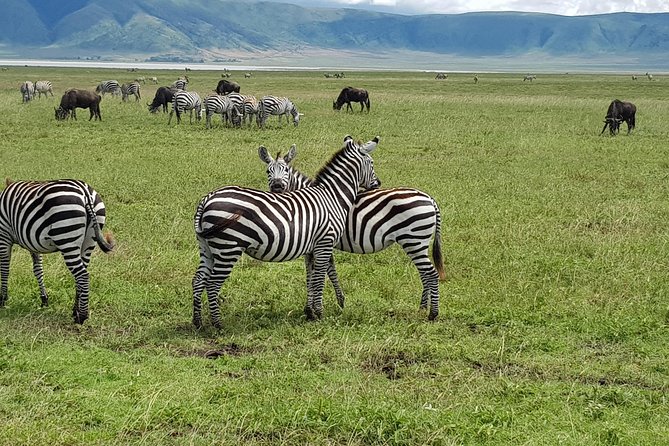
The main event is the Mara River crossing, where vast herds of wildebeest, zebra, and antelope gather in northern Serengeti. The timing is never guaranteed, but this six-day route gives you two full days near the river, plus game drives before and after the crossing zone.
I like two things here: you see three very different parks, and the private format lets your group focus on wildlife rather than follow a fixed crowd. I also like the practical start and finish, with pickup at Kilimanjaro International Airport and drop-off at your hotel or airport. The catch is that six days means long drives, early starts, and no promise that the animals will cross during your visit.
Key points at a glance
- Two full Mara River search days: Days 3 and 4 keep you in northern Serengeti, where your guide looks for crossing activity.
- Three major parks in one route: Tarangire, Serengeti, and Ngorongoro each offer a different setting and wildlife focus.
- Private safari format: Only your group takes part, giving you more control over questions, pacing, and time at sightings.
- Meals are covered: Six lunches, five breakfasts, and five dinners are included in the price.
- Airport-to-airport convenience: Pickup begins at Kilimanjaro International Airport, with return to Arusha or the airport on the final day.
- A demanding schedule: Expect long game-drive days, road travel, and a moderate level of physical fitness.
The Great Migration is the star, but timing matters
The Great Migration is not a single one-day parade. Around 1.5 million herbivores move through the Serengeti-Masai Mara ecosystem in a broad annual cycle, with animals feeding, breeding, and searching for safer grazing. The Mara River crossing is one of the most dramatic moments, but it depends on weather, water levels, herd movement, and animal instinct.
That makes this trip exciting and uncertain in equal measure. You may see thousands of animals gathering at the river, or you may spend hours watching herds move through northern Serengeti without a crossing. The itinerary handles that uncertainty sensibly by giving you two full days in the Mara River area rather than one quick attempt.
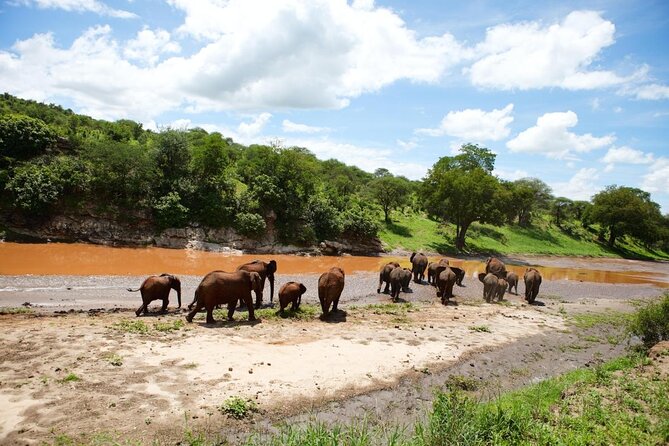
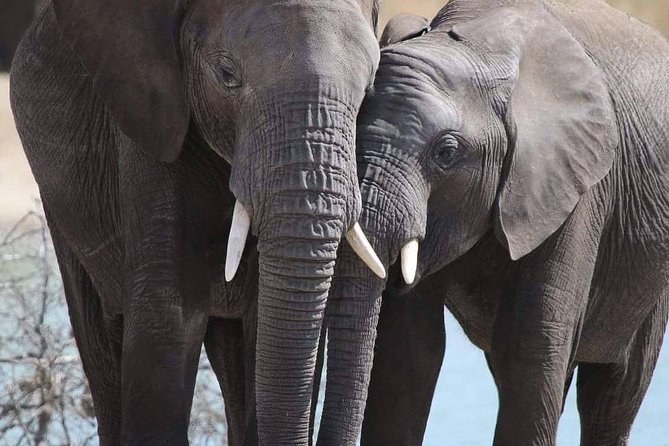
You also get much more than migration. Tarangire brings large elephant herds and baobab trees. Central Serengeti gives you broad plains and general game viewing. Ngorongoro Crater provides a final concentrated wildlife drive before you return to Arusha or Kilimanjaro International Airport.
More wildebeest migration trips in Kilimanjaro:
- Great Migration Safari In Tanzania
★ 5.0 · 71 reviews - 8 Days Great Wildebeest Migration – Mara River Crossing
★ 5.0 · 28 reviews - 7 Days Wildebeest Migration – Ndutu Calving Season
★ 5.0 · 18 reviews
Day 1: Elephants and baobabs in Tarangire
Your safari begins with pickup from Kilimanjaro International Airport or a hotel in or around Arusha. The drive to Tarangire takes about two and a half hours, with views of countryside, local communities, and changing scenery along the way.
Tarangire is a strong opening park because it has a clear visual identity. Large numbers of elephants and huge baobab trees give the day a distinctive feel, even before you start counting other animals. The park is also associated with tree-climbing African pythons, a detail that adds a bit of suspense to the usual big-game search.
You spend the day on a full game drive, so this is not a quick stop on the way to the Serengeti. At the end of the day, you leave the park for Sangaiwe Tented Lodge, where a swimming pool offers a welcome break.
The first day lasts about 12 hours. That is useful to know before you book. You begin with a transfer, spend much of the day in the vehicle, and finish with dinner and rest at the lodge. If you arrive in Tanzania tired, the pace will feel full, but it also gets you into the safari rhythm right away.
Day 2: Crossing Ngorongoro to reach the Serengeti
After an early breakfast, you leave with a packed lunch and travel toward the Serengeti through the Ngorongoro Conservation Area. This is a long transfer day, but it has an important purpose: you are moving from the southern safari circuit toward the migration route in the north.
After reaching Serengeti National Park, you have lunch and spend the afternoon on a game drive. The central Serengeti is known for open plains and the large-scale movement of herbivores, so you are already in the right setting for migration viewing.
You spend the night at Tanzania Bush Camp in Central Serengeti. This overnight stop breaks up the long journey and places you inside the park for the next stage of the route. The accommodation is described as a comfortable retreat, with dinner and time to rest before another full day on the road.
The tradeoff is simple: much of this day is spent traveling. You should choose this trip because you want access to the northern migration area, not because every hour will be a game drive. The packed lunch keeps the schedule moving and avoids losing valuable daylight to a long restaurant stop.
Days 3 and 4: Two chances at the Mara River
Day 3 is when the trip becomes fully focused on the migration. After breakfast, you travel north through the Serengeti, watching for animals as you move toward the Mara River. The goal is to locate the herds and assess where they are gathering.
A river crossing can be sudden. Herds may pause at the bank, mill around, retreat, or move at a different point. Your guide’s ability to read the area and choose where to search matters greatly. The guide is also there to answer questions and help you understand the animal behavior unfolding in front of you.
You spend the night at Tanzania Bush Camp in northern Serengeti, with dinner and time around the camp fire. The setting gives the day a natural finish, though you should expect a full schedule before you reach camp.
Day 4 keeps you near the Mara River for another full day of game viewing. This is one of the strongest features of the route. If the herds are in the area but have not crossed on Day 3, you have another chance. If a crossing does happen, you have more time to search for the right viewing point rather than treating the moment as a rushed photo stop.
Still, you should keep expectations realistic. No responsible safari operator can guarantee a crossing. The animals control the timetable, and poor weather may also affect the schedule. The tour notes that bad weather can lead to a different date or a full refund, but the experience itself is non-refundable for ordinary cancellations or changes, so read those terms carefully before paying.
More six-day trips in Kilimanjaro:
- Kilimanjaro climb, Lemosho Route (6-day)
★ 5.0 · 129 reviews - Kilimanjaro climb, Marangu route (6-day)
★ 5.0 · 72 reviews - 6 Days Tanzania Classic Safari
★ 5.0 · 52 reviews - The Best of Machame Route in 6 Days: Your World’s Summit Guide
★ 5.0 · 44 reviews
Day 5: Returning through central Serengeti
After breakfast, you leave northern Serengeti with packed lunches and travel back toward the central part of the park. Game viewing continues along the route, so the return is not simply a transfer with the windows closed.
This day gives you a second look at the Serengeti from a different direction. You may see animals you missed while heading north, and the changing position of the herds can make the same park feel different from one day to the next. The plan includes another night at Tanzania Bush Camp.
The day ends with dinner and a Serengeti sunset. That sounds simple, but it is one of the pleasures of a safari schedule that leaves you inside the park instead of rushing back to a city. You will have spent several days with the sounds, roads, and wide-open views of the Serengeti before the final crater drive.
Day 6: A final wildlife drive in Ngorongoro Crater
The last day starts very early. You leave camp, exit the Serengeti, and travel to the Ngorongoro Conservation Area. From there, you descend into Ngorongoro Crater for game viewing.
The crater changes the scale of the safari. Instead of open plains stretching toward the horizon, you are in a contained natural area where wildlife can be easier to locate. It is a fitting final stop because the crater offers a concentrated game-viewing experience before the long return to Arusha.
After the crater drive, you climb out, leave the conservation area, and return to Arusha. Drop-off is available at a prebooked hotel or Kilimanjaro International Airport. The day is scheduled for about 12 hours, so do not plan a tight flight connection without checking the timing carefully.
This final transfer is one of the most useful practical features of the trip, especially if you are flying home from Kilimanjaro. It also means Day 6 is not a relaxed farewell. You will be up early, in the vehicle for much of the day, and moving straight from the crater toward your onward plans.
What the private format adds
This is a private tour, so only your group participates. That matters on a wildlife trip. You can ask questions throughout the drive, discuss where to spend more time, and share the day with people you already know rather than a changing group of strangers.
The guide is a major part of the experience. The strongest praise attached to this safari focuses on guides who know where to look for animals, answer questions clearly, and keep the trip organized from airport pickup through final drop-off. That is especially important during migration season, when a good search strategy can make the difference between randomly driving around and understanding why you are in a particular area.
You should still confirm the pickup details before arrival. The stated meeting point is Kilimanjaro International Airport, with a start time shown as 12:00 am. Since the route also allows pickup from hotels in or around Arusha, make sure your actual arrival time and pickup location are clearly agreed in advance.
Accommodation, food, and the $3,606 price
The price is about $3,606.16 per person. That is a serious amount, but the value depends on what you compare it with. The trip includes a private safari, park fees and taxes, five breakfasts, five dinners, six lunches, accommodation, airport or hotel pickup, and a route through three major parks.
You are also paying for access to the northern Serengeti, not just a short wildlife outing near Arusha. Reaching the Mara River requires long road sections, several nights in the park, and a guide who can spend time looking for migration activity. For someone focused on the crossing, those two full northern Serengeti days are the heart of the package.
The accommodation includes Sangaiwe Tented Lodge and Tanzania Bush Camp in central and northern Serengeti. Exact room details are not provided, so you should ask the operator what accommodation category applies to your booking and whether the northern camp changes with seasonal location.
Tips are not included. Set aside extra money for gratuities, and confirm the preferred tipping practice with the company before departure. Other personal expenses are not specified, so you should also ask what, if anything, you need to pay beyond the listed inclusions.
Who will enjoy this safari most
I would choose this route if your top priority is the Great Migration and you want a private, organized trip rather than a short park visit. It suits people who are willing to accept long drives and uncertain wildlife timing in exchange for a serious attempt at the Mara River.
It is also a good fit if you want a first safari that covers several famous areas in one trip. Tarangire gives you elephants and baobabs, the Serengeti provides migration country, and Ngorongoro finishes with a compact wildlife setting.
I would hesitate if you dislike early mornings, long vehicle days, or changing plans based on animals. This is not a slow lodge holiday. You will spend six days following a demanding route, with two 12-hour days and several full game-drive days.
The moderate fitness requirement is worth taking seriously. You do not need an athletic level of fitness based on the information provided, but you should be comfortable with extended time in a safari vehicle, early starts, and long road transfers.
Booking advice before you commit
This experience is booked, on average, 151 days ahead. That makes sense for a migration-focused safari, especially if you have fixed international flights or want a particular travel period. Start by confirming the expected migration timing, pickup plan, accommodation details, and final drop-off schedule.
The cancellation rule is strict. The experience is non-refundable and cannot be changed for any reason once booked. If poor weather forces cancellation, you are offered another date or a full refund, but ordinary cancellations and amendments do not qualify for a refund.
That policy makes travel insurance worth considering, particularly because the trip has a high price and a fixed route. You should also avoid booking a same-day onward flight with little margin after the estimated arrival in Arusha or Kilimanjaro.
Should you book the 6 Days Mara River Crossing safari?
Book it if you want a private, migration-centered safari with two full days near the Mara River and a broad route through Tarangire, Serengeti, and Ngorongoro. The careful organization, included meals, airport transfers, and strong guide feedback add real value.
Do not book it expecting a guaranteed river crossing or a leisurely schedule. You are paying for a well-positioned attempt at one of nature’s most unpredictable scenes. If you can accept that uncertainty, this is a powerful six-day introduction to northern Tanzania and the Great Migration.
FAQ
How long is the safari?
The safari lasts approximately six days. Days 1 and 6 are each scheduled for about 12 hours, while the middle days are full-day safari outings and transfers.
Where does the safari start?
The stated meeting point is Kilimanjaro International Airport on Kilimanjaro Airport Road, Tanzania. Pickup is also offered from hotels in or around Arusha.
Which parks and protected areas are included?
The route includes Tarangire National Park, Serengeti National Park, the Ngorongoro Conservation Area, and a game drive inside Ngorongoro Crater.
Is the Mara River crossing guaranteed?
No. The itinerary offers two full days of searching around the Mara River, but animal movement, weather, and river conditions determine whether a crossing takes place during your visit.
What meals are included?
The price includes six lunches, five breakfasts, and five dinners.
Is this a private tour?
Yes. Only your group participates in the private tour or activity.
Where does the safari end?
After the Ngorongoro Crater visit, you return to Arusha for drop-off at a prebooked hotel or Kilimanjaro International Airport.
Just added around Kilimanjaro
- 6 days Machame route climbing Mt.Kilimanjaro★ 5.0 · 8 reviews
- machame route★ 5.0 · 16 reviews
- Mt Kilimanjaro 6 days Marangu route hike★ 5.0 · 3 reviews
- Private Cycle to Kilimanjaro Bike Park Safari★ 5.0 · 6 reviews
- West Kilimanjaro cycling Adventures★ 4.5 · 8 reviews
- Kilimanjaro Climb • Marangu Route ~ 9 Day★ 5.0 · 4 reviews
- 3 Days Private E-Bike Tour in West Kilimanjaro★ 5.0 · 3 reviews
- Kilimanjaro Climb • Machame Route ~ 10 Day★ 5.0 · 6 reviews
Great Migration Safaris, compared.
8 Days Great Wildebeest Calving Migration Safari from Arusha
Read our review →
8 Day Spectacular Migration Serengeti mid -Range Tanzania Safari
Read our review →
Private 6-Day Great Migration Ndutu Serengeti Safari Tour
Read our review →
6 Days Tanzania Budget Camping Safari with Migration
Read our review →10-Day Wildebeest Migration Calving Safari -All Inclusive
Read our review →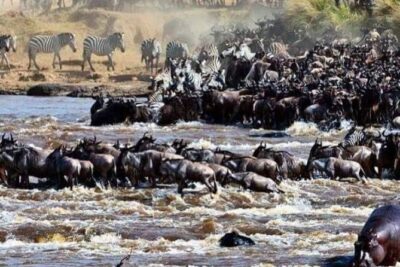
8 Days Great Wildebeest Migration – Mara River Crossing
Read our review →
Tanzania Safari – The Great Migration in the North of the Serengeti and Lake Natron
Read our review →
5-Days Private Serengeti Wildebeest Migration Lodge Safaris
Read our review →Browse the lists this tour appears in