
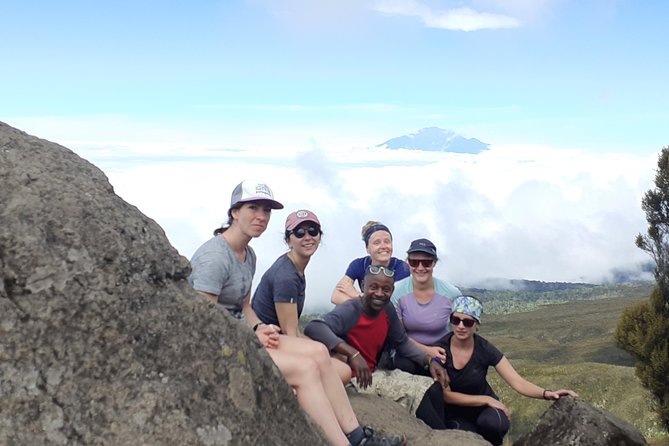
Reviewed · LEMOSHO ROUTE CLIMBS
climb the Kilimanjaro via Lemosho route
Kilimanjaro’s Lemosho Route gives you more than a summit photo. In eight days, you move from farm country and rainforest to the Shira Plateau, lava fields, volcanic rock, and the cold upper slopes of Africa’s highest mountain. The route is tough, but its slower shape gives you time to adjust to altitude.
I like the varied scenery and the way this route uses high camps and lower sleeping points for acclimatization. I also like the personal feel: this is a private climb, and guide Paul Bernad has led small groups, including climbers ranging from their 30s to their late 60s. The cooks and guides are part of the experience, not just background support.
The main caution is simple: this is a serious physical challenge. You need moderate fitness, tolerance for long uphill days, and a good plan for cold weather. The schedule also contains a few timing and route variations, so confirm the final camp plan with Paul before departure.
Key points at a glance
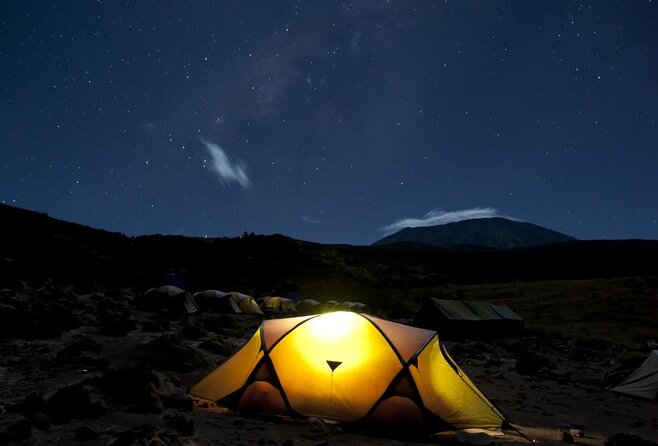
- Lemosho’s changing scenery: Walk from cultivated farmland and rainforest into the Shira Plateau, then across alpine desert toward the summit.
- Paul Bernad’s personal guiding: Paul has led private groups and adjusts the pace to suit different abilities.
- A full eight-day schedule: The plan builds through Shira, Lava Tower, Barranco, Karanga, and Barafu before the summit push.
- Uhuru Peak at 5,896 meters: The final climb reaches Stella Point at 5,756 meters, then continues to Africa’s highest point.
- Private-group format: Only your own group participates, which can make pacing and communication easier.
- A price worth examining: At $2,564.11 per person, value depends on what is included in your final package, so clarify transport, park fees, camping, food, staff, and equipment before paying.
Why the Lemosho Route is worth the extra days
Lemosho is a strong choice if you want a broad mountain experience rather than the shortest possible path to the summit. The first stages approach Kilimanjaro from the west, moving through farmland and forest before reaching the open Shira Plateau. That gives you a gradual change in altitude and scenery.
I like this route because the mountain does not reveal itself all at once. The first day begins near Londorossi Gate, at about 2,200 meters, where registration takes place. From there, the drive continues toward the walking start, passing fields and planted trees. Farmers grow crops such as carrots and potatoes among the trees, a useful reminder that Kilimanjaro is also a lived-in agricultural area, not only a famous peak.
The walk then enters rainforest for about 5 kilometers. The stated time is around four hours, though the full first day is listed at about 12 hours because of the driving, registration, and transfer arrangements. Forest Camp sits at about 2,830 meters.
This first stage may include sightings of elephants, buffalo, eland, birds, small animals, and mountain flowers. Wildlife is never guaranteed, and you should not treat this as a safari, but the possibility adds interest to a walking day that could otherwise feel like a long approach.
More Lemosho Route climbs:
- Kilimanjaro climb by Lemosho Route (7-day)
★ 5.0 · 651 reviews - 8-Day Small-group Lemosho Kilimanjaro Summit Trekking
★ 5.0 · 186 reviews - Kilimanjaro Climbing Lemosho Route 8 Days.
★ 5.0 · 186 reviews
Day 2: From Big Tree Camp to Shira 1
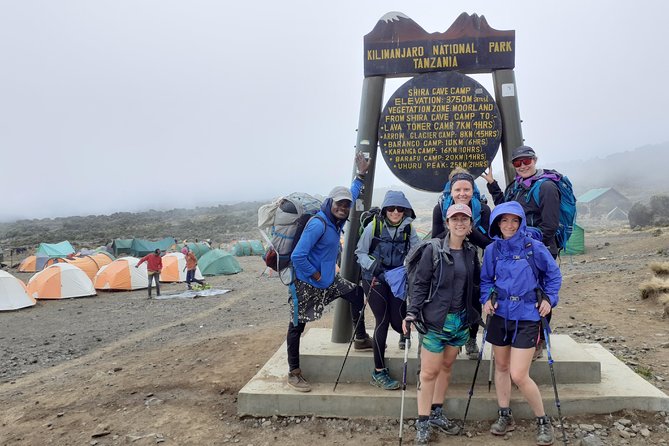
The second day leaves the forest and climbs toward Shira 1 Camp. The walk is listed at 7 kilometers and four to six hours, reaching about 3,509 meters. The trail becomes narrower and rises through heath and moorland.
The scenery changes quickly. Erica plants and open grassland replace the dense forest, and the air begins to feel thinner. On a clear evening, you may see Kibo, the main volcanic cone that holds Uhuru Peak.
This is one of the route’s best transitions. You are high enough to feel that you are on a real mountain, but the day is still manageable compared with the summit push. Use it to settle into your walking rhythm, drink regularly, and pay attention to how your body responds.
Day 3: Shira Cathedral and the first real acclimatization choice
Day three offers two route options. One follows an upper path to Shira Cathedral, about 3,920 meters, for acclimatization before continuing to Shira 2 Camp at approximately 3,840 meters. That section is listed at four to five hours and 6 kilometers.
The other option takes a lower route along the rescue road toward Moir Hut Camp, at about 4,200 meters. The supplied schedule gives this as an alternative, so you should ask which version Paul plans to use and why.
The Shira Cathedral option makes sense for a slower, scenic day. It takes you high during the day and then brings you slightly lower to sleep, a useful pattern for adjusting to altitude. The Moir Hut option reaches a higher camp and may create a different acclimatization profile.
This is where a private group helps. If one person is responding slowly to the altitude, the guide can discuss the pace and route choice directly with the group. Do not treat the higher option as automatically better. The best route is the one that fits your condition and the mountain weather.
Day 4: Lava Tower and the descent to Barranco
Day four is a key acclimatization stage. You climb through a rocky desert zone to Lava Tower at about 4,605 meters, with lunch planned there, then descend to Great Barranco Camp at roughly 3,940 meters.
The walking time is listed at five to six hours over about 9.5 kilometers. The important feature is the high point followed by a lower sleeping altitude. You get a taste of the upper mountain without staying as high as Lava Tower.
The setting becomes stark and dramatic. Vegetation thins, volcanic rock dominates, and the views open wide. This is also the day when altitude may become more noticeable. Headaches, nausea, unusual tiredness, and poor coordination should be reported to the guide rather than hidden.
Barranco Camp is placed beneath the Barranco Wall, one of the route’s most memorable sights. The wall looks intimidating from camp, but the following morning’s path is a scramble rather than a technical rock climb according to the schedule. Still, you should be comfortable using your hands on steep sections and moving carefully.
More treks and hikes around Kilimanjaro:
- Kilimanjaro climb, Machame Route (7-day)
★ 5.0 · 262 reviews - Climbing Kilimanjaro – Machame Route
★ 5.0 · 170 reviews - Climbing Kilimanjaro through 7 days Machame Route
★ 5.0 · 151 reviews - Kilimanjaro climb, Lemosho Route (8-day)
★ 5.0 · 148 reviews
Day 5: The Barranco Wall and Karanga Camp
After breakfast, you climb the Barranco Wall, reaching about 4,200 meters. The day covers roughly 5.5 kilometers in three to four hours before continuing to Karanga Camp at about 4,000 meters.
This is a short stage compared with the summit day, but it is not effortless. The rock sections require patience, balance, and attention to the guide’s instructions. The reward is a close-up mountain experience that feels more active than simply walking along a broad trail.
Karanga Camp includes a hot lunch and time to rest. That matters. You are now saving energy for the summit attempt rather than trying to win each day. I would treat this afternoon as a recovery period, not as spare time for a long walk around camp.
Day 6: Barafu, Stella Point, and Uhuru Peak
The sixth day is the heart of the climb. The morning ascent from Karanga to Barafu Hut covers about 5 kilometers in three to four hours, reaching roughly 4,620 meters. The route passes through alpine desert, with little vegetation and a more exposed feel.
From Barafu, the plan is to make the summit attempt. It lists about six hours for the climb to Stella Point at 5,756 meters, then Uhuru Peak at 5,896 meters, followed by a descent to Barafu. The timing in the supplied schedule is not fully clear, so confirm how the operator divides the summit push, rest, and descent.
Uhuru Peak is called Freedom Peak, and the final minutes at the summit are usually reserved for photos before the descent begins. The summit is not the end of the work. Descending on tired legs, loose volcanic ground, and cold-weather gear can be just as demanding.
The trip is well suited to someone who wants a genuine summit attempt, but you should not book it as a casual sightseeing walk. The combination of altitude, cold, darkness or early starts, and long hours makes preparation essential. One useful tip from the supplied feedback is not to rely entirely on a phone for summit photos. Cold can reduce battery life, and the summit moment may be brief.
Day 7: Recovery at Mweka Hut
Day seven descends from the upper mountain toward Mweka Hut at about 3,100 meters. A food and rest stop is planned for about an hour, followed by the long descent and a final night at camp.
The day is listed at roughly six hours. After the summit attempt, that may feel longer than the number suggests. Your knees and feet will take the strain, so trekking poles, well-tested footwear, and careful pacing matter.
Mweka Hut provides a lower and more comfortable final night on the mountain, though you are still camping rather than staying in a lodge. Dinner is included in the plan, but confirm the exact food arrangements and camping setup when you book.
Day 8: Forest, Mweka Gate, and the certificate
The final walk descends through rainforest to Mweka Gate at about 1,760 meters. The distance is around 8 kilometers, with approximately four hours of walking.
At the gate, you sign out and receive a certificate recognizing the climb. Then the group drives back to the hotel. The schedule says the return is to a hotel, but it does not specify the exact hotel or whether the transfer returns to Arusha, Moshi, or another location, so confirm that before departure.
The last forest walk is a pleasant change after the exposed upper slopes. It also gives you time to notice how quickly the mountain climate changes as you lose altitude.
Guides, food, and the private-group advantage
Paul Bernad is the named guide connected with this climb. The experience also includes guides and cooks, with the operator placing emphasis on hospitality and a friendly camp atmosphere.
The strongest practical point is the private format. Your group is the only group taking part, so the walking pace does not have to match a large mixed party. That can be especially useful when one person is older, less experienced, or adapting more slowly to altitude.
Paul has guided a small party of four climbers and has worked with a family group that included people aged 68 and 69. That does not mean the climb is easy for older people. It does show why direct pacing and close attention from a guide can matter.
Food is another important part of a multi-day mountain climb. The supplied information specifically highlights good food and hot lunches on the route. Since the exact menu, dietary options, and included meals are not listed, ask for those details before booking.
Is $2,564.11 good value?
The price is $2,564.11 per person. That is a substantial amount, but an eight-day Kilimanjaro climb requires more than a walking guide. The value may include some combination of park access, mountain staff, food, camping, transfers, and logistics, but the supplied details do not spell out every inclusion.
Before paying, ask for a written breakdown of:
- Pickup and return transport
- Park and camping fees
- Tents and sleeping arrangements
- Meals and drinking water
- Guide and cook services
- Porter support, if offered
- Emergency and rescue arrangements
- Hotel nights before or after the climb
The price looks most attractive if the major mountain costs and transport are already covered. It looks less attractive if you must add park fees, meals, equipment, or transfers later. A clear list is more useful than comparing headline prices alone.
Who should book this climb?
I would choose this experience if you want a scenic approach, a private group, and a full eight-day attempt at the summit. It fits people who enjoy long walking days and want time for acclimatization rather than chasing the shortest schedule.
You should have a moderate level of physical fitness. The route includes several hours of walking on most days, steep climbs, rocky sections, high altitude, and a long summit effort. You also need to prepare for cold conditions. One direct piece of advice is to take cold-weather clothing seriously, especially for the summit stage.
This may not suit you if you want a soft adventure, dislike camping, or prefer a fixed schedule with no route changes. Day three has two options, and the summit timing needs clarification. Those are not problems by themselves, but you should know exactly what you are buying.
Booking confirmation is provided at the time of booking. Pickup is offered, and the activity is available during the stated operating period from October 19, 2019, through June 18, 2026, with hours listed from 8:00 AM to 11:30 PM daily. Cancellation is generous at six or more full days before the start, when a full refund is available. Two to six full days brings a 50 percent refund, and cancellation within two days is nonrefundable. Poor weather or failure to meet the minimum group size may lead to a new date, another experience, or a full refund.
Should you book the Lemosho Route climb?
Book it if Kilimanjaro is the main purpose of your Tanzania trip, you want the western approach, and you value a private group with a named guide. The route gives you forest, moorland, plateau, volcanic rock, and summit terrain in one carefully staged climb.
Before committing, get the inclusions in writing and confirm the day three route, summit-day timing, hotel transfer, food, and equipment. If you are ready for the cold, altitude, and sustained effort, this is a strong route for a serious but personal Kilimanjaro attempt. If you are unsure about your fitness or want a relaxed holiday, choose a shorter mountain outing instead.
FAQ
How long is the Kilimanjaro climb?
The planned duration is approximately eight days, including the approach, summit attempt, descent, and return to the hotel.
What route does the climb use?
The climb uses the Lemosho Route, approaching Kilimanjaro through farmland, rainforest, heath and moorland, the Shira Plateau, alpine desert, and the upper mountain.
What is the highest point reached?
The summit is Uhuru Peak, also called Freedom Peak, at 5,896 meters. The route also reaches Stella Point at about 5,756 meters.
Is pickup available?
Yes. Pickup is offered, and the first drive is described as running from a hotel in Arusha or Moshi to Londorossi Gate.
Is this a private climb?
Yes. Only your own group participates in the activity.
What level of fitness is required?
You should have a moderate level of physical fitness. The climb includes several hours of walking per day, steep sections, rocky terrain, high altitude, and a demanding summit stage.
Who is the guide?
The named guide is Paul Bernad. The experience also uses additional guides and cooks.
What happens if bad weather cancels the climb?
If poor weather causes cancellation, you are offered a different date or a full refund. A different date, another experience, or a full refund may also be offered if the minimum number of participants is not reached.
Just added around Kilimanjaro
- 6 days Machame route climbing Mt.Kilimanjaro★ 5.0 · 8 reviews
- Mt Kilimanjaro 6 days Marangu route hike★ 5.0 · 3 reviews
- machame route★ 5.0 · 16 reviews
- Private Cycle to Kilimanjaro Bike Park Safari★ 5.0 · 6 reviews
- West Kilimanjaro cycling Adventures★ 4.5 · 8 reviews
- Kilimanjaro Climb • Marangu Route ~ 9 Day★ 5.0 · 4 reviews
- 3 Days Private E-Bike Tour in West Kilimanjaro★ 5.0 · 3 reviews
- Kilimanjaro Climb • Machame Route ~ 10 Day★ 5.0 · 6 reviews