
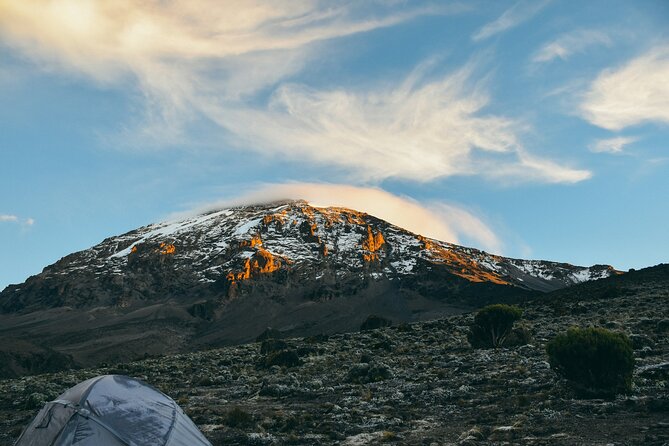
Reviewed · HIKING & TREKKING
8 Days Guided Private Trekking in Mount Kilimanjaro
Kilimanjaro is not a casual mountain walk. This eight-day private trek gives you time to move from rainforest to glacier country at a steady pace, with the summit attempt saved for Day 7. I like the small-group setup and the climb through several distinct plant zones. I also like the careful acclimatization pattern, especially the high climb to Lava Tower followed by a lower night at Barranco.
The main caution is that the published timings are uneven. Day 3 is shown as four minutes, Day 6 as three minutes, and the summit day as four hours despite an expected total of about 18 kilometers. Treat the distances and camp elevations as the useful guide, then ask Spirit of Kilimanjaro to confirm the daily walking times before you pay.
- Londorossi starting point: The route begins at the western side of Kilimanjaro National Park and enters the rainforest.
- Seven nights on the mountain: You sleep at Mti Mkubwa, Shira 1, Shira 2, Barranco, Karanga, Barafu, and Mweka.
- Useful acclimatization day: The trail climbs to 4,600 meters at Lava Tower before dropping to Barranco Camp at about 3,960 meters.
- Private group format: Only your party takes part, so the pace and support can be more personal than on a large group departure.
- Named guide experience: Joseph, Swahele, Zac, and William are associated with the company’s recent climbs, though your exact crew should be confirmed.
- Included food and lodging: Breakfast is listed for eight days, lunch for eight days, and dinner for seven days, along with accommodation and a guide.
Starting in Moshi and entering through Londorossi Gate
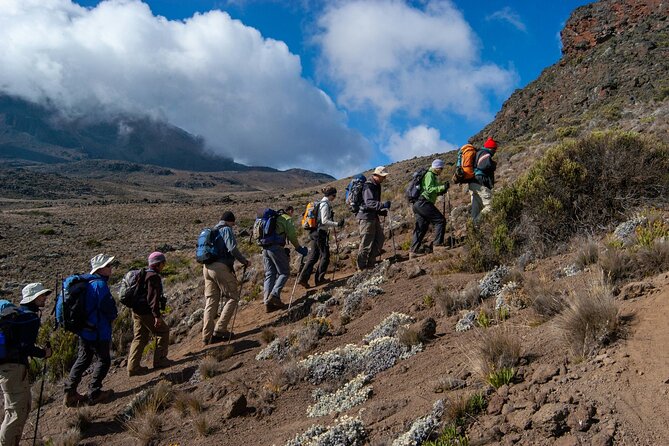
Your meeting point is Panama Garden Resort on Shanty Town Road in Moshi. Pickup is offered, and the activity ends back at the meeting point after you leave the mountain. Moshi is the practical base for this climb, and beginning there keeps the first morning focused on park formalities and the short drive to the trailhead.
At Londorossi Gate, you complete the national park registration process. Then the walking begins in the rainforest, where the first day covers about 6 kilometers and takes roughly three hours according to the schedule.
Mti Mkubwa, or Big Tree, Camp sits at about 2,750 meters. This is a sensible first night because you gain height without facing a long opening day. You can use the evening to sort your sleeping gear, eat, and learn how the walking routine works.
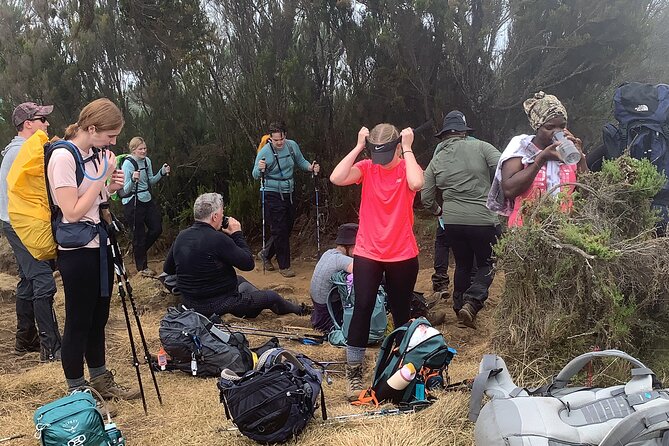
The first section is more than a warm-up. Kilimanjaro’s forest gives you shade and a softer trail, but the route can still feel tiring after the drive and paperwork. Wear shoes that you have already tested, keep your day bag light, and carry water where you can reach it without unpacking.
From rainforest to Shira 1 at 3,505 meters
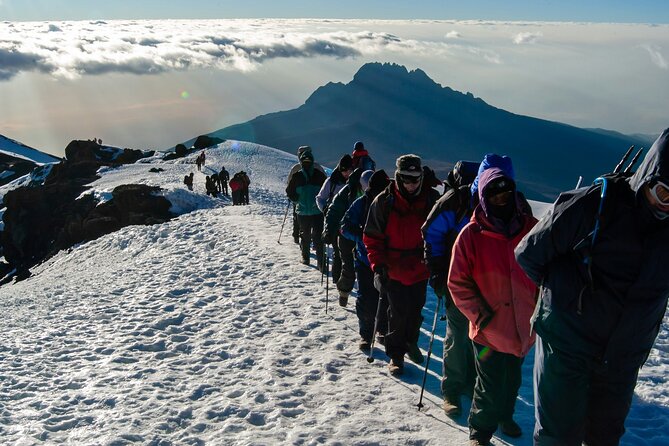
Day 2 continues through the forest before reaching the moorland zone. The trail becomes rougher, the vegetation changes, and the route gains about 755 meters before Shira 1 Camp.
The walking distance is about 8 kilometers, with roughly four hours on the schedule. Shira 1 sits at around 3,505 meters, so this is the first night when altitude may affect your sleep, appetite, or energy.
I like the way this day lets you see Kilimanjaro change under your feet. You do not jump straight from a town road to an empty high-altitude plateau. Instead, the forest gradually thins and the volcanic ground becomes more exposed.
At this point, your guide’s judgment matters. A private trek gives the guide room to notice how you are moving and to adjust the pace within your group. The company presents its guides as experienced in mountain safety and acclimatization, while names connected with recent climbs include Joseph, Swahele, and Zac. Ask in advance who will lead your group and how many support staff will accompany you.
More Private Tours in Kilimanjaro
- Private Full Day Hiking Experience to Marangu Route
★ 5.0 · 61 reviews - Private Kilimanjaro Hike 7 Day Lemosho Route
★ 5.0 · 60 reviews - Kilimanjaro 7 Day Private Trekking Experience
★ 5.0 · 40 reviews
Shira 2 and the first alpine desert
Day 3 is shorter, at about 7 kilometers, and ends at Shira 2 Camp at roughly 3,850 meters. The setting changes again. You are now in an alpine desert, with less plant cover and a stronger sense that the mountain is becoming a serious high-altitude climb.
This short day has a useful purpose. You continue gaining height without adding a very long walk, and the body gets more time to adjust. You may notice thinner air here, even if the trail itself is not especially technical.
The schedule lists only four minutes for this segment, which cannot sensibly describe the full walk. I would not use that figure to judge the day’s difficulty. Ask for the expected walking hours, meal times, and camp routine before departure, especially if you are planning around flights or extra nights in Moshi.
Shira 2 also offers a good point to judge your own condition. Mild tiredness is normal. A strong headache, unusual breathlessness, or a sharp decline in energy should be reported to your guide rather than hidden to protect the schedule.
Lava Tower, Barranco Wall, and the best acclimatization day
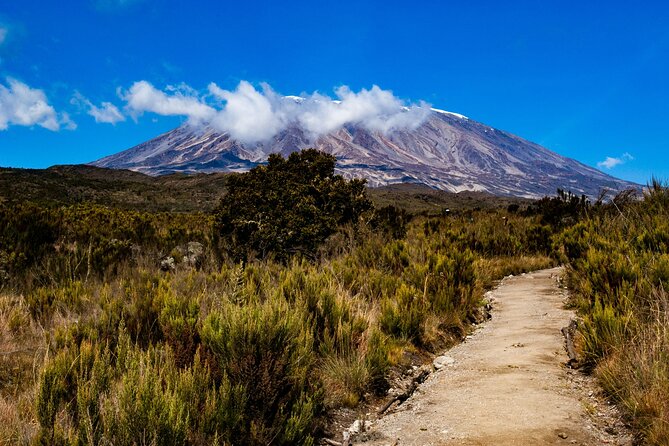
Day 4 is the most carefully designed part of the route. You climb to Lava Tower at about 4,600 meters, then descend to Barranco Camp at approximately 3,960 meters. The total distance is about 10 kilometers, and the planned walking time is around five hours.
This is the classic climb high, sleep lower pattern. Reaching Lava Tower gives you time at a greater elevation, while the lower camp makes the night easier than sleeping at the highest point you reached. For summit success, this type of gradual exposure is far more useful than rushing upward.
The trail then brings you to the Barranco Wall. The wall adds hands-on movement and a sharper sense of adventure, but it is described as a climb rather than a technical mountaineering pitch. You should still expect uneven rock and a need to watch your footing.
Barranco is one of the route’s memorable stops because the day combines altitude, changing terrain, and a clear physical challenge. It is also where the trip may feel less like a scenic hike and more like a sustained mountain effort.
Karanga Camp and the final push toward Barafu
Day 5 covers about 4 kilometers to Karanga Camp at around 4,035 meters. The distance is short, but the altitude and rocky ground make this more than an easy stroll.
The alpine terrain opens up broad views of the surrounding volcanic slopes. You will have time to settle into camp, eat, and prepare for the next stage. A short day here is valuable because the body is doing hard work even when the trail length looks modest.
On Day 6, you walk roughly 3 kilometers to Barafu Camp at about 4,600 meters. Barafu is the launch point for the summit attempt. The published schedule gives three minutes for this walk, another timing figure that needs clarification.
Barafu is less about sightseeing and more about preparation. You will need to organize warm clothing, water, snacks, headlamp equipment, and anything you want close at hand for the early start. The supplied information does not specify a gear rental package, so ask exactly what is provided and what you must bring.
The short approach to Barafu can be misleading. You may feel that you have an easy day, but altitude makes every task slower. Save your energy, follow your guide’s advice, and do not treat the final afternoon as spare time for a hard extra walk.
More treks and hikes around Kilimanjaro:
- Kilimanjaro climb by Lemosho Route (7-day)
★ 5.0 · 651 reviews - Kilimanjaro climb, Machame Route (7-day)
★ 5.0 · 262 reviews - Kilimanjaro Climbing Lemosho Route 8 Days.
★ 5.0 · 186 reviews - 8-Day Small-group Lemosho Kilimanjaro Summit Trekking
★ 5.0 · 186 reviews
Uhuru Peak before sunrise
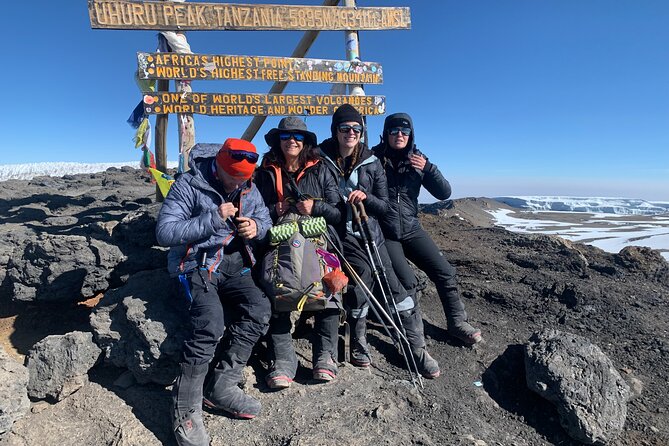
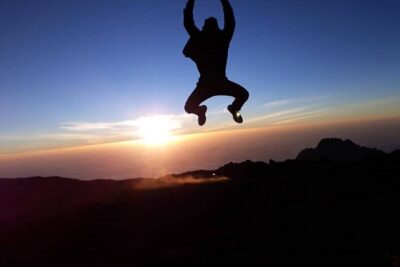
Day 7 is the hardest day by a wide margin. The summit attempt starts in the early hours, with a steep climb toward Uhuru Peak, the highest point in Africa. The goal is to reach the summit before sunrise, then descend to Mweka Camp at approximately 3,100 meters.
The full day covers about 18 kilometers. Although the listed stop duration says four hours, the distance and the two-part climb and descent make it clear that this is the day to plan around, not a quick outing. Confirm the expected start time and total duration with the operator.
The pre-dawn start has a practical reason. It gives you the best chance of reaching the top before the day becomes warmer and lets you see sunrise from high on the mountain if conditions allow. It also means you will be walking when tired, cold, and short of sleep.
After Uhuru Peak, the descent to Mweka Camp is not an afterthought. Your legs may feel worse going down, and loose ground can be hard on knees and ankles. Mweka’s lower elevation should help, but you still have to complete a long day before you can rest.
The summit certificate is presented after you leave the mountain, not at the top. Keep your expectations practical. Reaching Uhuru Peak depends on health, pacing, weather, and how your body responds to altitude. A good guide should treat a safe decision as more important than forcing a summit.
The rainforest return to Mweka Gate
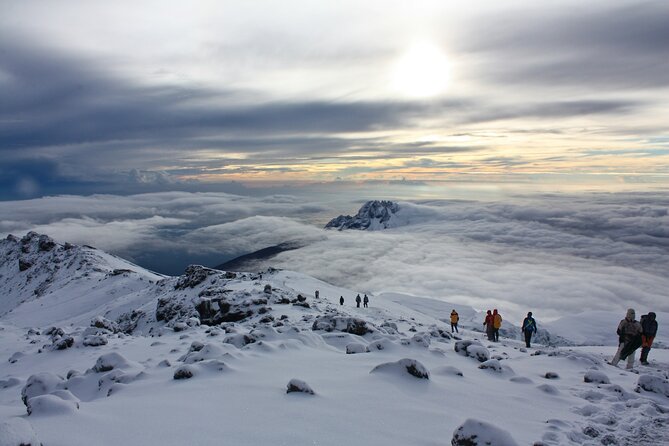
Day 8 is a 10-kilometer descent from Mweka Camp to Mweka Gate, through the rainforest zone. The schedule gives about three hours, making this one of the more straightforward days, though tired feet can make a descent feel longer.
At the gate, you receive summit certificates and say goodbye to your guides and porters. The activity then returns to the Panama Garden Resort meeting point in Moshi.
This final day gives the trip a clean ending. You move from the cool high mountain back into thicker vegetation, then return to town with the formal proof of your climb. If you have an onward safari or flight, leave a sensible buffer. The provided details do not promise a fixed arrival time in Moshi.
What the $2,310 price means
At $2,310 per person, this is a major trip expense, but it covers more than a day hike. The package includes a guide, accommodation, breakfast for eight days, lunch for eight days, and dinner for seven days. The route also involves park access and a full mountain support operation, though the supplied inclusions do not spell out every park, porter, transfer, or equipment charge.
That last point matters. Before booking, request a written list of what the price covers. Ask about airport transfers, park fees, porter support, drinking water, sleeping arrangements, emergency procedures, and gear. Do not assume that the phrase top-notch gear means personal equipment rental is included.
The private format improves the value for families and small groups. You are not sharing the activity with a large mixed party, and the guide can focus on your group’s pace. A family group once included a 70-year-old father, with concern about whether he could reach the summit. That example should encourage careful planning, not blind confidence. Age alone does not settle the question, but every participant should discuss fitness and altitude concerns with a medical professional.
The meals are included, which simplifies budgeting. Breakfast and lunch are listed for all eight days, while dinner is listed for seven nights. That matches seven nights on the mountain, but I would still ask how meals are handled on arrival and departure days.
The human side of the climb
A Kilimanjaro trek depends heavily on the mountain crew. The company’s recent climbs have been associated with guides named Joseph, Swahele, and Zac, while William is connected with the planning and booking side. Your exact team is not guaranteed by the supplied details, so confirm names and roles before departure.
The strongest praise connected with this experience focuses on organization, flexibility, guide support, and the good humor of the porters. That is important. A long climb is made easier when camp routines run well and communication is clear.
The company also presents the trek as a responsible tourism activity that supports local communities and protects the park. Ask how that promise works in practice, including porter treatment, tipping guidance, waste handling, and group size. Small groups can help with personal attention, but the exact maximum number is not stated.
Who should book this trek
I would consider this trip if you want the longer eight-day pace and prefer a private group over a large departure. The route has a sensible progression from forest to moorland to alpine desert, and the Lava Tower day gives you a useful acclimatization climb.
It may suit a family group, a group of friends, or a couple willing to pay more for a private arrangement. It is also a good fit if you want a route with seven nights on the mountain rather than a rushed schedule.
I would be more cautious if your main concern is fixed timing, clearly itemized inclusions, or equipment rental. The inconsistent duration figures need clarification, and the package description leaves some cost details open. You should also be ready for a long summit day, cold conditions, and the possibility that altitude changes the plan.
Cancellation is flexible up to 24 hours before the local start time, with a full refund. Inside that 24-hour window, the payment is not refunded and changes are not accepted. Visas are not included.
Should you book Spirit of Kilimanjaro?
Book it if you value a private group, an eight-day route, included meals, and a gradual climb with Lava Tower acclimatization. The route profile is strong, the summit day is clearly treated as the central challenge, and the guide team receives especially positive attention for organization and care.
Before booking, get written answers about the daily walking times, exact route name, guide assignment, equipment, park and porter fees, and transport details. If those answers are clear, the $2,310 price can be reasonable for a private Kilimanjaro attempt. If they remain vague, compare another operator before committing.
FAQ
Where does the Kilimanjaro trek begin?
The meeting point is Panama Garden Resort on Shanty Town Road in Moshi, Tanzania. The mountain route begins at Londorossi Gate in Kilimanjaro National Park.
Where does the activity end?
The activity ends back at the meeting point in Moshi after you leave the mountain.
Is pickup available?
Yes. Pickup is offered, with the listed meeting point at Panama Garden Resort.
Is this a private trek?
Yes. Only your group participates in the activity.
How long does the trek last?
The trek lasts approximately eight days and includes seven nights on the mountain.
Which camps are included in the route?
The route includes Mti Mkubwa Camp, Shira 1 Camp, Shira 2 Camp, Barranco Camp, Karanga Camp, Barafu Camp, and Mweka Camp.
Is food included?
Yes. Breakfast is included for eight days, lunch for eight days, and dinner for seven days.
Is a guide included?
Yes. A tour guide is included in the package.
What is the cancellation policy?
You can cancel at least 24 hours before the local start time for a full refund. Cancellations or changes made within 24 hours are not accepted, and the amount paid is not refunded.
More Eight-Day Trips in Kilimanjaro
- Kilimanjaro climb, Lemosho Route (8-day)
★ 5.0 · 148 reviews - Climbing Kilimanjaro through 8 days Lemosho Route
★ 5.0 · 52 reviews - Kilimanjaro climb, Northern Circuit route (8-day)
★ 5.0 · 40 reviews - 8 Days Kilimanjaro Hike via Lemosho Route
★ 5.0 · 39 reviews
Just added around Kilimanjaro
- 6 days Machame route climbing Mt.Kilimanjaro★ 5.0 · 8 reviews
- Mt Kilimanjaro 6 days Marangu route hike★ 5.0 · 3 reviews
- machame route★ 5.0 · 16 reviews
- Private Cycle to Kilimanjaro Bike Park Safari★ 5.0 · 6 reviews
- West Kilimanjaro cycling Adventures★ 4.5 · 8 reviews
- Kilimanjaro Climb • Marangu Route ~ 9 Day★ 5.0 · 4 reviews
- 3 Days Private E-Bike Tour in West Kilimanjaro★ 5.0 · 3 reviews
- Kilimanjaro Climb • Machame Route ~ 10 Day★ 5.0 · 6 reviews
Hiking & Trekking, compared.
7-Day Machame Kilimanjaro Summit Tour from Arusha
Read our review →
Private Full Day Hiking Experience to Marangu Route
Read our review →
4 days Best experience Kilimanjaro Hike, Serengeti &Ngorongoro
Read our review →
Best Kilimanjaro hiking day trip tour with Kilinge Adventures
Read our review →Browse the lists this tour appears in