
Reviewed · MACHAME ROUTE CLIMBS
7 Day Tour Machame Route
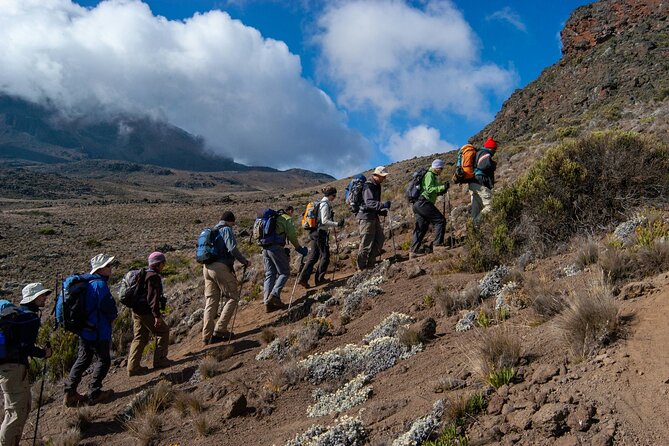
The Machame Route gives you a real mountain journey, not a quick march to the summit. Over seven days, you move from thick rainforest to moorland, volcanic high country, and the stark upper slopes of Kilimanjaro, with Lava Tower helping your body adjust before the final climb.
I like the sensible pacing and the variety of terrain. I also like that the price includes guides, porters, full-board meals, drinking water, park costs, accommodation, and a complimentary oxygen cylinder. The main drawback is the summit day: after an early start and the push to Uhuru Peak, you still descend to Mweka Camp, making it a long and tiring day.
Key points to know before booking
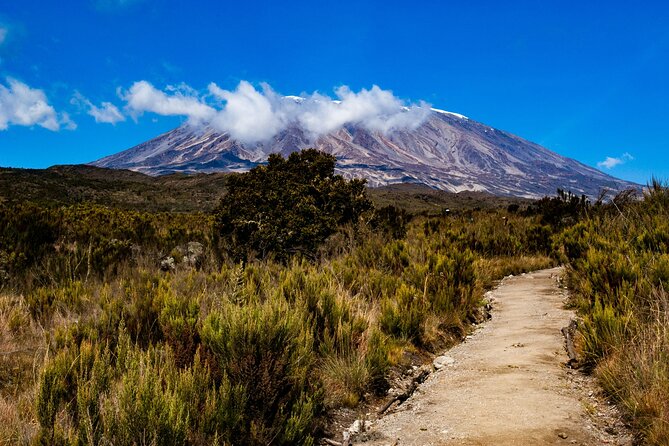
- Lava Tower at about 4,600 meters: You climb high for acclimatization, then sleep lower at Barranco Camp.
- Barranco Wall on day four: This is the route’s most hands-on section and may feel demanding if you dislike steep ground.
- Seven days on the mountain: The extra time allows a steadier ascent than a shorter itinerary.
- Full-board support: Breakfast, lunch, dinner, drinking water, guides, porters, and accommodation are included.
- Uhuru Peak attempt: Summit day begins in the early hours and covers about 18 kilometers in total.
- Maximum group size of 30: A larger group can affect the pace and feel of the trek.
Why seven days on Machame makes sense
At $2,205 per person, this is not a cheap walk in the park. It is a serious mountain package with national park fees, crew wages, food, water, lodging, a professional English-speaking guide, and porter support built into the rate.
The extra day matters. Kilimanjaro’s biggest challenge is not simply walking uphill. Your body must adjust to thinner air as you rise. This plan takes you higher during the day, then brings you down to sleep on day three, a useful pattern for acclimatization.
You also get a changing set of surroundings. The first day feels green and sheltered. By the middle of the trip, trees are mostly gone, and the route becomes rocky, open, and exposed. The final approach is less about scenery and more about patience, breathing, and keeping a steady pace.
The listed start time is 7:30 a.m., with pickup offered and the meeting point given as Kilimanjaro Airport in Kilimanjaro National Park, Tanzania. Because the itinerary begins at Machame Gate, confirm the exact pickup and transfer plan before departure. That small detail matters after a long flight.
More Machame Route climbs:
- Kilimanjaro climb, Machame Route (7-day)
★ 5.0 · 262 reviews - Climbing Kilimanjaro – Machame Route
★ 5.0 · 170 reviews - Climbing Kilimanjaro through 7 days Machame Route
★ 5.0 · 151 reviews
Day one: rainforest from Machame Gate to Machame Camp
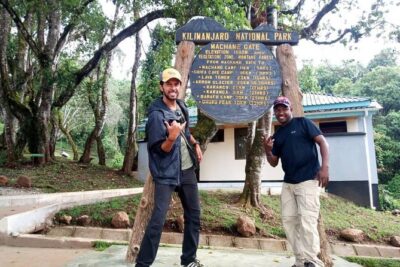
Your first mountain day begins at Machame Gate. Registration takes place here, and you meet the guides and porters who will support the climb.
The route covers about 11 kilometers and takes roughly four hours. The rainforest is the star of this section, with dense greenery and a cool, shaded feel that makes the first climb more pleasant than the bare upper slopes.
You finish at Machame Camp, around 3,000 meters above sea level. This is a useful first night because you gain height without facing the severe cold and exposure found higher up.
The first day still deserves respect. Four hours may sound modest, but you are walking uphill and beginning a seven-day effort. Keep your pace slow from the start. A strong first day does not win the summit, but an overconfident one can make the next stages harder.
Day two: open moorland and the first big views
After breakfast, you leave much of the rainforest behind and enter open moorland. The distance is shorter, about five kilometers, and the walk takes around three hours.
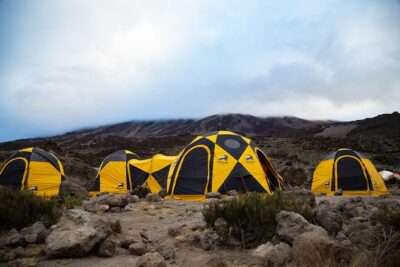
Shira Camp sits at approximately 3,800 meters. The setting is more open than Machame Camp, so you begin to see farther across the surrounding volcanic country. This change in vegetation is one of the pleasures of Machame. Each day feels distinct rather than like a repeat of the previous walk.
The short distance does not mean the day is effortless. You are sleeping higher, and the altitude may begin to affect your appetite, energy, or sleep. Keep meals and water on schedule, even if you do not feel especially hungry.
This is also a good point to settle into the rhythm of camp life. You walk, eat, rest, and prepare for the next day. The package includes breakfast, lunch, and dinner for all seven days, which removes a major planning burden.
Day three: Lava Tower and Barranco Camp
Day three is one of the most useful parts of the route for acclimatization. You climb to Lava Tower at roughly 4,600 meters, then descend to Barranco Camp at around 3,960 meters.
The total distance is about 10 kilometers, with around four hours of walking listed. The important idea is climb high, sleep lower. You experience a higher altitude during the day, then rest at a lower camp.
Lava Tower brings a real change in conditions. The upper zone is more exposed, rocky, and spare, with little of the shelter you had in the forest. You may feel the altitude here, even if the walk itself does not look extreme on paper.
The descent to Barranco Camp is not merely a retreat. It helps set up the following day and gives you another view of the mountain. Barranco is high enough to feel like a serious alpine camp, yet lower than Lava Tower.
Do not judge your summit chances too quickly on this day. Feeling fine at Lava Tower is encouraging, but the summit comes later, at a higher elevation and after several more days of walking.
More seven-day trips in Kilimanjaro:
- Kilimanjaro climb by Lemosho Route (7-day)
★ 5.0 · 651 reviews - 7-Day Machame Kilimanjaro Summit Tour from Arusha
★ 5.0 · 125 reviews - 7 Days Kilimanjaro via Machame route affordable price
★ 5.0 · 110 reviews - Private Kilimanjaro Hike 7 Day Lemosho Route
★ 5.0 · 60 reviews
Day four: the Barranco Wall and Karanga Camp
The Barranco Wall is the route’s most memorable physical feature. You climb over and around this steep section before continuing to Karanga Camp, which sits at about 4,035 meters.
The day covers roughly six kilometers and takes about four hours. The distance is short, but the wall makes the route feel more demanding than the numbers suggest.
You will need to pay attention to your footing and follow the guide’s direction. The Barranco Wall is often described as a climb rather than a simple trail walk, though the supplied details do not give technical climbing requirements. If steep, uneven ground worries you, this is the section to consider carefully.
The reward is a strong sense of progress. You are no longer simply gaining height through forest and moorland. You are working through the mountain’s upper volcanic terrain, with views that remind you how far you have come.
Karanga Camp is another relatively high sleeping point. By now, a slow pace is not a luxury. It is the sensible way to save energy for Barafu and the summit attempt.
Day five: Barafu Camp before the summit
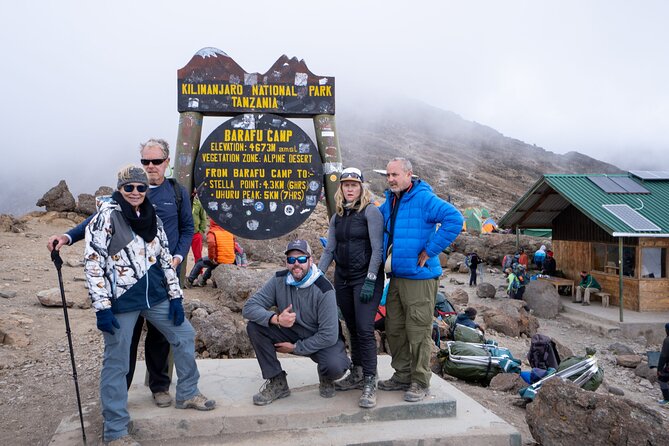
The walk to Barafu Camp covers only about four kilometers and takes roughly three hours. Barafu sits at around 4,600 meters and serves as your final camp before Uhuru Peak.
The terrain becomes more alpine and rugged. There is less cover, and the camp’s main purpose is practical: eat, rest, and prepare for the night ahead.
This short day can be deceptive. You may have time to rest, but you are also sleeping at a high altitude before the hardest section of the entire trip. Keep your kit organized, follow your guide’s instructions, and make the most of the available downtime.
The route does not list a separate summit briefing, so ask your guide about the exact departure plan, clothing, water, and what you should carry. The guides named in the experience include Emanuel, Joseph, and Emanuele, though the spelling varies in the supplied information. Confirm your guide’s name and communication plan when you meet the team.
Day six: Uhuru Peak and the long descent
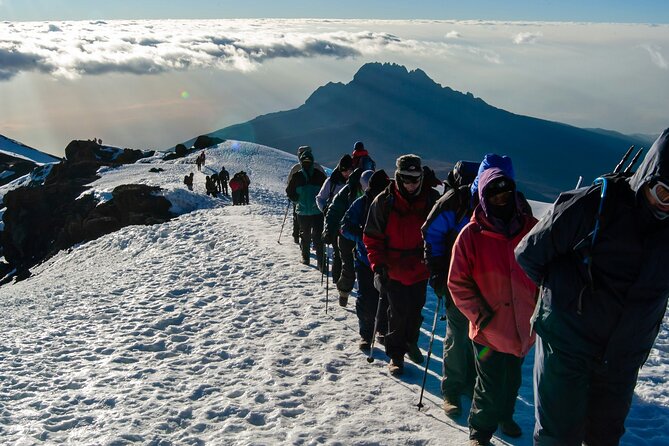
Summit day begins in the early hours, before dawn. You climb toward Uhuru Peak, the highest point in Africa, then descend to Mweka Camp at about 3,100 meters.
The full day covers approximately 18 kilometers. The listed walking time is about three hours, but the distance and early start make this the most demanding part of the itinerary. Treat that time figure as a broad guide rather than a promise.
The pre-dawn ascent is difficult because of the cold, darkness, steep ground, and altitude. The goal is not speed. A calm, steady rhythm is more useful than trying to keep up with a faster group.
Reaching Uhuru Peak gives you the obvious high point of the trip, but the descent deserves equal attention. After celebrating at the summit, you still have to lose a great deal of height before reaching Mweka Camp. Tired legs can make downhill walking awkward, so use care.
A complimentary oxygen cylinder is included. That is useful safety equipment, but it should not be treated as a guarantee against altitude problems. Your guide’s judgment and your willingness to report symptoms remain important.
Day seven: rainforest again at Mweka Gate
The final walk takes you from Mweka Camp to Mweka Gate, descending about 10 kilometers through rainforest.
This return through the trees gives you a different view of the mountain than day one. You now know what lies above the forest, so the greenery feels like a clear sign that the hard work is nearly finished.
At Mweka Gate, you receive your summit certificates and thank the guides and porters. Crew support is a major part of this experience. The package states that crew wages are paid on a fair and sustainable basis, and the included meals and water help keep the group functioning throughout the week.
The route ends back at the meeting point. Since the published start information names both Kilimanjaro Airport and Kilimanjaro National Park, confirm the exact end transfer rather than assuming airport drop-off is included.
Food, guides, porters, and camp support
You receive breakfast, lunch, and dinner for all seven days, along with drinking water. That is valuable on a route where carrying and planning every meal yourself would add needless work.
The food appears to be one of the strongest parts of the service. The trip information highlights a cook and waiter as part of the team, and the included feedback specifically praises the meals, with one person comparing the food favorably to a five-star hotel. Keep expectations sensible, since mountain meals are still served in a trekking setting, but this suggests that food receives real attention.
The guides are described as professional and English-speaking. Emanuel, Joseph, and Emanuele are the names connected with the team information. A useful step is to confirm who will lead your group, especially if you are joining a larger departure.
The maximum group size is 30 people. That is not a small private trek, and group pace can vary. A larger party can bring social energy and shared support, but it may also mean waiting at narrow sections or moving at a pace set by the group. Ask about the expected group size for your date.
What the $2,205 price covers
The price is easiest to judge by looking at what you do not need to arrange separately. It includes:
- All fees and taxes
- Accommodation
- Guides and porters
- Fair and sustainable crew wages
- Drinking water
- Full-board meals
- Seven breakfasts, seven lunches, and seven dinners
- A complimentary oxygen cylinder
- Summit support and park access
Tips are not included, and towels are also excluded. Those are small items compared with the total price, but you should plan for them.
I see the price as reasonable for a seven-day supported Kilimanjaro climb, provided the crew arrangements and transfer details match your expectations. The value comes from the time on the mountain and the support system, not from luxury accommodation.
You should also compare what other operators include before booking. Pay particular attention to crew pay, meals, water, park fees, airport transfers, and the expected group size. A lower headline price may not be lower once those items are added.
Who should choose this Machame trek?
This route suits you if you want a gradual seven-day ascent and can manage sustained uphill walking at altitude. You need moderate physical fitness, but the supplied information does not list technical climbing qualifications.
It is a good match if you value changing scenery, a day at Lava Tower for acclimatization, and the challenge of Barranco Wall. It is less suitable if you want a short, easy mountain outing or dislike early starts and long summit days.
You should be comfortable with basic mountain accommodation and a schedule shaped by altitude. The route offers full meals and professional support, but it remains a demanding trek, not a resort holiday with mountain views.
Free cancellation is available if you cancel at least 24 hours before the experience start time. Cancellations inside that window are not refunded, and changes made within 24 hours are not accepted.
Should you book the seven-day Machame Route?
Book it if you want a well-paced Kilimanjaro route with varied scenery, a useful Lava Tower acclimatization day, and strong practical support. The seven-day schedule gives you more time than a rushed climb, while the Barranco Wall adds a memorable physical challenge.
Before paying, confirm the pickup location, the exact airport transfer, the likely group size, and which guide will lead your departure. If you are ready for a long summit day and moderate-to-hard walking at altitude, this trek offers solid value at $2,205. If your priority is comfort, privacy, or an easy schedule, choose a different kind of Tanzania trip.
FAQ
How long is the Machame Route trek?
The experience lasts approximately seven days, from the first walk at Machame Gate to the descent from Mweka Camp and exit at Mweka Gate.
What time does the activity start?
The listed start time is 7:30 a.m.
Where does the tour start?
The meeting information gives Kilimanjaro Airport, Kilimanjaro National Park, Tanzania as the start point. The walking itinerary begins at Machame Gate, so confirm the transfer details before the trek.
Is food included?
Yes. Breakfast, lunch, and dinner are included for all seven days, along with drinking water and full-board meal service.
Are guides and porters included?
Yes. The package includes a professional English-speaking guide, porters, and fair and sustainable crew wages.
Is an oxygen cylinder provided?
Yes. A complimentary oxygen cylinder is included.
What is the cancellation policy?
You can receive a full refund by cancelling at least 24 hours before the experience start time. Cancellations or changes made within 24 hours are not accepted, and the amount paid is not refunded.
Just added around Kilimanjaro
- 6 days Machame route climbing Mt.Kilimanjaro★ 5.0 · 8 reviews
- machame route★ 5.0 · 16 reviews
- Mt Kilimanjaro 6 days Marangu route hike★ 5.0 · 3 reviews
- Private Cycle to Kilimanjaro Bike Park Safari★ 5.0 · 6 reviews
- West Kilimanjaro cycling Adventures★ 4.5 · 8 reviews
- Kilimanjaro Climb • Marangu Route ~ 9 Day★ 5.0 · 4 reviews
- 3 Days Private E-Bike Tour in West Kilimanjaro★ 5.0 · 3 reviews
- Kilimanjaro Climb & Safari – Lemosho Route – 13 Day★ 5.0 · 10 reviews
Machame Route Climbs, compared.
The Best of Machame Route in 6 Days: Your World’s Summit Guide
Read our review →Browse the lists this tour appears in