
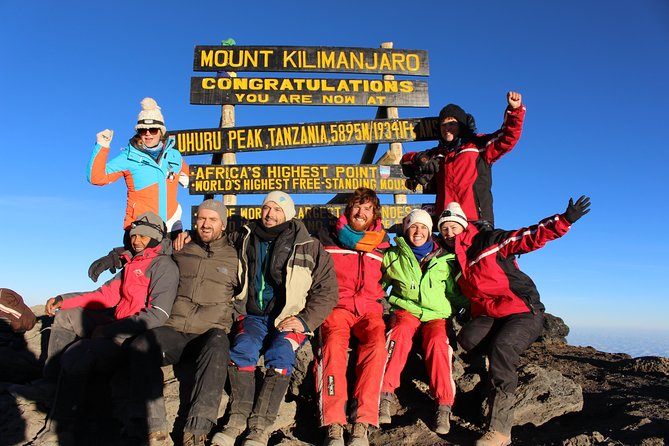
Reviewed · LEMOSHO ROUTE CLIMBS
Kilimanjaro Lemosho Route 8 Days
The best thing about this Kilimanjaro climb is its steady acclimatization plan. You cross the Shira Plateau, reach Lava Tower, descend into Barranco, then tackle the Great Barranco Wall before the summit push. That climb high, sleep low rhythm gives your body more time to adjust to altitude.
I like the small private-group format and the serious safety setup, including a Gamow bag, emergency oxygen, pulse oximeter, radio, and wilderness first responder support. I also like the human touch: guides such as Manase, Ayumwe, and Stephen have been praised for their mountain knowledge, calm manner, and help on summit day.
The main drawback is the schedule wording. It is sold as an eight-day trip, but the detailed mountain plan lists seven hiking days, with two hotel nights included. Confirm exactly how the extra night is used before paying, and prepare for a demanding 12-hour summit day.
Key points to know before you book
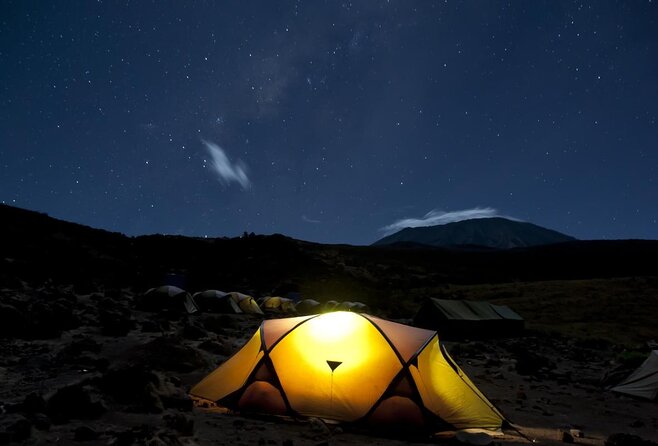
- Lava Tower and Barranco Wall: You climb to roughly 4,530 meters, then descend before tackling a steep rock scramble the next day.
- Slow acclimatization plan: The route gains height gradually and uses the important climb-high, sleep-low pattern.
- Midnight summit attempt: Expect about six hours to Stella Point, followed by another two hours toward Uhuru Peak.
- Strong mountain support: Porters, cooks, private toilets, a mess tent, purified water, medical equipment, and daily hot washing water are included.
- Recent guide praise: Manase, Ayumwe, and Stephen are named in the supplied feedback as friendly and capable guides.
- High overall cost: The $3,000 price covers many park, camping, food, transport, and safety costs, but tips and personal equipment remain extra.
Why the Lemosho route works well for acclimatization
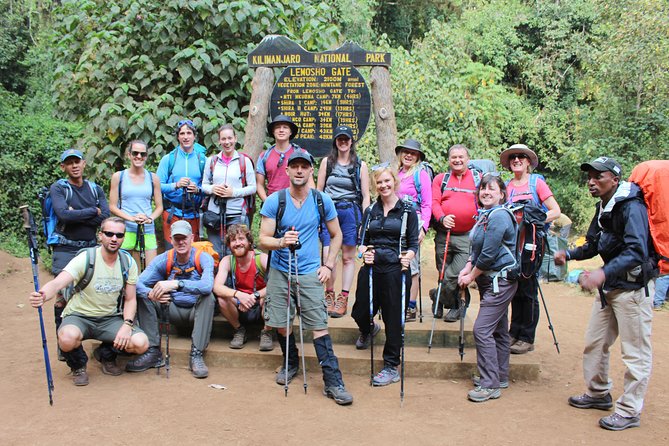
Kilimanjaro is not a technical climbing mountain on this route, but altitude is the serious test. The trail rises from the forest at about 1,981 meters to Uhuru Peak at 5,895 meters. That is a huge change in air pressure, even though the walking itself is mostly hiking and scrambling.
This itinerary is built around gradual gain. You spend the first days moving through montane forest, moorland, and the Shira Plateau. You then cross the alpine desert, climb toward Lava Tower, and descend into Barranco. Your sleeping altitude does not rise as quickly as your highest point of the day, which is useful for acclimatization.
The local phrase pole pole, meaning slowly slowly, is more than a slogan here. You need to walk at a patient pace, drink the purified water provided, eat even when your appetite fades, and tell your guide quickly if you develop altitude symptoms. No itinerary can guarantee a summit, but this route gives you a sensible structure for adjusting.
More Lemosho Route climbs:
- Kilimanjaro climb by Lemosho Route (7-day)
★ 5.0 · 651 reviews - Kilimanjaro Climbing Lemosho Route 8 Days.
★ 5.0 · 186 reviews - 8-Day Small-group Lemosho Kilimanjaro Summit Trekking
★ 5.0 · 186 reviews
Day 1: From Londrossi Gate to the first camp
After breakfast, a four-wheel-drive vehicle takes you to Londrossi Gate. This is where the park paperwork, climber registration, and porter bag weighing take place. The 20-kilogram porter limit is important. It helps prevent excessive loads and signals that the company has a formal system for managing its mountain crew.
The drive continues for about 11 kilometers along narrow dirt roads and through pine plantations to the Lemosho Glades. The first walk covers roughly 7 kilometers and takes four to five hours. You begin at about 1,981 meters and finish near 2,780 meters.
This opening day is manageable, but do not treat it as a casual stroll. You are beginning a long week at altitude, often on narrow forest tracks. Depending on the weather and schedule, lunch may be taken at the gate. Park admission is included, so you are not sorting out fees at each stage.
Day 2: Forest, heather, and the Shira Plateau
Day two is longer, at about 12 kilometers and seven hours. You move from montane forest into moorland, starting near 2,780 meters and finishing around 3,511 meters.
The setting changes as you climb. Giant heather and erica give way to unusual high-altitude plants, including giant lobelia and giant groundsel. These plants make the route feel distinctly Kilimanjaro rather than like an ordinary mountain walk.
The trail follows narrow tracks that weave over ridges. The distance is not extreme by hiking standards, but the altitude and uneven surface slow you down. This is where the patient pace matters most. You reach the Shira Plateau with broad views and a noticeable change in vegetation.
The plateau is one of the route’s memorable sections, but the camp can feel exposed. Weather can change quickly at this height, and the seven-hour walking day may leave you tired. Still, the gradual climb is valuable, especially compared with shorter routes that reach high camps more quickly.
Day 3: Shark’s Tooth and the high desert
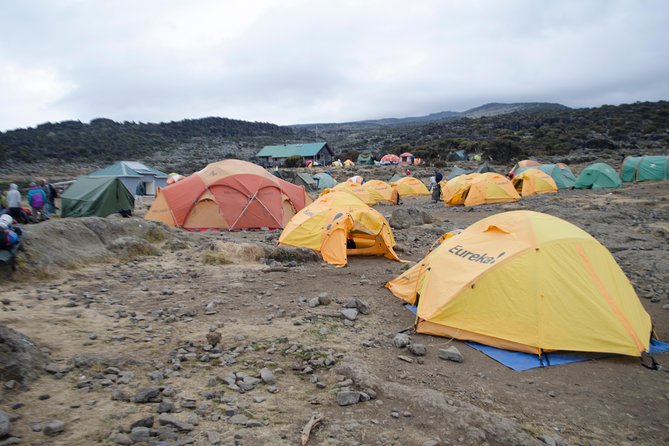
The third day covers around 9 kilometers in five to six hours. You continue north through heather and into an alpine desert zone, finishing near 4,175 meters.
A natural landmark called Shark’s Tooth provides a useful point along the route. You then walk toward a ridge and valley, arriving at camp around lunchtime. The higher you go, the fewer plants survive. Hardy everlasting flowers and small senecios replace the larger vegetation below.
The area near the Lent Group, a collection of large volcanic dykes, gives the day a stark volcanic character. A broad circular bowl formed by glacial activity sits above the route. The scenery is quieter and more severe here, with bare rock and open slopes replacing forest.
This is a shorter walking day than day two, but the altitude makes it no easy rest day. You may feel the thinner air during even modest climbs. Lunch on arrival leaves time to rest, check your kit, and monitor how your body is responding.
More eight-day trips in Kilimanjaro:
- Kilimanjaro climb, Lemosho Route (8-day)
★ 5.0 · 148 reviews - Climbing Kilimanjaro through 8 days Lemosho Route
★ 5.0 · 52 reviews - Kilimanjaro climb, Northern Circuit route (8-day)
★ 5.0 · 40 reviews - 8 Days Kilimanjaro Hike via Lemosho Route
★ 5.0 · 39 reviews
Day 4: Lava Tower, then a major descent
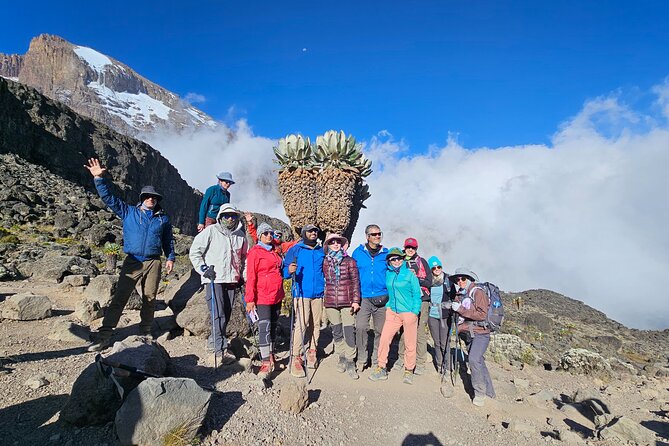
Day four is one of the smartest parts of the schedule. You start near 4,175 meters and climb to Lava Tower at about 4,530 meters, with the final camp listed near 4,642 meters. The walking time is around five to six hours, and the route covers roughly 6 kilometers.
At Lava Tower, you can take an optional non-technical rock scramble. The reward is a 360-degree view toward the Karanga Valley, Shira Plateau, and Western Breach. You do not need to attempt the scramble, and skipping it is sensible if you feel weak, dizzy, or unusually breathless.
After lunch, the trail descends steeply for about two hours, losing more than 600 meters into the Great Barranco Valley. That drop is the practical heart of the climb-high, sleep-low plan. You have visited a higher point during the day, then sleep lower in Barranco.
The descent can be hard on knees, especially on loose rocky ground. Bring trekking poles if you use them, and keep your pace controlled. You gain beautiful views of the Western Breach and glaciers, but clouds may hide parts of the mountain.
Day 5: The Barranco Wall and Karanga Valley
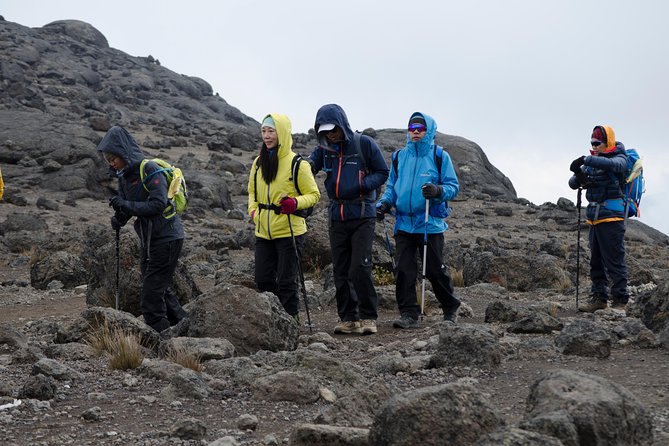
The Great Barranco Wall looks intimidating from camp. The route climbs steadily up its eastern face, passing below the Heim Glacier. This is a rock scramble rather than a technical climb, but you will use your hands in places and need to follow your guide’s instructions.
The day takes about six to seven hours and covers approximately 9 kilometers. It begins around 4,039 meters and finishes near 4,600 meters. The exact figures in the schedule vary slightly from day to day, but the practical message is clear: you remain high and the air is thin.
The wall is the most physical section before the summit attempt. It is also one of the most satisfying. You move through a changing route of rock ledges and steep trail, then descend into the alpine desert of the Karanga Valley before climbing again toward camp.
Cloud cover can limit the views toward Heim Glacier and the upper mountain. Even so, the route gives you a useful test of how you handle steep terrain at altitude. If you are struggling badly here, speak plainly with your guide. The summit is not worth hiding symptoms.
Day 6: The midnight start and Uhuru Peak
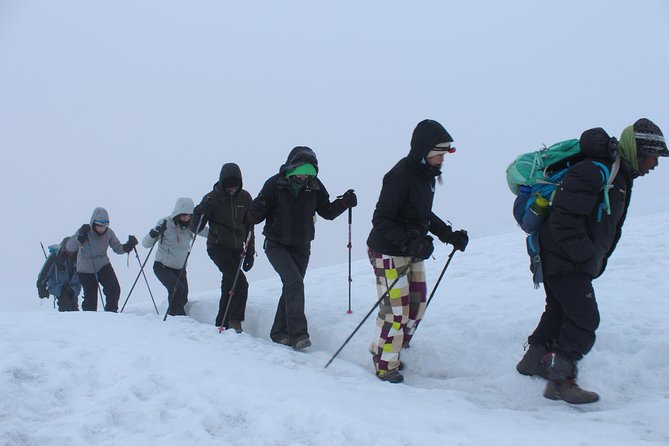
Summit day begins around midnight. You receive a warm drink and light snack before setting out in the dark. The schedule allows about 12 hours for the full day, which includes the ascent, time at the top, and descent to the next camp.
The first major goal is Stella Point at 5,685 meters, reached after about six hours of slow, strenuous walking. This section is often the hardest mentally. It is dark, cold, and steep, and every step takes effort. Your guide sets a controlled pace rather than letting you race early.
At Stella Point, you can rest, eat, and look over the clouds. From there, the final ascent to Uhuru Peak generally takes another two hours. The trail is normally snow-covered, and you pass near the Rebmann and Tarzel glaciers before reaching the summit ridge.
The listed route refers to Elveda Point at 5,882 meters, followed by the final approach to Uhuru Peak. You may have only a short time at the summit because the body is working hard at nearly 5,900 meters. The reward is the roof of Africa, with views shaped by weather, cloud, snow, and the remaining volcanic cone.
After the summit, you descend. This is where tired legs and loose ground become a concern. Drink, eat, and follow the guide’s instructions. The day is long enough that fitness matters, but altitude response matters just as much.
The inclusion of wine and champagne at the summit adds a celebratory touch, though you should keep alcohol modest until you are safely lower. The company also includes emergency oxygen, a Gamow bag, medical monitoring, and a medical kit. These tools are reassuring, but they do not replace honest symptom reporting or a willingness to turn around.
Day 7: Through Mweka forest to the park gate
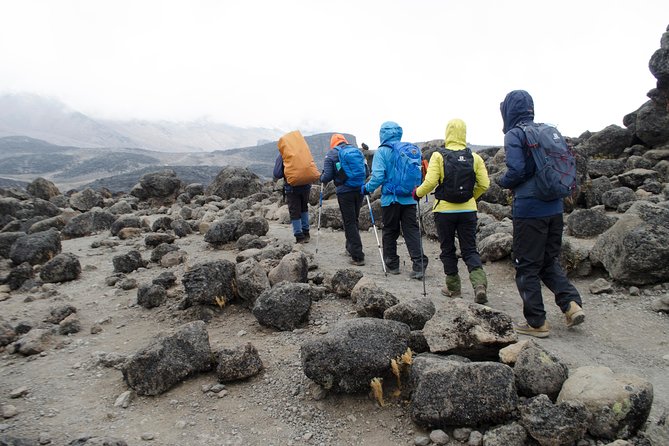
The final hiking day drops from the high mountain into montane rain forest. The route covers about 13.5 kilometers and takes five to six hours, with a steep descent from roughly 3,819 meters to about 1,652 meters.
The trail can be slippery when wet. It follows the crest of a broad ridge between two river valleys before reaching a road for the final 40 minutes to Mweka Park Gate.
A picnic lunch is provided at the gate, and successful climbers receive certificates from the Kilimanjaro National Park Authority. Gold certificates are for Uhuru Peak, while green certificates are for Stella Point.
After the celebrations, private bus or Jeep transport takes you to your hotel in Arusha. The itinerary also includes a return transfer between your Arusha hotel and the park gate, plus airport transfers. Confirm the exact hotel plan, since the package lists two nights of bed-and-breakfast accommodation at either Ameg Lodge or Salinero Hotels.
What the $3,000 price really covers
At $3,000 per person, this is not a budget climb. The price becomes easier to assess once you separate the mountain costs from the extras you still pay yourself.
Included are Kilimanjaro National Park entrance, camping, and rescue fees; guides, cooks, and porters; seven breakfasts, seven lunches, and seven dinners; purified water; airport transfers; and transport between your Arusha hotel and the park gate.
The camp setup is also more substantial than a basic tent operation. You receive three-person expedition tents used by two clients, mountaineering mattresses, a mess tent, a shower and wash tent, and a private portable flush toilet. There are chairs with back rests, aluminum tables, hot washing water morning and evening, and hot towels at camp.
The medical and communication equipment adds real value. The package lists a two-way radio, mobile phone, pulse oximeter, comprehensive vital sign monitoring, emergency oxygen, a Gamow bag, an expedition medical kit, and medical evacuation support through AMREF Flying Doctors. These features do not guarantee safety, but they show that the operator has planned for mountain emergencies.
You still need to budget for staff gratuities, personal trekking equipment, visas, international flights, laundry, souvenirs, room service, immunizations, extra communication charges, and some medical or evacuation costs. Meals caused by illness or an inability to continue the planned route are also excluded.
The porters are promised fair and ethical treatment, and the 20-kilogram load limit is a useful detail. I would still ask how tips are organized and how the company handles porter welfare before departure.
Guide support and the private-group format
This is a private activity, so only your group participates. That gives you more control over pace and communication than a large mixed group. It can also make the experience more personal, though the exact group size is not stated.
Manase and Ayumwe are named as guides from one recent eight-day climb, while Stephen and Manase are named from another. The feedback describes them as friendly, responsive, and able to answer questions about the mountain. Joseph is also identified as a quick contact during trip planning.
Those details matter because your guides are central to the experience. They set the pace, watch your condition, explain the route, and decide how to respond when weather or altitude causes trouble. Ask for the final guide names and guide-to-climber ratio before departure, since those details are not specified here.
Who should choose this climb
This route suits you if you want a private Kilimanjaro climb with a gradual altitude plan and a strong camp operation. You should have a moderate fitness level, be ready for six to seven hours of walking on several days, and accept that summit day may last 12 hours.
It is a good fit if you value support equipment, hot meals, private camp facilities, porter service, and a route with varied scenery. It is less suitable if you want a short, simple hike or dislike steep scrambling, cold nights, exposed high camps, and a midnight start.
The route also suits people who want several distinct mountain zones in one climb: forest, heather, moorland, alpine desert, volcanic rock, glaciers, and summit snow. The scenery changes often, which helps break up the physical effort.
Booking details worth checking first
Free cancellation is available if you cancel at least 24 hours before the local start time. Cancellations inside that window are not refunded, and late changes are not accepted. Poor weather may lead to a new date or a full refund.
The biggest practical question is the duration. The product name says eight days, the summary says about seven days, and the detailed hiking schedule has days one through seven. Since two hotel nights are included, ask where the extra day sits and whether it is used for arrival, rest, or an added mountain day.
Should you book the Lemosho route?
I would consider booking this trek if you want a well-supported private climb and are comfortable paying for a fuller camp setup. The acclimatization pattern, guide support, medical equipment, food, transport, and porter services make the $3,000 price easier to justify than a bare-bones park package.
Before you commit, get the eight-day schedule in writing, confirm the hotel nights, ask for the guide-to-climber ratio, and clarify tipping expectations. If those answers are clear, this is a strong choice for a fit first-time high-altitude trekker who wants time on the mountain rather than the fastest route to the top.
FAQ
How long is the Kilimanjaro Lemosho trip?
It is marketed as an eight-day experience, but the detailed hiking plan lists seven days. Confirm how the additional day is arranged before booking.
Where does the experience begin?
The trip is based in Moshi, Tanzania. Transport is provided to Londrossi Gate, where registration and porter bag weighing take place.
What is the highest point reached?
The route aims for Uhuru Peak at approximately 5,895 meters. The summit day also passes Stella Point at about 5,685 meters.
Is a private tour available?
Yes. This is a private activity, so only your group participates.
What fitness level is required?
A moderate physical fitness level is required. Several days involve five to seven hours of hiking, and summit day may last about 12 hours.
Are meals included?
Yes. Seven breakfasts, seven lunches, and seven dinners are included. The package also includes large portions of fresh, nutritious food and purified water on the mountain.
Is camping equipment included?
Yes. The package includes expedition tents, mountaineering mattresses, a mess tent, a shower and wash tent, and a portable private flush toilet.
Is medical and emergency equipment included?
The package includes a medical kit, emergency oxygen, a Gamow bag, a pulse oximeter, vital sign monitoring, a two-way radio, and medical evacuation support through AMREF Flying Doctors.
Are airport transfers included?
Yes. Airport transfers are included, as is transport between the Arusha hotel and the park gate.
What is not included in the price?
International airfare, visas, personal trekking equipment, staff gratuities, laundry, souvenirs, immunizations, room service, excess baggage, and certain extra medical, evacuation, communication, and meal costs are not included.
Just added around Kilimanjaro
- 6 days Machame route climbing Mt.Kilimanjaro★ 5.0 · 8 reviews
- machame route★ 5.0 · 16 reviews
- Mt Kilimanjaro 6 days Marangu route hike★ 5.0 · 3 reviews
- Private Cycle to Kilimanjaro Bike Park Safari★ 5.0 · 6 reviews
- West Kilimanjaro cycling Adventures★ 4.5 · 8 reviews
- Kilimanjaro Climb • Marangu Route ~ 9 Day★ 5.0 · 4 reviews
- 3 Days Private E-Bike Tour in West Kilimanjaro★ 5.0 · 3 reviews
- Kilimanjaro Climb • Machame Route ~ 10 Day★ 5.0 · 6 reviews