
Reviewed · LEMOSHO ROUTE CLIMBS
Kilimanjaro Lemosho Route 8 Days
Kilimanjaro’s Lemosho Route gives you eight days to cross Tanzania’s most varied mountain scenery, from the western forest edge to the high volcanic slopes and the summit at 5,895 meters. The route is scenic, private, and paced to give your body more time to adjust than a rushed climb.
I like the slow approach across the Shira Plateau, and I like the practical support: emergency oxygen, a Gamow Bag, radios, a pulse oximeter, a private toilet, and a porter to carry your day-pack during the summit attempt. The main drawback is the summit schedule. Day 7 is a very long, demanding push, with the summit climb followed by a descent to Mweka Camp.
What makes this climb worth considering
- Eight days on the mountain: The extra time helps you settle into the altitude before the final climb.
- A scenic western approach: You cross the Shira Plateau with possible views toward Mount Meru, Longido, and the Great Rift Valley.
- A full support package: Food, purified water, tents, mats, lighting, rescue fees, and mountain safety equipment are included.
- A serious summit day: You climb from Barafu to Uhuru Peak, rest briefly, then descend to Mweka Camp.
- A local Kilimanjaro company: Kilimanjaro Brothers is based in Tanzania and places emphasis on fair treatment for guides and porters.
- Good preparation for a private trek: The company can arrange arrival and departure transfers, hotel nights, and the climb for your group alone.
Why Lemosho is a strong eight-day choice
Lemosho is one of the more scenic ways to climb Kilimanjaro. Instead of beginning near the crowded eastern routes, you approach from the west, then cross the Shira Plateau before joining the southern circuit.
That opening gives you a sense of progress. The mountain does not appear all at once in a single dramatic view. You walk through changing vegetation, open high ground, rocky camps, and finally the volcanic summit zone. Some wildlife may be seen early in the trek, but this is a mountain climb, not a safari.
The eight-day format matters. Altitude is the main challenge on Kilimanjaro, not technical climbing. You need to let your body adjust as you gain height. The itinerary gives you several shorter walking days and includes the useful pattern of climbing high and sleeping lower, especially around Barranco and Karanga.
This is still a hard trip. You need a moderate level of fitness, and you must be comfortable walking for several hours on uneven ground. The final ascent is cold, steep, tiring, and followed by a long descent. The route gives you time, but it does not make the mountain easy.
More Lemosho Route climbs:
- Kilimanjaro climb by Lemosho Route (7-day)
★ 5.0 · 651 reviews - 8-Day Small-group Lemosho Kilimanjaro Summit Trekking
★ 5.0 · 186 reviews - Kilimanjaro Climbing Lemosho Route 8 Days.
★ 5.0 · 186 reviews
Day 1: Londorossi Gate to Mti Mkubwa Camp
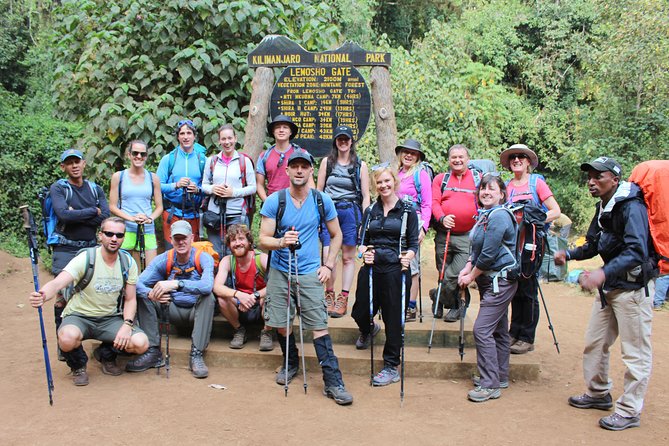
Your first mountain day begins with a drive to Londorossi Park Gate at about 2,385 meters. After park formalities, you walk roughly 8 kilometers to Mti Mkubwa Camp at 2,700 meters.
The stated hiking time is three to four hours, which makes this a gentle introduction. You gain height without immediately exhausting yourself. That is useful because the first day is about finding your pace, organizing your camp routine, and learning how the support team works.
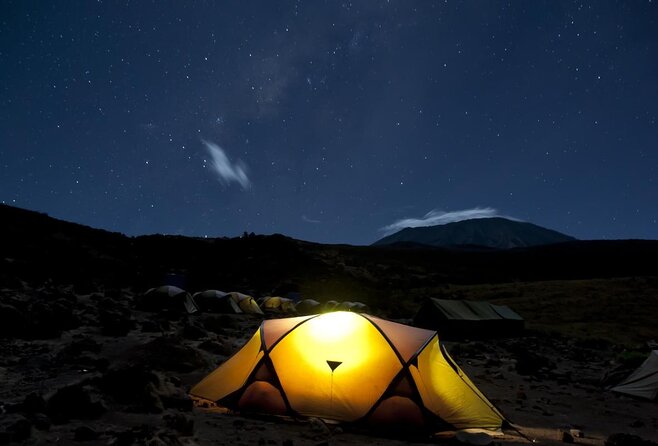
The forest section can feel humid and enclosed compared with the open ground ahead. You may see some wildlife in this lower part of the route, though sightings are not promised. At camp, you sleep in waterproof tents on sleeping mats, with a dining tent, tables, chairs, and toilet facilities provided.
Day 2: Mti Mkubwa to Shira Camp 1
Day 2 takes you from Mti Mkubwa to Shira Camp 1 at approximately 3,500 meters. The walk is listed as five to six hours over about 6 kilometers.
This is a noticeable jump in altitude. The vegetation begins to thin, and the route opens into broad high-country views. You start to understand why Lemosho is valued for scenery rather than speed.
Your guide’s pace matters here. Previous trips with Kilimanjaro Brothers have included guides such as Abel, Eli, Justin, Richard, Abdul, and Priscus. The exact team depends on your departure, but the company’s guide role is important: keeping the group together, watching for altitude symptoms, and setting a pace that does not turn the first half of the climb into a race.
Day 3: Shira Camp 1 to Shira Camp 2
The third day is shorter, with about three to four hours of walking and a listed distance of 8 kilometers. Shira Camp 2 sits at roughly 3,840 meters.
This is a useful acclimatization day. You continue gaining height, but the walking time is moderate. The broad Shira Plateau gives you some of the route’s finest views, including possible sights toward Mount Meru, Longido, and the Great Rift Valley.
You should not treat the shorter day as spare time for hard activity. Rest, eat well, drink regularly, and keep your clothing organized. The included meals are described as fresh, nutritious, and generous, which is valuable when your appetite and energy can become unpredictable at altitude.
More eight-day trips in Kilimanjaro:
- Kilimanjaro climb, Lemosho Route (8-day)
★ 5.0 · 148 reviews - Climbing Kilimanjaro through 8 days Lemosho Route
★ 5.0 · 52 reviews - Kilimanjaro climb, Northern Circuit route (8-day)
★ 5.0 · 40 reviews - 8 Days Kilimanjaro Hike via Lemosho Route
★ 5.0 · 39 reviews
Day 4: Shira Camp 2 to Barranco Camp
Day 4 is a longer crossing to Barranco Camp at about 3,950 meters. The walk takes roughly six to seven hours over 8 kilometers.
Although Barranco is only slightly higher than Shira Camp 2, you gain and lose elevation along the way. This is part of the route’s altitude strategy. You spend time at higher levels during the day, then sleep at a height that is not dramatically above the previous camp.
Barranco is one of the most memorable camps on the southern circuit. The route brings you close to the Barranco Wall, which you tackle the next morning. You do not need technical climbing skills for the wall, but the path can feel steep and exposed in places. A steady pace and careful footwork matter more than speed.
Day 5: Barranco to Karanga Valley
From Barranco, you walk about 5 kilometers to Karanga Valley Camp at 3,995 meters. The listed hiking time is four to five hours.
This is a shorter day, but it is not effortless. The Barranco Wall requires attention, and the route continues across rocky ground. After the wall, you move through a series of rises and dips before reaching Karanga.
I like this part of the plan because it avoids forcing you straight from Barranco to Barafu in one long day. Karanga gives you another night to eat, rest, and watch your response to altitude before the summit push.
The camp sits in a high, increasingly bare zone. The trees are gone, and the mountain feels more severe. Your tent, sleeping mat, warm washing water, and hot meals become much more important here than they sounded in the booking details.
Day 6: Karanga Valley to Barafu Camp
Day 6 covers only about 4 kilometers, but the climb to Barafu Camp reaches 4,550 meters. The walk is listed as four to five hours.
Barafu means ice in Swahili, and the camp is the launch point for the summit attempt. There is not much room for wasted energy here. You normally arrive, eat, prepare your summit clothing, and rest before setting out again.
This is a good place to check the practical details of your kit. Keep warm layers, gloves, headlamp, water, snacks, and required personal items close at hand. Your porter carries your day-pack during the summit attempt, but you still need access to the things you will use during the climb.
The high camp may feel uncomfortable. Appetite can fade, sleep can be poor, and the cold is more noticeable. That is normal at this height, but you should report troubling symptoms to your guide at once.
Day 7: Uhuru Peak and the descent to Mweka
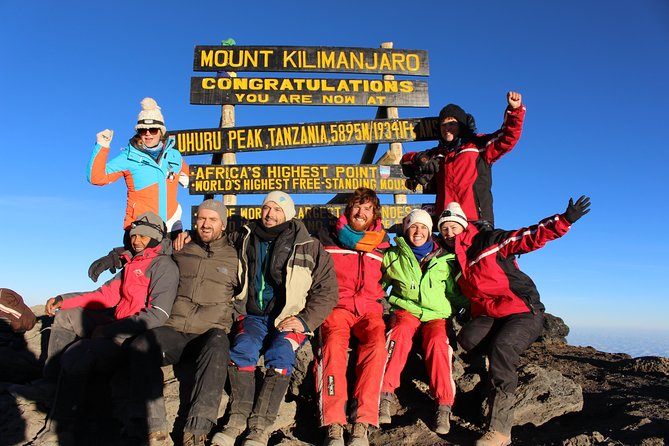
Day 7 is the hardest day by far. The listed summit section runs from Barafu to Uhuru Peak at 5,895 meters, with seven to eight hours of hiking and about 5 kilometers of distance. After returning through Barafu for a short rest, you continue down to Mweka Camp at 3,060 meters, a further four to six hours and about 12 kilometers.
The description also presents this as a summit in daylight and at sunrise. That makes the timing worth confirming before departure, because the exact start and rest schedule will shape your experience. The itinerary’s separate time figures add up to a very long day, even though the schedule also shows a shorter duration in one place.
At the summit, you are on the crater rim near Uhuru Peak. The plan also refers to passing Kibo Crater Rim and reaching the top of the inner Reusch Crater. Those details are unusual and should be clarified with the operator, since access and timing can depend on mountain conditions and the guide’s safety judgment.
You should expect a slow, deliberate climb. The final section is not about athletic performance. It is about conserving energy, breathing steadily, and responding quickly if you feel unwell. The crew carries emergency oxygen and a Gamow Bag, while the pulse oximeter and VHF radios give the guides extra tools for monitoring and communication. These tools do not remove altitude risk, but they are meaningful signs of a properly equipped operation.
After the summit, the descent to Mweka is a relief for your lungs but hard on your legs. The long drop can punish knees and toes, so trekking poles and well-tested boots are especially useful, even though they are not listed among the inclusions.
Day 8: Mweka Gate and the certificate ceremony
The final day takes you down to Mweka Gate. The listed walking time is three to four hours, with a stated distance of 4 kilometers. The itinerary gives an elevation of 4,600 meters for the gate, which appears inconsistent with the descent sequence, so I would ask the operator to confirm the exact distance and elevation before booking.
After the gate, you transfer to Park View Inn for certificates and a summit party ceremony. This is a welcome change from tent life and gives you time to mark the achievement with your guides and porters.
The package includes arrival and departure transfers, transportation in the destination, and hotel accommodation before and after the trek. The accommodation wording includes both classic standard and comfort hotel nights, with bed and breakfast, so you should confirm the exact hotel category included for your booking.
What the $2,833.34 price covers
At $2,833.34 per person, this is not a budget walk-up-the-mountain package. The price makes more sense when you count what is bundled.
You receive park entrance fees and government taxes, all mountain meals, purified drinking water, warm washing water, waterproof tents, sleeping mats, solar LED lighting, dining furniture, toilet tents, a portable personal flush toilet, rescue fees, emergency oxygen, a Gamow Bag, a pulse oximeter, and VHF radios.
You also receive guides, porters, a porter for your day-pack during the summit attempt, ground transfers, and hotel nights. Those inclusions reduce the number of costly details you must arrange separately. The package also includes eight breakfasts, eight lunches, and eight dinners, although you should confirm how those meals line up with the hotel nights and travel days.
The price does not include tips, a Tanzania visa, personal expenses, laundry, telephone use, beverages, or optional tours such as a safari. Budget for those separately. Tipping is not included, and you should ask the company for its current recommended approach so the money is shared fairly among guides, cooks, and porters.
The human side of Kilimanjaro Brothers
The company is locally owned, and its director, George Mtaki, is described as a former porter who made fair treatment of porters a priority. That matters on Kilimanjaro, where the crew carries tents, food, cooking gear, and group equipment up and down the mountain.
The strongest praise for this operation centers on organization, guide support, food, and the porters’ kindness and effort. Guides named in past trips include Abel and Eli, Justin and Eli, Richard, Abdul, and Priscus. You should not assume a particular guide will lead your departure, but those names give you a useful sense of the company’s experienced guide pool.
A private trip means only your group participates. That gives you more control over pace and group rhythm than a large shared departure. It can also mean less social variety, and a small group may still need to follow the guide’s safety decisions when someone is struggling.
Who should book this route?
I would choose this trek if you want a scenic route, a private group, and a full support package rather than the lowest possible price. The eight-day schedule suits you if you prefer a measured approach and can accept several nights in tents.
It is a good fit for a reasonably fit hiker who is prepared for long days, high altitude, cold conditions, and a demanding descent. It is not a casual sightseeing trip, and the summit day requires real stamina.
The route may also suit a couple, family group, or small group of friends who want the company to handle transfers, meals, camps, and mountain logistics. If your main goal is the fastest or cheapest climb, you should compare other routes and operators.
Free cancellation is available if you cancel at least 24 hours before the local start time. Changes made inside that window are not accepted, and poor weather may lead to a different date or a full refund.
Should you book the 8-day Lemosho Route?
I would book this experience if the scenic western approach and strong safety setup matter more to you than keeping the price low. The Shira Plateau, Barranco section, crater views, and full support team give the trek real substance.
Before paying, confirm three points: the exact hotel category, the detailed timing for the sunrise summit, and the Day 8 gate elevation and distance. If those details are clear, the package offers a well-supported private climb with a sensible eight-day structure.
FAQ
How long is the Kilimanjaro Lemosho Route experience?
The trek lasts approximately eight days, including the climb, descent, transfers, and the certificate ceremony.
Where does the trek begin?
The first mountain day begins with a drive to Londorossi Park Gate at about 2,385 meters, followed by a hike to Mti Mkubwa Camp.
How high is Uhuru Peak?
Uhuru Peak is listed at 5,895 meters, or 19,341 feet.
Is this a private tour?
Yes. Only your group participates in this private tour or activity.
Are meals included?
Yes. The package includes breakfast, lunch, and dinner during the experience, with eight breakfasts, eight lunches, and eight dinners listed.
Is drinking water provided?
Yes. Clean, purified drinking water is included, along with warm water for washing each day.
What safety equipment is included?
The package includes emergency oxygen tanks, VHF handheld radios, a Gamow Bag, rescue fees, a pulse oximeter, and a portable personal flush toilet.
What is not included in the price?
Tips, the Tanzania visa on arrival, personal expenses such as laundry and telephone use, beverages, and optional tours are not included.
Just added around Kilimanjaro
- 6 days Machame route climbing Mt.Kilimanjaro★ 5.0 · 8 reviews
- machame route★ 5.0 · 16 reviews
- Mt Kilimanjaro 6 days Marangu route hike★ 5.0 · 3 reviews
- Private Cycle to Kilimanjaro Bike Park Safari★ 5.0 · 6 reviews
- West Kilimanjaro cycling Adventures★ 4.5 · 8 reviews
- Kilimanjaro Climb • Marangu Route ~ 9 Day★ 5.0 · 4 reviews
- 3 Days Private E-Bike Tour in West Kilimanjaro★ 5.0 · 3 reviews
- Kilimanjaro Climb • Machame Route ~ 10 Day★ 5.0 · 6 reviews