
Reviewed · LEMOSHO ROUTE CLIMBS
Kilimanjaro Experience 7 Days Lemosho route
Kilimanjaro’s Lemosho Route gives you the mountain in chapters: thick rainforest on day one, open moorland above the trees, volcanic rock near Lava Tower, and a midnight push into the cold arctic zone. The seven-day plan uses the South Circuit before reaching Barafu Camp, so you see Kibo from several sides instead of walking straight up and down one corridor.
I like two things here. First, the route includes a proper acclimatization day on the Shira Plateau and the climb-high, sleep-lower pattern at Lava Tower and Barranco. Second, the support package is practical: a cook, porters, tents, meals, purified water, guide salaries, and rescue fees are included. The main caution is price clarity: Kilimanjaro National Park fees, tips, and personal expenses are extra, and the summit day is a long, demanding night.
Key points before you book
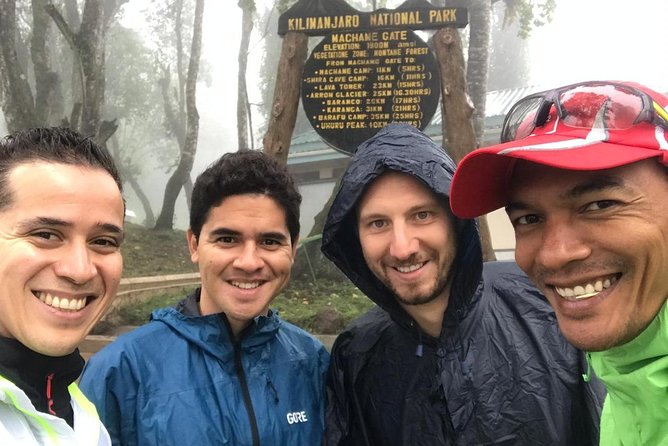
- Seven days from Lemosho to Mweka: You start in rainforest and finish with a descent through wet, muddy lower forest.
- A gradual route with a serious summit night: Daily walks are manageable until the final push, which begins around midnight.
- Shira Plateau acclimatization: Day three is a full day at high elevation, with walks toward Moir Hut and Lent Hills.
- Strong camp support: Guides, porters, a cook, tents, food, drinking water, and mountain accommodation are provided.
- Past guide teams include Thomas, Alex, Victor, and Norka: Ask Kilinge Adventures who will lead your group and how many climbers will be with you.
- The advertised price is $1,000 per person: Park fees and gratuities are not included, so confirm the final total before paying.
Why Lemosho is a smart seven-day route
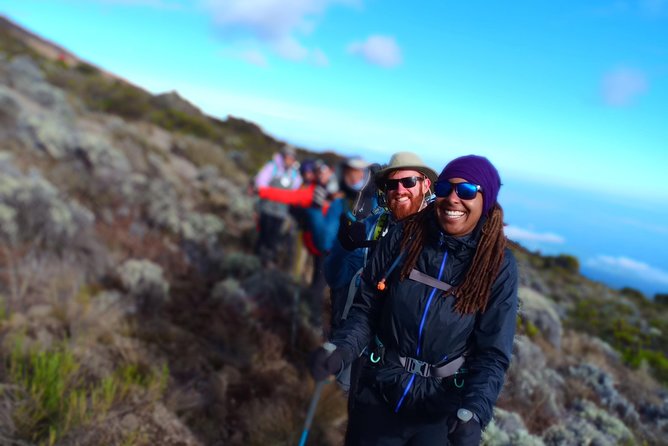
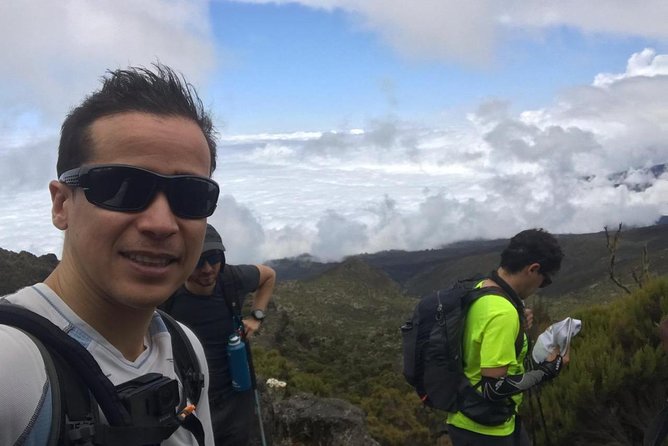
Lemosho is a good choice if you want scenery and a slower build toward the summit. You begin on the western side of Kilimanjaro, far from the high camps, then cross the Shira Plateau and join the southern circuit. That gives your body several days to adjust before the summit attempt.
The route is not easy. You spend six nights camping, walk for up to ten hours on day five, and then climb at midnight before descending the same day. Still, the schedule avoids the rushed feel of shorter Kilimanjaro routes.
Your trip begins with pickup in Moshi at about 8:30 a.m. The drive to Londorossi Gate takes roughly four hours, followed by entry formalities and another hour to the trailhead. That makes day one more about getting into the mountain than covering big mileage.
The advertised group limit is 100 people. That is a large possible maximum, so ask about the expected group size, guide-to-climber ratio, and porter arrangements before booking. A smaller group can make rest stops, pacing, and communication easier.
More Lemosho Route climbs:
- Kilimanjaro climb by Lemosho Route (7-day)
★ 5.0 · 651 reviews - Kilimanjaro Climbing Lemosho Route 8 Days.
★ 5.0 · 186 reviews - 8-Day Small-group Lemosho Kilimanjaro Summit Trekking
★ 5.0 · 186 reviews
Day one: rainforest from Londorossi to the first camp
The first walk covers about 7 kilometers and takes three to four hours. You rise from roughly 7,800 feet to 8,694 feet, walking through Kilimanjaro’s rainforest zone.
The drive matters here. You leave Moshi in the morning, spend much of the day reaching the gate and trailhead, eat lunch, and then start walking. The trail moves through relatively undisturbed forest, which gives the opening day a quiet, gradual feel.
Keep your rain layer handy. The route description specifically warns that the lower mountain can be wet, and the same is true on the final descent. You will want easy access to waterproof clothing rather than burying it in your duffel.
This first night is also when you learn how the camp works. The crew carries equipment, sets up the tents, prepares meals, and provides purified drinking water. According to the supplied plan, you sleep in tents on the mountain each night, not in huts.
Day two: leaving the trees for Shira Ridge
Day two covers 8 kilometers in five to six hours. You climb from about 8,694 feet to 11,840 feet, leaving the forest for moorland.
The scenery changes quickly. Tall grasses, heather, volcanic rock, and pale lichen replace the dense trees. You cross streams and climb rolling ground toward Shira Ridge, then drop gently to Shira 1 Camp.
This is a useful day for pacing. The distance is modest, but the altitude gain is not. Walk slowly, drink regularly, and tell your guide early if you develop a headache, nausea, unusual fatigue, or trouble sleeping. A good mountain day is not a race to camp.
The view toward Kibo is one of the first major rewards. From across the plateau, the summit appears as a large, distant goal rather than an abstract number on a route sheet. That view can make the scale of the climb clear.
Day three: a high-altitude day on Shira Plateau
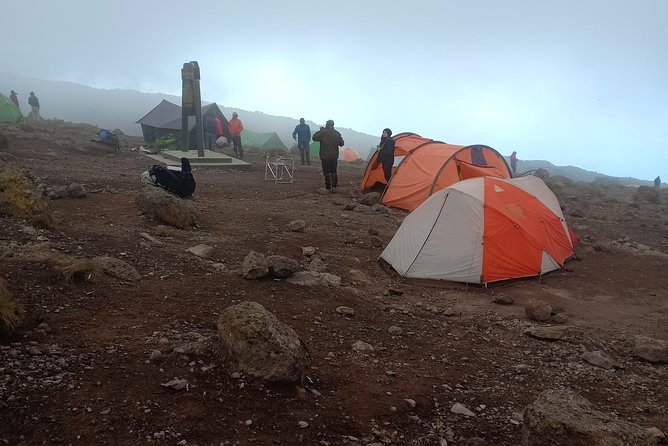
Day three is the acclimatization heart of this itinerary. The walk is about 14 kilometers and takes five to seven hours, with the route reaching roughly 13,800 feet.
You cross Shira Plateau toward Kibo, passing moorland meadows and a stream near Shira 2 Camp. The plan then continues toward Moir Hut, a less-used site at the base of Lent Hills. Walks around Lent Hills offer extra time at altitude without sending you straight to the summit camps.
This is one of the strongest parts of the seven-day schedule. You gain height, spend time there, and keep moving rather than simply resting at a lower camp. The phrase pole pole, meaning slowly, is useful here even though it is not part of the formal itinerary. Your goal is to arrive healthy, not to finish each day first.
The drawback is that day three is longer than the opening walks. Fourteen kilometers at high elevation can feel tiring, especially if you are still adjusting. Use the rest stops, eat even if your appetite is low, and keep warm once you reach camp.
More seven-day trips in Kilimanjaro:
- Kilimanjaro climb, Machame Route (7-day)
★ 5.0 · 262 reviews - Climbing Kilimanjaro through 7 days Machame Route
★ 5.0 · 151 reviews - 7-Day Machame Kilimanjaro Summit Tour from Arusha
★ 5.0 · 125 reviews - 7 Days Kilimanjaro via Machame route affordable price
★ 5.0 · 110 reviews
Day four: Lava Tower, then down to Barranco
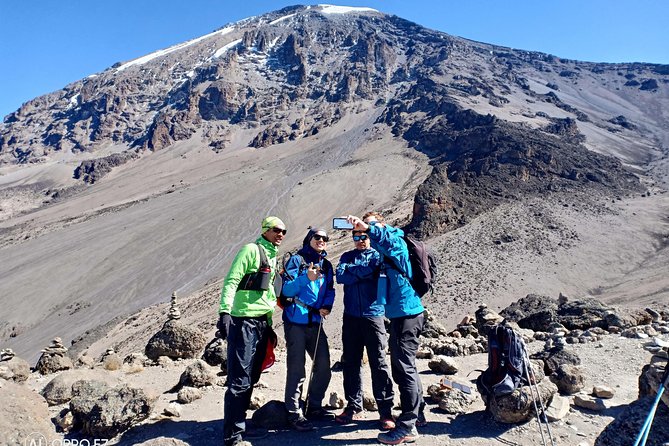
Day four covers about 7 kilometers and takes four to six hours. You climb from the Shira Plateau toward Lava Tower, listed at about 13,800 feet, then descend to Barranco Camp at roughly 12,926 feet.
Lava Tower, also called the Shark’s Tooth, is a key acclimatization point. You gain height during the day, stop for lunch, and then sleep lower. That climb-high, sleep-lower pattern helps prepare you for the summit attempt.
The route turns southeast as it approaches the tower. You pass the junction toward Kibo, then descend through semi-desert terrain to Barranco. The day may look short on paper, but the altitude makes it meaningful.
Barranco is also a useful mental checkpoint. You have left the broad moorland behind and are now among volcanic formations and dry, exposed ground. Keep your warmer layers close. Temperatures can change sharply between sun, wind, and evening shade.
Day five: Barranco Wall and Barafu Camp
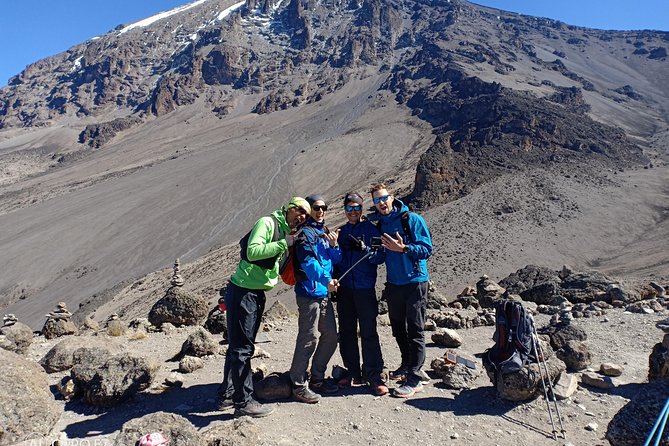
Day five is one of the hardest regular walking days. The route covers about 9 kilometers and takes eight to ten hours, rising from Barranco Camp to around 13,100 feet at Barafu.
You begin with the Barranco Wall, a steep ridge that requires careful footing and steady movement. This is not a technical climbing section, but it is more demanding than the gentler plateau walks. Your guide will set the pace, and you should avoid rushing to get around other groups.
After the wall, you continue to Karanga Valley, then reach the junction with the Mweka Trail. From there, the route climbs to Barafu Hut, where you camp for the night.
Barafu marks the end of the South Circuit. From here, you have seen Kibo from several angles, and Mawenzi and Kibo can be visible from camp. The practical issue is rest. You arrive after a long day, eat dinner, organize summit clothing, and try to sleep before the midnight wake-up.
Pack this night’s essentials before dinner. You need warm layers, gloves, a headlamp if you have one, water, snacks, and any personal medication ready at hand. Searching through a duffel at 11 p.m. is a poor way to begin the summit.
Day six: midnight to Uhuru Peak, then a long descent
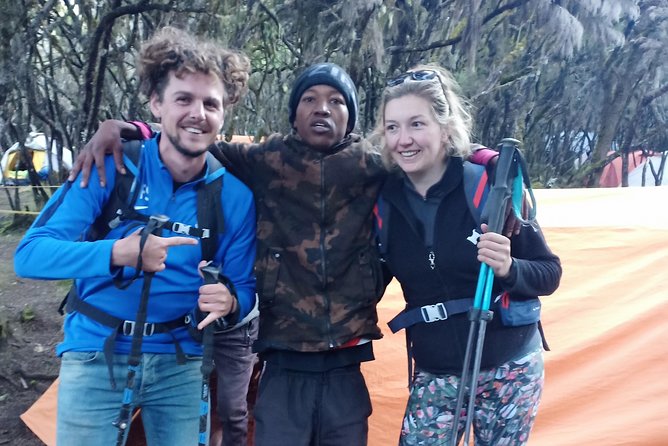
Summit day begins around 11 p.m. with tea and snacks. You start walking at midnight, climbing steep rocky ground for two to three hours before entering a zigzag section toward the crater rim.
The route reaches Stella Point at about 18,800 feet, or 5,657 meters, around 6 a.m. From there, you continue toward Uhuru Peak. The provided schedule gives the summit ascent about five kilometers and seven to eight hours, followed by a 12-kilometer descent of four to six hours.
This is the day that tests everyone. The cold, darkness, altitude, and lack of sleep are more important than the distance alone. Move slowly. Stay close to your guide. Take small sips and eat small amounts rather than waiting until you feel weak.
Sunrise from near Stella Point is a major part of the experience. You may meet climbers arriving from other routes at the rim, then continue toward Uhuru Peak, Kilimanjaro’s highest point. The final stretch can feel slow because you are already high and tired.
After the summit, you return to Barafu for a short rest before descending toward a lower camp near 10,000 feet. This is a long day with little spare energy. The descent is easier for breathing but hard on knees and legs, so trekking poles are useful.
The schedule has a small ambiguity: it describes the ascent and descent but does not clearly name the overnight camp after leaving Barafu. Ask Kilinge Adventures to confirm exactly where you sleep on night six and how transport of your personal gear is handled.
Day seven: forest descent and a hot shower in Moshi
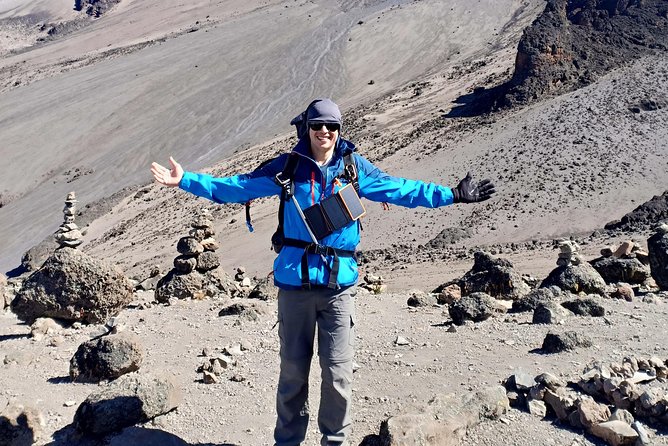
The final day drops from about 10,000 feet to 5,380 feet. You walk roughly 10 kilometers in three to four hours through rainforest before reaching Mweka Park Gate.
Lower sections can be wet and muddy. Gaiters and trekking poles are specifically recommended, and you should keep rain gear and warmer clothing accessible until the trail ends. The note that shorts and a T-shirt may be enough at lower elevations does not mean you should pack away your waterproof jacket.
At the gate, you receive summit certificates, then a vehicle takes you back to your Moshi hotel. The promised finish is simple and welcome: a hot shower and a Kilimanjaro beer.
What the $1,000 price includes, and what it does not
At $1,000 per person, the package includes a substantial amount of mountain support. You receive professional guides, porters, a cook, tents, all meals on the mountain, purified drinking water, mountain accommodation, guide and porter salaries, and rescue fees.
Food is a real advantage on a week-long climb. The plan promises large portions of fresh, nutritious meals, and past trips specifically praised the cooking. Chef Joseph and Shedrack are among the cooks named in past accounts, though you should confirm who will be assigned to your group.
The price does not include Kilimanjaro National Park fees. It also excludes tips, personal expenses, and optional tours such as a short safari after the climb. This means $1,000 is not necessarily your final trip cost.
Ask for a written breakdown covering park charges, airport or hotel transfers, porter tipping guidance, gear rental if available, and the exact accommodation before and after the mountain. The package says pickup is offered, but the supplied details do not specify every transfer point.
Guides, porters, and the human side of the climb
The crew can shape your experience as much as the route. Past trips have included guides named Thomas, Alex, Victor, and Norka. Thomas was also described as attentive with oxygen saturation checks, and that kind of monitoring is worth asking about before you go.
Do not treat a summit guarantee as a promise. High altitude is unpredictable, and a responsible guide must put health before the certificate. Ask how the team handles altitude symptoms, when a climber is turned around, and what rescue support the included fees cover.
The porters do the heavy work that allows you to walk with a lighter daypack. The package states that porters receive fair and ethical treatment, but you should still ask how much luggage each porter carries and how tipping is organized. A clear system protects both you and the crew.
The repeated praise for friendly service, good organization, food, and helpful porters points to a well-supported camp routine. Still, confirm the details in writing. Names and assignments can change.
Who should choose this trek
This route suits you if you have moderate physical fitness, can walk for several hours on consecutive days, and are comfortable camping for six nights. You do not need to be a technical climber based on the route description, but you do need stamina and patience.
It is a good fit for someone who values changing scenery, a longer acclimatization schedule, and a full summit attempt rather than the shortest possible climb. It is less suitable if you want hotel comfort, short walking days, or a flexible sightseeing schedule.
You should arrive with layered clothing, waterproof gear, sturdy walking shoes or boots, a warm summit outfit, and a daypack that you can carry comfortably. The supplied information does not list a full equipment checklist, so request one before you travel.
Should you book the seven-day Lemosho Route?
I would consider booking this trek if you want a scenic route with a sensible acclimatization pattern and strong practical support. The rainforest start, Shira Plateau, Lava Tower, Barranco Wall, and South Circuit give the week real variety.
I would book only after confirming the extra park fees, expected group size, assigned guides, night-six camp, tipping plan, and what pickup includes. The 5-star score from 14 ratings and the repeated praise for guides, food, porters, and organization are encouraging, but the summit remains physically demanding.
For a fit first-time Kilimanjaro climber who wants a seven-day route and accepts basic camping, this looks like a solid value. If you need more time at altitude, ask if an eight-day option is available instead. Free cancellation is offered up to 24 hours before the start time, while weather cancellations offer a new date or full refund.
FAQ
How long is the Kilimanjaro Lemosho Route experience?
The experience lasts approximately seven days, including six nights on the mountain and the descent to Mweka Park Gate.
Where does the trek start?
The tour starts with pickup in Moshi at about 8:30 a.m. You travel to Londorossi Gate, complete entry formalities, and then continue to the Lemosho trailhead.
What is included in the price?
The package includes guides, porters, a cook, tents, mountain accommodation, all meals on the mountain, purified drinking water, guide and porter salaries, and rescue fees.
Are Kilimanjaro National Park fees included?
No. Kilimanjaro National Park fees are listed as an extra cost, along with tips, personal expenses, and optional tours.
How difficult is the seven-day trek?
You need a moderate level of physical fitness. The toughest sections are the long day to Barafu and the midnight summit climb followed by a long descent.
What time does summit day begin?
You wake around 11 p.m. for tea and snacks, then begin the summit climb at about midnight.
Where do you receive the summit certificate?
You receive your summit certificate at Mweka Park Gate after descending from the mountain.
Are meals provided during the trek?
Yes. Breakfast is provided six times, lunch seven times, and dinner six times according to the package details.
Can you cancel for a full refund?
Yes, if you cancel at least 24 hours before the experience start time. Cancellations made later are not refunded, and weather cancellations offer a different date or a full refund.
Just added around Kilimanjaro
- 6 days Machame route climbing Mt.Kilimanjaro★ 5.0 · 8 reviews
- machame route★ 5.0 · 16 reviews
- Mt Kilimanjaro 6 days Marangu route hike★ 5.0 · 3 reviews
- Private Cycle to Kilimanjaro Bike Park Safari★ 5.0 · 6 reviews
- West Kilimanjaro cycling Adventures★ 4.5 · 8 reviews
- Kilimanjaro Climb • Marangu Route ~ 9 Day★ 5.0 · 4 reviews
- 3 Days Private E-Bike Tour in West Kilimanjaro★ 5.0 · 3 reviews
- Kilimanjaro Climb • Machame Route ~ 10 Day★ 5.0 · 6 reviews