
Reviewed · HIKING & TREKKING
Kilimanjaro climb, Kilimanjaro Crater route (10-day)
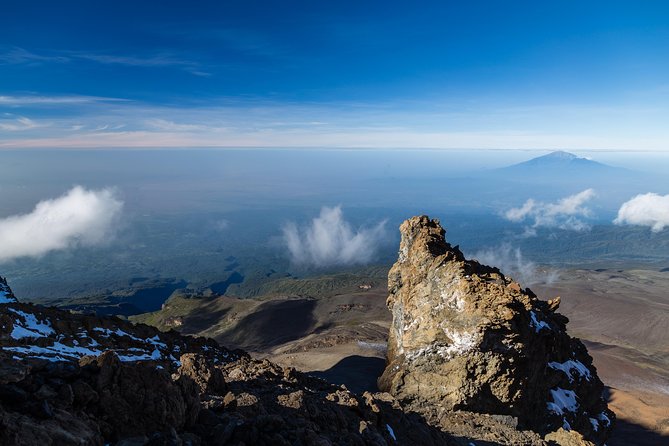
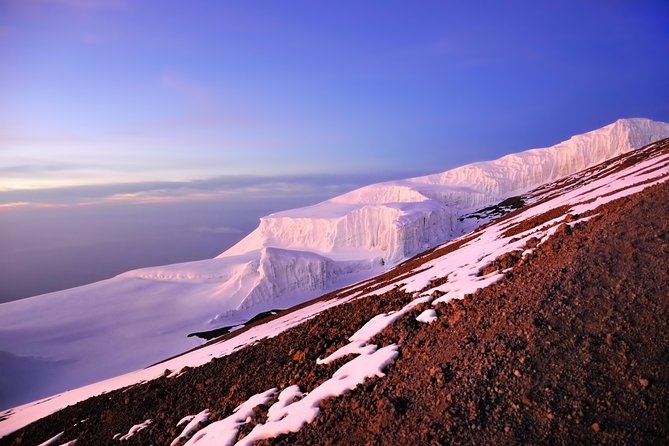
The most unusual part of this Kilimanjaro climb is the planned overnight crater camp, high above the surrounding plains beneath clear stars and beside rapidly shrinking glaciers. You also get the Northern Circuit, the mountain’s longest route, with quiet northern slopes, Kenya-facing views, and more time to adjust to altitude than on shorter climbs.
I like the slow acclimatization plan and the strong support system: certified Wilderness First Responder guides, twice-daily medical checks, oximeters, oxygen, cooks, porters, and proper North Face tents. The main caution is serious: crater camping adds risk at extreme altitude, and the supplied day-by-day schedule does not clearly show a separate crater night. Confirm that point before paying.
Key points to know before you book
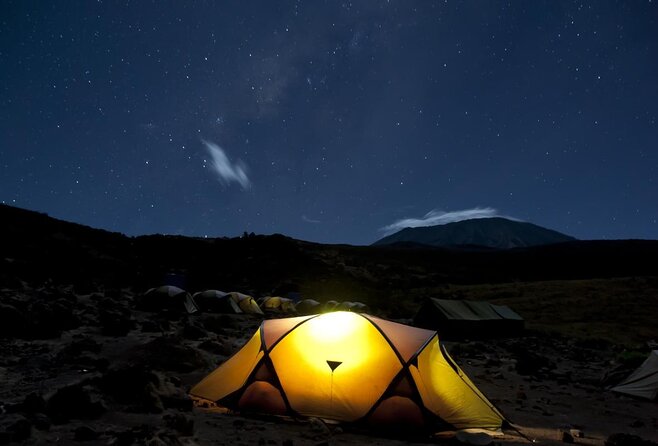
- Crater camping is the headline feature: Sleeping inside Kilimanjaro’s crater is rare, demanding, and not a casual add-on.
- The Northern Circuit takes the long way up: Its gradual gains offer useful acclimatization and quieter views along the northern slopes.
- The summit reaches 5,895 meters: The climb is not technically difficult, but altitude makes summit night physically demanding.
- Medical support is built into the price: Guides carry medical kits, use oximeters, perform checks at least twice daily, and have unlimited oxygen tanks available.
- This is a private climb: Only your own group participates, with group discounts available.
- The price covers a lot: At $6,466 per person, permits, transport, hotel nights, meals, tents, crew, and mountain services are included, but tips, insurance, visas, personal gear, and some hotel costs are extra.
What this 10-day Kilimanjaro climb is really like
At $6,466 per person, this is a serious investment. You are not paying only for a guide and a place on a trail. The price includes airport transfers, two hotel nights, park fees, a full mountain crew, three meals a day, tents, camp equipment, drinks, medical checks, and summit support.
I see the value in the long format. Kilimanjaro is high enough that the biggest challenge is usually altitude, not technical climbing. Ten days gives your body more time to adjust than a short itinerary, and the route avoids rushing straight from the forest to the summit.
This is also a private activity. That matters if you want your own pace, your own group, and a more personal planning process. Maria is named as a planning contact who helped customize one private trip, so you can expect some attention before departure rather than simply showing up at a crowded meeting point.
Still, the price does not cover everything. You must arrange your own international travel to Tanzania, visa, trekking clothes, boots, sleeping bag, insurance, and crew tips. Insurance should cover trekking to at least 6,000 meters and helicopter evacuation. That is not the place to save money.
More treks and hikes around Kilimanjaro:
- Kilimanjaro climb by Lemosho Route (7-day)
★ 5.0 · 651 reviews - Kilimanjaro climb, Machame Route (7-day)
★ 5.0 · 262 reviews - Kilimanjaro Climbing Lemosho Route 8 Days.
★ 5.0 · 186 reviews
Day 1: A smooth arrival in Moshi
You are met at Kilimanjaro International Airport and driven to Aishi Machame Hotel. The hotel stay includes a room, hot water, internet, a swimming pool, and staff support. Check-in begins at 2:00 PM, so an early arrival may involve some waiting.
The evening briefing is useful. Altezza managers check your readiness and go over the climb before you leave town. Use this time to ask direct questions about the crater night, your personal gear, tipping, weather, and the expected group pace.
You also get a second briefing the next morning with your mountain guide and support crew. That repeated review is practical, especially for a climb where small equipment problems become larger problems at altitude.
Day 2: Londorossi Gate and the Shira Plateau
The drive to the western entrance at Londorossi Gate takes about three to four hours. After permits and search-and-rescue registration are handled, off-road vehicles carry the group farther uphill to about 3,500 meters.
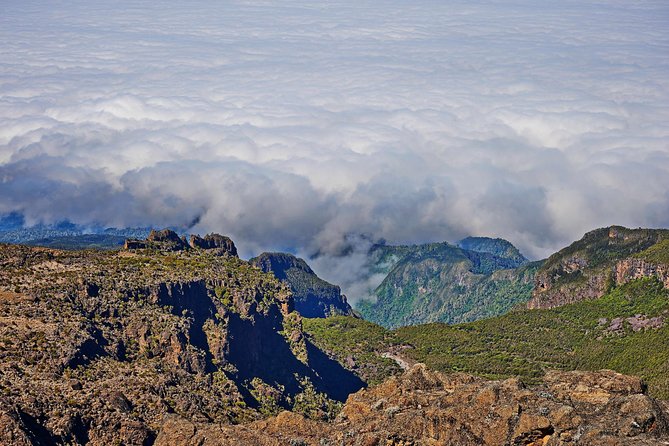
This short vehicle approach is one of the route’s unusual features. You begin high, with views of the Shira Plateau appearing early, rather than spending several days walking through lower forest. From the drop-off point, the walk to Shira 1 Camp gains only a little height and should feel manageable.
The trade-off is clear. You gain time and remote scenery, but your first camp is already high. Pay close attention to how you feel from the start. Eat, drink, walk slowly, and tell your guide about headaches, nausea, unusual tiredness, or trouble breathing.
Day 3: Shira 1 to Shira 2, with a useful altitude walk
The morning walk to Shira 2 Camp adds about 300 meters of height and is not described as physically severe. This leaves time to look at the plant life and, in clear conditions, Mount Meru, one of Africa’s highest mountains.
After lunch and a two-hour rest, you take an acclimatization walk toward Lava Tower. The point is not to reach camp there. It is to let your body spend time at a higher elevation before returning to sleep lower.
I like this pattern because it follows the simple high-altitude rule of climbing higher during the day and sleeping lower when possible. The day lasts about six hours, but the rest period matters just as much as the walking.
More ten-day trips in Kilimanjaro:
- Kilimanjaro Climb • Machame Route ~ 10 Day
★ 5.0 · 6 reviews - 10 Days Machame Route Kilimanjaro Climb
★ 5.0 · 6 reviews - 10-Day Serengeti Wildebeest Migration Safari from Arusha
★ 5.0 · 218 reviews - 10-Day Wildebeest Migration Calving Safari -All Inclusive
★ 5.0 · 30 reviews
Day 4: Lava Tower and Moir Hut Camp
This is one of the more demanding days. You leave Shira Camp at about 3,900 meters and climb toward Lava Tower at 4,630 meters. The route rises and falls, so the effort is not a simple steady climb.
You stop for lunch at Lava Tower and remain at the higher altitude for one or two hours. That can bring discomfort, but it gives your guide a useful chance to assess how the group is adjusting.
If someone is not acclimatizing well, the guide may bypass Lava Tower and use the porter route instead. In that case, the day’s highest point is about 4,400 meters. I consider this a good safety choice, not a missed achievement. The summit matters more than a number in your diary.
The afternoon route rises a little before descending to Moir Hut Camp. The day lasts around eight hours, so you should expect tired legs even if the walking is not technical.
Day 5: Across the northern slope toward Kenya
After a short, steep climb out of Moir Valley, the route begins its long sweep around Kilimanjaro’s northern side. The trail has repeated ups and downs but no major sustained climb.
This section is one of the best reasons to choose the Northern Circuit. You get a different view of the mountain than you would on the southern routes, and the route approaches the border with Kenya. On a clear day, you can see toward the Tsavo and Amboseli Valleys.
The day takes about seven hours. It may feel easy on paper, but the repeated rises and falls can wear you down. Keep your pace steady and save energy for the high camps still ahead.
Day 6: Reaching Third Cave Camp
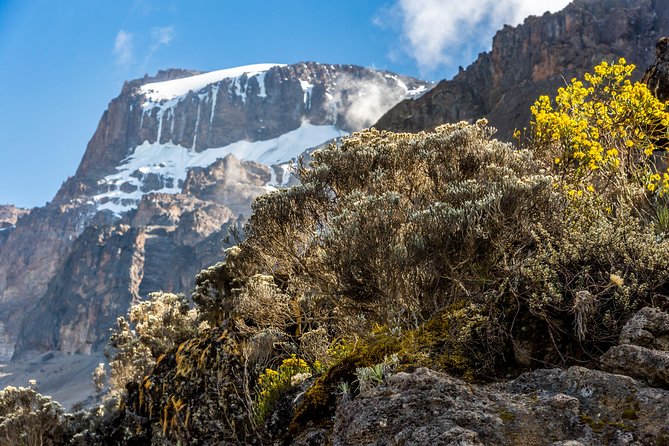
You finish the northern traverse and spend the night at Third Cave Camp, where the route meets the traditional Rongai route. The walking day is shorter than the previous one.
By now, the plan expects you to be acclimatized to about 4,000 meters. That can improve your general energy, but it does not guarantee a successful summit. Altitude affects people differently, and your condition can change quickly above 5,000 meters.
The itinerary lists this day as 14 hours, which does not fit neatly with the description of a shorter trekking day. Treat the schedule as approximate and ask the operator to clarify the expected walking time. On a private trip, that is an important detail to settle before you start.
Day 7: School Hut and the final rest before the summit
You climb to School Hut Summit Camp at 4,750 meters. The walking itself is described as manageable, but this is a preparation day, not a day to spend proving your strength.
At camp, you should sleep, drink fluids, and avoid strenuous activity. The summit attempt begins around midnight, so your afternoon and evening rest are part of the climb. A poor night of sleep is common at altitude, but lying down quietly still helps.
This camp is high enough that you should report any symptoms early. A guide may adjust the plan if someone is not acclimatizing properly. The correct decision is always to protect health rather than force the timetable.
Day 8: Uhuru Peak at 5,895 meters
The summit push begins around midnight. Technically, the route is not presented as difficult, but the altitude makes it a serious physical test.
One guide is assigned for every two climbers during the summit attempt. That close ratio allows the guide to watch breathing, pace, coordination, and general condition. The group reaches Uhuru Peak at 5,895 meters, the highest point on Kilimanjaro.
After a successful summit, walking onto the nearest glacier is offered as an option. I would treat that as a bonus only if you still feel well. You have already reached the main goal, and the high altitude is not the time to push for an extra photograph.
The descent continues to Barafu Camp for a two-hour lunch and rest, then to Millennium Camp at 3,820 meters. This is an extremely long and tiring day, even though the stated activity time is only about five hours in one part of the schedule. Ask for the operator’s expected total summit-day timing, including the climb, descent, meal break, and arrival at camp.
The warning about descent deserves attention. Falls, damaged toes, and broken bones are more likely when you are tired and moving downhill. Slow down, watch each step, and do not let the excitement of the summit rush you.
Day 9: Forest descent and the end of the climb
Millennium Camp is lower and sits in tropical forest. After breakfast, you descend to Mweka Gate at about 1,650 meters.
This final walk is your chance to recover from the summit while still being on the mountain. At the gate, you meet the support crew again, receive accomplishment certificates, and return to the company offices before going back to the hotel.
The day is listed at about 12 hours, so expect a long finish. A hot shower, a real bed, and a quiet evening at Aishi Machame Hotel will feel well earned.
Day 10: Hotel rest and airport transfer
The last day is deliberately light. You rest at the hotel and transfer to the airport.
Hotel check-out is at 11:00 AM. If your flight leaves in the evening, late check-out is available for an additional fee. Confirm your departure timing before the climb so you know if you need to budget for that extra hotel time.
The crater-camping question needs clarification
The main description presents an overnight stay inside Kilimanjaro’s crater as the special feature of this program. That means sleeping at extreme altitude near glaciers and crater scenery, an experience few climbers get.
However, the supplied day-by-day schedule names Shira 1, Shira 2, Moir Hut, Third Cave, School Hut, Millennium Camp, and the lower hotel. It does not clearly identify a night inside the crater. Since crater camping brings more altitude exposure and extra risk, you should ask Altezza exactly when it happens, at what elevation, and how the schedule changes to include it.
Do not assume that the phrase Kilimanjaro Crater route automatically means a crater overnight. Get the answer in writing before booking. This is the single most important point to clarify.
Meals, tents, and medical support
Three meals are served each day on the mountain, with vegetarian, gluten-free, halal, and other meal plans available. Drinks include tea, coffee, juice, and soda. The package lists nine breakfasts, seven lunches, and eight dinners, which matches the climbing schedule but leaves some meals at the hotel outside the mountain plan.
You sleep in North Face VE-25 tents, with two hikers per tent unless you are climbing alone. The camp setup includes sleeping pads, a mess tent, tables, chairs, crockery, and cutlery. Single accommodation in the hotel and tent is available for an extra charge.
The medical arrangements are stronger than the basic minimum. Guides are certified Wilderness First Responders with at least seven years of professional experience. Medical checks take place at least twice daily, and the crew carries medical kits, oximeters, and unlimited oxygen tanks.
Oxygen should not make you careless. It is an emergency support measure, not a substitute for acclimatization or good decisions. You still need suitable insurance, honest communication, and the willingness to turn around if your condition worsens.
Who will get the most from this route?
This climb suits you if you want a private, carefully supported ascent and prefer a longer schedule over a quick push. It is also a good match if quiet northern views, Kenya-facing scenery, and gradual altitude gains appeal more than joining a busy standard route.
You need moderate physical fitness. The trip includes long walking days, steep sections, cold high camps, a midnight summit start, and a very tiring descent. You do not need to be a technical climber based on the information provided, but you do need to handle sustained effort and high altitude.
The climb is less suitable if you dislike camping, need a flexible low-altitude holiday, or are unwilling to buy high-altitude evacuation insurance. It is also not ideal if you want a short Kilimanjaro experience at the lowest possible price.
Free cancellation is available up to 24 hours before the start time. After that, the amount paid is not refunded, and changes made inside that 24-hour window are not accepted.
Should you book the 10-day Northern Circuit?
I would consider booking this climb if you value time, privacy, strong camp support, and a route with more gradual acclimatization. The Northern Circuit offers a quieter way around Kilimanjaro, and the package includes many costs that can quickly add up elsewhere.
Before booking, ask three direct questions: Is the crater overnight definitely included? What is the exact summit-day schedule? What tips are expected for the mountain crew? If the answers are clear and your insurance covers trekking to 6,000 meters plus helicopter evacuation, the package offers a well-supported way to attempt Uhuru Peak.
Choose it for the slow pace and rare crater experience, not because the summit will be easy. Kilimanjaro remains a high-altitude climb, and good judgment matters more than determination.
FAQ
How much does the 10-day Kilimanjaro climb cost?
The listed price is $6,466 per person. Group discounts are available.
Where does the climb begin?
The experience begins with pickup at Kilimanjaro International Airport, also called JRO. The group later drives to Londorossi Gate on Kilimanjaro’s western side.
Is airport pickup and drop-off included?
Yes. Pickup and drop-off at Kilimanjaro International Airport are included, along with ground transportation during the trip.
Is this a private tour?
Yes. Only your group participates in the climb.
How many nights are included at the hotel?
Two nights at Aishi Machame Hotel are included, with two people per room unless you are traveling alone. Single accommodation costs extra.
How many people sleep in each mountain tent?
Two hikers share each North Face VE-25 tent, except on solo climbs. A single tent is available for an additional charge.
Are meals included?
Three mountain meals per day are included. Vegetarian, gluten-free, halal, and other meal plans are available. Hotel lunches and dinners are not included.
Is crater camping included?
The program description presents crater camping as a feature, but the supplied daily schedule does not clearly show a separate crater night. Confirm the exact crater-camping plan with Altezza before booking.
What kind of fitness is required?
A moderate level of physical fitness is required. The climb includes long walking days, high-altitude camps, a midnight summit attempt, and a long descent.
Is insurance included?
No. You must arrange your own insurance, and it should cover trekking up to 6,000 meters and helicopter evacuation.
Just added around Kilimanjaro
- 6 days Machame route climbing Mt.Kilimanjaro★ 5.0 · 8 reviews
- machame route★ 5.0 · 16 reviews
- Mt Kilimanjaro 6 days Marangu route hike★ 5.0 · 3 reviews
- Private Cycle to Kilimanjaro Bike Park Safari★ 5.0 · 6 reviews
- West Kilimanjaro cycling Adventures★ 4.5 · 8 reviews
- Kilimanjaro Climb • Marangu Route ~ 9 Day★ 5.0 · 4 reviews
- 3 Days Private E-Bike Tour in West Kilimanjaro★ 5.0 · 3 reviews
- Kilimanjaro Climb • Machame Route ~ 10 Day★ 5.0 · 6 reviews
Hiking & Trekking, compared.
7-Day Machame Kilimanjaro Summit Tour from Arusha
Read our review →
Private Full Day Hiking Experience to Marangu Route
Read our review →
4 days Best experience Kilimanjaro Hike, Serengeti &Ngorongoro
Read our review →
Best Kilimanjaro hiking day trip tour with Kilinge Adventures
Read our review →Browse the lists this tour appears in