
Reviewed · GREAT MIGRATION SAFARIS
10-Day Serengeti Wildebeest Migration Safari from Arusha
The main event here is the Serengeti wildebeest migration, with three days in the northern park during the period when huge herds may gather near the Mara River. You also get time in central Serengeti, a crater safari, and a full day in Tarangire, so this is more than a one-note migration chase.
I like the small group limit of seven and the mix of upscale tented camps and lodges. I also like that meals, bottled water, airport transfers, and a private vehicle are included. The chief catch is cost: at $5,512.83 per person, you must also pay for the flight from Kilimanjaro to northern Serengeti, and a river crossing can never be promised.
Key points to know
- Three nights in northern Serengeti give you a real chance to see migration activity near Kogatende.
- July through October is the stated migration season, with August through October the strongest period for possible river crossings.
- Central Seronera adds variety, with more time for general wildlife viewing beyond the migrating herds.
- Ngorongoro and Tarangire round out the trip, bringing crater scenery, elephants, birds, and a quieter park setting.
- Named guides praised for their service include George, Arnold, Calvin, William, Inno, Laban, Rahim, and Cleopa.
- The package is nearly all-inclusive, but the Serengeti flight, alcohol, and final-night accommodation are not covered.
Three days near Kogatende and the migration’s northern route
The trip begins with pickup at Kilimanjaro International Airport and a transfer to your Arusha hotel. You receive a safari briefing, then begin the main journey the following morning.
Days two through four are the heart of the trip. After breakfast, you transfer to the Arusha airstrip for a flight to northern Serengeti. That flight is not included, so ask for its current price before you commit to the package. It is an important part of the budget, not a minor add-on.
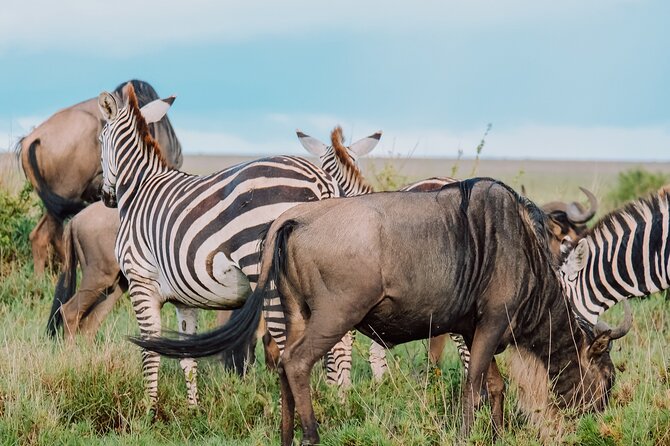
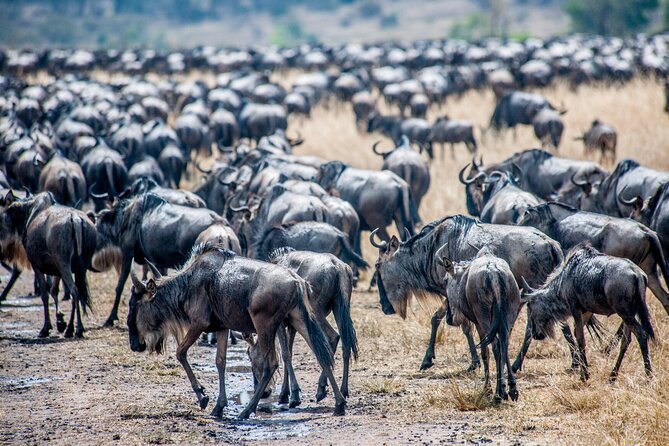
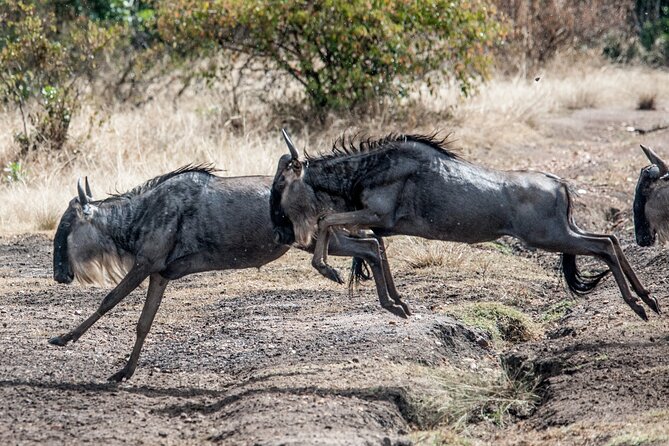
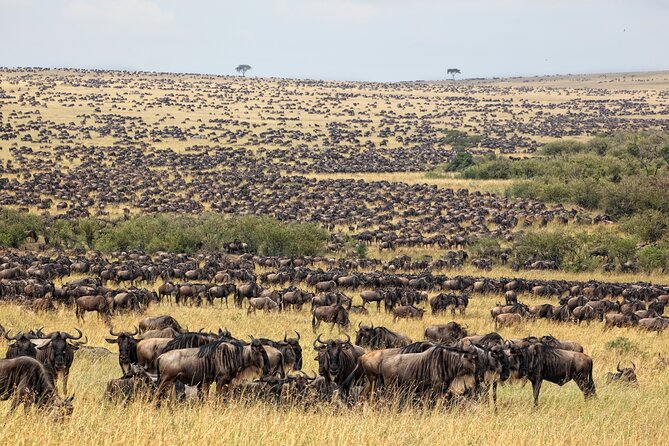
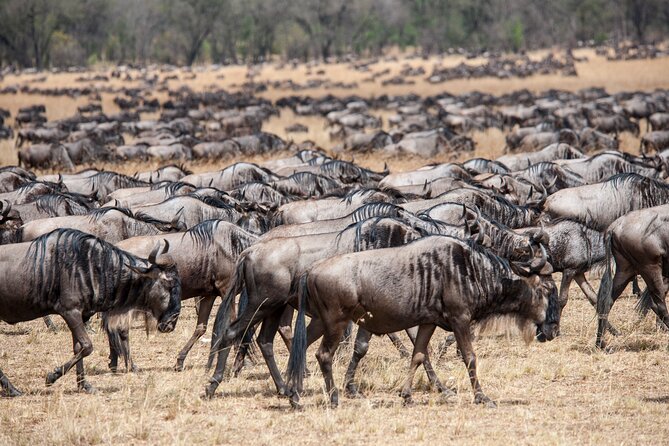
Northern Serengeti is the right place to focus on the migration when the herds are in the area. The annual movement involves about 1.5 million wildebeest, along with large numbers of zebra and antelope. Near Kogatende, the action can center on the Mara River, where herds move back and forth in response to rain and fresh grass.
The timing matters. The strongest period listed is August through October, while the broader migration window is July through October. Even then, you are following animals, not a timetable. The herds may cross, turn back, split up, or remain away from the river. The itinerary describes crossings as common in the best months, but I would treat them as a possibility rather than a guarantee.
You get three days of game drives in the north, which is a useful amount of time. One quick visit could leave you with a distant view of the herd and little else. Several days give your guide more chances to follow movement, find predators, and work around changing conditions.
The area can also be busy when a crossing is underway. Your guide’s judgment matters here. The guide names associated with especially strong wildlife and service feedback include George, Arnold, Calvin, William, and Inno. George was praised for spotting lions, leopards, and cheetahs, while Calvin was repeatedly singled out for finding good positions for photographs. Those skills are valuable when animals are spread across open country.
More Great Migration Safaris in Serengeti
- 8 Day Spectacular Migration Serengeti mid -Range Tanzania Safari
★ 5.0 · 161 reviews - 9-Day Serengeti Migration Footsteps Tanzania Safari
★ 5.0 · 96 reviews - Private 6-Day Great Migration Ndutu Serengeti Safari Tour
★ 5.0 · 47 reviews
What the tented camps add to the experience
You stay in an upscale tented safari camp in northern Serengeti, then another luxury tented camp in central Serengeti. This is a good middle ground between a basic camping trip and a fully polished lodge circuit.
A tented camp keeps you close to the setting without asking you to carry camping equipment or prepare meals. Your bed, meals, and camp arrangements are handled for you. The supplied details do not specify the exact camp names or room facilities, so confirm those before booking if air conditioning, Wi-Fi, private bathrooms, or power arrangements matter to you.
The package includes breakfast, lunch, and dinner on the nine nights covered by the itinerary, along with bottled water. Alcoholic drinks cost extra. That meal plan keeps daily spending under control, though you should still budget for drinks, gratuities, and the northern Serengeti flight.
Three nights in central Seronera
After the northern section, you drive to central Serengeti for days five through seven. Seronera is the park’s best-known central zone and gives the itinerary a useful change of pace.
Here, the point is not only the migration. The Serengeti supports a broad range of wildlife, and the central section gives you more time to watch the park itself. The itinerary highlights wildebeest, zebra, and Thomson’s gazelle, but the guide feedback also points to strong chances of seeing lions, leopards, cheetahs, and the Big Five.
I like this part of the plan because migration trips can become too narrowly focused. If the herds are not positioned exactly where expected, three nights in central Serengeti still provide substantial game-viewing time. You are not left with only one dramatic event to hope for.
The trade-off is driving time. Moving from the north to Seronera takes time on safari roads, and some of the day may be spent getting between areas rather than sitting at a wildlife sighting. That movement is part of the price of covering both northern and central Serengeti in one trip.
The guide can make this stretch especially rewarding. Cleopa was praised for patient family service and for explaining the animals clearly. Laban was noted for pointing out less obvious species, while Rahim was described as persistent when searching for leopards. If your priority is photography, mention it at the start. Calvin was particularly praised for positioning the vehicle well for pictures.
An early crater drive at Ngorongoro
Day eight brings an early morning game drive inside Ngorongoro Crater. The crater is the visual counterpoint to the open Serengeti. Instead of wide plains and moving herds, you get a dramatic enclosed setting with a concentrated wildlife area.
The Ngorongoro Conservation Area was created to protect wildlife and natural resources while also recognizing the interests of Indigenous communities and supporting tourism. That wider purpose is worth keeping in mind. This is not simply a scenic stop on the way back to Arusha.
An early start is sensible because it gives you more time inside the crater and makes the most of the day before the next overnight stop. The schedule is busy, though. After several days of game drives, you may feel ready for a slower morning, but this itinerary keeps moving.
Accommodation shifts from a tented camp to a luxury lodge for this night. The exact lodge is not named, so ask for the property and room details before paying. That question is especially useful if you are comparing this tour with another safari at a similar price.
More Safaris in Serengeti
- Serengeti Balloon Safari and authentic bush breakfast
★ 5.0 · 2,480 reviews - Balloon Safari & Bush Breakfast in Serengeti – Miracle Experience
★ 5.0 · 1,646 reviews - 3 Days Serengeti & Ngorongoro Group Camping Safari
★ 5.0 · 574 reviews - Safari Serengeti And Ngorongoro
★ 5.0 · 288 reviews
A quieter final park day in Tarangire
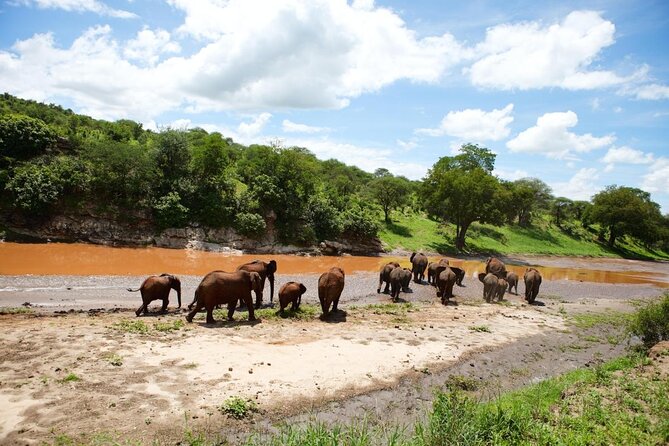
Day nine is a full game drive in Tarangire National Park. This park sits slightly away from the main northern safari route and is presented as a quieter stop, known especially for elephants and birding.
That makes Tarangire a smart final park. After the busy migration zone and the popular crater, a less crowded setting can feel like a relief. You may see elephants, and the birdlife gives you something different to watch when large mammals are less active.
The itinerary calls Tarangire’s wildlife movement an elephant migration. It also notes the park’s calmer atmosphere. Do not expect it to replicate the spectacle of the Serengeti herd. Tarangire works best as a change of rhythm, not as a second migration finale.
You spend the night at another luxury lodge. Meals remain included, but drinks and any personal purchases are extra. On day ten, you return to Arusha after breakfast, stop at a shopping market, and receive a transfer to Kilimanjaro International Airport.
The value of $5,512.83 per person
At $5,512.83 per person, this is a major purchase. The price makes more sense if you value a private vehicle, a small group, upscale accommodation, nine nights of meals, bottled water, airport transfers, and a guide focused on wildlife and photography.
It also buys range. In ten days, you cover northern and central Serengeti, Ngorongoro, and Tarangire rather than staying in one area. That variety is a real benefit for a first safari in northern Tanzania.
Still, compare carefully. The Serengeti flight from Kilimanjaro to the north is excluded, and accommodation on the final day is not included. The activity returns you to Arusha and provides airport transfer, but you need to think about where you will sleep if your flight is not the same day.
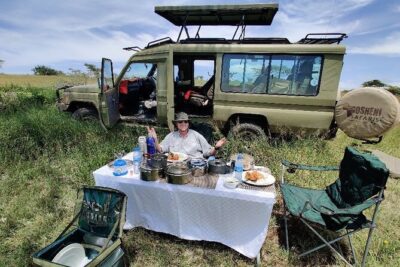
The small group cap of seven is another part of the value. A vehicle with fewer people gives you more room and makes it easier to see around one another during a sighting. Several comments also praise the company’s private, air-conditioned safari vehicles, though you should confirm the exact vehicle arrangement for your departure.
The strongest praise is directed at the guides. George was described as a skilled wildlife spotter and careful driver. Arnold was praised for looking after everyone in the vehicle, including children. William was singled out for attentive service from the airport onward, while Inno received praise for driving, service, and wildlife expertise. These details matter because your guide shapes almost every hour of a safari.
Who will enjoy this safari most
This trip suits you if the migration is your main goal but you also want a fuller northern Tanzania itinerary. It works well for first-time safari visitors who prefer one organized package instead of arranging hotels, meals, transfers, and park drives separately.
Families can consider it, since children must be accompanied by an adult and one guide was specifically praised for caring for children. Couples and small groups will also appreciate the seven-person limit.
You should have a moderate fitness level. Safari days can be long, and the itinerary moves through several areas. There is no promise of a relaxed schedule, and you should be comfortable with early starts, vehicle travel, and changing plans around wildlife.
This may not suit you if you want a slow, private luxury holiday with little driving. It also may disappoint you if your whole decision rests on seeing a river crossing. The migration is natural and unpredictable, even during the best season.
Booking details worth checking first
Pickup is offered, the meeting point is in Arusha, and the listed start time is 8:00 a.m. Confirmation is issued within 48 hours, subject to availability. The trip requires a minimum number of participants, although the maximum group size is seven.
Give dietary requirements when booking. The cancellation policy allows a full refund when you cancel at least 24 hours before the start time. Late cancellations and late changes are not accepted for a refund, and poor weather or an unmet minimum may lead to a different date or a full refund.
I would ask four questions before paying:
- What is the current cost and schedule of the flight to northern Serengeti?
- Which exact tented camps and lodges are included?
- What vehicle will be used, and will it be private to your group?
- Where will you stay if your onward flight leaves after the return to Arusha?
These are simple questions, but the answers will tell you how closely the actual trip matches your idea of upscale safari travel.
Should you book it?
I would book this safari if you want a serious migration trip with enough time in both northern and central Serengeti, plus two major northern Tanzania parks. The itinerary is broad, the meal and accommodation plan is convenient, and the small group size should help keep the experience personal.
I would not book it without first pricing the northern flight and confirming the camps. And I would choose a departure in August, September, or October if river crossings are your priority, while keeping expectations flexible.
The best reason to choose this trip is the combination of time and guiding. With guides such as George, Calvin, William, Arnold, or Inno, you are not simply being driven through the park. You are relying on someone to read animal behavior, find better viewing positions, and make sense of what you see. For a costly safari, that is where the value is made.
FAQ
How long is the safari?
The experience lasts approximately 10 days, beginning with arrival in Arusha and ending with a transfer to Kilimanjaro International Airport.
Where does the safari start?
The tour starts in Arusha, in Tanzania’s Arusha Region. Pickup is provided from Kilimanjaro International Airport on arrival.
Is the flight to northern Serengeti included?
No. The flight from Kilimanjaro to Serengeti North is an additional cost and must be paid separately.
When is the best time for the migration section?
The stated migration period is July through October. River crossings near Kogatende are associated especially with August through October, but crossings cannot be guaranteed.
How many people can join the tour?
The maximum group size is seven people.
Are meals included?
Yes. Breakfast, lunch, and dinner are included for the nine nights covered by the itinerary. Alcoholic drinks are not included.
What parks and areas are visited?
The route includes northern Serengeti, central Seronera, Ngorongoro Crater, and Tarangire National Park, with time in Arusha at the beginning and end.
Is accommodation included on the final day?
No. Accommodation is included except on the last day. The itinerary includes a return to Arusha and airport transfer.
Can children join the safari?
Yes, but children must be accompanied by an adult. The activity also asks all participants to have a moderate level of physical fitness.
More Ten-Day Trips in Serengeti
- 10 Day Serengeti, Ngorongoro Crater and Zanzibar Private Tour
★ 5.0 · 7 reviews - Tanzania Safari 10 Days- Serengeti, Lake Manyara, Ngorongoro Crater.
★ 5.0 · 4 reviews - 10-Day Wildebeest Migration Calving Safari -All Inclusive
★ 5.0 · 30 reviews - 10-Day Predators Tanzania Safari Luxury Package
★ 5.0 · 24 reviews
Just added around Serengeti
- Serengeti & Ngorongoro 3 days Fly Safari in from Zanzibar★ 5.0 · 21 reviews
- 3 Days Serengeti National Park from Zanzibar★ 4.5 · 3 reviews
- 4-Day Serengeti, Ngorongoro,Tarangire safari★ 5.0 · 3 reviews
- Serengeti 2-Day Safari from Mwanza★ 5.0 · 16 reviews
- Serengeti Day Trip Tour from Mwanza★ 5.0 · 4 reviews
- Full-Day Serengeti Tour from Mwanza★ 5.0 · 11 reviews
- Discover Our Best Guide for 1-Day Serengeti Safari from Mwanza★ 5.0 · 5 reviews
- Serengeti Day Trip Safari From Mwanza Tanzania★ 5.0 · 7 reviews
Great Migration Safaris, compared.
8 Days Great Wildebeest Calving Migration Safari from Arusha
Read our review →
8 Day Spectacular Migration Serengeti mid -Range Tanzania Safari
Read our review →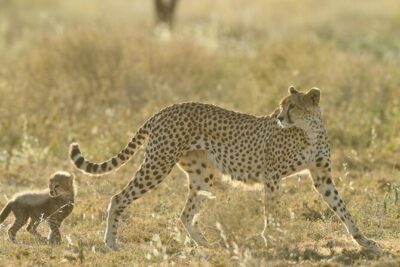
Private 6-Day Great Migration Ndutu Serengeti Safari Tour
Read our review →
6 Days Tanzania Budget Camping Safari with Migration
Read our review →10-Day Wildebeest Migration Calving Safari -All Inclusive
Read our review →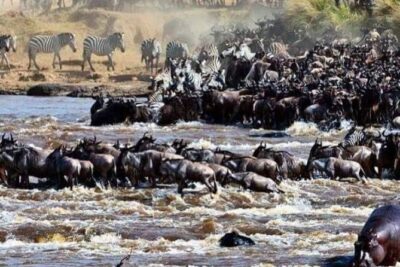
8 Days Great Wildebeest Migration – Mara River Crossing
Read our review →
Tanzania Safari – The Great Migration in the North of the Serengeti and Lake Natron
Read our review →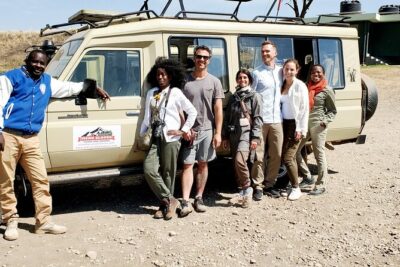
5-Days Private Serengeti Wildebeest Migration Lodge Safaris
Read our review →Browse the lists this tour appears in