
Reviewed · LEMOSHO ROUTE CLIMBS
A Definitive Guide For the 7-day Kilimanjaro’s Lemosho Route 2025
Mount Kilimanjaro’s Lemosho Route gives you a longer approach to Africa’s highest peak, with seven days to move from rainforest to the 19,345-foot summit. That extra time matters. You are not simply racing uphill, and the route includes a useful high-altitude night at Moir Hut before dropping to Barranco.
I like the changing scenery, from thick forest to open moorland and finally stark volcanic terrain. I also like that the package includes tents, sleeping mattresses, meals, Moshi hotel transfers, a briefing, a guide, and a summit certificate. The main catch is price clarity: the $1,250 fare does not include park fees, tips, personal hiking gear, flights, or hotel nights before and after the climb.
Key points before you book
- Seven days gives you a better acclimatization profile: You gain height gradually, with time at Shira and Moir Hut before the summit push.
- Lemosho begins in the rainforest: The first day is short, scenic, and far gentler than the final climb.
- Moir Hut and Lava Tower are important high points: These days help prepare your body for sleeping and walking at altitude.
- Summit night is the real test: You climb from Barafu Camp to 19,345 feet, then descend all the way to Mweka Hut.
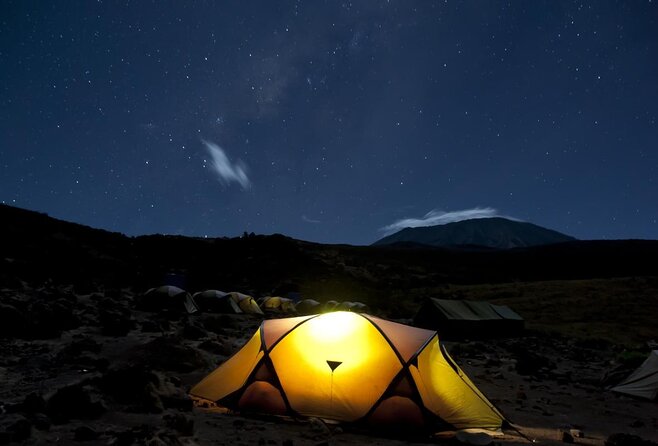
- Food and camping are included: You receive breakfast, lunch, dinner, a tent, and a sleeping mattress during the trek.
- The advertised price is not all-inclusive: Add park fees, crew tips, hotel accommodation, flights, and personal equipment to your budget.
Why Lemosho is worth seven days
Lemosho is often chosen for its gradual route and scenic approach from the western side of Kilimanjaro. Compared with a very short climb, this itinerary gives your body more time to adjust to thinner air. That does not remove the risk of altitude sickness, but it gives you a more sensible schedule than trying to force the mountain into too few days.
The route crosses several of Kilimanjaro’s main ecological zones. You begin in rainforest, pass through moorland, cross semi-desert and alpine desert, and finish in an Arctic-like summit zone. The scenery changes because the altitude changes, and that variety keeps the walk interesting even when your legs are tired.
The seven-day plan is still demanding. You hike for several hours on most days, and the fifth day lasts up to 10 hours before the summit attempt. The summit day includes five kilometers of climbing followed by 12 kilometers of descent. I would treat this as a serious mountain expedition, not a sightseeing walk with a dramatic finish.
More Lemosho Route climbs:
- Kilimanjaro climb by Lemosho Route (7-day)
★ 5.0 · 651 reviews - Kilimanjaro Climbing Lemosho Route 8 Days.
★ 5.0 · 186 reviews - 8-Day Small-group Lemosho Kilimanjaro Summit Trekking
★ 5.0 · 186 reviews
Day 1: Londorossi Gate to Forest Camp
Your climb begins at Londorossi Gate, at about 7,800 feet. The first day covers six kilometers and takes roughly three to four hours, ending at Forest Camp around 9,500 feet.
This is a manageable opening day. The rainforest is the main attraction, with dense vegetation and a damp, shaded feel. You get a gentle introduction to the pace of the trek rather than being thrown straight into long, exposed slopes.
The included pickup takes you from your hotel in Moshi to Londorossi Gate. A briefing is also included, so use that time to confirm the daily schedule, meal arrangements, sleeping setup, and what your crew expects you to carry.
The short distance can feel deceptively easy. Do not treat day one as a chance to walk fast. A steady pace from the beginning is one of the most useful habits you can bring to Kilimanjaro.
Day 2: Forest Camp to Shira Camp
The second day climbs from about 9,500 to 11,500 feet over eight kilometers. Expect five to six hours of walking as the forest gives way to open moorland.
This change in setting is one of the pleasures of Lemosho. The trees thin out, the views open, and the mountain begins to feel less like a forest hike and more like a high-altitude journey. The air will be cooler and the sun more direct, so you need protection even when the morning begins under cloud.
The schedule supplied for this experience repeats day two, but the intended route is clear: Forest Camp to Shira Camp. Confirm the exact camp name and daily plan during your briefing so there is no confusion.
Sleeping at Shira gives you your first real night at altitude. That makes this day more than a scenic transition. Your guide will need to keep the group moving at a controlled pace, and you should speak up early if you develop a headache, nausea, dizziness, or unusual fatigue.
Day 3: Shira Camp 1, Shira 2, and Moir Hut
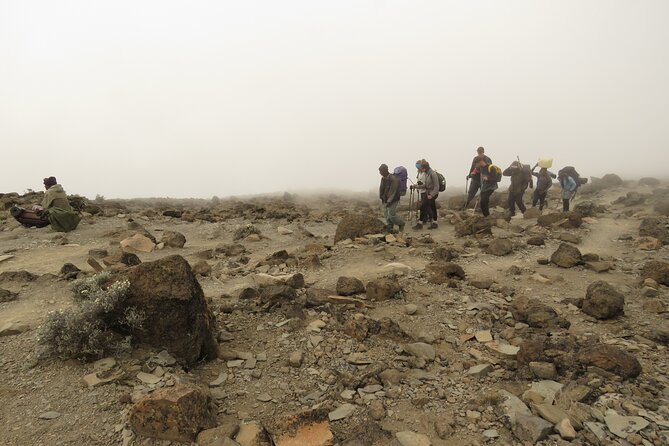
This is a longer high-altitude day. You walk about 14 kilometers in five to seven hours, moving from roughly 11,500 feet to 13,800 feet. The route passes through Shira Camp 1 and Shira 2 before reaching Moir Hut.
Moir Hut is a useful stop because it puts you higher than your previous camps without forcing you to remain on a steep upward line all day. The moorland here is more open and exposed, with fewer trees and a stronger sense that you are entering Kilimanjaro’s upper zone.
The distance is not extreme by itself, but altitude changes the effort. A walk that would feel ordinary at sea level can leave you short of breath here. Keep your pace slow, drink according to your guide’s advice, and do not spend energy trying to stay ahead of the group.
This is also a good day to check your clothing and sleeping system. Temperatures will continue to fall as you climb, and small problems with wet layers, poor socks, or an uncomfortable mattress become bigger problems later.
More seven-day trips in Kilimanjaro:
- Kilimanjaro climb, Machame Route (7-day)
★ 5.0 · 262 reviews - Climbing Kilimanjaro through 7 days Machame Route
★ 5.0 · 151 reviews - 7-Day Machame Kilimanjaro Summit Tour from Arusha
★ 5.0 · 125 reviews - 7 Days Kilimanjaro via Machame route affordable price
★ 5.0 · 110 reviews
Day 4: Moir Hut to Lava Tower and Barranco Camp
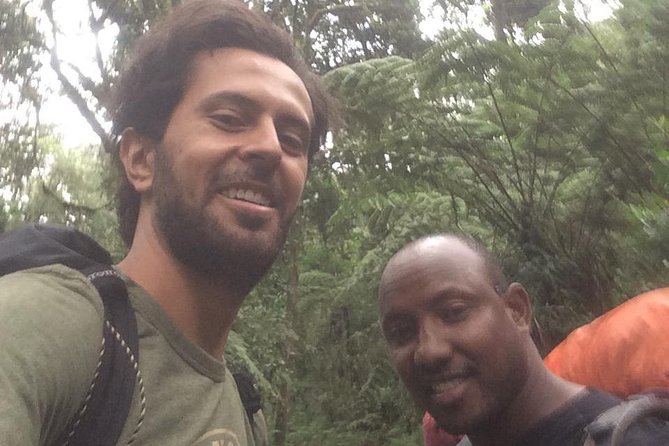
Day four covers seven kilometers in about four to six hours. You climb from approximately 13,800 feet to Lava Tower before descending slightly to Barranco Camp at around 13,000 feet.
That high point followed by a lower camp is useful for acclimatization. You spend time at a greater elevation, then sleep a little lower. The route passes through semi-desert terrain, where the vegetation is sparse and the volcanic character of the mountain becomes more obvious.
Lava Tower is an important marker on the route. It represents a serious jump into high-altitude walking, even though the day is shorter than the previous one. You may feel fine at the start and struggle later, so keep your effort measured.
Barranco Camp is not a rest day. The descent from Lava Tower may help, but you are still sleeping high and preparing for a long day ahead. I would use the evening to eat, organize your summit clothing, and ask your guide about the next day’s timing.
Day 5: Barranco to Karanga and Barafu Camp
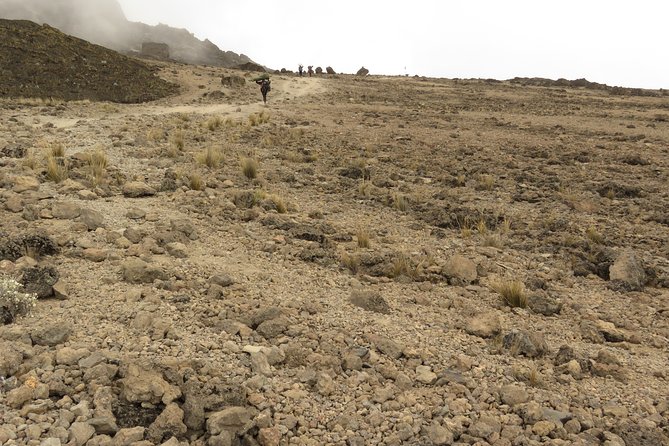
This is one of the hardest regular hiking days. You walk nine kilometers over eight to 10 hours, moving from roughly 13,000 feet through Karanga Camp to Barafu Camp at about 15,000 feet.
The route is listed as alpine desert, and the surroundings become increasingly bare. The physical challenge comes from the long duration and altitude rather than the distance alone. By the time you reach Barafu, your body has already worked through several days of climbing.
Barafu is the launch point for the summit attempt. You will need to rest here and prepare for an early or overnight departure, depending on the guide’s schedule. Keep your essential layers, water, headlamp, snacks, and gloves easy to reach.
This is where the value of the seven-day itinerary becomes clearer. You have not been pushed straight from the lower slopes to Barafu in only a few days. Even so, no route can make 15,000 feet feel easy, and you should be ready for a difficult night with limited sleep.
Day 6: Barafu Camp to the summit and Mweka Hut
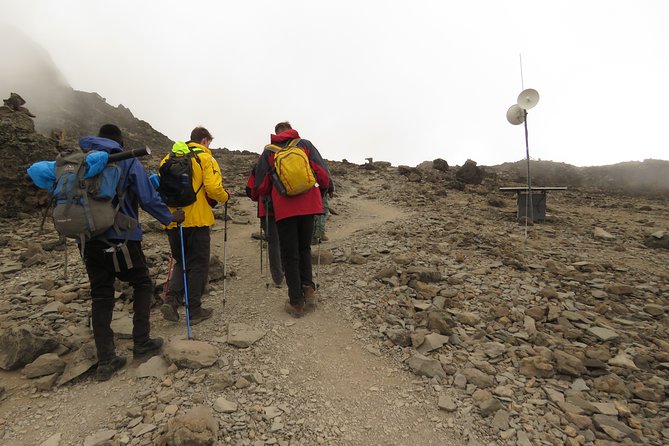
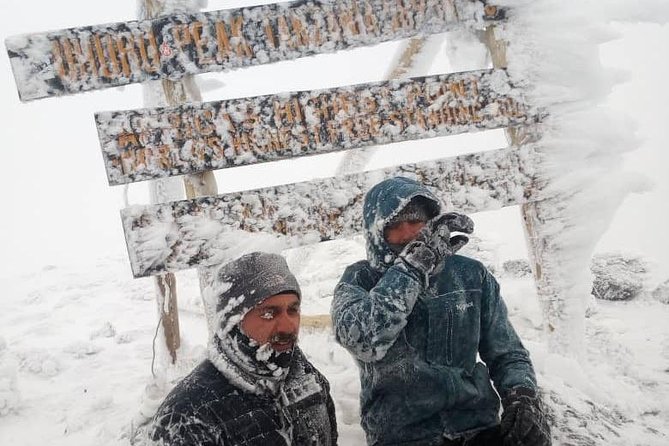
Summit day is the central event and the toughest part of the trek. From Barafu Camp at approximately 15,300 feet, you climb five kilometers to the summit at 19,345 feet. The ascent takes about seven to eight hours, followed by a 12-kilometer descent lasting four to six hours.
The upper mountain is described as Arctic terrain. Expect cold, thin air and a slow pace. The climb is not about speed. You move step by step, with the guide setting a pace designed to conserve energy and help you handle the altitude.
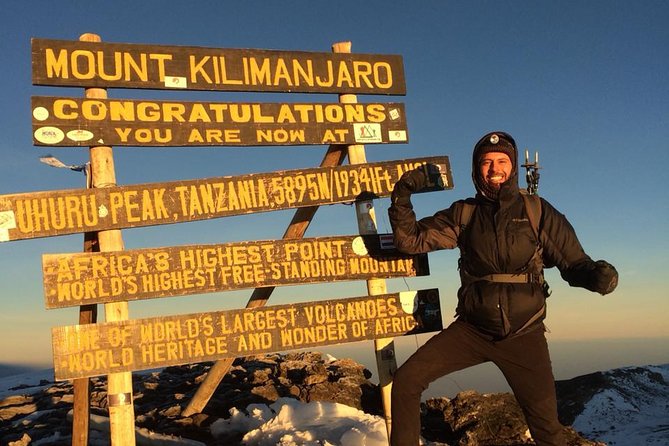
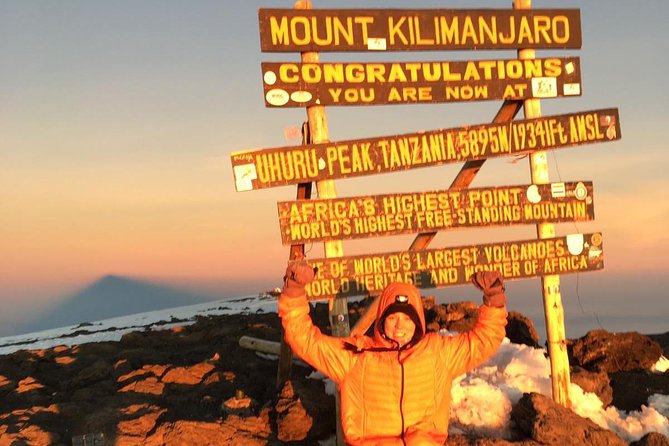
Reaching the summit of Kilimanjaro is a major physical achievement and completes one of the Seven Summits. The view and the sense of height are the reward, but the summit is only halfway through the day. You still have a long descent to Mweka Hut, around 10,000 feet.
That descent can be rough on knees and feet. Trekking poles are not listed as included, so bring them if you normally use them and confirm that your personal equipment meets your needs. Your guide will also be the person to watch if altitude symptoms become serious. Do not hide problems because you want to continue. The mountain will still be there, but a medical emergency at high altitude is no small matter.
Day 7: Mweka Camp to Moshi
The final day drops from about 10,000 feet to 5,400 feet over 10 kilometers. Walking time is roughly three to four hours, and the route returns to rainforest.
After the cold upper slopes, the forest feels warmer and more familiar. Your legs may be tired, but the lower elevation makes breathing easier. This is still a downhill walk, so take care with footing and do not rush simply because the summit is behind you.
At Mweka Gate, the package includes transportation back to your hotel in Moshi. A trekking certificate is also included. The experience ends at the listed meeting point, Africa Natural Tours on Mkwawa Avenue, although the practical finish is your return to your Moshi hotel.
Camping, meals, and the mountain crew
Camping equipment is included, specifically quality tents and a sleeping mattress. Breakfast, lunch, and dinner are also provided throughout the trek. That removes two major planning tasks, but you should still ask what personal snacks, water treatment, and extra layers you need to bring.
Food can make a real difference on a long climb. You need enough energy to walk for up to 10 hours before the summit attempt, and appetite can change at altitude. The cooking team is an important part of the operation, and past accounts specifically praised the food, cooks, guides, and porters.
The package includes a professional Kilimanjaro guide, but it does not name the guide assigned to every departure. Edwin and Moodie are names connected with past trips, so ask in advance who will lead your group and how the crew is organized.
Tips for the mountain crew are not included. Set aside a separate amount for this before you arrive, and ask the operator for current guidance on fair tipping practice. Crew welfare is part of the real cost of climbing Kilimanjaro responsibly.
What the $1,250 price really covers
At $1,250 per person, the package covers the basic operating pieces of a seven-day trek: camping equipment, meals, a guide, transport between Moshi and the trailheads, briefing, and a certificate. That can be useful value for someone who wants one operator to coordinate the climb.
The headline price does not include all costs. You must add:
- Mount Kilimanjaro park fees
- Tips for the mountain crew
- Airport transfers
- Hotel accommodation before and after the trek
- International or domestic flights
- Personal hiking equipment
Park fees can be a major addition, so ask for a full written quotation before paying. Also confirm exactly what tent and mattress are supplied, what meals include, and whether any transport outside the stated Moshi hotel transfers costs extra.
The group limit is listed as 50 people. That is a large possible maximum for a mountain experience, even though your actual departure may be smaller. Ask for the expected group size and guide-to-climber ratio. A smaller group can make communication and pacing easier, while a larger group may have a more social feel but slower decisions.
Best time to climb Kilimanjaro
The recommended periods are mid-December through March and mid-June through October, when conditions are generally better. These are the practical windows to consider if you want a stronger chance of drier trail conditions.
Weather can still change quickly on a high mountain. The activity requires good weather, and if poor conditions force cancellation, you can choose another date or receive a full refund. You can also cancel up to 24 hours before the start time for a full refund, but changes or cancellations made inside 24 hours are not accepted for a refund.
Who should choose this trek
This route suits you if you have a moderate level of physical fitness and want a scenic, multi-day climb rather than the shortest possible route. You should be comfortable walking for several hours on consecutive days, sleeping in tents, and managing cold, fatigue, and altitude.
It is a good match for someone who values a slower acclimatization schedule and wants the full progression from rainforest to summit. It is less suitable if you want hotel comfort, a light daypack, or a casual walk with no serious physical preparation.
The tour has a maximum of 50 participants, pickup is offered, and confirmation is provided at booking. The starting point is Africa Natural Tours on Mkwawa Avenue in Tanzania, with the activity ending back at the meeting point after the return arrangements.
Should you book the 7-day Lemosho Route?
Book this trek if you want a longer, scenic route with an extra acclimatization day and you are prepared to pay beyond the advertised $1,250. The included meals, tents, guide, and Moshi transfers make the arrangement straightforward, while the Lemosho route gives you a gradual approach to the upper mountain.
Before booking, get the park fees in writing, confirm your guide and expected group size, and check exactly what personal gear you must supply. If you accept that summit day is a cold, exhausting 19,345-foot effort rather than a simple finish-line walk, this is a strong choice for a serious first Kilimanjaro attempt.
FAQ
How long is the Kilimanjaro Lemosho Route tour?
The tour lasts approximately seven days.
Where does the tour begin?
The listed meeting point is Africa Natural Tours on Mkwawa Avenue in Tanzania.
Where does the tour end?
The activity ends back at the meeting point, with drop-off provided from Mweka Gate to your booked hotel in Moshi.
Is hotel pickup included?
Pickup is included from the hotel you booked in Moshi town to Londorossi Gate.
Is airport pickup included?
No. Airport pickup and drop-off are not included.
Are meals included during the trek?
Yes. Breakfast, lunch, and dinner are included during the trekking days.
Is camping equipment provided?
Yes. The package includes quality tents and sleeping mattresses.
Are Kilimanjaro park fees included?
No. All Mount Kilimanjaro park fees are excluded and must be paid directly to the park or through the tour operator.
Is personal hiking gear included?
No. You must provide your own personal hiking gear.
What happens if bad weather cancels the tour?
If poor weather causes cancellation, you will be offered another date or a full refund.
Just added around Kilimanjaro
- 6 days Machame route climbing Mt.Kilimanjaro★ 5.0 · 8 reviews
- machame route★ 5.0 · 16 reviews
- Mt Kilimanjaro 6 days Marangu route hike★ 5.0 · 3 reviews
- Private Cycle to Kilimanjaro Bike Park Safari★ 5.0 · 6 reviews
- West Kilimanjaro cycling Adventures★ 4.5 · 8 reviews
- Kilimanjaro Climb • Marangu Route ~ 9 Day★ 5.0 · 4 reviews
- 3 Days Private E-Bike Tour in West Kilimanjaro★ 5.0 · 3 reviews
- Kilimanjaro Climb • Machame Route ~ 10 Day★ 5.0 · 6 reviews