
Reviewed · HIKING & TREKKING
Kilimanjaro 2 days Hike
Kilimanjaro’s Marangu Route gives you a real taste of Africa’s highest mountain without committing to a summit expedition. In two days, you walk from rainforest to open moorland, sleep at Mandara Hut, visit Maundi Crater, and see Mawenzi and Kibo before heading back down.
I like the private format, since your group can set its own walking rhythm with a certified guide. I also like the overnight stay: it gives you time to enjoy the mountain quietly, rather than racing up and down in one long day. The main drawback is clear: you do not reach the summit, and the second day includes a long return walk.
Key points at a glance
- Mandara Hut overnight: Sleep in a park hut at about 9,000 feet after a rainforest hike.
- Maundi Crater side trip: Add a short outing for views toward northern Tanzania and Kenya.
- Two distinct mountain zones: Walk through montane forest on day one, then open heathland and moorland on day two.
- Private departure any day: Your group can begin on any day of the year, subject to park and tour arrangements.
- A serious but non-summit hike: You need strong physical fitness, even though this is not a summit climb.
- Meals and transport included: Breakfast, lunch, dinner, taxes, and an air-conditioned vehicle are covered.
What this short Kilimanjaro hike really offers
This is not a shortened version of a summit climb. It is a mountain experience with a firm turn-around point. You reach Mandara Hut on the first day, then climb toward Horombo Hut on the second before returning to Mandara for lunch and walking out to the park gate.
That distinction matters. If reaching Uhuru Peak is your main goal, this trip will not meet it. If you want to feel Kilimanjaro under your boots, see its changing plant zones, and spend a night above the forest, it makes good sense.
I would view it as a sampler for people who enjoy hiking but do not need a summit certificate. It also suits anyone with limited time in Tanzania who wants more than a one-day forest walk.
The mountain does not give away its best features at once. The first day is shaded and leafy. The second opens into wider views, unusual high-altitude plants, and strong views of Kilimanjaro’s volcanic peaks. You get a compact lesson in how the mountain changes with height.
More treks and hikes around Kilimanjaro:
- Kilimanjaro climb by Lemosho Route (7-day)
★ 5.0 · 651 reviews - Kilimanjaro climb, Machame Route (7-day)
★ 5.0 · 262 reviews - 8-Day Small-group Lemosho Kilimanjaro Summit Trekking
★ 5.0 · 186 reviews
Day one: from Moshi to Mandara Hut
Your morning begins in Moshi, with an 8:00 a.m. start and a drive of about one hour to Kilimanjaro National Park Gate. The tour includes an air-conditioned vehicle, which is useful after breakfast and before several hours on foot.
At the gate, you register and meet the formal beginning of the hike. All trekking inside the national park requires a certified Kilimanjaro guide, and this route is the only one that allows these short overnight treks.
The trail climbs from about 5,500 feet, or 1,700 meters, to roughly 9,000 feet, or 2,740 meters. The walk covers about 7 kilometers and takes around four to five hours. That is not an extreme distance, but the steady climb and altitude make it more demanding than a casual forest stroll.
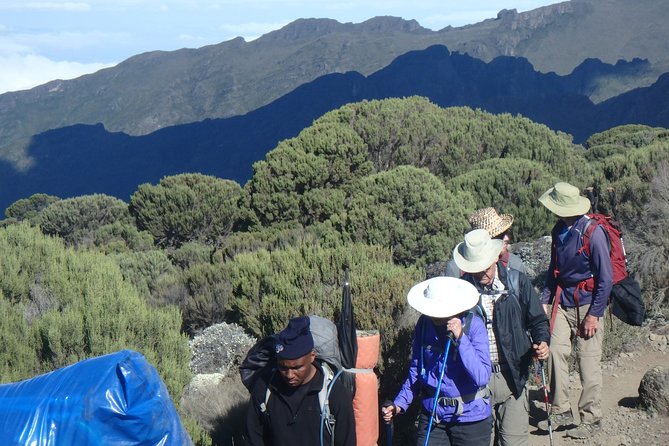
The first section passes through montane forest. Look for tall eucalyptus trees, bird life, and colobus monkeys. The forest also provides shade, which helps during the uphill walk, though it can make the route feel humid and enclosed.
Your guide sets the pace, and the private setup means you can ask for pauses when you need them. This is one reason I prefer this format to a fixed group hike. You are not tied to the fastest person in another party, nor are you waiting for a large crowd at every stop.
The side trip to Maundi Crater is one of the best uses of your time. From there, you can take in views toward northern Tanzania and Kenya. It gives you a broader sense of where you are, rather than keeping your attention only on the path ahead.
Allow yourself to enjoy the quiet here. A previous guest particularly valued the chance to walk to Maundi Crater and take in the silence and view toward Kenya. That detail tells you something useful: the side trip is not just a box to tick. It can be one of the most memorable parts of the overnight outing.
You spend the night at Mandara Hut. The accommodation is basic park-hut lodging, not a hotel, and the price description identifies it as budget accommodation. Meals include lunch and dinner on day one, with breakfast included as part of the package.
The overnight stay changes the feel of the experience. You are not simply visiting the lower slopes and leaving. You have time to settle into the mountain, notice the changing light, and enjoy the setting after the main walking is done.
Still, keep expectations sensible. This is a practical mountain hut, not a comfort-focused lodge. The attraction is the location and the chance to spend the night on Kilimanjaro, not luxury.
The Mandara to Horombo climb
Day two begins by leaving the forest glades and following an ascending trail across open heathland and moorland. The route rises from around 9,000 feet to about 12,100 feet, or 3,700 meters, as you walk toward the Horombo area.
The schedule allows about three to four hours for the uphill section, followed by more than two hours down. The total walking distance is around 11 kilometers. This is the tougher day, not because the route is technically described as difficult, but because altitude and the return distance add up.
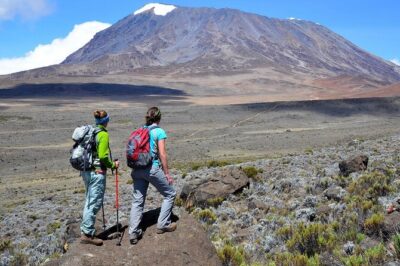
At this height, the scenery changes sharply. You may see giant lobelias and grounsels, plants that give the route a distinctly high-mountain character. The open ground also brings the major reward: views toward Mawenzi and Kibo, the two main volcanic peaks associated with Kilimanjaro.
The views toward the summit of Kibo are especially useful for putting the mountain in perspective. You see the route continuing upward, while knowing that this experience turns around before the summit zone. For some people, that will feel like a satisfying preview. For others, it may leave them wishing they had booked a longer climb.
The itinerary says you hike toward Horombo rather than spend the night there. You then return to Mandara Hut for lunch before continuing downhill to the park gate. After that, the vehicle takes you back to Moshi, again with about an hour on the road.
This makes day two feel like two separate hikes: an uphill morning into the moorland, followed by a substantial descent through the forest. I would not plan a demanding evening activity in Moshi after this. Give your legs time to recover.
The plants, wildlife, and changing mountain zones
The appeal of this route is not just the height. It is the way the mountain changes around you.
At the lower elevation, the montane forest brings tall trees, birds, and the possibility of seeing colobus monkeys. The forest can feel enclosed, with the trail leading through greenery and shade.
Higher up, the route opens into heathland. Giant lobelias and grounsels are among the most distinctive plants named for this section. These are not ordinary roadside flowers. Their presence helps show that you are moving into a colder, higher plant zone.
The switch from forest to open moorland also improves the views. On day one, the forest is the main attraction. On day two, Mawenzi and Kibo become the visual focus. That contrast gives the short trek more variety than a single lower-elevation hike.
The Maundi Crater stop adds another kind of experience. It offers a place to look outward toward Tanzania and Kenya, and it gives you a break from the steady climb. If the weather is clear, this may be your best broad view of the surrounding area.
More two-day trips in Kilimanjaro:
- 7 Day Kilimanjaro Climb Lemosho Route & 2 Day Safari
★ 5.0 · 16 reviews - Kilimanjaro Private 2 Days Hiking Tour
★ 5.0 · 10 reviews - 2 Day Serengeti Safari Experience from Mwanza
★ 5.0 · 198 reviews - 2 Days Tarangire and Ngorongoro Group Camping Safari
★ 5.0 · 146 reviews
Is $918 a fair price?
At $918 per person, this is not a cheap day hike. The value depends on what you want from Kilimanjaro and what is included.
You are paying for a private two-day national park experience, a certified guide, park access, transport from Moshi, meals, and an overnight hut stay. The package includes breakfast, lunch, dinner, an air-conditioned vehicle, and all fees and taxes. Those inclusions reduce the number of extra costs you need to sort out separately.
The private arrangement also has real value. You are booking only for your own group, rather than joining a shared departure. That matters if your group has mixed walking speeds, wants time at Maundi Crater, or prefers a slower pace for photographs and rest.
The price is harder to justify if you mainly want a quick view of Kilimanjaro or a short forest walk. You are paying for a mountain night and a second day at altitude, so the trip makes more sense when you want the full overnight experience.
A one-day option might cost less, but it would not give you the same time at Mandara Hut or the chance to start day two toward Horombo. I like the overnight version for that reason. It gives you a stronger sense of Kilimanjaro without the longer commitment of a summit trek.
Fitness, altitude, and the return walk
The operator advises a strong physical fitness level, and you should take that seriously. The route includes four to five hours of uphill walking on day one, then three to four hours uphill and more than two hours downhill on day two.
You do not need to be a mountaineer based on the information provided, but you should be comfortable with sustained uphill walking. The second day reaches about 12,100 feet, so the altitude adds another challenge even though you do not summit.
The descent is easy to underestimate. After walking toward Horombo, you return to Mandara for lunch and then continue down to the gate. Your legs may feel more tired on the downhill than during the climb, especially after two days on the trail.
Use the private format to your advantage. Walk steadily, take sensible rests, and tell your guide when you need to slow down. The schedule is approximate, so you should not treat the listed times as a race.
Because this is an altitude hike, comfort and pacing matter more than speed. The trip does not promise a summit, so there is no reason to push beyond a sensible pace simply to gain a few extra minutes.
What the service appears to cover
The package includes the basic pieces you need for the outing: meals, transport, national park fees, and a certified guide. Equipment support is also important in practice. The supplied guest comments describe Bujo Tours arranging proper equipment, food, and shelter, with porters helping carry and manage equipment.
That is useful reassurance, but you should still confirm the equipment arrangements before departure. The supplied details do not provide a full packing list or specify exactly what gear is supplied.
The tour starts from Moshi and offers pickup. Confirmation is received at booking, and the experience is available on a private basis. It can start any day of the year, which is helpful if you are fitting the hike around a safari or another Tanzanian trip.
The attraction of this flexibility is practical. You do not need to build your whole holiday around a fixed group departure. The tradeoff is that you should confirm the exact pickup details, guide meeting arrangements, and equipment before setting out.
Who should book this hike?
I would recommend this trip to you if you:
- Want to experience Kilimanjaro without attempting the summit.
- Enjoy four to six hours of walking in a day.
- Like the idea of sleeping in a basic mountain hut.
- Want a private guide and a flexible departure date.
- Have limited time but still want to reach the higher moorland.
- Prefer nature, plants, wildlife, and views over a summit-focused challenge.
I would hesitate if your only goal is standing at the summit. This route cannot deliver that. You should also think twice if you dislike basic accommodation, have limited fitness for long uphill walks, or want a relaxed sightseeing day rather than a physical outing.
The trip suits hikers who value the journey itself. The rainforest, Maundi Crater, Mandara Hut, giant lobelias, grounsels, and views of Mawenzi and Kibo provide plenty to notice along the way.
A few practical decisions before booking
Plan for a full mountain day on both days, not just a short scenic walk. The listed distances and times are estimates, but you should expect a steady physical effort.
Ask about the exact pickup point in Moshi when you book. The start time is 8:00 a.m., and the drive to the park gate takes about one hour.
Check the hut and equipment details in advance. Mandara Hut is budget accommodation, and the tour information does not give further details about sleeping arrangements or personal gear.
Keep the cancellation terms in mind. You receive a full refund if you cancel at least six full days before the start time. Cancellation two to six full days before departure allows a 50 percent refund, while cancellation less than two full days before the start time is nonrefundable. Changes follow the same timing limits.
Should you book the 2-day Marangu hike?
Book it if you want a genuine Kilimanjaro experience, an overnight hut stay, and a look at the mountain’s higher zones without making a summit attempt. The private format, included meals and park fees, and flexible departure date make it a practical choice for a short Tanzania itinerary.
Do not book it expecting a summit climb. You will turn around toward Horombo, return to Mandara for lunch, and then hike out. For the right person, that is not a weakness. It is a well-defined mountain sampler with enough altitude, scenery, and effort to feel like a real adventure.
FAQ
Does this hike reach the summit of Kilimanjaro?
No. The hike goes toward Horombo Hut on the second day but does not continue to the summit.
Which Kilimanjaro route does the tour use?
The tour uses the Marangu Route. It is the only Kilimanjaro route where short treks of this type are allowed.
Where do you sleep overnight?
You stay at Mandara Hut, described as budget accommodation inside the national park.
How long is the first day of hiking?
The first day covers about 7 kilometers and takes roughly four to five hours, climbing from about 5,500 feet to 9,000 feet.
How long is the second day?
The second day covers about 11 kilometers. The uphill section toward Horombo takes about three to four hours, followed by more than two hours of descent.
Is this a private tour?
Yes. Only your group participates, and the tour is offered on a private basis.
What meals and transport are included?
Day one includes lunch and dinner, and breakfast is included in the package. The tour also includes an air-conditioned vehicle, all fees and taxes, and pickup is offered.
Just added around Kilimanjaro
- 6 days Machame route climbing Mt.Kilimanjaro★ 5.0 · 8 reviews
- machame route★ 5.0 · 16 reviews
- Mt Kilimanjaro 6 days Marangu route hike★ 5.0 · 3 reviews
- Private Cycle to Kilimanjaro Bike Park Safari★ 5.0 · 6 reviews
- West Kilimanjaro cycling Adventures★ 4.5 · 8 reviews
- Kilimanjaro Climb • Marangu Route ~ 9 Day★ 5.0 · 4 reviews
- 3 Days Private E-Bike Tour in West Kilimanjaro★ 5.0 · 3 reviews
- Kilimanjaro Climb • Machame Route ~ 10 Day★ 5.0 · 6 reviews
Hiking & Trekking, compared.
7-Day Machame Kilimanjaro Summit Tour from Arusha
Read our review →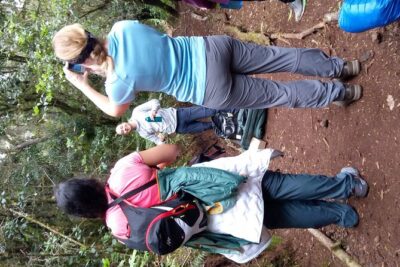
Private Full Day Hiking Experience to Marangu Route
Read our review →
4 days Best experience Kilimanjaro Hike, Serengeti &Ngorongoro
Read our review →
Best Kilimanjaro hiking day trip tour with Kilinge Adventures
Read our review →Browse the lists this tour appears in