
Reviewed · LEMOSHO ROUTE CLIMBS
Kilimanjaro-lemosho Route 8 Days Itinerary
Kilimanjaro’s Lemosho Route gives you a long, gradual approach to Africa’s highest point, starting in forest and crossing the open Shira Plateau before reaching the summit by way of Barranco, Karanga, and Barafu. The route is demanding, but its steady profile gives you time to adjust to altitude.
I like the private group format, which means your party climbs together rather than joining a large mixed group. I also like the practical setup: airport transfers, a pre-climb equipment check, lodge nights in Arusha, park fees, and meals are built into the package. Guides such as Emmanuel and Frankie have led earlier departures.
The main drawback is the summit day. You may walk for 13 to 15 hours, beginning before midnight and finishing at Mweka Camp. The advertised route takes eight mountain days, but the full trip lasts about 10 days, so you need enough time, stamina, and patience for a serious high-altitude climb.
Key points to know before booking
- Lemosho starts gently: You begin in mountain forest, then climb toward the wide Shira Plateau.
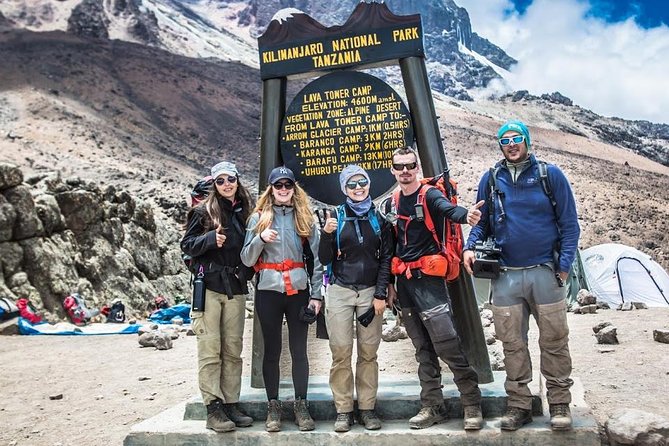
- The route reaches 4,600 meters before summit day: Lava Tower and Barafu Camp provide important altitude practice.
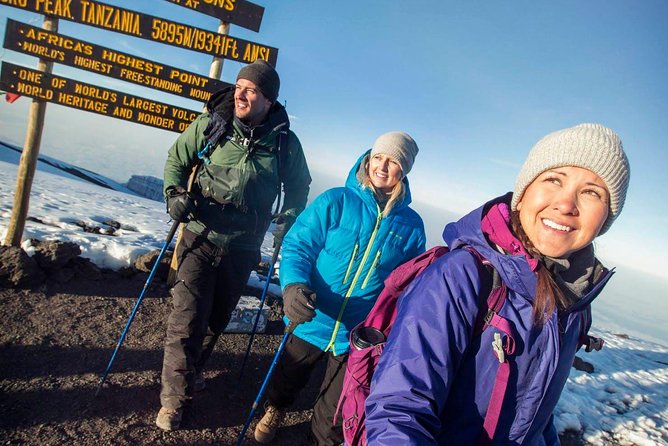
- The summit push is very long: You start before midnight, reach Stella Point at 5,735 meters, continue toward Uhuru Peak at 5,895 meters, then descend to Mweka Camp.
- Arusha transfers are included: A private vehicle collects you at Kilimanjaro International Airport and returns you after the climb.
- The best weather window is generally January, February, August, and September: March through May brings long rains, while November can be wet.
- The cost is $2,950 per person: That is a substantial price, but it covers the mountain program, airport transfers, lodge stays, meals, and park admission.
Why the Lemosho Route is a smart Kilimanjaro choice
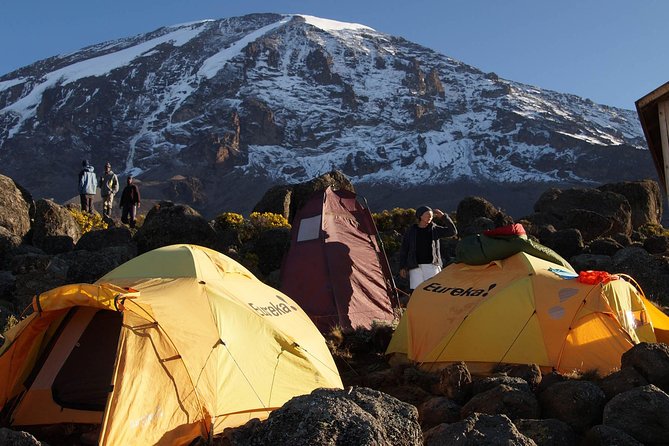
Lemosho is appealing because it does not rush you straight toward the high camps. Your first walking day runs from Londrossi Gate to Mti Mkubwa Camp, a relatively short three to four hours through forest. That gentle opening matters. You get used to the pace, the guides, and the daily routine before the mountain becomes more exposed and demanding.
The route then moves across several distinct mountain zones. You start among trees, reach open ground at Shira, pass volcanic rock and high desert near Lava Tower, and finish among steep ridges and loose scree above Barafu. You are not simply repeating the same uphill walk each day.
The route is also private, so only your own group participates. That can make a difference when someone needs a slower pace or an extra break. You should still ask how large your private party will be, since the description does not give a group limit.
More Lemosho Route climbs:
- Kilimanjaro climb by Lemosho Route (7-day)
★ 5.0 · 651 reviews - 8-Day Small-group Lemosho Kilimanjaro Summit Trekking
★ 5.0 · 186 reviews - Kilimanjaro Climbing Lemosho Route 8 Days.
★ 5.0 · 186 reviews
Arusha arrival and the pre-climb briefing
Your trip begins at Arusha Safari Lodge, on the lower slopes of Mount Meru. You can arrive at Kilimanjaro International Airport at any time, and a private transfer is included to the lodge. You do not need to arrange a separate airport ride or pay an extra transfer fee.
The first evening includes a briefing at 5:30 pm and an equipment check. This is one of the most useful parts of the setup. A mountain climb is not the time to discover that your warm layers, waterproof clothing, or walking equipment are inadequate.
The team also confirms that you have mandatory medical coverage and travel insurance. Take this seriously. The climb reaches 5,895 meters, and the operator requires appropriate protection before you set off.
You spend the night at the lodge with dinner and breakfast included. The lodge gives you a fixed base before the mountain section, though you should note one small timing issue: the package lists an 8:30 am start time, while the first evening briefing is at 5:30 pm. Confirm the exact schedule for your arrival day and departure day before booking flights.
Day 2: Londrossi Gate to Mti Mkubwa Camp
After breakfast, you drive about two hours through rural countryside to Londrossi Gate. The road passes farmland and open views across the plains before reaching the trailhead.
Park registration takes place at Londrossi National Park Gate. From there, you begin walking through forest to Mti Mkubwa Camp at about 2,650 meters. The stated walking time is three to four hours.
This is a good first day because it does not try to prove anything. You walk at a measured pace and begin learning the basic rhythm of a Kilimanjaro climb: steady movement, regular rest, food, water, and an early night.
Day 3: Forest edge and the Shira Plateau
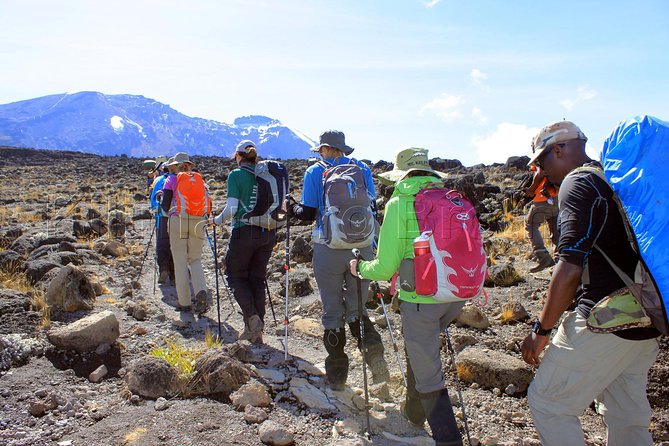
The forest thins as you climb toward the rim of the Shira Plateau. The day takes six to seven hours, ending at Shira Camp at roughly 3,550 meters.
This is one of the route’s important transitions. You leave the enclosed feel of the forest and reach broad views over the high plateau. The scenery becomes more open, and the altitude becomes more noticeable.
The length of the day is worth considering. Six to seven hours is not extreme by Kilimanjaro standards, but it is a real walking day at increasing altitude. You should be prepared to move slowly. The itinerary repeatedly stresses a gradual pace, and that is the right approach here.
More eight-day trips in Kilimanjaro:
- Kilimanjaro climb, Lemosho Route (8-day)
★ 5.0 · 148 reviews - Climbing Kilimanjaro through 8 days Lemosho Route
★ 5.0 · 52 reviews - Kilimanjaro climb, Northern Circuit route (8-day)
★ 5.0 · 40 reviews - 8 Days Kilimanjaro Hike via Lemosho Route
★ 5.0 · 39 reviews
Day 4: Shira Cathedral and a cold night at Shira Hut
Day four is shorter, with three to five hours of walking. You take an easier path to Shira Cathedral, then continue to Shira Hut at around 3,840 meters.
The shorter walking time gives you a little space to adjust before the route becomes more strenuous. The catch is exposure. Shira Hut can be much colder than the previous camp, with temperatures dropping well below freezing.
Pack your warm layers where you can reach them easily. Do not bury them deep in your luggage. Even if the walking is shorter, the night can be uncomfortable if your sleeping clothing is not suited to freezing conditions.
Day 5: Lava Tower, altitude practice, and Barranco
This is a key day for the route. You cross the southwest side of Kilimanjaro, pass beneath Lava Tower, and reach about 4,600 meters for a hot lunch. You then descend to the bottom of the Great Barranco Valley at approximately 3,900 meters.
The walking time is five to seven hours. The climb to Lava Tower and the later descent are not just scenic changes. They give you time at a higher elevation before you sleep lower in Barranco. That pattern is one reason this itinerary feels carefully paced.
Barranco Valley is also one of the more dramatic camps on the route. The next day begins with a steep climb up the Barranco Wall, so you can expect a more physical morning ahead.
Day 6: Barranco Wall and Karanga Camp
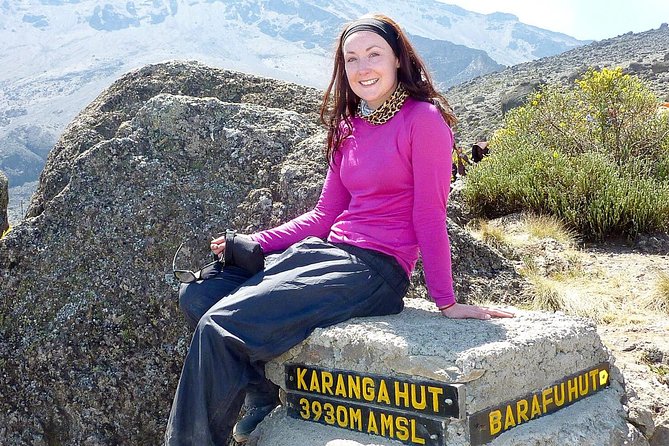
The morning starts with a steep climb along the eastern wall of the valley, below the Heim Glacier. The route then tackles the Great Barranco Wall before dropping toward the Karanga Valley.
You finish with another steep climb to Karanga Camp at about 4,000 meters. The stated walking time is four to five hours. The description contains a typo showing four minutes, but the realistic itinerary detail is clearly four to five hours.
This is a day when your guide’s judgment and pacing matter. The route is not described as technical climbing, but the Barranco Wall is steep and can feel demanding after several days on foot. You should expect hands-on scrambling in places, although the supplied details do not specify equipment or technical climbing requirements.
The reward is a varied day with views toward the glaciers and the southeastern slopes of Kibo. It also moves you into the final preparation phase for the summit.
Day 7: Karanga to Barafu Camp
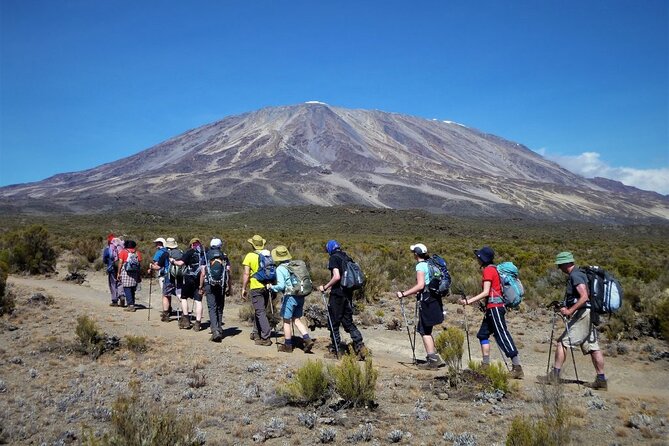
You follow the Traverse Route toward Barafu Ridge, walking slowly to Barafu Camp at about 4,600 meters. The day takes three to four hours.
Barafu is the final camp before the summit attempt. Much of the day is spent resting and preparing for the early start. This is not wasted time. You need to conserve energy because the next stage begins before midnight and lasts through the following afternoon.
Barafu is high, cold, and exposed. Use the afternoon to organize your summit clothing, water, snacks, and headlamp if those items are part of your personal equipment. The package includes an equipment check at the start, but you remain responsible for having suitable personal items.
Day 8: Stella Point, Uhuru Peak, and the long descent
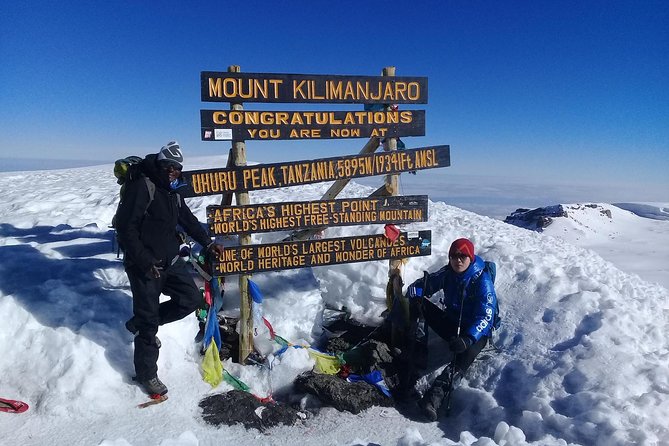
The summit day begins before midnight. You climb over loose volcanic scree, following graded zigzags at a slow, steady pace toward Stella Point on the crater rim at 5,735 meters.
At Stella Point, you can rest briefly and watch the sunrise over Mawenzi. If you still feel strong, you continue along the crater rim for the two-hour round trip to Uhuru Peak, the highest point in Africa, at 5,895 meters.
This is the emotional high point of the trip, but it is only the middle of a very long day. You descend to Barafu Camp for refreshments, then continue down to Mweka Camp at about 3,100 meters. The full walking time is given as 13 to 15 hours, although the itinerary also contains a typo showing 13 minutes.
You should make your decision about Uhuru Peak with your guide, not from pride. Reaching Stella Point is already a high-altitude achievement, and continuing to Uhuru Peak adds more time and effort. The itinerary allows the option for those who are still feeling well.
Day 9: Rainforest descent and return to Arusha
The final walking day takes you through rainforest to Mweka Gate in three to five hours. Successful climbers receive summit certificates at the gate.
After lunch, a vehicle returns you to Arusha Safari Lodge. You spend another night there with dinner and breakfast included. This overnight stop is useful because it gives you a proper end to the mountain section rather than sending you directly to an airport after a tiring descent.
The day is listed as including about six hours of activity. The exact driving time back to Arusha is not provided, so keep the evening fairly open.
Day 10: Airport transfer or extra time in Tanzania
After saying goodbye to the mountain crew, the included private transfer takes you from Arusha to Kilimanjaro International Airport for your flight.
You can also discuss adding a short safari or another activity. That option is not part of the listed $2,950 price, so confirm the cost and schedule separately.
The package states that breakfast is included for 10 meals, lunch for 10 meals, and dinner for nine meals. The detailed itinerary lists lodge meals and mountain meals, but the final breakfast and exact meal timing should be confirmed before departure.
Price, inclusions, and what you still pay
At $2,950 per person, this is not a budget climb. The price includes private airport transfers, the Arusha Safari Lodge stays, park admission, the mountain itinerary, and the listed breakfasts, lunches, and dinners.
That bundle can be good value if you want a single operator handling the main arrangements. You are paying for a full 10-day program, not just a guided walk. You also avoid arranging transport from the airport to Arusha and back again.
You still need to budget for tips, international flights, and personal items. The package also requires medical coverage and travel insurance, so those costs belong in your total trip budget.
The strongest value comes from the length and structure of the route. You get several days of gradual altitude gain before the summit push, rather than a compressed schedule. Still, price alone does not tell you the standard of porter support, tent arrangements, or precise meal setup, so ask those questions before paying.
Best months and weather tradeoffs
January and February are listed as the warmest months, with skies often clearer in the mornings and evenings. August and September are also recommended. These periods are generally the most attractive for a first attempt.
July can be colder. November and December can be wet, while March, April, and May bring long rains and are best avoided. November has shorter rains, but climbing can still be possible because wet weather does not necessarily last all day.
Weather on a high mountain is never guaranteed. The operator requires suitable weather and may offer a new date or a full refund if poor conditions force cancellation. You can cancel for a full refund if you do so at least 24 hours before the start time. Later cancellations and late changes are not refunded or accepted.
Who should book this climb?
This suits you if you have moderate physical fitness, can walk for several hours on repeated days, and are willing to begin the summit push before midnight. You should also be comfortable with cold nights, basic mountain camps, and a long final descent.
It is a good fit for a couple or small private group that wants its own guides and schedule. Past departures included couples and groups of five, and guides such as Emmanuel and Frankie were specifically associated with strong organization, care, and encouragement.
It is not a casual sightseeing outing. You need to take the medical coverage requirement seriously and understand that the summit day may last most of a day and night. The route is gradual, but gradual does not mean easy.
Should you book the Africa Joy Tours Lemosho climb?
I would consider booking it if you want a long Lemosho itinerary with airport transfers and Arusha lodging included, and if the private format suits your group. The route offers a thoughtful progression from forest to plateau, high volcanic ground, glacier views, and the summit rim.
Before committing, confirm the exact guide team, group size, porter arrangements, camping equipment, meal plan, and the confusing timing details in the itinerary. Also check the number of lodge nights and the final transfer time against your flight.
Book it if you value a structured package and can handle the price. Skip it if you want a short, low-cost mountain outing, since this is a demanding 10-day program built around one very long summit day.
FAQ
How long does the full Kilimanjaro experience last?
The full program lasts approximately 10 days. The mountain trek itself is described as an eight-day Lemosho Route climb, with lodge nights in Arusha before and after the ascent.
Where does the tour begin and end?
It begins and ends at Arusha Safari Lodge. Airport pickup and the return private transfer to Kilimanjaro International Airport are included.
What is the highest point reached?
The route reaches Uhuru Peak at 5,895 meters, the highest point in Africa. You first reach Stella Point at 5,735 meters and may continue along the crater rim if you feel well enough.
What meals are included?
The package lists 10 breakfasts, 10 lunches, and nine dinners. Dinner and breakfast are included at Arusha Safari Lodge, with meals also provided during the mountain trek.
What months are recommended for climbing?
January, February, August, and September are listed as the best months. March, April, and May have long rains and should be avoided. November can be wet but may still be possible.
Can I cancel for a full refund?
Yes. You can cancel at least 24 hours before the experience start time for a full refund. Cancellations or changes made less than 24 hours before the start time are not accepted for a refund.
Just added around Kilimanjaro
- 6 days Machame route climbing Mt.Kilimanjaro★ 5.0 · 8 reviews
- Mt Kilimanjaro 6 days Marangu route hike★ 5.0 · 3 reviews
- machame route★ 5.0 · 16 reviews
- Private Cycle to Kilimanjaro Bike Park Safari★ 5.0 · 6 reviews
- West Kilimanjaro cycling Adventures★ 4.5 · 8 reviews
- Kilimanjaro Climb • Marangu Route ~ 9 Day★ 5.0 · 4 reviews
- 3 Days Private E-Bike Tour in West Kilimanjaro★ 5.0 · 3 reviews
- Kilimanjaro Climb • Machame Route ~ 10 Day★ 5.0 · 6 reviews