
Reviewed · LEMOSHO ROUTE CLIMBS
8 Days Mountain Kilimanjaro Lemosho Route
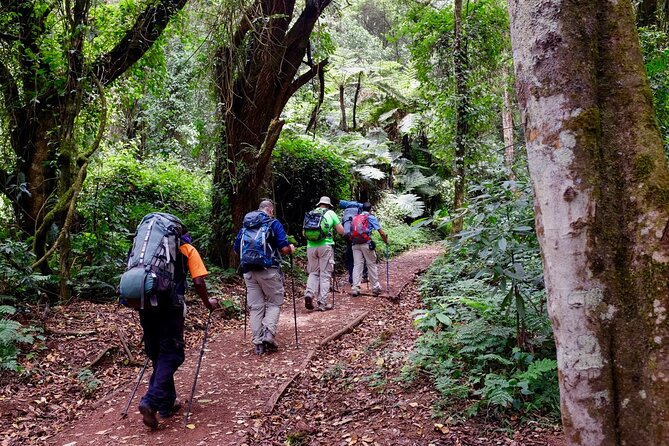
Kilimanjaro’s Lemosho Route gives you time to adjust before the hard work begins. You walk from rainforest to Arctic summit, passing tall grasses, volcanic rock, high moorland, and the striking Shira Plateau before reaching Uhuru Peak at 19,341 feet.
I like the slow climb and the extra acclimatization day around Shira Plateau and Moir Hut. I also like that the operator is a paid member of KPAP, the Kili Porter Assistance Project, which supports fair treatment and pay for porters.
The catch is simple: this is still a serious high-altitude trek. A moderate fitness level is required, and summit day means hiking through the night in cold, wind, darkness, and thin air. The $2,840 price is substantial, but it covers many costs that can quickly add up on Kilimanjaro.
Key points to know before you book
- Eight days gives you more time to adjust: The route climbs gradually and includes a full day on the Shira Plateau.
- The scenery changes every day: You move from thick rainforest to heath, moorland, alpine desert, and Arctic terrain.
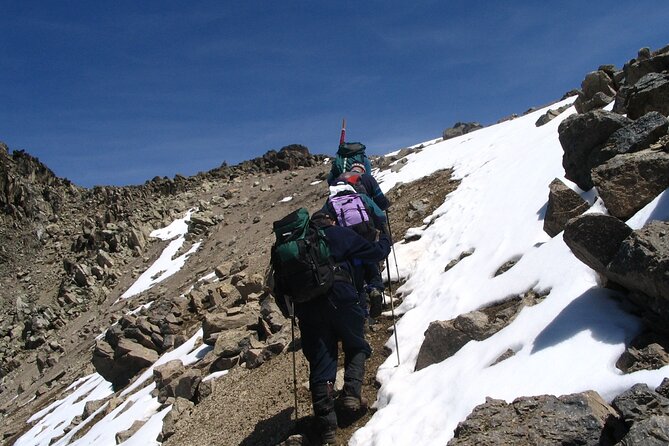
- Summit day is the real test: Expect a midnight start, 6 to 8 hours to Uhuru Peak, then a long descent to Mweka Camp.
- John Danford is a frequently praised guide: Several trips specifically credit him with calm pacing, strong mountain knowledge, and helping groups reach the summit.
- Most core costs are included: Water, camping equipment, sleeping bag, meals, park fees, and taxes are covered.
- Porter welfare is addressed: African Polecat Safaris holds paid KPAP membership, an important point for responsible trekking.
Why the Lemosho Route works well for acclimatization
Lemosho is a good choice if you want a longer, more gradual approach to Kilimanjaro. The first days do not rush you toward the summit. Instead, you gain height in stages, spend time at different elevations, and use shorter walks to help your body adjust.
That matters because altitude, not technical climbing, is the main challenge here. The route includes steep sections, but the itinerary does not call for ropes or climbing skills. Your main job is to walk slowly, drink water, eat enough, and listen to the guide.
The route also gives you a broad range of scenery. You begin among trees and possible sightings of colobus monkeys. By the middle of the trek, the trees are gone and volcanic rock, heath, moorland, and high desert take over. The final summit section feels almost polar, with darkness, cold, and snow or ice possible around the highest reaches, though conditions can vary.
This is a private trip, so only your own group takes part. That can make pacing and daily decisions easier than on a large shared departure. You also have the option of discussing shorter walks or route adjustments with the guide, within the limits of the planned trek.
More Lemosho Route climbs:
- Kilimanjaro climb by Lemosho Route (7-day)
★ 5.0 · 651 reviews - 8-Day Small-group Lemosho Kilimanjaro Summit Trekking
★ 5.0 · 186 reviews - Kilimanjaro Climbing Lemosho Route 8 Days.
★ 5.0 · 186 reviews
Day 1: Londorossi Gate to Mti Mkubwa Camp
Your driver and guide collect you after breakfast at your accommodation and drive toward Lemosho Gate. The route passes through Londorossi Gate, where the park entry process takes place and the mountain crew joins you.
There is time to stop in a nearby village for lunch and last-minute supplies. That is useful, especially if you discover that you need snacks, toiletries, or another small item before leaving roads behind.
The first hike takes about three to four hours through thick rainforest to Mti Mkubwa, also called Big Tree Camp. The elevation gain is modest compared with later days, making this a gentle start. Keep your eyes open for colobus monkeys and other wildlife in the forest.
The main point of this day is not distance. It is to get walking, settle into the group, and begin the trek without using up too much energy. You sleep in a mountain camp, so expect a basic outdoor setting rather than hotel comfort.
Day 2: From rainforest to Shira 1 Camp
The trail leaves the forest and moves into tall grasses, heather, volcanic rock, and lichen. The scenery opens up quickly, and you begin to see how much Kilimanjaro changes with altitude.
This section covers about 8 kilometers and takes roughly five to six hours, although the supplied schedule also lists about four hours of activity. Plan for a full half-day or longer on your feet, since walking pace, breaks, and trail conditions can affect the timing.
You cross streams and climb toward Shira Ridge before making a gentler descent to Shira 1 Camp. From here, Kibo, Kilimanjaro’s highest cone, comes into view across the plateau.
The elevation rises from about 9,498 feet to 11,500 feet. That is high enough for some people to notice the thinner air, but the gradual pace helps. Keep this day easy. The mountain is not going anywhere, and conserving energy now pays off later.
Day 3: A full day on the Shira Plateau
Day three is one of the best reasons to choose the eight-day version. Instead of rushing onward, you spend the day exploring the Shira Plateau, one of the highest plateaus on Earth.
The walk heads east through moorland meadows toward Shira 2 Camp, then turns toward Moir Hut at the base of Lent Hills. The distance is about 11 kilometers, with five to seven hours of walking listed. Several shorter walks are possible around Lent Hills, making this a useful day for acclimatization.
The elevation reaches about 13,800 feet. You may find the walking gentler than the numbers suggest, but the altitude is real. A slow pace is important here. The point is to spend time high, not to race between camps.
This is also a good day to ask your guide questions about the mountain, the plants, and the route ahead. John Danford is frequently singled out for his understanding of Kilimanjaro’s nature and for keeping a steady pace. That kind of guide matters more than a dramatic speech at the trailhead. You want someone who notices how you are walking and makes sensible calls.
More eight-day trips in Kilimanjaro:
- Kilimanjaro climb, Lemosho Route (8-day)
★ 5.0 · 148 reviews - Climbing Kilimanjaro through 8 days Lemosho Route
★ 5.0 · 52 reviews - Kilimanjaro climb, Northern Circuit route (8-day)
★ 5.0 · 40 reviews - 8 Days Kilimanjaro Hike via Lemosho Route
★ 5.0 · 39 reviews
Day 4: Lava Tower and the descent to Barranco
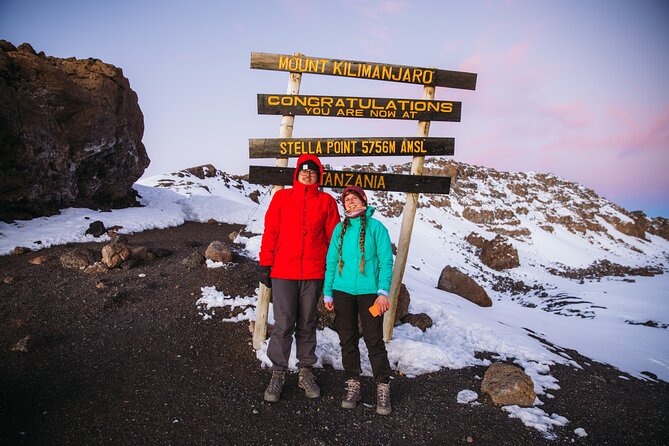
This is the classic acclimatization day. You climb from Moir Hut to Lava Tower at about 15,190 feet, then descend to Barranco Camp at roughly 13,044 feet.
The climb to Lava Tower covers around 7 kilometers and takes three to four hours. Lava Tower itself is a 300-foot volcanic rock formation and a memorable point on the route. After spending time high, you descend another 3 kilometers to Barranco through the unusual Senecio Forest.
You begin and end the day at similar elevations, but the time spent higher helps your body adjust. This is an important design feature of the route. You gain experience with thin air without sleeping at the highest point reached that day.
The alpine desert here feels stark and exposed. There are fewer trees, more rock, and a greater sense that you are on a high volcanic mountain rather than a forested African trail. It is a long day at six hours or more, but it prepares you for what follows.
Day 5: Climbing the Barranco Wall to Karanga
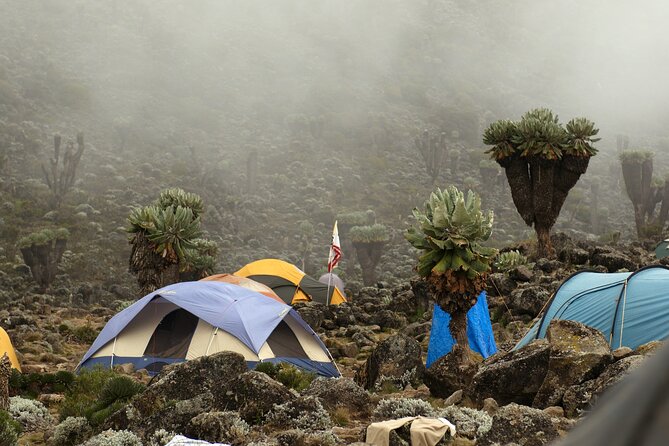
The Barranco Wall looks intimidating from camp, but the route up is described as steep and non-technical. You descend into a ravine, reach the base of the wall, then climb nearly 900 feet.
This is the most hands-on walking section before the summit. You use the trail carefully and may need to place your hands on rock in spots, but the itinerary does not require technical climbing equipment.
From the top, the trail crosses hills and valleys before dropping into Karanga Valley. One final climb brings you to Karanga Camp. The distance is only about 5 kilometers, with two to three hours of hiking listed, making this a shorter day.
I like the short schedule here. After the previous day’s climb and descent, you need time to rest, eat, and prepare for the summit push. Do not mistake a short mileage day for an easy one. The altitude and steep sections still make it demanding.
Day 6: Karanga to Barafu Camp
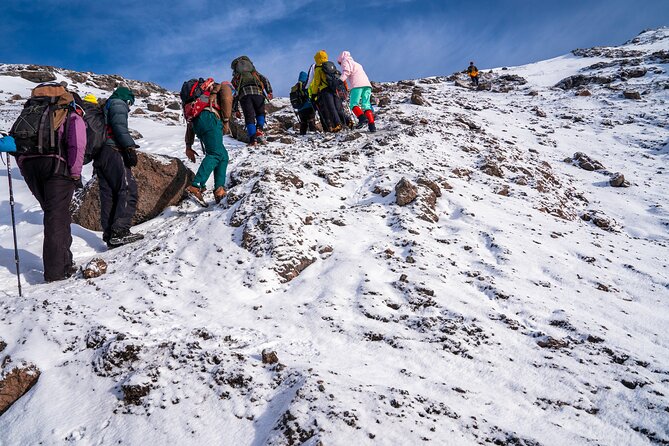
The walk from Karanga to Barafu is short, only about 4 kilometers and one to two hours. You climb from around 13,106 feet to 15,331 feet through rocky alpine desert.
At the junction, the route connects with the Mweka Trail. From Barafu, you have completed the Southern Circuit, which gives views of Kibo and Mawenzi from several angles.
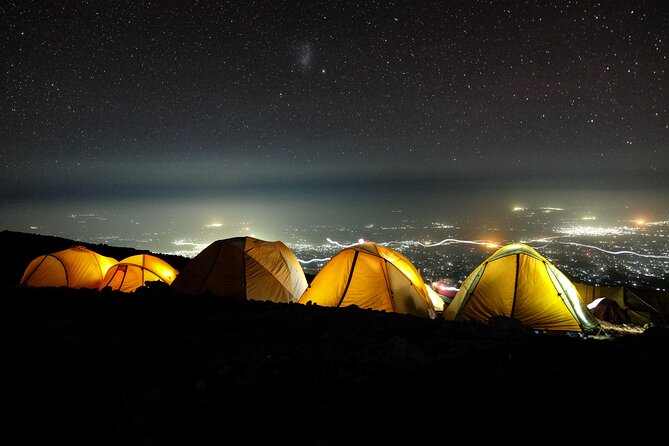
Barafu is the launch point for summit day. You camp, rest, and eat an early dinner before trying to sleep. The schedule is tight because the summit hike begins around midnight.
This is where preparation becomes practical. Keep your warm layers, headlamp, water, snacks, and gloves ready before dinner. The cold and early start can make simple tasks feel harder. A well-organized camp routine helps you save energy for the main event.
Day 7: Uhuru Peak and the long descent
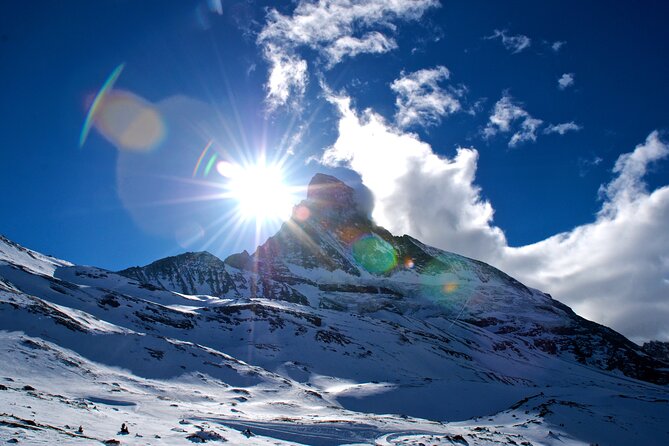
Summit day starts around midnight. You climb from Barafu Camp at 15,331 feet to Uhuru Peak at 19,341 feet, a 6-kilometer ascent that takes about six to eight hours.
This is the toughest part of the trek. You walk in darkness, often taking short, frequent breaks. Wind and cold can be severe, and the high altitude makes every step feel slower. The steady, patient pace praised in connection with John Danford and the mountain crew is especially valuable here.
Near Stella Point, at approximately 18,900 feet, you may see sunrise over Mawenzi. From there, you continue along the crater rim to Uhuru Peak, the highest point in Africa.
Reaching the summit is only half of this day. You then descend about 12 kilometers to Mweka Camp, dropping to around 10,065 feet. The descent takes another four to six hours and moves from Arctic conditions back toward rainforest.
The full day can last many hours. You should expect fatigue, sore legs, and a strong desire to stop well before camp. Eat and drink even when you do not feel like it. The descent is easier on your breathing but hard on your knees and feet.
Day 8: Mweka Camp to the park gate
The final day is a two to three-hour descent through rainforest from Mweka Camp to Mweka Gate. The elevation falls from about 10,065 feet to 5,380 feet, and the trail may be wet and muddy.
At the gate, you collect summit certificates. From there, the plan includes another hour to Mweka Village, where a vehicle meets you for the drive back to your hotel in Moshi.
This last section is not glamorous, but it completes the trip properly. Bring footwear with good grip and clothing that can handle mud. After the high mountain, the return to warm, lower air can feel surprisingly quick.
What the $2,840 price covers
At $2,840 per person, this is not a low-cost day trip. It is an eight-day expedition with park fees, staff, transport, camping equipment, food, and water. The listed inclusions cover all fees and taxes, clean water, camping gear, a sleeping bag, seven breakfasts, seven lunches, and seven dinners.
That package reduces the number of expensive extras you need to arrange yourself. It also means you are paying for a support crew, not just a permit and a guide. The ethical porter policy is worth noting when comparing operators. African Polecat Safaris has paid membership with KPAP, which signals a stated commitment to fair porter treatment and pay.
Tips are not included, so budget separately for them. Travel insurance, visas, and flights are also your responsibility. Those omissions are normal for an international mountain trip, but they can change your total budget by a lot.
The value is strongest for someone who wants a private, supported climb and prefers a longer route for acclimatization. If you are comparing only the headline price, check what other companies include for meals, water, sleeping gear, park charges, and transport.
Food, camping, and the mountain crew
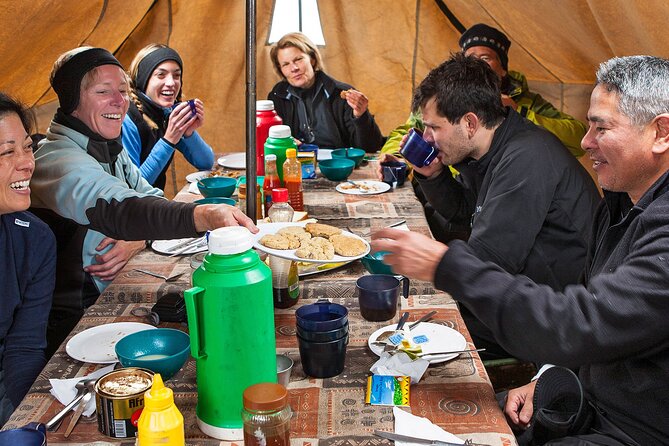
Seven breakfasts, lunches, and dinners are included, along with clean water and camping equipment. That gives you a simpler daily routine. You do not need to plan every meal or carry all your camping supplies from home.
Several accounts specifically praise the food, tents, and crew, but keep your expectations practical. This is camping on a high mountain, not a lodge stay. Conditions can be cold, basic, and tiring even when the staff works hard.
The guide team is a major part of the experience. John Danford is the name most often associated with successful summit days, calm pacing, and a strong understanding of the mountain. James is identified as the tour operator who handles communication and planning before arrival.
The company’s KPAP membership also gives you a useful question to ask before departure: how many porters will join your group, what equipment do they carry, and how are tips handled? The supplied information does not state those details, so confirm them directly.
Who should choose this trek
This trip suits you if you have moderate fitness, can walk for several hours on successive days, and want more acclimatization time than a short Kilimanjaro itinerary allows. It also suits people who value a private group and want the flexibility of discussing daily walks with their guide.
It may not suit you if you dislike camping, struggle with long descents, or want a relaxed holiday with little physical effort. The summit day is especially demanding, and no company can remove the effects of altitude.
The route is also a good fit for first-time high-altitude hikers who want strong support. Several people credit the guides and crew with helping them finish despite limited mountain experience. Still, the eight-day format is a support tool, not a guarantee. You need to prepare, pace yourself, and accept that summit success depends on health and conditions.
Booking details and cancellation
Pickup is offered, and the listed start time is 8:00 a.m. on the first day. Confirmation is received at booking, and the activity ends back at the meeting point after transport from Mweka Village.
You can cancel for a full refund up to 24 hours before the experience start time. Cancellations or changes made within 24 hours are not accepted for a refund. The cut-off uses local Tanzanian time.
Should you book the 8-day Lemosho trek?
I would choose this route over a shorter Kilimanjaro option if your schedule and budget allow it. The Shira Plateau acclimatization day, the Lava Tower high point, and the slower approach give you a sensible rhythm before summit night.
The strongest reasons to book are the full route, private format, included camping support, and the repeated praise for John Danford and the wider crew. The main reasons to pause are the price, basic camping conditions, and the serious physical demands of summit day.
Book it if you want a supported climb with varied scenery and enough time to adjust. Before paying, confirm the exact group size, porter arrangements, tipping guidance, equipment list, and what happens if altitude or weather prevents a summit attempt. That small bit of preparation will make the $2,840 commitment easier to judge.
FAQ
How long is the Kilimanjaro Lemosho trek?
The experience lasts approximately eight days, with hiking from Mti Mkubwa Camp through Uhuru Peak and down to Mweka Gate.
What time does the activity start?
The listed start time is 8:00 a.m. on the first day, with pickup offered from your accommodation.
Is this a private tour?
Yes. Only your own group participates in the activity.
What meals are included?
Seven breakfasts, seven lunches, and seven dinners are included.
Is camping equipment provided?
Yes. Camping gear, a sleeping bag, and clean water are included.
What is not included in the price?
Tips, travel insurance, visas, and flights are not included.
Just added around Kilimanjaro
- 6 days Machame route climbing Mt.Kilimanjaro★ 5.0 · 8 reviews
- machame route★ 5.0 · 16 reviews
- Mt Kilimanjaro 6 days Marangu route hike★ 5.0 · 3 reviews
- Private Cycle to Kilimanjaro Bike Park Safari★ 5.0 · 6 reviews
- West Kilimanjaro cycling Adventures★ 4.5 · 8 reviews
- Kilimanjaro Climb • Marangu Route ~ 9 Day★ 5.0 · 4 reviews
- 3 Days Private E-Bike Tour in West Kilimanjaro★ 5.0 · 3 reviews
- Kilimanjaro Climb • Machame Route ~ 10 Day★ 5.0 · 6 reviews