
Reviewed · LEMOSHO ROUTE CLIMBS
8 Days 7 Nights Kilimanjaro Lemosho Route
Mount Kilimanjaro’s Lemosho route gives you the mountain in chapters: thick rainforest, open heath, the broad Shira Plateau, bare volcanic slopes, and finally an Arctic summit. The 8-day plan approaches from the west and uses the Southern Circuit before the midnight push to Uhuru Peak at 19,341 feet.
I like the route’s slow acclimatization plan and the quieter start. I also like the human side of this operation. Emanuel helps with planning, and the mountain crew, including guides and porters, is described as friendly, experienced, and supportive. One climber even received help with borrowed equipment after luggage went missing at the airport.
The main drawback is the physical demand. Summit day lasts 11 to 14 hours, and the itinerary includes a steep scramble up the 1,200-foot Barranco Wall. The Day 3 description also repeats Day 2, so you should confirm the exact camp and daily mileage before paying.
Key points to know before you book
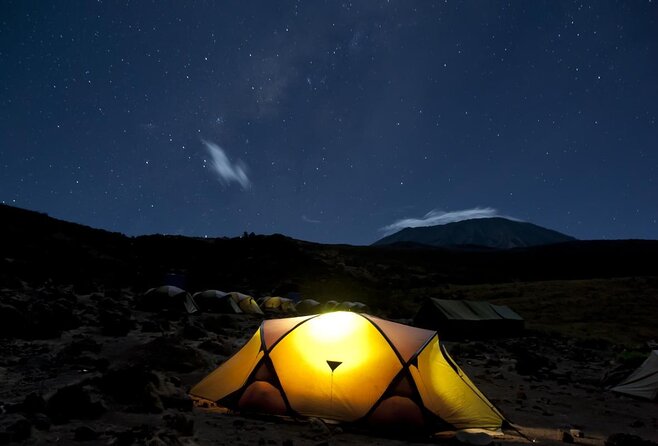
- Lemosho starts quietly in western Kilimanjaro: You spend the opening days in rainforest and heath before meeting heavier foot traffic near Lava Tower.
- The route is built for acclimatization: The high point near Lava Tower is followed by a descent to Barranco, and the Karanga day is intentionally short.
- Summit day is a serious test: You begin around midnight, reach Stella Point at 18,600 feet, continue to Uhuru Peak, then descend as far as Mweka.
- Emanuel is the main contact: He helps with route planning and preparation, while the guiding team leads you on the mountain.
- This is a private climb: Only your group participates, which gives you more control over pace and daily decisions.
- The $3,480 price needs careful checking: It may represent good value for a private 8-day climb, but the supplied details do not spell out every inclusion.
Why the Lemosho route earns its reputation
Lemosho is a western approach to Kilimanjaro, beginning with a long transfer from Moshi to Londorossi Gate. That drive takes about four hours before entry formalities and the onward trip to the trailhead, so your first morning is partly a transport day.
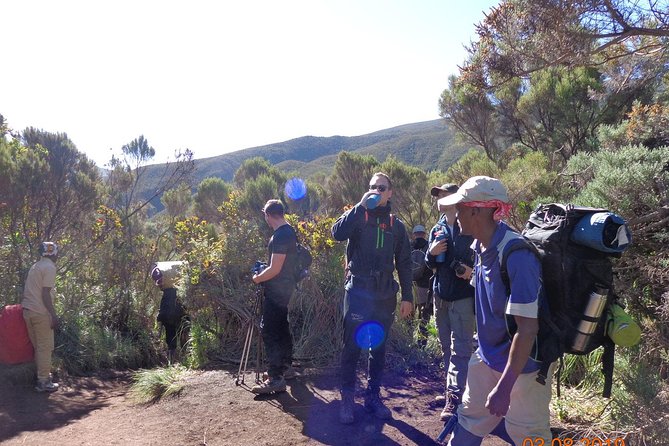
The payoff is scenery and a gentler start. You enter through rainforest rather than beginning immediately on the dry southern slopes. In the first two days, the route changes from dense forest to tall grasses, heather, volcanic rock, and lichen-covered plants. This gradual change gives you something to look at while your body adjusts to altitude.
The route then crosses the Shira Plateau from west to east. This section is relatively flat compared with the days ahead, and it brings wide views toward Kibo, Kilimanjaro’s main summit cone. Crowds are described as low until the route joins the Machame path near Lava Tower.
That combination matters. You get a quieter opening without giving up the classic southern approach later in the climb. You also spend more time gaining height gradually than you would on a very short itinerary.
More Lemosho Route climbs:
- Kilimanjaro climb by Lemosho Route (7-day)
★ 5.0 · 651 reviews - 8-Day Small-group Lemosho Kilimanjaro Summit Trekking
★ 5.0 · 186 reviews - Kilimanjaro Climbing Lemosho Route 8 Days.
★ 5.0 · 186 reviews
Day 1: Moshi to rainforest camp
The day begins with a 7:30 a.m. start from Old Moshi Road. Pickup is offered, and the drive to Londorossi Gate takes about four hours. At the gate, you complete entry formalities before continuing to the Lemosho trailhead.
After lunch, you walk from roughly 7,742 feet to 9,498 feet. The distance is only 6 kilometers, with three to four hours of hiking through rainforest. This is a manageable first walk on paper, but the road transfer makes the day about 12 hours from start to finish.
The forest is an excellent introduction to Kilimanjaro. Expect dense vegetation, damp conditions, and a trail that feels far removed from Moshi. You should keep rain protection handy, since the lower mountain can be wet.
The short distance is useful. You are not trying to prove anything on day one. Walk slowly, learn how the team organizes the day, and conserve energy for the altitude above the tree line.
Day 2: Across the heath toward Shira Ridge
Day 2 moves from 9,498 to 11,500 feet over 8 kilometers. The walk takes five to six hours and changes the setting quickly. The rainforest gives way to heath, tall grasses, rolling ground, volcanic rock, and plants draped with lichen.
You cross several streams while climbing toward Shira Ridge. The route then drops gently to Shira 1 Camp. That small loss of height after gaining it is part of the route’s character, and it gives you a better chance to adjust than a constant steep climb would.
The view toward Kibo is one of the early highlights. From the plateau, the summit appears across an open expanse rather than directly above you. That distance can be encouraging, though it also reminds you how much mountain remains.
The supplied schedule lists Day 3 with the same elevation, distance, habitat, and description as Day 2. Treat this as a point to clarify with Topi Adventure. An 8-day Lemosho plan normally uses the third day to continue across the Shira area, but the exact camp and route are not stated here, so do not rely on the duplicate text when planning your daily expectations.
Day 3: Confirm the Shira Plateau plan
The Shira section is valuable because it gives you time at altitude without immediately forcing a hard summit-style effort. The published details repeat the previous day, describing another 8-kilometer, five-to-six-hour walk through heath to Shira 1 Camp.
That duplication does not necessarily mean you will repeat the same trail. It may simply be a scheduling error in the description. Still, it is worth asking for the precise day-by-day camp names, elevation profile, and distance before departure.
For you, the practical question is simple: how much of Day 3 is spent crossing the plateau, and where do you sleep? Clear answers will help you judge the acclimatization plan and understand how Day 4 begins.
More eight-day trips in Kilimanjaro:
- Kilimanjaro climb, Lemosho Route (8-day)
★ 5.0 · 148 reviews - Climbing Kilimanjaro through 8 days Lemosho Route
★ 5.0 · 52 reviews - Kilimanjaro climb, Northern Circuit route (8-day)
★ 5.0 · 40 reviews - 8 Days Kilimanjaro Hike via Lemosho Route
★ 5.0 · 39 reviews
Day 4: Lava Tower and the descent to Barranco
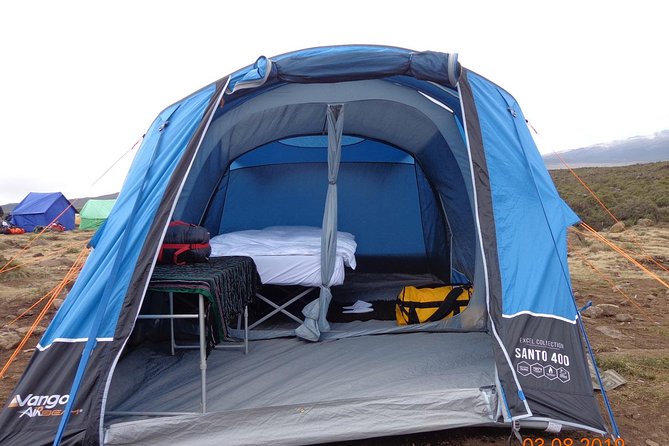
Day 4 is the route’s great acclimatization day. You climb from about 13,800 feet to 15,190 feet, with the route briefly heading toward the high junction near Arrow Glacier at about 16,000 feet, before descending to Barranco Hut at 13,044 feet.
The day covers 10 kilometers and takes six to eight hours through alpine desert. The trail heads east along a ridge, then turns southeast toward Lava Tower, also called Shark’s Tooth. The scenery becomes stark and spare, with volcanic ground replacing the softer heath of the plateau.
This is a classic climb high, sleep lower day. You reach a much greater altitude than your evening camp, giving your body useful exposure before the summit attempt. You may feel the height here, even though you finish lower than the day’s high point.
The descent to Barranco is not a wasted effort. It is one of the reasons this route can suit a climber who values acclimatization over speed. You should still expect a tiring day, especially after several days on foot.
Day 5: Barranco Wall and Karanga Valley
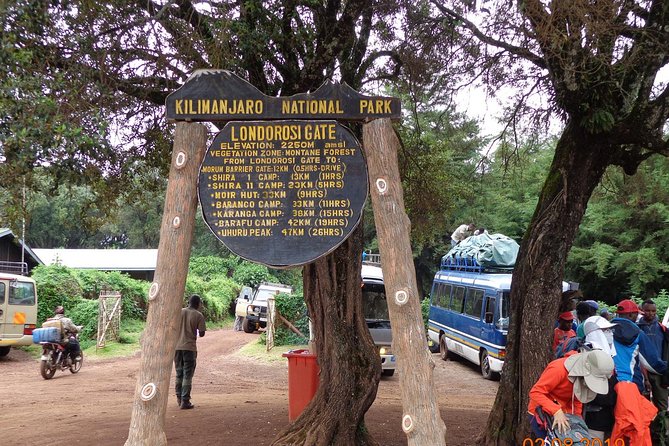
The day begins with the Barranco Wall, a 1,200-foot volcanic rock face. The route involves climbing and scrambling rather than simply walking uphill. It is a physical and mental change from the broad paths of the Shira Plateau.
You do not need to treat the wall as a race. Follow the guide’s pace, use the secure sections of rock, and keep your hands free where possible. The top offers views toward Barafu and Mount Meru, making the effort worthwhile.
From the wall, you cross ridges and valleys to Karanga Valley Camp. The distance is just 5 kilometers, and the walking time is four to five hours. The short day is deliberate. It gives you time to recover while staying high, which is useful preparation for the harder stages ahead.
This is one of the route’s better design choices. A short day after the Lava Tower crossing and Barranco Wall helps prevent the itinerary from becoming a series of exhausting pushes.
Day 6: The final camp at Barafu
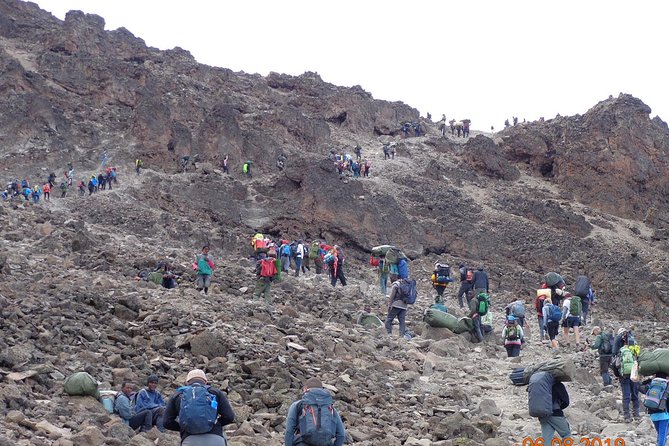
From Karanga, you climb 4 kilometers to Barafu Hut, rising from 13,106 to 15,331 feet. The walk takes four to five hours through alpine desert.
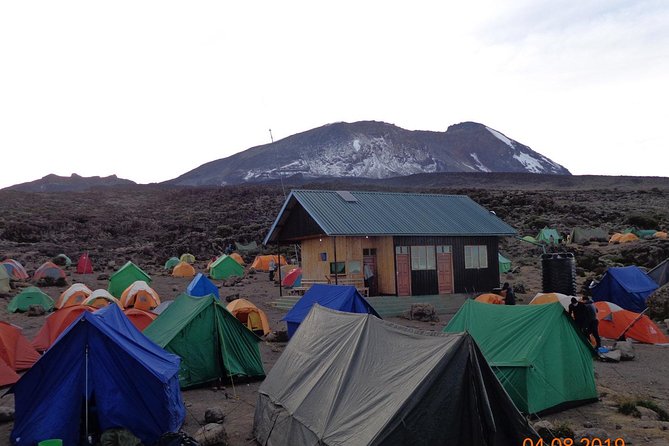
You pass the junction with the Mweka Trail, the route used for the descent. By Barafu, you have completed the Southern Circuit and seen Kibo and Mawenzi from several angles. The two peaks are visible from camp, which gives this stop a strong sense of place.
The day ends early by mountain standards. You are expected to rest, eat an early dinner, and prepare for the midnight start. Barafu is not a sightseeing stop in the usual sense. It is a staging point, and your priority is to protect your energy for the summit.
You should organize your clothing, water, headlamp, and other essentials before lying down. The supplied information confirms an early dinner and rest period, but it does not list the equipment provided, so ask Topi Adventure what you must bring and what can be rented.
Day 7: Stella Point, Uhuru Peak, and the long descent
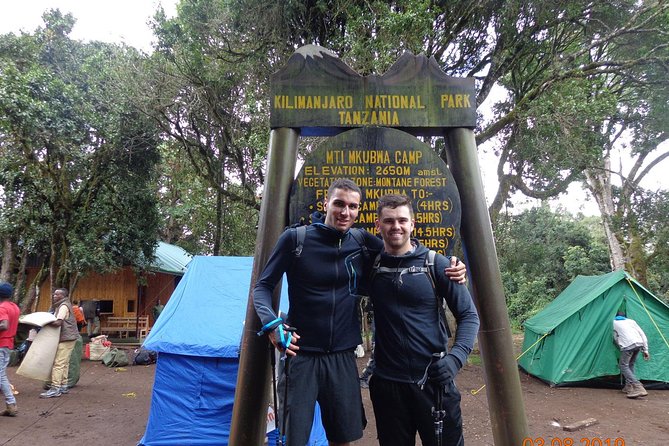
Summit day starts around midnight. From Barafu at 15,331 feet, you climb through heavy scree toward Stella Point on the crater rim at 18,600 feet. This is the toughest part of the climb, both physically and mentally.
The route covers about 17 kilometers in total and takes 11 to 14 hours. The figures include the summit climb and the descent to roughly 10,065 feet, so do not read 17 kilometers as a simple uphill walk.
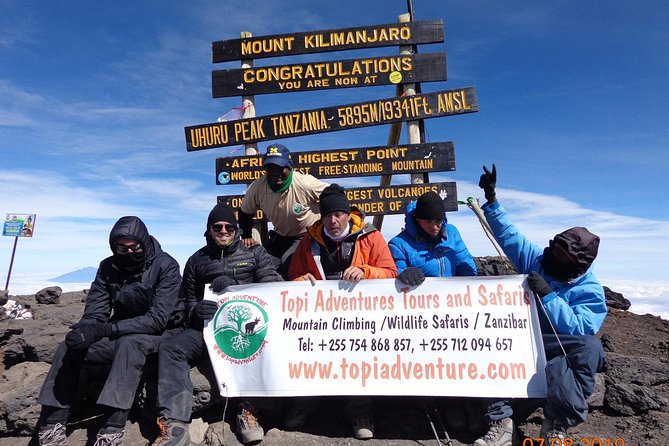
At Stella Point, you pause for a short rest and may see sunrise over the high mountain. From there, the route continues for about another hour to Uhuru Peak, at 19,341 feet. Reaching the summit is the obvious goal, but the descent is still demanding. Tired legs, loose scree, and altitude continue to require attention.
After the summit, you return to Barafu and then continue downward to the camp near Mweka. The schedule gives the full day a 12-hour outline, while the hiking estimate is 11 to 14 hours. Either way, this is a very long day.
Plan emotionally for an uneven experience. You may feel strong one hour and depleted the next. The guide’s role is especially important here, and the positive feedback about Emanuel’s team focuses on their experience, friendliness, and support during the climb.
Day 8: Down through the rainforest to Moshi
The final day descends from about 10,065 feet to 5,380 feet. You walk 10 kilometers for three to four hours through rainforest, then continue to Mweka Park Gate to receive your summit certificate.
The lower trail can be wet and muddy. Your footwear and clothing may be dirty by the end, so keep a change of clothes ready for the vehicle journey. From the gate, the walk continues for about another hour to Mweka Village, where a vehicle takes you back to your hotel in Moshi.
This is a satisfying finish because the vegetation returns as you lose altitude. The mountain gives you one last visual change, from open volcanic slopes back into forest.
The return to Moshi is included in the stated plan, but the precise hotel arrangement is not described. Confirm where the transfer ends if you have a flight, safari, or other activity arranged soon afterward.
What $3,480 means in practical terms
At $3,480 per person, this is a major purchase, but an 8-day private Kilimanjaro climb can offer solid value if the service and inclusions match your needs. You are paying for a long mountain program, route support, transport at the beginning and end, guiding, and a private group arrangement.
The price is harder to judge because the supplied details do not list every inclusion. They do not clearly state the lodging before or after the climb, meals beyond the daily notes, equipment rental, airport transfers, park fees, or gratuities.
Before booking, ask for a written list of:
- Hotel nights in Moshi
- Meals during the climb
- Park and rescue fees
- Guide, cook, and porter arrangements
- Rental equipment
- Airport transfers
- Tips and other expected costs
The strongest value here is the route length and private format. You are not squeezed into a short schedule, and only your group participates. That can make a real difference if you need a slower pace or want direct communication with the guide.
The people behind the climb
Emanuel is the named point of contact and is described as helping with route selection and preparation. That matters because choosing Lemosho is only the first step. You also need advice about clothing, fitness, altitude, and the practical shape of summit day.
The mountain crew receives repeated praise for being experienced, friendly, and supportive. One particularly useful detail is the way the company helped when a climber’s luggage failed to arrive at the airport. Elly arranged borrowed equipment and helped with the recovery of the missing luggage, turning a serious travel problem into something manageable.
That does not guarantee every departure will feel identical, but it does tell you where this company’s strengths appear to lie: personal attention, preparation, and a hands-on approach when plans go wrong.
The route is listed as private, so your group will not be combined with others. That gives you a better chance of keeping a sensible pace, though it also means you should discuss your group’s fitness honestly before setting out.
Who should choose this 8-day climb?
I would consider this route if you want Kilimanjaro’s scenery rather than the quickest possible path to the top. The rainforest, Shira Plateau, Lava Tower, Barranco Wall, and Southern Circuit create more variety than a simple up-and-down route.
It is also a good match if you prefer a private climb and value direct support from the operator. The 8-day schedule gives you several acclimatization-focused days, including the Lava Tower descent and the short Karanga stage.
You should think twice if you are not prepared for long, strenuous days. Moderate physical fitness is required, and summit day is far beyond an ordinary day hike. The Barranco Wall includes scrambling, while the summit approach involves heavy scree and very high altitude.
No route can guarantee a summit. A longer itinerary can improve your preparation, but weather, health, and altitude still matter.
Booking details and cancellation
The meeting point is on Old Moshi Road in Tanzania, with a listed start time of 7:30 a.m. Pickup is offered, and the activity ends back at the meeting point after the return to Moshi.
Confirmation is provided at booking, and the experience is described as being near public transportation. The tour has a moderate fitness requirement and is private to your group.
Cancellation is free up to 24 hours before the start time for a full refund. Cancellations or changes made within 24 hours are not accepted for a refund, and the cutoff follows local time.
Should you book Topi Adventure’s Lemosho climb?
I would book this if you want a scenic, slower Kilimanjaro route with a private group and a company that puts real emphasis on personal preparation. Emanuel’s involvement, the reported help from Elly, and the strong praise for the guiding and porter team are meaningful advantages.
Before you commit $3,480, get the missing inclusions in writing and ask Topi Adventure to correct or explain the repeated Day 3 description. If the cost covers the expected park, guiding, mountain support, transport, and meals, the 8-day Lemosho plan looks like a sensible choice for a serious first Kilimanjaro climb.
FAQ
Where does the Kilimanjaro climb start?
The meeting point is on Old Moshi Road in Tanzania. The listed start time is 7:30 a.m., and pickup is offered.
How long is the Lemosho experience?
The climb lasts approximately eight days and seven nights.
Is this a private tour?
Yes. Only your group participates in the activity.
What is the highest point reached?
The summit is Uhuru Peak, at 19,341 feet.
How difficult is the climb?
You should have a moderate level of physical fitness. Summit day takes about 11 to 14 hours and includes a midnight start, heavy scree, the climb to Stella Point, and the descent to Mweka.
What route features are included?
The route includes rainforest, heath, the Shira Plateau, Lava Tower, Barranco Wall, Karanga Valley, Barafu, Stella Point, Uhuru Peak, and the descent through Mweka.
Can I cancel for a full refund?
Yes, if you cancel at least 24 hours before the experience start time. Cancellations or changes made less than 24 hours before the start are not eligible for a refund.
Just added around Kilimanjaro
- 6 days Machame route climbing Mt.Kilimanjaro★ 5.0 · 8 reviews
- machame route★ 5.0 · 16 reviews
- Mt Kilimanjaro 6 days Marangu route hike★ 5.0 · 3 reviews
- Private Cycle to Kilimanjaro Bike Park Safari★ 5.0 · 6 reviews
- West Kilimanjaro cycling Adventures★ 4.5 · 8 reviews
- Kilimanjaro Climb • Marangu Route ~ 9 Day★ 5.0 · 4 reviews
- 3 Days Private E-Bike Tour in West Kilimanjaro★ 5.0 · 3 reviews
- Kilimanjaro Climb • Machame Route ~ 10 Day★ 5.0 · 6 reviews