
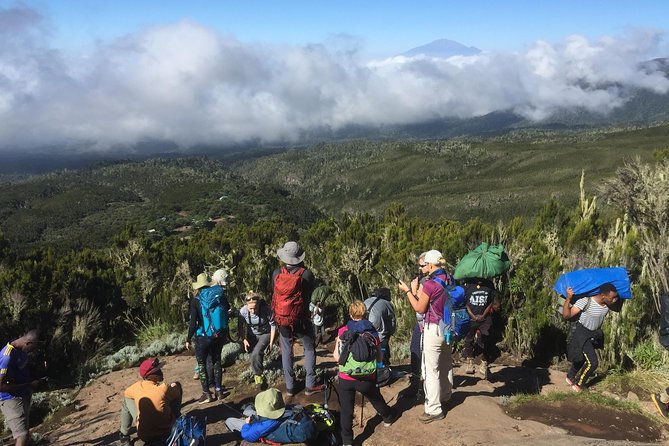
Reviewed · LEMOSHO ROUTE CLIMBS
7 days Lemosho route
The Lemosho Route gives you Kilimanjaro at its most varied. You begin in thick rainforest on the western side of the mountain, cross the open Shira Plateau, climb toward Lava Tower, and finish at Uhuru Peak at 5,895 meters. It is a strong choice if you want lower trail traffic and a better acclimatization pattern than a rushed climb.
I like the route’s slow climb through several climate zones, and I like the practical support: airport pickup, a hotel night in Arusha, an equipment check, porters, a cook, camping gear, and private guiding. The main catch is the name. It is sold as a seven-day Lemosho trek, but the supplied schedule runs across eight days, including arrival and the final descent.
Key points to know before booking
- Londorossi Gate begins the climb in rainforest, with a chance to spot colobus monkeys.
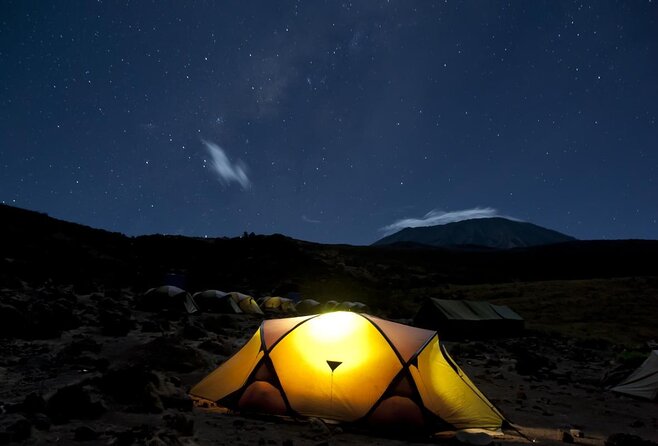
- Shira 2 Camp sits at about 3,840 meters, giving you an early altitude test and broad views toward the Western Breach.
- Lava Tower and Barranco Camp form the key acclimatization day, with a climb to 4,630 meters followed by a descent to sleep lower.
- The private format suits a pair, since the $6,300 price covers up to two people rather than charging per person.
- Summit day is long and demanding, with about eight hours to Uhuru Peak followed by a seven to eight-hour descent to Mweka.
- The trek includes guides, porters, transport, camping gear, and meals, but not flights, visas, or personal trekking equipment.
Why the Lemosho Route is worth considering
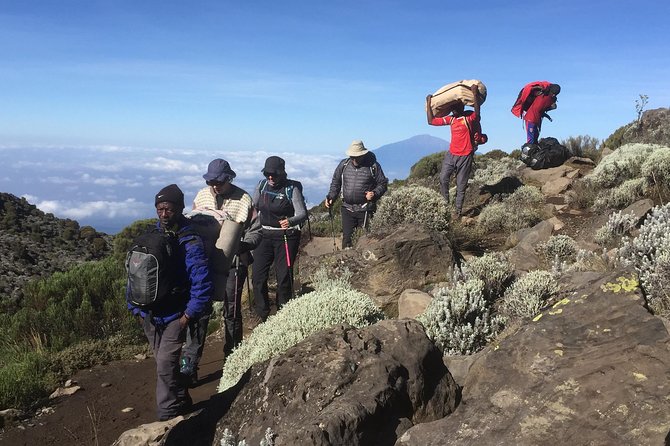
Lemosho begins far from the busiest eastern approaches to Kilimanjaro. That matters during the first days, when the forest feels more like a genuine mountain journey than a procession of people heading uphill. The route eventually joins the Machame trail at Shira 2, but you get a quieter start before reaching the shared southern circuit.
I like the way this route builds altitude in stages. You do not simply race toward the summit. You sleep at Shira, climb high to Lava Tower, then descend to Barranco before moving toward Barafu Camp. That climb high, sleep lower pattern gives your body a useful chance to adjust.
The company recommends at least seven days for Lemosho and prefers eight for better acclimatization and summit success. The schedule supplied here includes arrival in Arusha on Day 1, six nights on the mountain, the summit and descent on Day 7, and the final walk out on Day 8. Check the exact count with the operator before paying, especially if you need to arrange flights around it.
More Lemosho Route climbs:
- Kilimanjaro climb by Lemosho Route (7-day)
★ 5.0 · 651 reviews - Kilimanjaro Climbing Lemosho Route 8 Days.
★ 5.0 · 186 reviews - 8-Day Small-group Lemosho Kilimanjaro Summit Trekking
★ 5.0 · 186 reviews
Day 1: Arusha arrival, briefing, and equipment check
Your trip begins with pickup from Kilimanjaro International Airport and a transfer to Arusha. The listed accommodation is Arusha Planet Lodge, where you meet the guide for a briefing and equipment check.
This first evening is more important than it sounds. Missing rain gear, warm layers, gloves, or suitable footwear can turn a hard trek into a miserable one. The operator says missing items can be rented that day, so arrive with enough time for a proper check rather than treating the evening as a formality.
The meeting point is in Arusha, and the stated start time is 8:00 a.m. The package includes transport, but you should confirm whether your own flight arrival fits the pickup plan. The one clear limitation is that flights and visas are not included.
Day 2: Londorossi Gate and the first rainforest walk
After breakfast, you drive roughly two hours from Arusha, at about 1,400 meters, to Londorossi Park Gate at 2,100 meters. The final 45 minutes use a rough forest track, and a four-wheel-drive vehicle is required.
Near the gate, you receive a packed lunch and can buy mineral water. Your guides and porters register with Tanzania National Parks Authority, organize supplies, and begin the three-hour walk through montane forest.
This is a gentle opening by Kilimanjaro standards. The forest is lush, shaded, and alive with birds and monkeys. Keep an eye out for colobus monkeys, one of the more memorable details of this first section.
The drawback is the road. The long drive and bumpy final stretch make this a full day even though the hike is short. Your first camp is not described in detail, so ask the operator for the exact camp name, elevation, and expected arrival time.
Day 3: Shira Plateau and the first cold night
The trail leaves the rainforest and enters heather moorland. You cross streams and walk across the Shira Plateau toward Shira 2 Camp, at about 3,840 meters.
The stated hiking time is about six to six and a half hours. Your tents should be ready before you arrive, and porters prepare drinking and washing water. Evening snacks and dinner come from the camp chef.
Shira 2 is one of the trip’s strongest stops. You get wide views toward the Western Breach and its glaciers, while a nearby stream gives the camp a useful sense of place. The open setting also brings a sharp drop in temperature. The schedule warns that temperatures can fall below freezing, so a warm sleeping system and dry night clothes are not optional comforts.
This is also your first serious altitude check. At nearly 3,840 meters, you may feel the thin air even on a moderate walk. Move slowly, drink regularly, and tell your guide about headaches, nausea, or unusual breathlessness rather than trying to hide symptoms.
More seven-day trips in Kilimanjaro:
- Kilimanjaro climb, Machame Route (7-day)
★ 5.0 · 262 reviews - Climbing Kilimanjaro through 7 days Machame Route
★ 5.0 · 151 reviews - 7-Day Machame Kilimanjaro Summit Tour from Arusha
★ 5.0 · 125 reviews - 7 Days Kilimanjaro via Machame route affordable price
★ 5.0 · 110 reviews
Day 4: Lava Tower, 4,630 meters, then Barranco
Day 4 is the route’s classic acclimatization day. You leave the moorland behind and enter semi-desert terrain, walking east for about five hours toward Lava Tower.
Lava Tower reaches 4,630 meters. You eat a packed lunch there and may climb the tower if weather permits. Even if you do not make the optional climb, reaching this height gives your body a valuable test before the summit push.
The important move comes after lunch. You descend roughly 680 meters to Barranco Camp, at about 3,950 meters. You sleep lower than Lava Tower, but still high enough to keep the acclimatization work going.
Headaches and shortness of breath often begin around this point. The itinerary itself warns you to expect altitude effects. That is useful advice, but it does not make symptoms harmless. Your guide needs to know how you feel, and the pace should remain controlled.
The day is listed at about seven hours and 15 kilometers. The terrain is rocky and exposed, and the repeated climb followed by descent can feel harder than the distance suggests. Still, this is exactly the kind of day that makes the route worth taking over a shorter itinerary.
Day 5: Barranco Wall and Karanga Camp
The day starts with the Barranco Wall, one of Kilimanjaro’s best-known sections. From below, it can look intimidating. The route is described as a Class 2 scramble, but you should still expect hands-on movement in places and a need to focus on your footing.
At the top, you get views toward Heim Glacier and may find yourself above the clouds. The trail then rises and falls through Karanga Valley before reaching Karanga Camp, at roughly 3,950 meters.
This is a short day, about four to five hours and approximately five kilometers. That shorter schedule is not wasted time. It gives you space to recover after Lava Tower while continuing to gain and lose elevation.
I would treat the Barranco Wall as a reason to pack gloves with good grip and keep your daypack light. The supplied information does not specify a technical climbing grade beyond Class 2, and no ropes or climbing equipment are listed, so ask the operator what the current route conditions require.
Day 6: Barafu Camp and a short rest before the summit
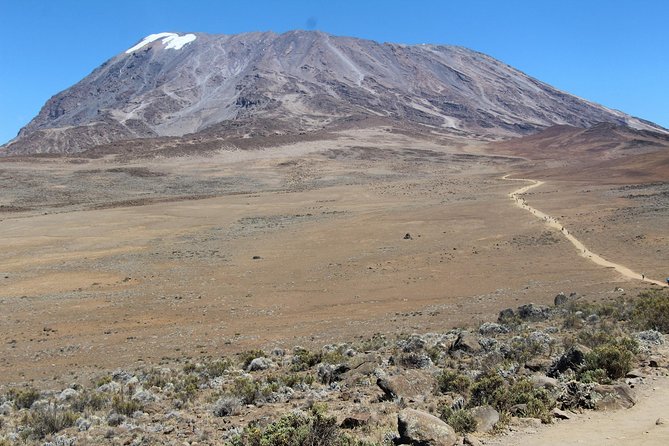
From Karanga, you climb for about two to three hours over four kilometers to Barafu Camp, at about 4,550 meters. The route intersects with the Mweka descent trail, which you use after reaching the summit.
Barafu means ice in Swahili. The camp sits on an exposed rocky ridge with no accessible water nearby. It is the final water stop for porters, and the tents can be exposed to wind and rock.
This is a short walking day but an important one. You should reach camp early enough to organize your summit clothing, headlamp, snacks, water, and poles before dark. An early dinner is served, then you rest for the midnight start.
The camp’s exposed position is a real consideration. It may feel cold, windy, and uncomfortable, and there is little to do besides eat, prepare, and sleep. That is normal for a summit camp. Do not judge the whole experience by your comfort here.
Day 7: Stella Point, Uhuru Peak, and the long descent
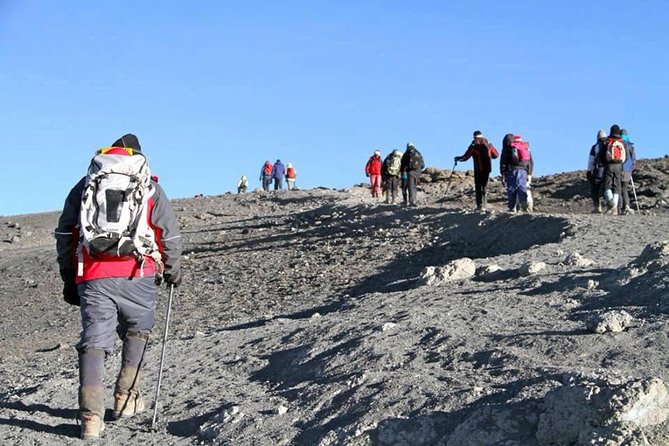
The summit day begins around 11:30 p.m. with tea and biscuits. You climb northwest over stone scree, usually in darkness, toward Stella Point at 5,685 meters.
The schedule gives about six hours to reach Stella Point. This is often the hardest mental section because the trail is steep, the air is thin, and your body has had little sleep. The slow pace is deliberate. Follow the guide’s rhythm and keep your effort steady.
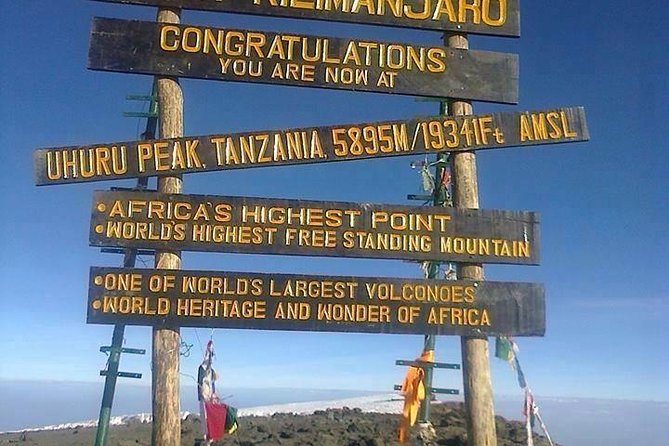
At Stella Point, you reach the crater rim and can watch sunrise. From there, it takes about two more hours over a snow-covered trail to Uhuru Peak, the highest point in Africa, at 5,895 meters.
The summit section is short on a map but demanding in practice. Cold, altitude, darkness, and fatigue all matter. Some climbers reach Stella Point but do not continue to Uhuru Peak, and the park awards different certificates: green for Stella Point and gold for Uhuru Peak.
After the summit, you descend to Barafu for a rest and then continue toward Mweka. The total schedule gives about seven to eight hours for the descent to Mweka, after roughly eight hours to reach Uhuru Peak. That makes this an exceptionally long day.
You should not expect a relaxed summit photo stop. Take your pictures, enjoy the view, and listen to your guide. The descent can be hard on knees and feet, especially after the overnight start.
Day 8: Mweka Gate and the mountain celebration
After breakfast, the crew holds a celebration with dancing and singing. You also present tips to the guides, assistant guides, chef or chefs, and porters. Tipping is not included in the listed price, so plan for this separately and ask the company for its current recommendation.
The walk from camp to Mweka Gate takes about three hours through forest. At the gate, you sign for your certificate. Those who reach Stella Point receive green certificates, while those who reach Uhuru Peak receive gold certificates.
The route then continues to Mweka village, about an hour and three kilometers farther. The schedule says the experience ends back at the meeting point, but it does not spell out every transfer detail. Confirm the vehicle transfer from Mweka and the final drop-off location before departure.
What the $6,300 private price buys
The stated price is $6,300 per group of up to two people. That works out to $3,150 each if two people share the booking, though you should confirm whether taxes, park surcharges, and any extra accommodation are already included.
For a private Kilimanjaro climb, the price includes the major operating pieces: park admission, camping equipment, guides, porters, transportation, breakfast, lunch, and dinner. The package lists seven breakfasts, seven lunches, and six dinners. Since the schedule contains eight days and dinner arrangements are not fully clear, ask exactly which meals are provided on arrival and departure days.
The value depends on what you want. If you prefer a private pair rather than a larger group, want airport pickup, and need help organizing porters and camp logistics, the package is easier to justify. If you already have equipment and are comparing per-person group treks, the total may look high.
Personal trekking gear is not included. That can mean boots, waterproof clothing, warm layers, gloves, a sleeping bag, a daypack, and other items, but the supplied details do not give a full equipment list. The operator can rent missing gear in Arusha, which is convenient, but confirm rental prices and availability before relying on it.
Guiding, food, and the human side of the climb
The strongest practical praise for this trip centers on organization, pacing, food, and crew support. The available feedback specifically credits good coordination between guides and porters, a steady pace for acclimatization, and meals described as generous and well balanced.
That combination matters more than fancy camp extras. On a high mountain, a guide who watches your pace and notices changes in your condition is worth far more than a quick itinerary. The crew has included Lucia as lead guide, Hamish as a safari guide and driver, and Matthew or Mathew in trip arrangements. Confirm your actual lead guide before the trek, since names may change.
The private format also gives you a direct line to the guide. You can discuss pace, rest stops, and symptoms without being tied to a large group’s speed. That does not remove the physical challenge, but it can make the days feel more manageable.
Who should choose this trek?
I would choose this route if you have a moderate level of fitness, can walk for several hours on uneven ground, and are willing to prepare for cold nights and high altitude. You do not need to be a technical climber, but the Barranco Wall, summit scree, and long descent require balance and stamina.
This is a good fit for a pair who value privacy and want a route with changing scenery. It is also useful for anyone who wants more acclimatization than a short Kilimanjaro schedule provides.
I would think twice if you dislike camping, struggle with long uphill days, or need a tightly fixed timetable after the trek. The summit day can last through the night and well into the following day. Poor weather can also force a change of date or a full refund, according to the stated policy.
Cancellation is free if you cancel at least 24 hours before the start time. Changes made within that final 24-hour period are not accepted, and bad weather may lead to a different date or full refund.
Should you book the Lemosho Route?
Book this trek if you want a quieter start, strong scenery, private guiding, and a route built around acclimatization. The progression from rainforest to Shira Plateau, Lava Tower, Barranco, Barafu, and the summit gives you a proper mountain journey rather than a quick uphill dash.
Before booking, get three points in writing: the exact number of trekking days, the full personal equipment and rental costs, and the transport plan after Mweka Gate. If those details are clear and you are comfortable with the $6,300 group price, this is a well-supported way for two people to attempt Kilimanjaro.
FAQ
Is this a seven-day or eight-day experience?
The tour is described as a seven-day Lemosho trek, but the supplied schedule runs from Day 1 through Day 8. Day 1 covers airport pickup, Arusha accommodation, briefing, and equipment checks, while Day 8 covers the descent to Mweka Gate and onward transfer. Confirm the final duration with the operator.
What is included in the price?
The price includes park admission, camping equipment, guides, porters, transportation, seven breakfasts, seven lunches, and six dinners. Flights, visas, and personal trekking equipment are not included.
How much does the private trek cost?
The stated price is $6,300 per group of up to two people. If two people share the booking equally, the basic cost is $3,150 per person.
Where does the trek start and finish?
The meeting point is in Arusha, Tanzania. Airport pickup is offered, and the listed activity ends back at the meeting point after the Mweka Gate descent and transfer.
How difficult is the Lemosho Route?
You should have a moderate level of physical fitness. The trek includes several multi-hour walking days, the Barranco Wall, high-altitude camps, a summit attempt from about 4,550 meters, and a long descent after reaching Uhuru Peak.
What happens if bad weather cancels the trek?
If poor weather causes cancellation, you are offered a different date or a full refund. For other cancellations, you must cancel at least 24 hours before the experience start time to receive a full refund.
Just added around Kilimanjaro
- 6 days Machame route climbing Mt.Kilimanjaro★ 5.0 · 8 reviews
- machame route★ 5.0 · 16 reviews
- Mt Kilimanjaro 6 days Marangu route hike★ 5.0 · 3 reviews
- Private Cycle to Kilimanjaro Bike Park Safari★ 5.0 · 6 reviews
- West Kilimanjaro cycling Adventures★ 4.5 · 8 reviews
- Kilimanjaro Climb • Marangu Route ~ 9 Day★ 5.0 · 4 reviews
- 3 Days Private E-Bike Tour in West Kilimanjaro★ 5.0 · 3 reviews
- Kilimanjaro Climb • Machame Route ~ 10 Day★ 5.0 · 6 reviews