
Reviewed · COOKING CLASSES
Private Market Tour and Tanzanian Cooking Class in Moshi
The heart of this Moshi outing is not a cooking demonstration in a polished studio. It is a market visit followed by lunch at Shida’s mud house, where you help make coconut dishes and ugali over a wood fire. William guides the market visit, while Shida leads the cooking and her family joins the meal.
I like the private format, which gives you room to ask questions, taste unfamiliar foods, and move at your own pace. I also like the direct link between market and kitchen: you see the ingredients, buy them, then help turn them into lunch.
The main consideration is comfort. The market can feel unfamiliar if you are cautious about food or cleanliness, and the cooking takes place in a simple home rather than a restaurant. You should also allow most of a morning or afternoon for the full five-and-a-half-hour outing.
Key points at a glance
- Meet William at your Moshi hotel: Pickup and drop-off make this easy to add before or after other Kilimanjaro plans.
- Taste the market before cooking: You may try local fruit, vegetables, herbs, dried sardines, and other foods as William explains their place in daily meals.
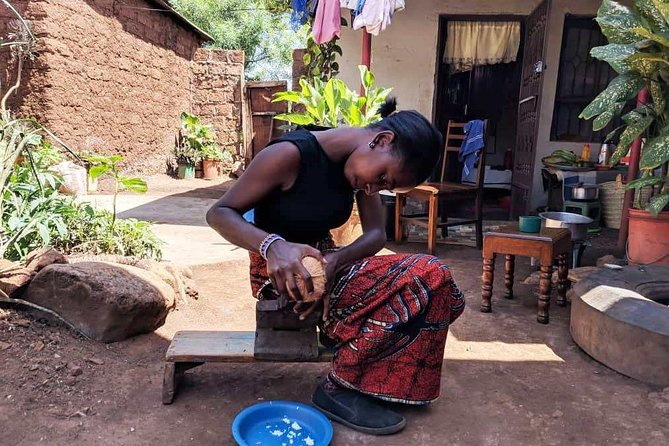
- Learn the buzi method: A small wooden seat with a grinder lets you shave coconut meat by hand and make fresh coconut milk.
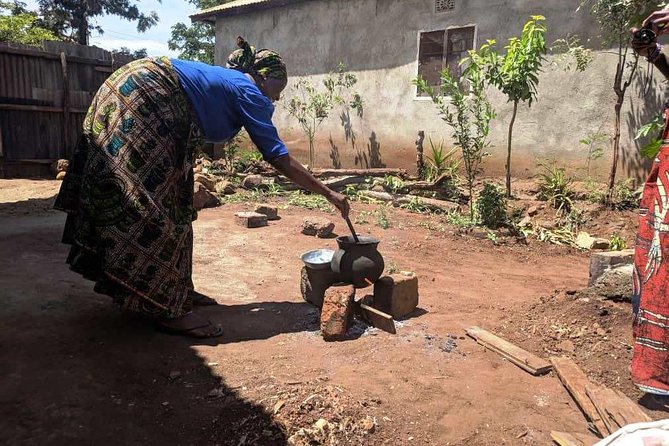
- Cook ugali over a wood fire: This cornmeal staple looks simple, but stirring it into the right texture takes effort and practice.
- Share lunch with Shida’s family: The meal is served outside on benches, with peanut brittle and homemade alcohol included.
- Pay for a private half-day: At $86 per person, the price makes the most sense for people who value personal contact and a small, flexible setting.
A market visit that gives the cooking meaning
The day begins with pickup at your Moshi hotel. William, a local Tanzanian and Marissa’s husband, handles the market portion and takes you through the stalls rather than sending you straight to a kitchen.
That order matters. You first see the raw materials of Tanzanian cooking, then use some of them later. Fruit, vegetables, herbs, and other produce are not just items on a recipe sheet. They are part of the ordinary food shopping that keeps a household running.
William also stops with you at favorite vendors. He explains ingredients, talks with sellers, and offers chances to taste foods along the way. One particularly memorable possibility is trying dried sardines, along with local fruit and vegetables. If you are unsure about an unfamiliar food, you can ask before tasting it.
The market is also where the outing feels most like daily life in Moshi. You are not simply looking at food from a distance. You are seeing how ingredients are selected and how a local family shops for a meal.
You should expect a sensory setting rather than a quiet one. Markets can be crowded, active, and unfamiliar, and the cleanliness may not match what you are used to at home. One useful strength of having William with you is that you can ask direct questions instead of guessing what something is or how it is normally prepared.
If food hygiene is a major concern for you, keep your expectations realistic. This is a local market visit, not a controlled tasting room. The chance to try foods is part of the appeal, but you never need to treat every sample as an obligation.
More Private Tours in Moshi
- Private Tour to Materuni waterfalls, coffee tour & Kikuletwa hot- springs
★ 5.0 · 49 reviews - Private 4-Days Northern Circuit National Parks in Tanzania
★ 4.5 · 26 reviews - Private Full-Day Trip to Materuni Waterfalls
★ 5.0 · 22 reviews
From the stalls to Shida’s mud house
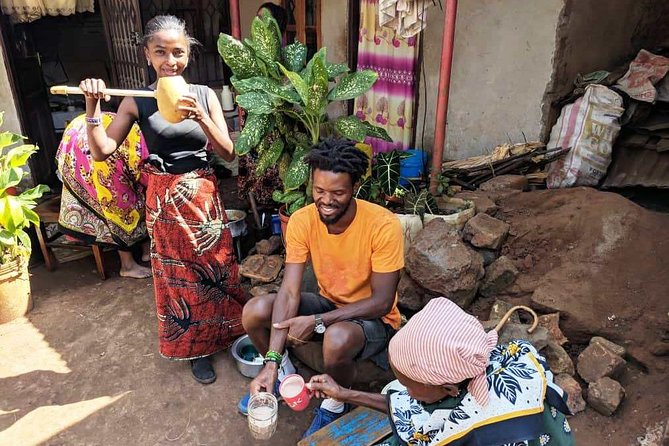
After the market, you go to Shida’s home, about 20 minutes away by walking or tuk-tuk. The short transfer helps connect the public market with the private household. You have seen the ingredients in their selling place, and now you see how they become a family meal.
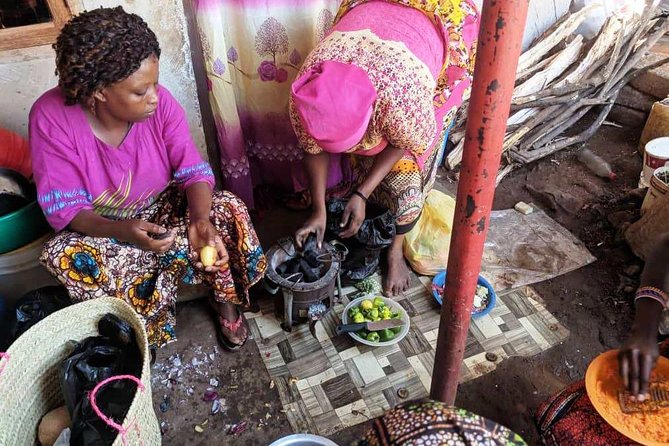
The setting is a mud house, with cooking built around a wood fire. That simplicity is important to the character of the outing. You are not watching a chef work in a commercial kitchen with modern equipment. You are learning a household method that depends on hand tools, fuel, timing, and repeated stirring.
The home setting also changes the tone. Shida, Marissa, and William are not only presenting dishes. The visit includes time with the family, and the meal is eaten outside on benches. You get a modest, personal look at one Moshi household rather than a broad lecture about Tanzania.
There is a practical point here: simple surroundings do not mean the activity is effortless. Some work is physical, and the wood fire adds heat, smoke, and a slower pace. If you prefer air-conditioned cooking schools, this will not be the right match. If you want to understand how a staple meal is made with basic tools, the setting adds real value.
One hour of coconut work and fire cooking
The hands-on cooking portion lasts about one hour. A central task is learning to make fresh coconut milk with a buzi, a small wooden seat fitted with a grinder for shaving coconut meat.
This is the kind of detail that makes the class worth considering. Coconut milk often appears as a smooth ingredient in a finished dish, but here you see the labor behind it. You grate the coconut by hand, then use the milk as a base for vegetable and stew dishes.
The buzi is also a useful cultural detail. It shows how a tool designed for one repeated household task can shape the way food is prepared. You are not simply stirring a sauce that someone else has measured. You are taking part in the earlier work that gives the dish its texture and flavor.
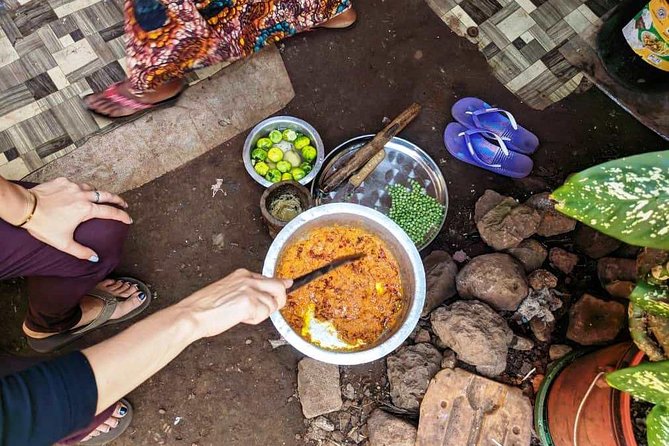
The other key lesson is ugali, a cornmeal staple served with sautéed vegetables. The ingredients are plain, but the method is not something you should dismiss as basic. Preparing ugali takes steady work to reach the proper consistency, and Shida takes pride in teaching the family method.
You will likely get more from this part if you ask to do the stirring yourself. The class is private, so you can stop and ask why the mixture is handled in a certain way. That personal format is more useful here than a large group demonstration where you might only watch from the back.
The menu is focused rather than sprawling. You are learning coconut preparation, vegetable or stew dishes, and ugali, not completing a long list of restaurant recipes. For some people, that focus is a benefit. You get time with the techniques instead of rushing through several unrelated dishes.
Sharing the meal outside with the family
Once the cooking is done, you eat the meal with the family outside the house. Ugali is served with sautéed vegetables, and the meal includes peanut brittle and homemade alcohol.
This is the social center of the outing. The point is not only to know what ugali contains. You have helped prepare it, and then you sit down to eat it in the home where the cooking took place.
The outdoor benches keep the meal informal. You are not being served a staged fine-dining course. The food is connected to the household, the fire, and the people who prepared it.
The homemade alcohol deserves a practical note. It is part of the offered hospitality, but you do not need to drink it. If you do not consume alcohol, make that clear to your hosts. Peanut brittle adds a sweet finish and gives you another local taste beyond the main meal.
This shared meal is likely to appeal most to people who enjoy conversation and cultural exchange. You should not book this expecting total privacy after the market. The activity is private in the sense that only your group participates, but the family is part of the meal and the welcome.
More cooking classes in Moshi:
- Zanzibar Cooking Class & Spice Tour
★ 4.5 · 77 reviews - Zanzibar: Spice Farm Tour with Traditional Cooking Lesson
★ 4.8 · 77 reviews - Half-Day Kuza Cave Swimming Adventure and Cooking Class
★ 4.5 · 44 reviews - NGO Lifted Strong – Traditional Tanzanian Cooking Class
★ 5.0 · 39 reviews
What $86 means for the value
The listed price is $86 per person. That is more than you would spend simply buying a market snack or eating a basic local meal, so the value rests in the full package: hotel pickup and drop-off, a private market visit, food tasting, transport to the home, a hands-on lesson, ingredients, and time with the family.
For a solo visitor or couple, the private arrangement is the main reason to consider the cost. You are paying for attention from William and Shida, not just for a seat in a class. You can ask about ingredients, spend more time on a technique, and respond to the market as you go.
Group discounts may improve the value for friends or families. Since only your group participates, the cost can feel more reasonable when shared among several people who all want the same kind of local activity.
I would compare this price with what you want from your Moshi day. If you want a polished cooking school, a broad menu, or a formal restaurant meal, this may not be the best use of your money. If you want a personal household visit and a clear look at how food moves from market stall to family table, the price is easier to justify.
The outing lasts about five and a half hours. That is long enough to make the cooking and meal feel unhurried, but it also takes a substantial part of your day. Plan around it rather than squeezing it between tight transfers or other scheduled activities.
The activity is often booked around 16 days ahead, so leaving it until the last moment may not be wise if your dates are fixed. Confirmation arrives at booking, and a mobile ticket is offered.
Who will enjoy this Moshi cooking class
I would recommend this outing to you if you want:
- A private activity rather than a large group class
- A direct look at ordinary food shopping in Moshi
- Hands-on work with coconut, vegetables, and ugali
- A family meal in a local home
- A cultural activity that can fit into a Kilimanjaro visit
- A chance to ask questions without feeling rushed
It is especially well suited to curious eaters who enjoy trying unfamiliar ingredients. The market tasting can include fruit, vegetables, herbs, dried sardines, and other local foods, so you should arrive open to small surprises.
Families and small groups may also appreciate the private setup. Group discounts are available, and pickup reduces the need to arrange your own way to the market.
You may want to skip it if you need a highly polished kitchen, have strict concerns about home cooking conditions, or dislike sitting outside for a shared meal. The cooking is hands-on and somewhat laborious, and the menu centers on staple food rather than a long series of elaborate dishes.
Timing, transport, and small practical choices
Pickup and drop-off at your Moshi hotel remove one common problem: figuring out local transport before the day has started. After the market, the home is about 20 minutes away on foot or by tuk-tuk. The exact choice depends on the arrangement for your visit, but both options are part of the stated route.
Wear something suitable for a working kitchen and wood fire. The information provided does not specify a dress code, so you should simply favor practical clothing that you do not mind wearing around food preparation and an outdoor meal.
Come ready to participate. The value is lower if you only watch William and Shida work. Ask to grate coconut, stir the ugali, taste ingredients, and hear how the dishes fit into local meals.
Free cancellation is available if you cancel at least 24 hours before the start time. Cancellations or changes made less than 24 hours ahead are not accepted for a refund, and the cut-off follows local time.
Should you book this private Moshi tour?
Book it if you want your food lesson to lead somewhere real: from a Moshi market, to Shida’s kitchen, to a family meal outside the house. William’s guidance, Shida’s cooking instruction, the buzi coconut grinder, wood-fire ugali, and the shared meal give the day a clear sense of place.
The strongest reason to book is the personal contact. You are not merely learning a recipe. You are seeing ingredients chosen, prepared, and eaten in a local household.
Skip it if you want a luxury setting or a fast sightseeing stop. At $86, it is best viewed as a private cultural visit with food at its center, not as a cheap lunch or a formal culinary school. For the right kind of curious eater, it offers a memorable and practical way to connect a Moshi market with everyday home cooking.
FAQ
How long does the private market and cooking tour last?
The activity lasts approximately five hours and 30 minutes.
What is included in the cooking lesson?
You learn to grate coconut and make fresh coconut milk with a buzi, then prepare ugali and vegetable or stew dishes over a wood fire.
Who leads the experience?
William leads the market visit, while Shida teaches the cooking. Marissa and William are connected to Shida’s family, and the meal includes the household.
Is hotel transportation provided?
Yes. Pickup and drop-off at your Moshi hotel are offered.
Is this a private tour?
Yes. Only your group participates in the activity.
What food and drinks are part of the meal?
The meal includes ugali with sautéed vegetables, peanut brittle, and homemade alcohol.
Can I cancel for a full refund?
Yes, if you cancel at least 24 hours before the experience start time. Cancellations or changes made less than 24 hours before the start are not refunded.
More Market Visits in Moshi
- Full-Day Moshi Private Forest Walk and Local Market Tour
★ 5.0 · 4 reviews - Stone Town Guided Tour: Culture, Slave Market & Spice Market
★ 4.8 · 44 reviews - Arusha: Traditional Tanzania Cooking Class & Food Market Tour
★ 5.0 · 34 reviews - Tanzanite experience tour – Tanzanite shopping in Arusha
★ 5.0 · 12 reviews
Just added around Moshi
- Day trip to Materuni waterfall, Coffee tour and Moshi Nightlife★ 5.0 · 6 reviews
- Sip & Paint: Unleash Your Inner Artist!★ 5.0 · 7 reviews
- Rau Forest Bike tour★ 5.0 · 12 reviews
- Moshi city bike day trip★ 5.0 · 17 reviews
- Full-Day Moshi Private Forest Walk and Local Market Tour★ 5.0 · 4 reviews
- Private guided tour to the night lifestyle of Moshi town★ 5.0 · 13 reviews
- Savannah Escape & Active Culture Tour★ 5.0 · 9 reviews
- Moshi Hotspring★ 5.0 · 8 reviews
Cooking Classes, compared.
Half-Day Kuza Cave Swimming Adventure and Cooking Class
Read our review →
NGO Lifted Strong – Traditional Tanzanian Cooking Class
Read our review →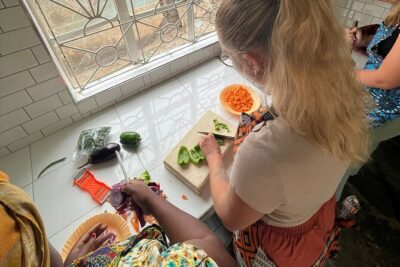
Cooking and Sewing & Jewelry Workshops in Arusha
Read our review →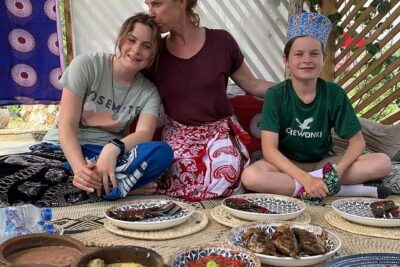
A private half day spice farm with a cooking lesson
Read our review →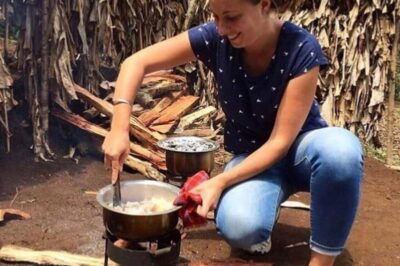
Local Tanzanian Cooking Class by Kingstone Asilia
Read our review →Browse the lists this tour appears in