
Reviewed · CULTURAL TOURS
7 Days Cultural and Wildlife Safari
This safari packs Tanzania’s Northern Safari Circuit into seven busy days, moving from flamingos and Maasai country to Hadzabe hunting grounds, the Serengeti plains, Ngorongoro Crater and Tarangire’s elephant country. The wildlife list is excellent, but the real strength is the mix of parks and human encounters.
I like the private group format, which gives your party more say over stops and pace than a large shared vehicle. I also like the range of experiences: a river-valley hike at Engaresero, a cultural visit around Lake Eyasi, and classic game drives. The main drawback is the amount of road time. This is a full Northern Circuit sampler, not a slow safari with long rests at one camp.
Key points to know before booking
- Lake Natron begins the trip with a river hike, flamingo habitat and Maasai guidance.
- Lake Eyasi adds a rare cultural encounter with Hadzabe and Datoga communities.
- Serengeti and Ngorongoro provide the strongest classic wildlife days.
- Tarangire is especially good for elephants and baobabs, with fewer visitors on many routes.
- The $3,748 price includes meals, park fees, bottled water and Flying Doctor emergency evacuation cover.
- A private departure suits families, couples or friends who want their own vehicle and guide.
Why this seven-day route works
Many Tanzania safaris focus only on Serengeti and Ngorongoro. This one takes a wider view. You get four major national park areas plus Lake Natron and Lake Eyasi, two places that add culture, geology and birdlife to the usual big-animal checklist.
That variety matters. One morning might involve a walk beside a river and waterfalls. Another brings a full-day game drive across open grassland. Later, you may look into Ngorongoro Crater from its rim before descending among hippos, buffalo and elephants.
You should also understand the trade-off. The route covers a lot of ground, and several days begin early with packed lunches. If you want a gentle holiday with plenty of free time, seven days may feel rushed. If you want a concentrated first look at northern Tanzania, the pace makes sense.
The trip is private, so only your group participates. That is useful when you want to stop for photographs, spend longer watching an animal, or adjust the day within the limits of park rules and driving distances. The supplied information names Erick as a guide on one Gilmag safari and Mary as a helpful trip planner, but you should confirm who will lead your particular departure.
More Safaris in Kilimanjaro
- Great Migration Safari In Tanzania
★ 5.0 · 71 reviews - 6 Days Tanzania Classic Safari
★ 5.0 · 52 reviews - 6-day Private Camping Safari Tour from Kilimanjaro Airport
★ 5.0 · 27 reviews
Day 1: Engaresero waterfalls at Lake Natron
After meeting Gilmag Safaris at Kilimanjaro International Airport, you receive a safari briefing before driving toward Lake Natron, about 136 kilometers west of Arusha. The first day is less about checking off animals and more about getting into a remote part of Tanzania.
After passing through three gates, a local Maasai guide accompanies you to the start of the Engaresero river walk. The round hike takes about two to three hours and follows the river valley. You can expect several waterfalls and pools where the water offers welcome relief after the drive.
This is a good opening because it gets you out of the vehicle. The walk also gives you a closer look at the dry country around the lake, where the river creates a sharp change in scenery. Wear shoes suitable for a wet trail and bring a small day bag, though the supplied details do not specify equipment or swimming conditions.
The day may feel long if your international flight arrives the same day. Since pickup is at Kilimanjaro International Airport, ask about the arrival time your operator recommends and the exact overnight location. The published route places you at Lake Natron, but does not provide the lodge name.
Day 2: Flamingos, early walking and Lake Manyara
Day two starts early with an easy guided walk from the lodge toward the southern part of Lake Natron. The purpose is to see the lake’s ecological variety and its flamingo breeding sites.
The lake is known for huge seasonal gatherings of flamingos. The supplied description gives an estimate of around two million birds migrating each year to nest on salty areas that form in the dry season. Conditions vary, so you should treat that figure as a seasonal possibility rather than a promise for your dates.
The walk also touches on local Maasai life around the lake. The area is described as isolated, with semi-nomadic communities living near the shore. You then see an ancient human footprint site believed to date back about 120,000 years. That combination, birds, local culture and early human history, gives the morning more substance than a simple photo stop.
After the lake visit, you pass through the gates and drive to Lake Manyara National Park for game viewing. Manyara is known for varied habitats and can provide a change from the open, dry country around Natron. The details supplied do not spell out the exact length of the Manyara game drive or overnight arrangement, so confirm both before paying.
This is one of the itinerary’s unclear points. Day two is already a substantial morning, followed by a transfer and park visit. You may have limited time inside Manyara rather than a full park day.
Day 3: Hunting with the Hadzabe at Lake Eyasi
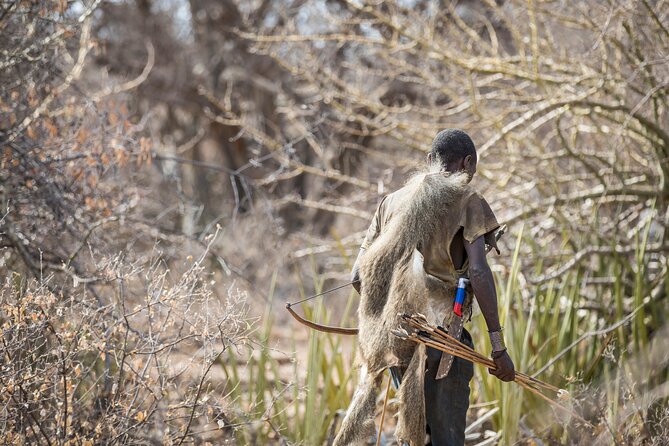
Lake Eyasi brings the trip’s most distinctive cultural encounter. You leave the lodge with a packed lunch and meet members of the Hadzabe community, one of East Africa’s remaining hunter-gatherer peoples.
The activity may include a hunt using strong bows and arrows. The bow strings are described as being made from giraffe tendons, while arrow treatments use poison extracted from the desert rose. The Hadzabe also gather wild fruits and berries, and their click-based language has links with languages spoken by Bushmen in southern Africa.
You should approach this visit with respect. It is not a staged wildlife show. The value comes from seeing how a community has used local knowledge and natural resources over a very long period. The supplied information says the Hadzabe have lived near the Rift Valley for more than 50,000 years, though exact historical figures of this kind are best treated as broad cultural context.
The day also includes contact with the Datoga tribe. That gives you two distinct cultural perspectives in one area. Since the route involves a hunt and community interaction, ask Gilmag how the visit is organized and what conduct is expected. The tour includes lunch, but the overall plan does not state how much time is spent with each community.
For many people, this will be more memorable than another standard game drive. For others, the cultural focus may feel outside their main safari interest. Know which kind of trip you want.
More cultural days in Kilimanjaro:
- Chagga Villages in Mount Kilimanjaro Cycling Day Trip
★ 5.0 · 42 reviews - Marangu waterfall & Coffee making Cultural Tour | BURIGI CHATO SAFARIS CO LTD
★ 5.0 · 12 reviews - Private Tour to Marangu Waterfalls, Chagga Caves, Coffee tour & Hot Springs
★ 5.0 · 7 reviews - Day Hike to Mount Kilimanjaro, Local experience and Chagga Culture
★ 5.0 · 6 reviews
Day 4: Olduvai Gorge and the road to Serengeti
Day four takes you toward Serengeti National Park through the Ngorongoro Conservation Area. You stop at the crater rim for the famous view before continuing to Olduvai Gorge.
Olduvai is one of the most important fossil sites connected with early human origins. The route includes the Olduvai Gorge Museum and the area associated with the Leakey family. Fossils and stone tools found here date back millions of years, and the site has helped researchers study early human development in Africa.
This stop breaks up the drive with a serious reason to pause. You are not just crossing from one park to another. You are passing through a part of the Rift Valley tied to some of the earliest evidence of human ancestors.
The first view of the Serengeti is another highlight. The name means endless plain, and the open country explains why the park is so famous. The stated size is about 6,900 square miles, or roughly 18,000 square kilometers. The scale is hard to grasp until the roads, animals and horizon all seem to run together.
The drawback is time. A crater-rim stop, museum visit and onward drive to camp make this another long day. Keep your camera accessible, but do not expect to arrive with a full evening to relax.
Day 5: A full Serengeti game drive
This is your main Serengeti wildlife day. After breakfast, you leave with lunch boxes and spend the day covering as much of the park as possible.
The Seronera area is a practical base because it can be within reach of both the southern plains and the Mara River area to the north, depending on the season and road conditions. The route includes several habitat types, such as swamps, woodland, soda lakes and short-grass plains.
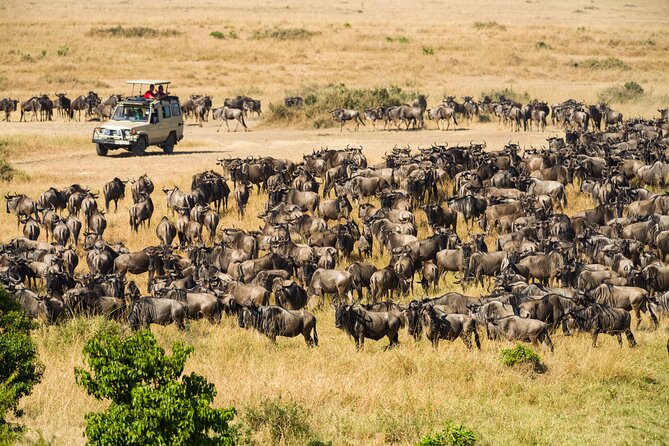
The resident animals are the reason this itinerary works outside migration season. You may see elephants, buffalo, gazelles, zebras, lions and other predators and herbivores. The description also points to large herds of wildebeest and zebra.
Migration timing is important. The route information places major movement through the area around April, May and November. Animal movements change from year to year, so you should not book solely on the promise of a particular herd location. The Seronera area has resident wildlife, which makes it a useful choice beyond the migration months.
A full-day drive can be tiring. You spend many hours on uneven roads, and lunch is carried with you rather than served back at camp. That is normal for a serious safari day, but it rewards patience. Your guide’s ability to read tracks and communicate with other drivers can shape what you see. One supplied account names Erick as a guide who was particularly effective at finding animals, but your assigned guide may be different.
Day 6: Into Ngorongoro Crater
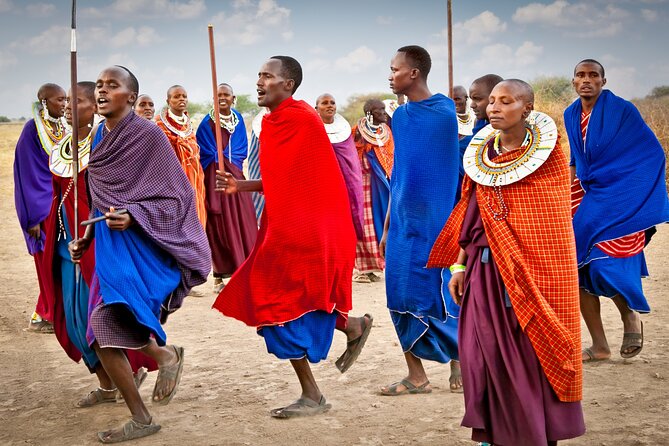
After an early breakfast, you leave camp with another packed lunch and drive toward the Ngorongoro Conservation Area. The centerpiece is the descent of more than 600 meters into the crater.
The crater’s enclosed setting and reliable water supply support a large range of animals. You may see wildebeest, zebra, buffalo, eland, warthogs, hippos and giant African elephants. Lake Magadi, a shallow alkaline lake in the southwest part of the crater, is one of the key stops.
This is also one of the better places on the route to look for black rhino. Sightings are never guaranteed, but the crater gives you a stronger chance than many open areas because animals use its grassland and water sources throughout the year.
Lunch at the hippo pool adds a memorable setting, though you should follow every instruction from your guide around the water. The afternoon drive continues before you leave the crater area.
Ngorongoro is visually dramatic, but it can also feel busy. Many safari vehicles want access to the same famous viewpoints and animal areas. The private format does not mean you have the crater to yourself, but it can make it easier to discuss timing and preferred stops with your guide.
Day 7: Elephants and baobabs in Tarangire
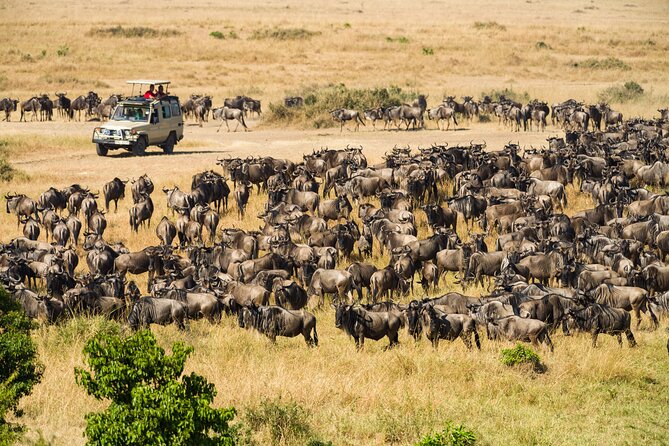
The final day moves to Tarangire National Park for game viewing. You have breakfast, make a relatively short drive and spend time among baobabs and the Tarangire River before an afternoon game drive.
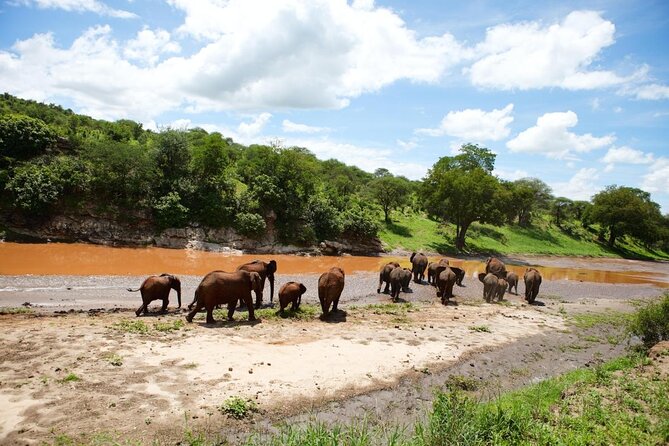
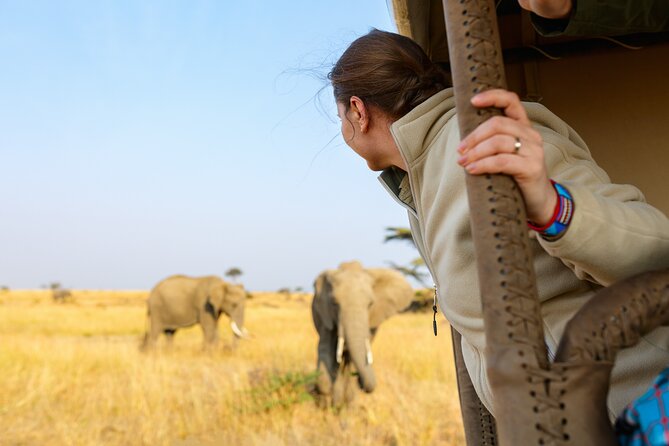
Tarangire is especially known for elephants. The park is described as having Tanzania’s largest concentration of them, and the river helps explain why animals gather here. The scenery is different from the Serengeti, with large baobabs marking the dry country.
Possible sightings include elephants, leopards, ostrich, lions, warthogs, zebras and cheetahs. Wild dogs are also mentioned as a fortunate sighting. There are no guarantees, but Tarangire broadens your wildlife list and ends the trip with a park that many short itineraries skip.
The supplied schedule gives day seven as a 12-hour activity and says the experience ends back at the meeting point. Because the airport is the stated starting point, confirm whether the final return is to Kilimanjaro International Airport or another location. Do not book a same-day onward flight without checking the actual return time.
What $3,748 includes, and what it does not
At $3,748 per person, this is a major purchase. The value depends on how much you want included in one private safari rather than arranging separate park visits.
The price includes breakfast for all seven days, lunch for all seven days and dinner for six days. It also includes park and activity fees, bottled mineral water, all stated taxes and Flying Doctor emergency evacuation cover. Those inclusions reduce the need to budget for several large extras.
The tour also offers airport pickup and group discounts. Since the departure is private, the per-person cost may make more sense for a small group sharing the vehicle than for one solo participant.
Tips for the guide are not included. Set aside money for that separately, and ask Gilmag about customary tipping guidance before departure. The supplied information does not state whether international flights, drinks beyond bottled water, lodge upgrades or personal expenses are included, so confirm those points in writing.
One important financial issue is the cancellation rule. The booking is non-refundable and cannot be changed for any reason. That makes travel insurance and firm flight planning sensible, though insurance terms are not part of the tour information.
Who should book this safari?
I would recommend this route to you if you want a broad first visit to northern Tanzania and do not mind early starts, packed lunches and long transfers. It is particularly well suited to a private group that values flexibility and wants more than the standard Serengeti and Ngorongoro pairing.
It is also a good fit if culture matters as much as animal sightings. Lake Natron’s Maasai connection and Lake Eyasi’s Hadzabe and Datoga visits give the trip a human dimension that many short safaris lack.
I would hesitate if your priority is a relaxed lodge holiday, a single park with repeated game drives, or guaranteed migration viewing. The schedule covers a lot of ground, and the exact accommodation details are not provided. Ask for the lodge and tented camp names, daily driving times, the final drop-off point and the guide assignment before booking.
FAQ
Where does the safari start?
It starts at Kilimanjaro International Airport in Tanzania, where a Gilmag Safaris representative meets you.
Where does the safari end?
The activity ends back at the meeting point, according to the supplied details. Confirm the exact final drop-off location with Gilmag before arranging onward travel.
Is this a private tour?
Yes. Only your group participates in the activity.
How long is the safari?
The safari lasts approximately seven days. The final Tarangire day is listed as lasting about 12 hours.
Which national parks are included?
The route includes Lake Manyara National Park, Serengeti National Park, Ngorongoro National Park or Conservation Area, and Tarangire National Park.
Does the safari include Lake Natron?
Yes. Lake Natron is visited on the first day, with a river-valley walk and a visit to the lake area on the second morning.
Does the safari include Lake Eyasi?
Yes. Day three includes a visit to Lake Eyasi, a hunt with the Hadzabe and contact with the Datoga tribe.
Are meals included?
Yes. Breakfast is included for seven days, lunch for seven days and dinner for six days.
Is bottled water included?
Yes. The tour includes an unlimited supply of bottled mineral water.
Are tips included?
No. Tips for the guide are not included in the price.
Is the booking refundable?
No. The experience is non-refundable and cannot be changed for any reason after booking.
Should you book the seven-day route?
Book it if you want maximum variety in one private safari: flamingos, waterfalls, early human history, Hadzabe culture, Serengeti wildlife, Ngorongoro’s crater floor and Tarangire elephants. The route gives you a strong first look at northern Tanzania and includes several useful costs in the headline price.
Before committing, get the exact accommodation list and daily driving plan. If you accept the pace and confirm the final transfer details, this is a well-rounded choice for a small group that wants both wildlife and culture rather than a safari made only of game drives.
More Seven-Day Trips in Kilimanjaro
- Kilimanjaro climb by Lemosho Route (7-day)
★ 5.0 · 651 reviews - Kilimanjaro climb, Machame Route (7-day)
★ 5.0 · 262 reviews - Climbing Kilimanjaro through 7 days Machame Route
★ 5.0 · 151 reviews - 7-Day Machame Kilimanjaro Summit Tour from Arusha
★ 5.0 · 125 reviews
More Wildlife Tours in Kilimanjaro
- Tanzania Wildlife Encounters – 6 Days
★ 5.0 · 277 reviews - Zanzibar: Jozani nature walk and wildlife tour
★ 4.5 · 89 reviews - 6 Day Tanzania Wildlife Mid range Safari
★ 5.0 · 54 reviews - 5 Days 4 Nights Tarangire, Serengeti , Ngorongoro & Manyara Wildlife Safari
★ 5.0 · 40 reviews
Just added around Kilimanjaro
- 6 days Machame route climbing Mt.Kilimanjaro★ 5.0 · 8 reviews
- machame route★ 5.0 · 16 reviews
- Mt Kilimanjaro 6 days Marangu route hike★ 5.0 · 3 reviews
- Private Cycle to Kilimanjaro Bike Park Safari★ 5.0 · 6 reviews
- West Kilimanjaro cycling Adventures★ 4.5 · 8 reviews
- Kilimanjaro Climb • Marangu Route ~ 9 Day★ 5.0 · 4 reviews
- 3 Days Private E-Bike Tour in West Kilimanjaro★ 5.0 · 3 reviews
- Kilimanjaro Climb • Machame Route ~ 10 Day★ 5.0 · 6 reviews
Cultural Tours, compared.
Stone Town Historical Cultural Walking Guided Tour
Read our review →
Arusha Guided Walking City Tour, Culture, Lifestyle & History
Read our review →
4h-Quad Explore the Heart and Culture of Nungwi and Kendwa
Read our review →
Materuni Waterfalls, Visiting Chagga Village, CoffeeTour Kikuletwa Hotsprings
Read our review →
The Best/Top Rated Cultural City Tour in Dar es Salaam
Read our review →
Mamas of Zanzibar – A Unique Cultural & Culinary Experience
Read our review →
Stone Town Guided Tour: Culture, Slave Market & Spice Market
Read our review →
Hidden Arusha Waterfall, Coffee & Village Tour (All-Inclusive)
Read our review →Browse the lists this tour appears in