
Reviewed · 8-DAY EXPERIENCES
8 Days, Migrations Safari-River crossing -(July to October)
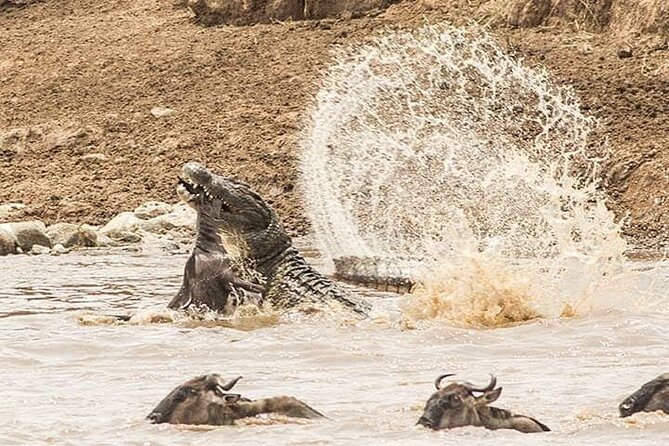
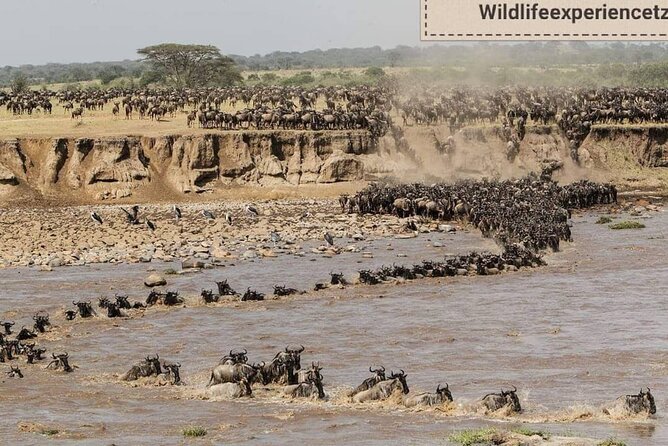
The main event here is the Mara River migration, where huge herds may gather at the water’s edge before making the dangerous crossing into the northern Serengeti. The timing is powerful, but never guaranteed. I like that this trip gives you several full days in the Mara area rather than one quick look, and I like the route’s variety, from Tarangire’s baobabs to Ngorongoro’s crater floor.
The tour also includes private transport, English-speaking driver-guides, lodge and luxury-camp accommodation, meals, drinks during game drives, and airport transfers. The trade-off is a demanding schedule, with game drives lasting up to 10 hours and long transfers between parks. You pay $5,600 per person, so this suits you best if the migration is your main goal and you value a private, guided safari over a shorter, cheaper circuit.
Key points to know before booking
- Mara River crossings are never promised: You may watch herds gather for hours, yet they may cross days later or not at all during your stay.
- Three days focus on the northern Serengeti and Mara area: That gives you better odds than a brief one-day visit, but it still requires patience.
- The route covers four major wildlife areas: Tarangire, Serengeti, Ngorongoro, and Lake Manyara.
- Private touring keeps the safari personal: Only your group participates, with pickup available and an 8:30 am start.
- The price includes many major costs: Lodges or luxury camps, park-related fees, meals, game drives, airport transfers, and selected drinks are covered.
- Expect long days in the vehicle: Several drives run for eight to ten hours, which is useful for wildlife viewing but tiring.
Why the Mara River is worth building a safari around
The Great Migration is not a single event on a fixed schedule. Wildebeest, zebras, and Thomson’s gazelles move in search of fresh grazing, and the herds can spread across a large area. In the northern Serengeti, the Mara River becomes one of the most dramatic obstacles in their path.
A crossing can be thrilling, but it is also unpredictable. Herds may bunch up at the riverbank, retreat, split into smaller groups, or wait for days. Crocodiles, steep banks, strong current, and the sheer number of animals make each crossing tense. You need to accept that nature sets the timetable, not the itinerary.
This safari gives you two full days around the Mara River, plus the preceding migration-focused day in the Serengeti. That is one of the strongest features of the route. A single afternoon would give you only a narrow chance. Three days give your guide more time to search, follow herd movement, and position the vehicle in the right area.
Still, you should not book this as a guaranteed crossing tour. You may see the herds beside the river without seeing them enter the water. Even so, watching thousands of animals gather, hearing their calls, and following their movement through the northern Serengeti can be memorable on its own.
More Safaris in Arusha
- 4 Days Group Camping Safari
★ 5.0 · 1,101 reviews - 5 Days Group Camping Safari
★ 5.0 · 730 reviews - 7-Day Premium Luxury Tanzania Safari All-Inclusive
★ 5.0 · 426 reviews
Day 1: Tarangire’s elephants and baobab trees
The safari begins from Arusha with a drive to Tarangire National Park. The park is known for large elephant herds, baobab trees, tree-climbing lions, and the Tarangire River, which provides an important year-round water source.
This is a good opening park because it offers a different setting from the open plains you will see later. The baobabs give the park a distinctive look, while elephants are often a major focus of the game drive. The river also helps explain why animals gather here, especially during dry periods.
Your first day is planned as an approximately eight-hour outing. That includes travel and game viewing, so it will feel full rather than leisurely. You will want to keep your camera ready from the start, but also pace yourself. This is the first of several long days.
Tarangire is not simply a warm-up stop. It adds variety to a safari built around migration. If you care about elephants and unusual trees as much as you care about wildebeest, this day makes the route more satisfying.
Day 2: Central Serengeti and resident wildlife
After breakfast, you move into the central Serengeti. This area is known for resident wildlife, including lions, leopards, elephants, buffalo, antelopes, and primates.
The central Serengeti matters because it is not dependent on catching the migration at one exact point. Wildlife remains in the area throughout the year, so your guide can search for predators and other animals while also tracking signs of the moving herds.
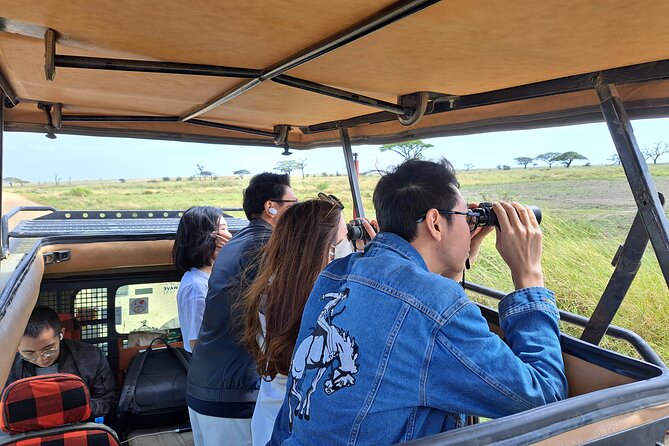
This is another approximately eight-hour day. The open country can make animal spotting feel expansive, but that also means wildlife may be spread out. Your English-speaking guide is expected to help with animal identification, behavior, and the wider story of the migration.
The company also states that some guides speak Spanish. Specific guide assignments are not guaranteed at booking, but the team includes names such as Tiger, Dullah, Joseph, and Anuary in its safari operation. If language matters to you, confirm your preferred guide and language before paying.
Day 3: Following the migration trails
Day three is a full game drive in the Serengeti, lasting about 10 hours. The focus shifts more firmly to the Great Migration and the animals that move with the wildebeest.
The scale is hard to picture until you are among it. The route describes around 200,000 zebras and 300,000 Thomson’s gazelles joining the wildebeest’s search for fresh grazing. The sound of millions of hooves crossing open ground is part of what makes this more than a standard big-game drive.
This day is also where guide quality matters most. A good driver-guide does more than point at animals. You want someone who can explain why the herds are moving, identify tracks and behavior, and adjust the search when conditions change.
The practical point is simple: ten hours in a safari vehicle is a long stretch. You may spend part of the day watching animals closely and part of it driving between sightings. Bring patience, sun protection, and a willingness to let the day unfold slowly.
More Arusha safaris to compare:
- 8 Days Great Wildebeest Calving Migration Safari from Arusha
★ 5.0 · 254 reviews - Group Safari 7 Days in Tanzania’s Main Parks
★ 5.0 · 240 reviews - Tanzania Simba Safari – 5 Days
★ 5.0 · 217 reviews - 5 Days Budget Private Safari, Tanzania
★ 5.0 · 191 reviews
Days 4 and 5: Two chances at the Mara River
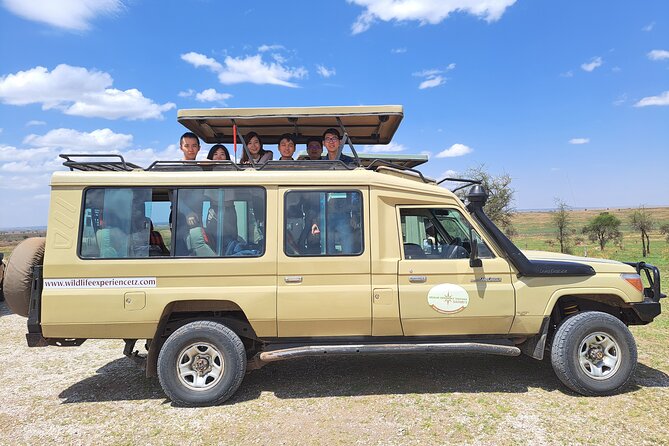
The fourth and fifth days concentrate on the Mara area in the northern Serengeti. Both are planned as full-day game drives of about 10 hours, with the Mara River as the main feature.
This repeated focus is the heart of the itinerary. You are not rushing north for a photograph and immediately leaving. You have two substantial days to look for herds, river activity, resident animals, kopjes, woodland, river vegetation, and open plains.
The scenery here differs from the central Serengeti. Rocky kopjes break up the open ground, while trees and river vegetation provide cover for wildlife. The area has a character similar to Kenya’s Masai Mara, but this experience keeps you on the Tanzanian side.
The key limitation remains timing. The animals may cross north one day and head south again a few days later. You could be close to a crossing point and still wait without success. That is not a failure of the safari, but it is a risk you should understand before spending $5,600.
You will also need energy for two consecutive long days. A private vehicle helps because you can focus on your group’s interests, but it does not shorten the drives. If you prefer easy mornings and short outings, this schedule may feel intense.
Day 6: Olduvai Gorge and the road to Ngorongoro
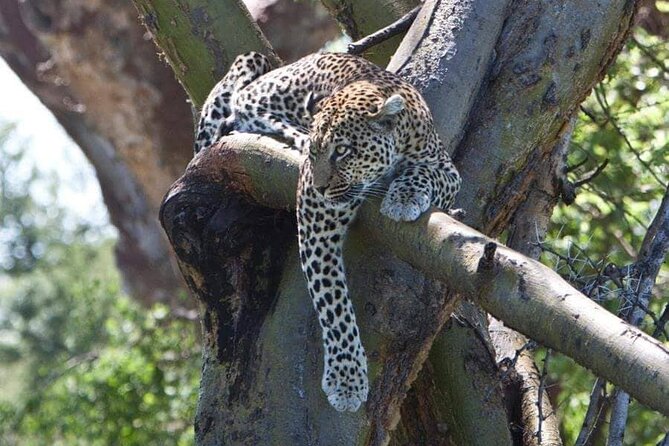
Day six combines another Serengeti game drive with a transfer toward the Ngorongoro Conservation Area. Along the way, the itinerary includes the Olduvai Gorge museum, one of East Africa’s best-known archaeological sites.
Olduvai connects the wildlife trip with the much older human story of the region. At nearby Laetoli, hominid footprints preserved in volcanic rock date back about 3.6 million years. That detail gives the route a useful change of pace after several days focused on animals and migration.
The plan then takes you to the Ngorongoro rim for the night. This is a transfer-heavy day, and the stated schedule includes morning wildlife viewing before the archaeological stop and the climb toward the crater rim. The exact timing can depend on road conditions and how long the morning sightings take.
You should think of this as a transition day rather than a relaxed museum visit. It links the Serengeti to the next major wildlife setting while adding context about early human history.
Day 7: Ngorongoro Crater from an early start
An early breakfast leads to a game drive inside Ngorongoro Crater. The crater is the focal point of the Ngorongoro Conservation Area, a highland region along the eastern arm of the Rift Valley.
The crater’s enclosed setting makes it especially appealing for wildlife viewing. The area was created to conserve wildlife and natural resources, while also supporting indigenous communities and tourism. The route notes the presence of a very small remaining black rhino population, so this is a place where careful observation matters.
The game drive lasts about eight hours, and the early start is sensible. It gives you more time inside the crater and puts the day’s main wildlife experience first. Afterward, you return to the lodge.
Ngorongoro adds a different mood to the safari. The Mara River is about movement and uncertainty. The crater feels more contained, with a clear natural boundary and a concentrated wildlife experience. It is one of the route’s strongest contrasts.
Day 8: Lake Manyara before returning to Arusha
The final day takes you to Lake Manyara National Park after breakfast. The park is known for groundwater forests, baboons, blue monkeys, and tree-climbing lions.
This is another useful change of setting. Instead of the open Serengeti plains and the crater floor, you get a lush forest environment with primates and dense vegetation. The park’s tree-climbing lions are a particular draw, although animal sightings are never guaranteed.
The plan allows the rest of the day for game viewing before a transfer to Arusha or the airport for your flight home. Since the departure time is not specified, you should confirm the timing carefully if you have a same-day flight.
The company includes airport transfers, which can make the final day easier. Accommodation and meals in Arusha before or after the safari are not included, so build those costs into your overall budget.
What the $5,600 price covers
At $5,600 per person, this is a major purchase. The value depends on how much you want the private format and how important the migration season is to you.
The listed inclusions cover many expenses that can otherwise add up quickly:
- Private safari participation for your group
- Lodges and luxury camps
- Professional English-speaking guide
- Game drives
- All fees and taxes
- Airport transfers
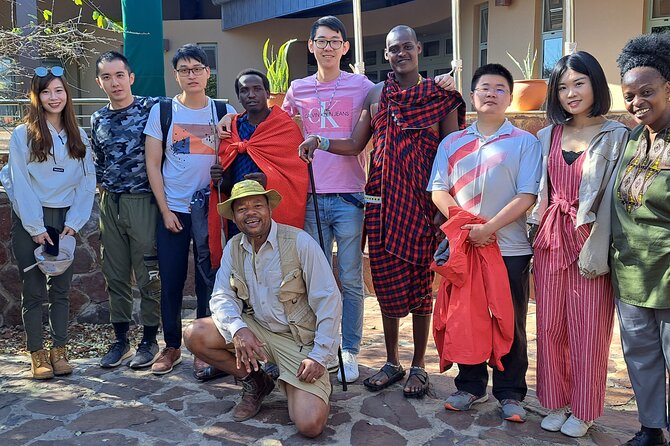
- Maasai village visit
- Seven dinners
- Eight lunches
- Seven breakfasts
- House wine, soft drinks, and premium beers during game drives
That package reduces the need to manage separate park charges, meals, and transport bookings. A private tour also means you are not sharing the vehicle with unrelated passengers.
The price does not include tips for the driver-guide, hard drinks, personal items, or accommodation and meals in Arusha before and after the safari. Those are not minor details, especially if you plan extra nights in town.
The tour also includes a Maasai village visit, but the supplied schedule does not assign it to a particular day or explain its format. Ask the operator how long the visit lasts and what is included if this is important to you.
Comfort, guide style, and daily rhythm
This is a private safari, so only your group participates. That gives you more control than a shared departure and may make it easier to pause for wildlife, ask questions, or manage the pace within the day’s limits.
The company has operated since 2010 and describes its guides as experienced in wildlife spotting, identification, behavior, and tourism. English is specified, and Spanish-speaking guides are also available within the team. Ask about guide assignment if you want a particular language or have a strong interest in birds, predators, photography, or migration behavior.
The daily rhythm is active. Most days begin after breakfast, while the Ngorongoro crater drive begins after an early breakfast. Game drives run around eight to ten hours, so you should be comfortable spending much of the day in a safari vehicle.
Meals are provided throughout the safari, and lodge or luxury-camp stays are included. The exact properties are not named, so ask for the accommodation list before booking if room style, location, or comfort level matters to you.
Who should book this safari
I would choose this trip if you want the Mara River to be the main purpose of your Tanzania visit and you are willing to accept uncertainty. The three northern Serengeti days give you a better opportunity than a quick migration stop, while Tarangire, Ngorongoro, and Lake Manyara keep the route varied.
It also suits you if you want a private vehicle, a guide-led experience, included airport transfers, and a package that covers most meals and park costs. Families and small groups may appreciate the private format, and the operator states that most people can participate.
I would think twice if you dislike long drives, need a slow schedule, or expect a guaranteed river crossing. You should also compare the cost with shorter Tanzania safaris if the migration is only one interest among many.
Free cancellation is available when you cancel at least 24 hours before the experience start time. Changes or cancellations made within 24 hours are not accepted for a refund, and the cutoff uses local time.
Should you book the 8-day migration safari?
Book it if you want a serious migration-focused safari with several chances to reach the Mara River, plus a broad northern Tanzania route. The best reasons are the private format, the long northern Serengeti stay, the variety of parks, and the number of major costs included.
Do not book it expecting nature to follow a timetable. The crossing may happen while you are there, or the herds may wait. If you can enjoy the search itself, the resident wildlife, the scenery, and the guide’s explanations, this is a strong use of eight days. If the crossing is your only acceptable outcome, no safari can honestly promise that result.
FAQ
Where does the safari begin?
The safari begins in Arusha, Tanzania, with pickup offered. The stated start time is 8:30 am.
How long is the experience?
The safari lasts approximately eight days.
When does this safari operate?
The experience is scheduled for the migration season from July through October.
Is the tour private?
Yes. Only your group participates in the activity.
Is airport pickup or transfer included?
Yes. Airport transfers are included.
Which national parks and areas are visited?
The route includes Tarangire National Park, Serengeti National Park, the Mara River area, the Ngorongoro Conservation Area, Olduvai Gorge, and Lake Manyara National Park.
Is a Mara River crossing guaranteed?
No. The crossing can be difficult to witness and depends on herd movement and timing. Herds may gather near the river without crossing.
What meals are included?
The package includes seven breakfasts, eight lunches, and seven dinners.
What is not included in the price?
Tips for the driver-guide, hard drinks, personal items, and accommodation and meals in Arusha before and after the safari are not included.
More Eight-Day Trips in Arusha
- 8 Days 7 Nights Tanzania Wildlife & Culture Lodge Safari
★ 5.0 · 17 reviews - 8 Day Safari The Best of Tanzania & Lake Eyasi
★ 5.0 · 11 reviews - 8 Days Green Season Offer – Luxury Serena Safari
★ 5.0 · 10 reviews - 8 Days Follow the Wildebeest Migration River Crossing Safari
★ 5.0 · 5 reviews
Just added around Arusha
- From Arusha: 11 days The Classics Northern Tanzania safari★ 5.0 · 11 reviews
- 6-Day Mount Meru Climb through Momella Route Guided Tour★ 5.0 · 5 reviews
- Private Day Trip to Arusha National Park with a Walking Safari★ 5.0 · 4 reviews
- From Arusha : 11-day Amazing North Tanzania safari tour★ 5.0 · 4 reviews
- Walking Day Tour to Safari in Arusha National Park★ 5.0 · 5 reviews
- 2 Days Tanzania Midrange Group Join Safari★ 5.0 · 7 reviews
- Best 5 Days Tanzania Private Luxury Safari with luxury Lodges★ 5.0 · 12 reviews
- Waterfall & Coffee Walking Tour★ 5.0 · 6 reviews
8-Day Experiences, compared.
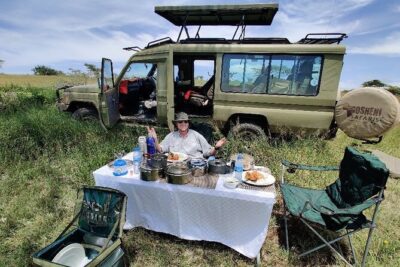
8 Days Great Wildebeest Calving Migration Safari from Arusha
Read our review →
8-Day Small-group Lemosho Kilimanjaro Summit Trekking
Read our review →
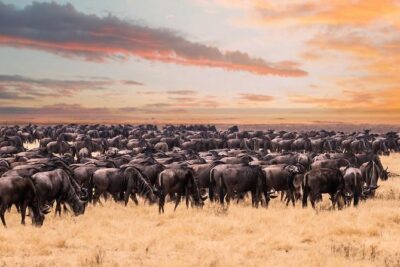
8 Day Spectacular Migration Serengeti mid -Range Tanzania Safari
Read our review →
Kilimanjaro climb, Northern Circuit route (8-day)
Read our review →
8 Days Safari (Lake Manyara /Tarangire/Serengeti/Ngorongoro)
Read our review →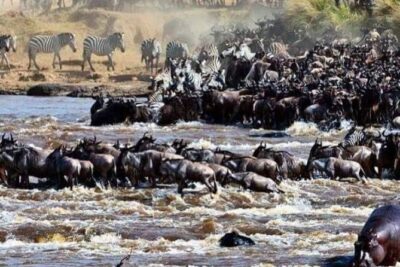
8 Days Great Wildebeest Migration – Mara River Crossing
Read our review →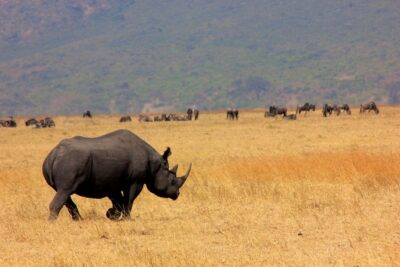
8 Days 7 Nights Tanzania Wildlife & Culture Lodge Safari
Read our review →Browse the lists this tour appears in