
Reviewed · GREAT MIGRATION SAFARIS
8 Days Follow the Wildebeest Migration River Crossing Safari
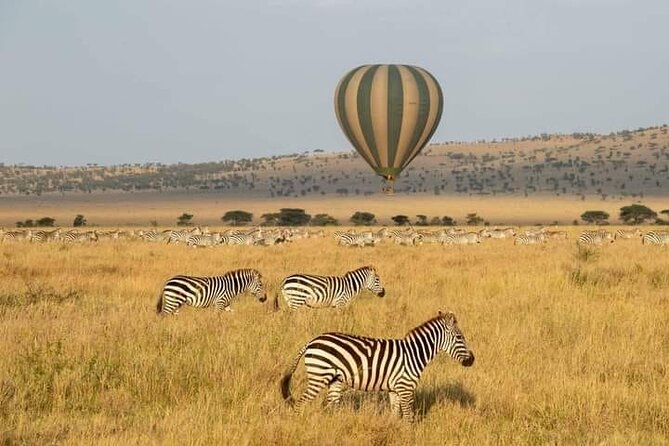
The real draw here is the chance to follow the Serengeti wildebeest migration across several major wildlife areas in one private, eight-day trip. You’ll search for newborn calves around Ndutu, look for big cats in central Serengeti, and visit Ngorongoro Crater, with Tarangire added at the front.
I like the mix of habitats and the fact that park fees, meals, water, and unlimited game mileage are included. I also like the private format: your group travels together instead of joining strangers in a shared vehicle. The main caution is important: the description mixes the December to April calving season with a northern Mara River crossing itinerary that is normally associated with July to October. Confirm the exact seasonal route before paying.
Key points to know before booking
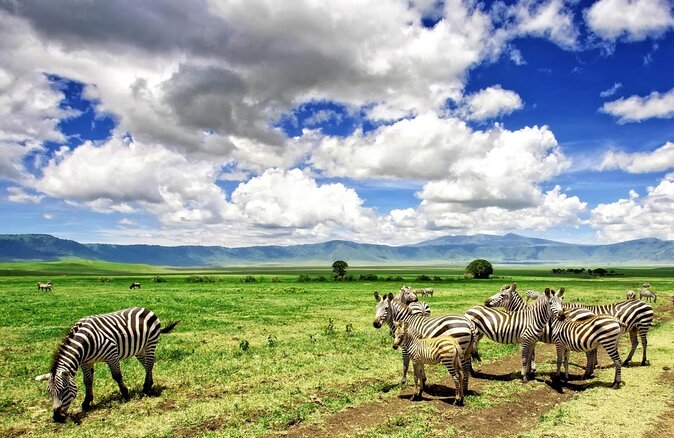
- Migration focus: The plan aims at the Ndutu, southern Serengeti, and central Serengeti areas, where wildebeest commonly gather during calving season.
- Mara River warning: The northern Serengeti section describes river crossings, but crossings are unpredictable and the stated July to October timing does not match the December to April calving focus.
- Private safari: Only your group participates, giving you more control than a shared departure.
- Strong wildlife variety: Expect opportunities for elephants in Tarangire, the Big Five in Serengeti, large predator prides, birds, and Ngorongoro’s crater wildlife.
- Two accommodation levels: You can choose mid-range Embalakai Authentic Camp or semi-luxury Serengeti Serena Lodge for the central Serengeti night.
- Full-board pricing: At $4,539 per person, the package includes seven breakfasts, seven lunches, seven dinners, park and crater fees, water, and an English-speaking driver-guide.
Why this safari is really two migration trips in one
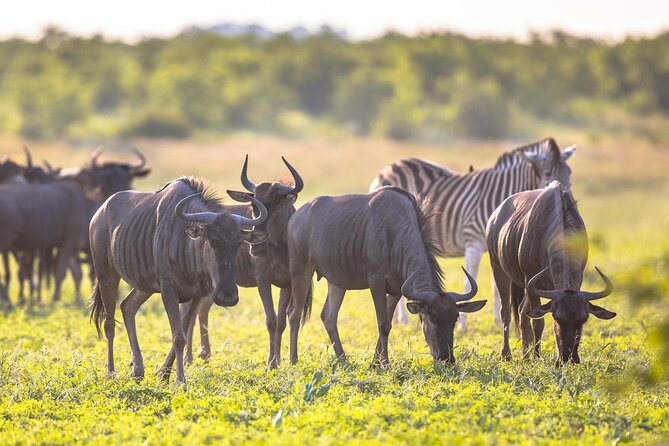
The itinerary promises an ambitious sweep through northern Tanzania. It begins with Tarangire, continues into Serengeti, reaches the northern Wagakuria area, returns to central Serengeti, then finishes at Ngorongoro Crater before returning to Arusha.
That route gives you variety, but it also creates a planning question. The first part of the description is built around the December to April calving season, especially around Lake Ndutu and the southern Serengeti. The later days focus on the Mara River in northern Serengeti, where crossings are generally linked with the July to October movement.
You should ask Congema Safaris which version applies to your travel dates. If you go between December and April, the Ndutu and southern Serengeti focus makes sense. If you go from July to October, northern Serengeti and the Mara River are more relevant. The trip cannot promise both seasonal highlights at the same time.
That does not make the safari a poor choice. It means the route needs clarification. A good migration trip follows the animals, not just a fixed brochure route.
More Great Migration Safaris in Arusha
- 8 Days Great Wildebeest Calving Migration Safari from Arusha
★ 5.0 · 254 reviews - 7 days great migration safari
★ 5.0 · 77 reviews - 7-Day Great Migration Safari
★ 5.0 · 14 reviews
Arusha arrival: a practical first night
Day one is mainly a transfer and rest day. You’ll be met at Kilimanjaro International Airport and driven about 55 kilometers, roughly one hour, to Arusha.
This is useful after a long international flight. You are not expected to begin a game drive immediately, and the extra time lets you prepare for an early start. The listed safari start time is 6:00 a.m., so an evening in Arusha matters.
The accommodation is described as your chosen lodging, but the exact property is not supplied. Ask where you will stay and whether airport pickup, dinner, and luggage storage are included. The tour offers pickup, and the ending transfer takes you back toward Arusha and Kilimanjaro International Airport.
Tarangire gives the safari an elephant-heavy opening
After breakfast on day two, you drive about 120 kilometers, or two hours, to Tarangire National Park. The plan allows a full day in the park, with breakfast, lunch, and dinner included.
Tarangire is a good first park because it has a quieter feel than the main Serengeti circuit and is known here for elephants, birding, and seasonal elephant movement. You’ll get an early taste of open-country wildlife without using the first full day only for long-distance transit.
The schedule calls for a nine-hour day. That includes driving, entry procedures, and game viewing, so expect a full day rather than a relaxed morning outing. The tour includes park entry fees and unlimited game mileage, which is useful when animals are spread out and your guide needs to search.
Tarangire is not the main migration stop. Its value is contrast. You begin with a different type of wildlife setting before moving toward the huge plains of Serengeti.
Entering Serengeti on the long road to Seronera
Day three covers about 245 kilometers and is listed as roughly four and a half hours of driving, though road conditions and wildlife stops can affect the timing. The destination is Seronera in central Serengeti.
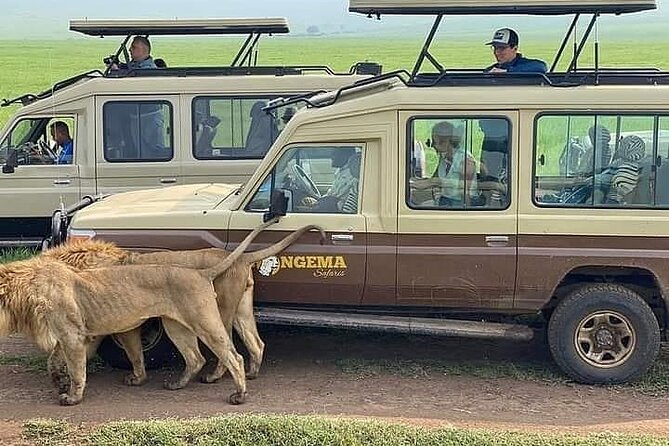
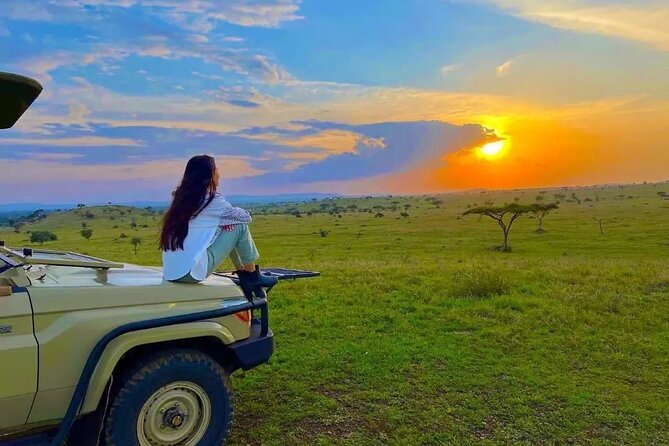
The park is described as the Endless Plain, and that name tells you what to expect: broad open country, resident wildlife, and a sense of scale that makes the migration easy to understand. The focus is not only wildebeest. Serengeti is also known for lions, leopards, elephants, rhinos, and buffalo.
You’ll have full-board meals, but the schedule remains a long one, around nine hours. Ask how much of the day is planned for game viewing and how much for the transfer itself. That distinction matters on safari, especially if you are hoping to spend the best light looking for animals rather than sitting in transit.
The included English-speaking driver-guide is central to the experience. The company’s wider team includes Sébastien and Musa Osman, both named in the supplied feedback, but the exact guide assigned to your vehicle is not stated. Request the guide’s name before departure if that matters to you.
More Safaris in Arusha
- 4 Days Group Camping Safari
★ 5.0 · 1,101 reviews - 5 Days Group Camping Safari
★ 5.0 · 730 reviews - 7-Day Premium Luxury Tanzania Safari All-Inclusive
★ 5.0 · 426 reviews - Group Safari 7 Days in Tanzania’s Main Parks
★ 5.0 · 240 reviews
The migration is more than wildebeest
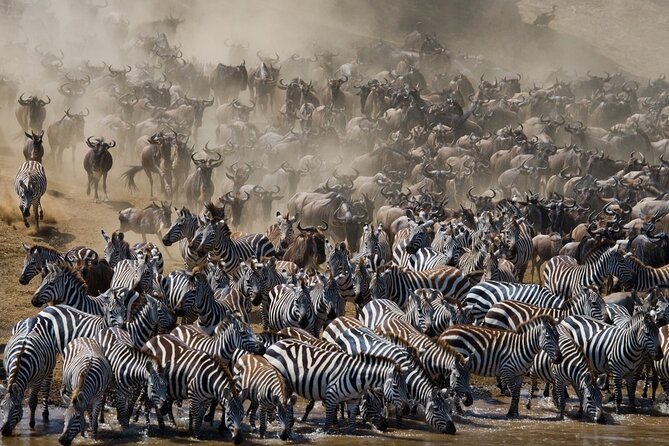
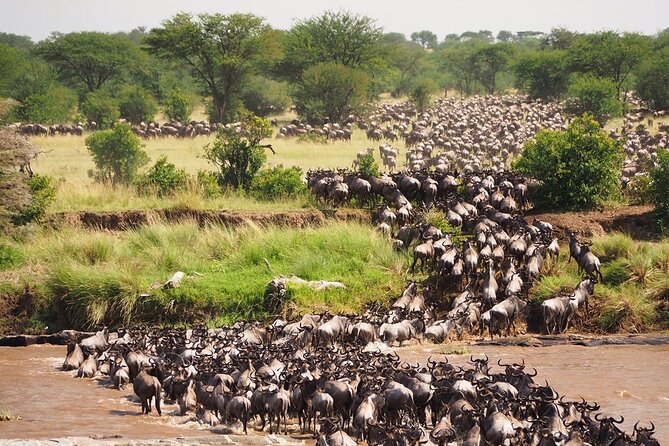
The Serengeti migration is often described through the wildebeest alone, but the moving herds are joined by about 200,000 zebras and 300,000 Thomson’s gazelles. Together, they follow fresh grazing and water across Tanzania and Kenya.
The appeal of the calving season is not simply the sight of tiny animals. A concentration of prey can also bring predators close, creating opportunities to see lions, cheetahs, hyenas, and other wildlife. The itinerary promises a search for these moments, not a guaranteed list of sightings.
The numbers in the description, including millions of hooves crossing the plains, are useful for understanding the scale. You may see a large herd, or you may spend time tracking smaller groups spread across a wide area. That uncertainty is part of a real wildlife safari, but you should not expect a staged show.
Northern Serengeti and the Mara River: exciting, but uncertain
Days four and five move into the Wagakuria area of northern Serengeti. This region is described as having strong resident wildlife numbers, including lion prides that can reach about 30 animals. The scenery changes too, with kopjes, woodland, river vegetation, and open plains.
The Mara River is the headline attraction. Herds may cross north, then turn south days later. The timing is controlled by the animals, not the tour company. A herd may gather beside the river and wait. It may cross quickly. It may turn away entirely.
The itinerary is refreshingly clear about this risk. Finding a crossing can be a matter of luck, and even a full day in the area does not guarantee one. That is the most important practical point for anyone booking this trip because of dramatic river footage.
The two northern days also add long drives. Day four lists about 155 kilometers and five hours, followed by game viewing. Day five is a full game-drive day in the same area. This gives you a better chance than a quick pass through, but the time spent reaching northern Serengeti is considerable.
Again, check the dates. The plan refers to July through October for this area, while the overall safari description centers on December through April. Ask for a written route based on your month of travel.
Central Serengeti brings variety beyond the Big Five
Day six returns to central Serengeti, with another 155-kilometer, approximately five-hour drive listed. This can be a tiring day, but central Serengeti adds much more than large mammals.
The itinerary points to agama lizards, rock hyraxes around granite kopjes, dung beetles, and about 500 recorded bird species. You may see ostriches and secretary birds across open grassland, while black eagles soar above the Lobo Hills.
I like this part because it encourages you to look beyond the usual safari checklist. A private vehicle can stop for smaller animals and birds when your group is interested. Ask your guide to include birdlife and reptiles rather than treating every stop as a search for lions.
For this night, the accommodation choices are clearer. The mid-range option is Embalakai Authentic Camp, located inside the park. The semi-luxury option is Serengeti Serena Lodge, also inside the park. Staying inside the park can reduce the time spent driving to an outside gate, though the exact room style, camp setup, and amenities are not provided here.
Ngorongoro Crater packs a different kind of wildlife day
Day seven takes you toward the Ngorongoro Conservation Area, listed at about 145 kilometers and three and a half hours. The plan includes an early morning game drive inside the crater.
Ngorongoro is not another version of Serengeti. It is a contained natural area with steep crater walls and a high concentration of wildlife. The conservation area also protects natural resources and recognizes the interests of Indigenous residents, so this stop has a broader purpose than game viewing alone.
An early start is worthwhile because the crater visit is the trip’s final major wildlife experience. You may see large mammals in a compact setting, then spend the evening at your lodge. The plan says the crater fee covers a 24-hour single entry, and crater fees are included in the package.
One point to clarify is the overnight location. The itinerary says you drive to the lodge after the crater visit but does not name the property. Ask whether the lodge is inside the conservation area or outside it, since that affects the next morning’s drive.
Returning to Arusha and the airport
Day eight is a return drive of about 245 kilometers and four hours to Arusha. The route includes a stop at a shopping market before the transfer to Kilimanjaro International Airport.
This is practical if your flight leaves later in the day, but you should confirm the airport transfer timing before booking flights. The tour ends back at the meeting point, and the listed start and finish point is Arusha, Tanzania.
Do not schedule an early flight without checking the actual departure time from the final lodge. The stated four-hour drive does not include breakfast, the market stop, traffic, or any delay on the road.
What the $4,539 price includes
At $4,539 per person, this is not a budget safari. The value depends heavily on the accommodation level, group size, travel dates, and how much of the route is tailored to the actual migration position.
The package includes:
- Park entry fees
- Ngorongoro Crater fees for a 24-hour single entry
- An English-speaking professional driver-guide
- Unlimited game-drive mileage
- Unlimited bottled drinking water during game viewing
- Seven breakfasts
- Seven lunches
- Seven dinners
- AMREF Flying Doctor Insurance
Those inclusions remove several large expenses from the daily budget. Unlimited mileage is particularly useful on a migration safari, where animals can be spread across a wide area. Full-board meals also make the remote park days simpler.
The price does not include international flights, tips, personal items, alcohol, visa fees, travel insurance, or medical repatriation. Suggested tipping guidance is $20 per person per day. For eight days, that works out to about $160 per person if you follow the guidance, though the exact amount is your choice.
You should also confirm what accommodation category the $4,539 price covers. Embalakai Authentic Camp and Serengeti Serena Lodge are listed as mid-range and semi-luxury choices, but the price difference between those options is not stated.
Who will get the most from this private safari
This trip suits you if you want a private vehicle, full-board travel, and several major northern Tanzania parks in one booking. It is also a good fit if you want to combine migration country with Tarangire and Ngorongoro instead of spending every night in Serengeti.
It works especially well for people who value flexibility within their own group. You can discuss whether to spend more time on birds, predators, elephants, or the migration itself. The data says most travelers can participate, and the activity is private, so only your group takes part.
It may not suit you if you need a short, light-driving trip. Several days list around nine hours, and the northern Serengeti section involves long transfers. It is also not ideal if a Mara River crossing is the sole reason you are booking. The itinerary itself warns that a crossing is never certain.
The five available ratings are all five-star ratings, with positive comments focused on the wider Congema team, trip organization, and staff members including Sébastien and Musa Osman. That is encouraging, though the small number of ratings means you should still ask direct questions about your assigned guide, vehicle, lodging, and seasonal route.
Should you book the 8-day migration safari?
I would consider booking it if your dates match the migration route and Congema confirms the details in writing. The combination of Tarangire, Serengeti, Ngorongoro, included park fees, full-board meals, and private travel offers solid value for a high-end wildlife trip.
Before you commit, ask one direct question: Where will the wildebeest be during my exact travel dates, and which parks will we visit because of that? If the answer is Ndutu and southern Serengeti from December to April, the calving focus is coherent. If the answer is northern Serengeti from July to October, the Mara River plan makes more sense.
Book this safari for the wider Tanzania experience, not for a guaranteed crossing. If you accept the long drives and the uncertainty of wild animals, it offers a strong route through some of northern Tanzania’s best-known wildlife areas.
FAQ
Where does the safari start?
The safari starts in Arusha, Tanzania. Pickup is offered, and airport arrival transfer is provided from Kilimanjaro International Airport to Arusha.
How long does the safari last?
The experience lasts approximately eight days, ending with a return to Arusha and transfer to Kilimanjaro International Airport.
What time does the safari start?
The listed start time is 6:00 a.m.
Is this a private tour?
Yes. Only your group participates in the activity.
What meals are included?
The package includes seven breakfasts, seven lunches, and seven dinners.
Are park fees included?
Yes. Park entry fees and Ngorongoro Crater fees for a 24-hour single entry are included.
Is bottled water provided?
Yes. Unlimited bottled drinking water is included during game viewing.
Which accommodation options are listed?
The mid-range option is Embalakai Authentic Camp. The semi-luxury option is Serengeti Serena Lodge. Both are listed as being inside Serengeti National Park for the central Serengeti night.
Can I cancel for a full refund?
Yes, if you cancel at least 24 hours before the experience start time. Cancellations made less than 24 hours before the start time are not refunded, and changes within that period are not accepted.
More Eight-Day Trips in Arusha
- 8 Days 7 Nights Tanzania Wildlife & Culture Lodge Safari
★ 5.0 · 17 reviews - 8 Day Safari The Best of Tanzania & Lake Eyasi
★ 5.0 · 11 reviews - 8 Days Green Season Offer – Luxury Serena Safari
★ 5.0 · 10 reviews - 8 Days, Migrations Safari-River crossing -(July to October)
★ 5.0 · 9 reviews
Just added around Arusha
- From Arusha: 11 days The Classics Northern Tanzania safari★ 5.0 · 11 reviews
- 6-Day Mount Meru Climb through Momella Route Guided Tour★ 5.0 · 5 reviews
- Private Day Trip to Arusha National Park with a Walking Safari★ 5.0 · 4 reviews
- From Arusha : 11-day Amazing North Tanzania safari tour★ 5.0 · 4 reviews
- Walking Day Tour to Safari in Arusha National Park★ 5.0 · 5 reviews
- 2 Days Tanzania Midrange Group Join Safari★ 5.0 · 7 reviews
- Best 5 Days Tanzania Private Luxury Safari with luxury Lodges★ 5.0 · 12 reviews
- Waterfall & Coffee Walking Tour★ 5.0 · 6 reviews
Great Migration Safaris, compared.
8 Days Great Wildebeest Calving Migration Safari from Arusha
Read our review →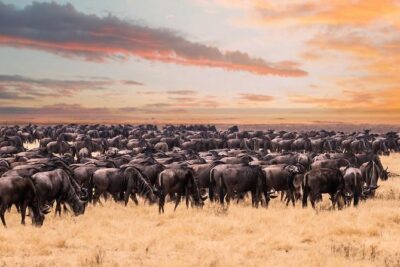
8 Day Spectacular Migration Serengeti mid -Range Tanzania Safari
Read our review →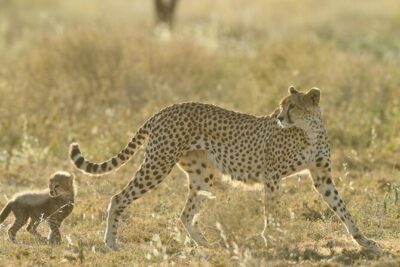
Private 6-Day Great Migration Ndutu Serengeti Safari Tour
Read our review →
6 Days Tanzania Budget Camping Safari with Migration
Read our review →10-Day Wildebeest Migration Calving Safari -All Inclusive
Read our review →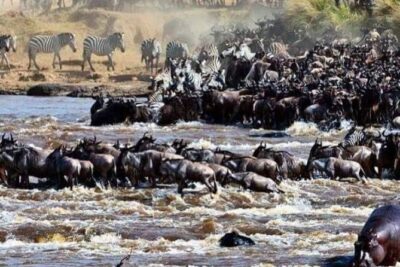
8 Days Great Wildebeest Migration – Mara River Crossing
Read our review →
Tanzania Safari – The Great Migration in the North of the Serengeti and Lake Natron
Read our review →
5-Days Private Serengeti Wildebeest Migration Lodge Safaris
Read our review →Browse the lists this tour appears in