
Reviewed · GREAT MIGRATION SAFARIS
7 days great migration safari
Lake Natron gives this safari its unusual edge. Instead of spending all seven days on the standard northern circuit, you begin beside a soda lake where flamingos gather, pass beneath the Rift Valley Escarpment Wall, then continue into the Serengeti and Ngorongoro Crater. The route ends with time among the Hadzabe and Datoga communities near Lake Eyasi.
I like the private format, since your guide can adjust the pace and spend more time with animals that interest you. I also like the mix of classic wildlife viewing and less usual stops, especially the Lake Natron walk and Lake Eyasi visit. The main consideration is the amount of time spent on rough roads and long drives. This is a serious safari, not a relaxed resort holiday.
Key points to know before booking
- Lake Natron adds a wild opening: Walk toward a soda lake known for breeding flamingos, or choose a waterfall walk and swim.
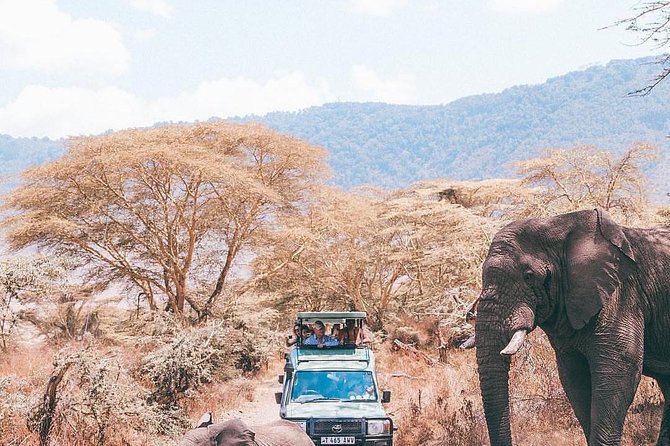
- Northern Serengeti comes early: You reach Lobo by midday on day two, with chances for lions, leopards, elephants, buffaloes, giraffes, and zebras.
- Migration timing matters: The route mentions large wildebeest herds in the north from October through December, but animal movement changes from year to year.
- Ngorongoro brings concentrated wildlife: The crater floor offers a strong chance to look for the Big Five, including the rare black rhinoceros.
- Lake Eyasi changes the subject: You leave wildlife viewing behind for contact with Hadzabe and Datoga communities.
- The package is well bundled: Lodging, meals, private transport, a professional driver-guide, airport transfers, binoculars, fees, and listed activities are included.
Why Lake Natron makes this seven-day route different
Many northern Tanzania safaris focus on Tarangire, Serengeti, and Ngorongoro. This one takes a rougher, less familiar route at the start, following the Rift Valley north toward Lake Natron. The drive passes through Masai country, with Ol Doinyo Lengai, the holy mountain of the Masai, appearing in the distance.
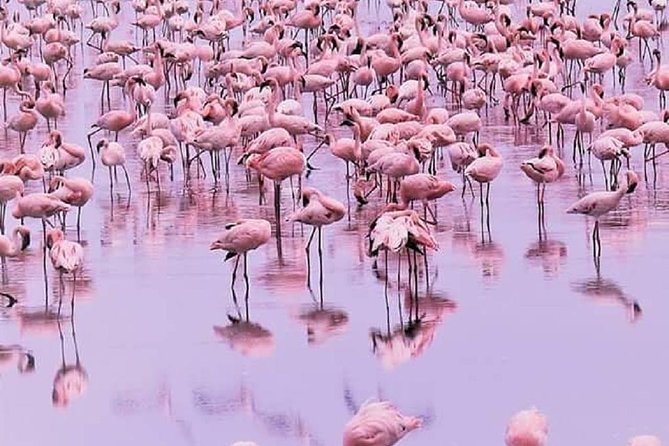
Lake Natron is a soda lake with highly alkaline water. Its shores can shimmer pink when large numbers of flamingos gather to breed. The experience is not simply a drive to a viewpoint. You take a guided bush walk toward the lake, giving you a closer look at the dry surroundings and the remarkable conditions that support the birds.
You also have another option: walking to a nearby waterfall for a refreshing bath. That choice matters. If you want unusual bird scenery, favor the lake walk. If you want a more active start after a flight or long transfer, the waterfall may be the better pick.
The first day includes breakfast, a picnic lunch, and dinner, with an overnight stay at Lake Natron Tented Camp. Airport pickup is included on the first day or the day before, and the scheduled start time is 7:30 a.m. Confirm the exact pickup details with the operator, since your first night may be arranged differently depending on when you arrive.
More Great Migration Safaris in Arusha
- 8 Days Great Wildebeest Calving Migration Safari from Arusha
★ 5.0 · 254 reviews - 7-Day Great Migration Safari
★ 5.0 · 14 reviews - 9 Days Safari To See Great Migration Crossing
★ 5.0 · 12 reviews
Day two: from the Rift Valley to Lobo
Day two begins with an early departure. The vehicle climbs through several winding turns, and you get a final view of Lake Natron before leaving the Rift Valley behind. The route continues through Wasso toward the northern Serengeti and enters the park at Kleins Gate around midday.
That timing gives you a useful first game drive in the Lobo area rather than saving all wildlife viewing for the next day. Lobo has permanent springs, open grassland, and scattered rocky kopjes. Those features help support animals throughout the year, not just during the migration.
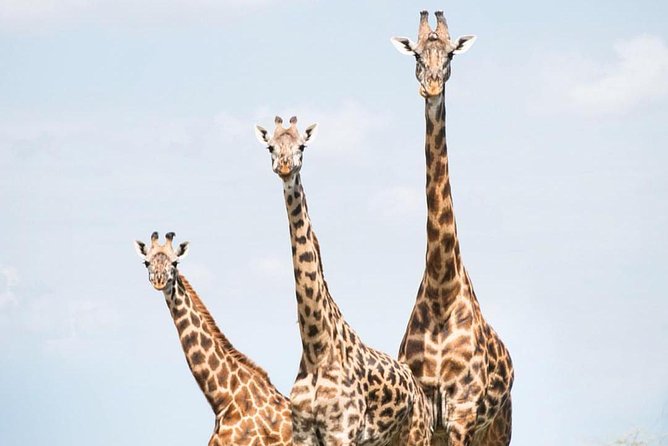
The area is noted for lions, leopards, buffaloes, elephants, giraffes, and zebras. From October through December, large wildebeest herds may be found moving back toward the southern plains. That is a useful seasonal guide, not a promise of a specific sighting or river crossing.
You spend the night at Lobo Wildlife Lodge. Breakfast, a picnic lunch, and dinner are included. The road distance and early start make this a full day, so do not plan on feeling fresh and polished by dinner. The reward is that you reach a remote part of the park without wasting the whole day in transit.
Day three: a full day in northern Serengeti
Day three keeps you in the northern Serengeti, where the scenery feels more open and remote than the central Seronera Valley. During the dry season, this area can hold large herds of wildebeest and zebra. It also supports resident animals, so the day does not depend entirely on catching the migration in motion.
You may look for lions, elephants, hippos, giraffes, crocodiles, and the uncommon oribi antelope. The mix is important because migration viewing can be unpredictable. Even if the herds are elsewhere, northern Serengeti offers year-round wildlife possibilities.
This is also one of the days when your guide matters most. Guides named in strong customer feedback include Estomih, Simon, Christian, Isaac, Johnathan, Innocent, and Chédy, though the assigned guide can vary. Ask in advance if a particular guide is available, but book the safari for the route and service rather than assuming a specific person will lead it.
You return to Lobo Wildlife Lodge for a second night. That is a practical choice. Keeping the same base avoids packing every morning and gives you more time in the area instead of shifting camp each evening.
Day four: the Seronera Valley and its big cats
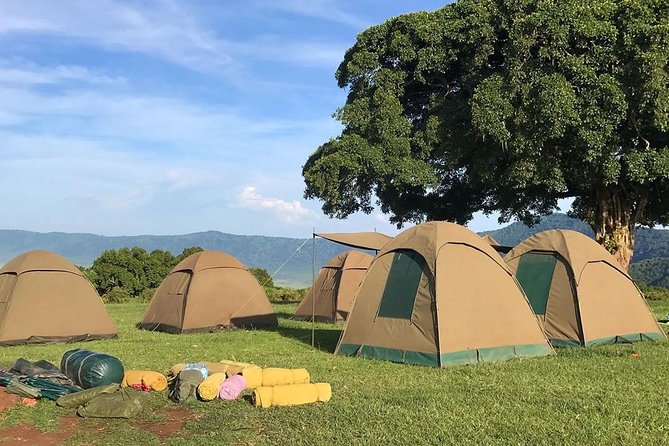
After a more relaxed morning drive toward central Serengeti, you spend the day in the Seronera Valley. This is one of the most dependable areas on the route for finding wildlife at different times of year.
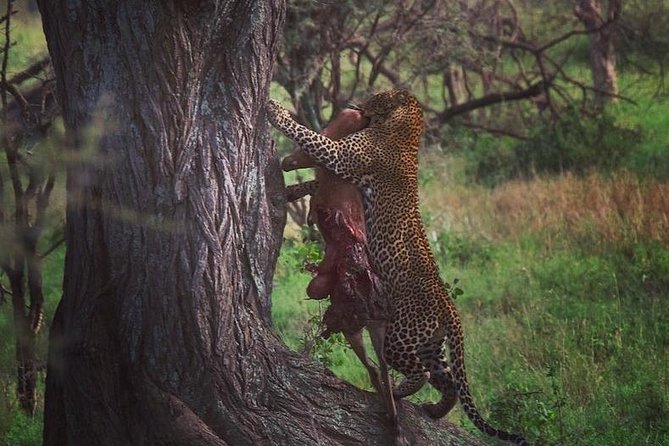
The valley supports cheetahs, hyenas, leopards, and lions, along with buffaloes, giraffes, hippos, impalas, topi, warthogs, and zebras. If predators are high on your list, this is likely to be one of the most exciting days. The open ground makes animal watching easier than in thick vegetation, although sightings are never guaranteed.
The guide also brings a naturalist’s eye to smaller details. You may learn to tell a Grant gazelle from a Thomson gazelle by the markings around the rump and tail. That kind of explanation adds value to a game drive because you begin to understand what you are seeing instead of collecting only a list of large animals.
Day four is listed as roughly 12 hours, which gives you an idea of the pace. You should be ready for a long day in the vehicle, with breaks shaped by park rules and the location of wildlife. Breakfast, a picnic lunch, and dinner are included.
More Safaris in Arusha
- 4 Days Group Camping Safari
★ 5.0 · 1,101 reviews - 5 Days Group Camping Safari
★ 5.0 · 730 reviews - 7-Day Premium Luxury Tanzania Safari All-Inclusive
★ 5.0 · 426 reviews - Group Safari 7 Days in Tanzania’s Main Parks
★ 5.0 · 240 reviews
Day five: leaving Serengeti for Ngorongoro
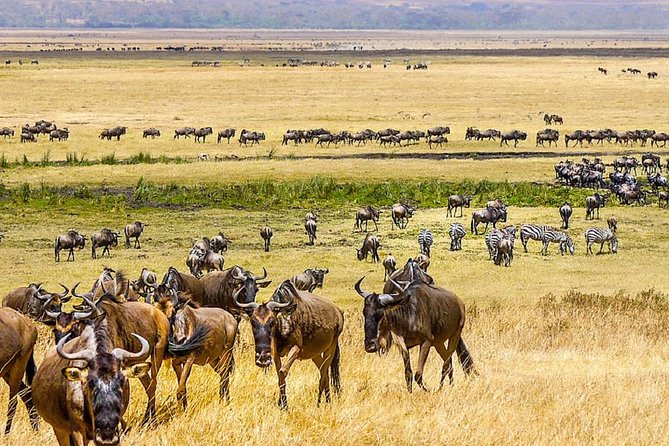
You begin with another game drive in the Serengeti before heading toward the Ngorongoro Conservation Area. The two places are close on a map, but the feel changes quickly. Serengeti is broad and open, while Ngorongoro brings steep crater walls and a concentrated floor filled with water, grass, and animals.
The conservation area covers 8,292 square kilometers and contains nine different craters. It is also home to Masai communities, who continue to live there alongside wildlife. That combination of people, livestock, geology, and animals gives the area a different character from a national park where permanent settlement is more limited.
Your accommodation is on top of the crater rim. The view down into the crater can be superb, especially when the light changes late in the day. It can also be cool and exposed, so pack a warm layer even if Arusha felt hot.
This is another long day, listed at about 12 hours. Breakfast, lunch, and dinner are included, and the crater conservation fee is covered. The benefit is a smooth transition from Serengeti game viewing to one of Tanzania’s most dramatic natural settings. The cost is fatigue, particularly if you have already spent several days on rough roads.
Day six: descending into Ngorongoro Crater
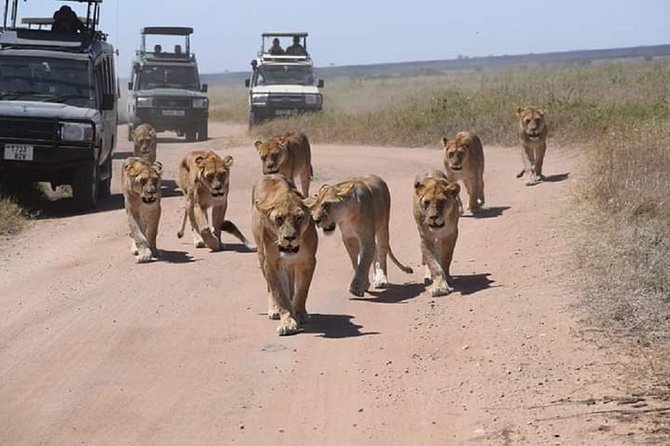
The schedule places the main crater visit on day six. After breakfast, you drive along the crater rim to Seneto Gate, then descend by an adventurous route to the crater floor. The view opens suddenly as you drop below the rim, and the scale of the caldera becomes clear.
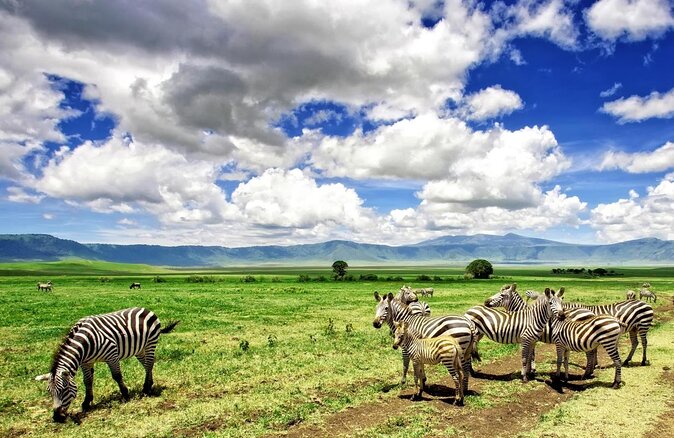
Ngorongoro has reliable water, which helps explain its high concentration of wildlife. Animals move in and out, and the numbers of different species shift with the seasons. During the dry season, wildebeest and zebra numbers increase. During the wet season, you may find more elands, elephants, and waterbucks.
The main goal is the Big Five: buffalo, elephant, leopard, lion, and black rhinoceros. The crater is one of only two places in Tanzania where the highly threatened black rhino can still be seen, according to the tour information. A sighting is never certain, but the crater gives you a focused chance to look.
The day is listed at about 12 hours. That includes the crater drive and the onward journey connected with Lake Eyasi, so clarify the exact overnight arrangement before departure. The schedule names Lake Eyasi for this day but describes the crater visit in detail, while the community visit is placed on day seven.
Day seven: Lake Eyasi and a different kind of safari
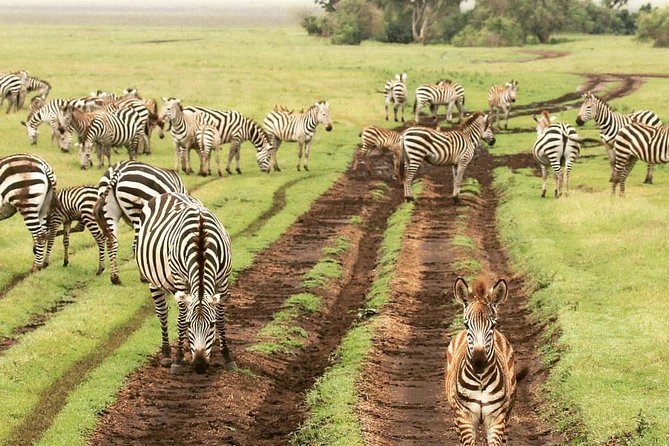
Lake Eyasi lies in the southwest corner of the Ngorongoro Conservation Area. It is a soda lake fed by the Sibiti and Baray Rivers, but the main reason to visit is cultural rather than photographic.
The area is home to Hadzabe and Datoga communities. The Hadzabe continue a hunting and gathering way of life, while the Datoga are pastoralists. A village visit may offer a close look at daily routines, family structures, traditional dances, and homes. You may also be invited into a home without a fixed script, which can make the experience feel more personal than a standard stop at a cultural center.
You should approach this part with respect and patience. It is not a staged wildlife show, and the value comes from listening, observing, and allowing the community visit to set its own pace. The cultural element also keeps the safari from becoming only a search for animals.
The final day is listed at about nine hours and ends in Arusha. Breakfast and lunch are included. Dinner is not listed for day seven, which explains why the package includes six dinners despite seven breakfasts and seven lunches.
What the price includes, and what it means
At $4,514 per person, this is a substantial purchase. The value depends heavily on how many people share the private vehicle, which is not specified in the available details. For a small private group, the price covers a great deal: seven breakfasts, seven lunches, six dinners, all listed accommodation, park and activity fees, private transport, a professional driver-guide, binoculars, camping equipment, and roundtrip airport transfers.
You are also paying for the route. Lake Natron and Lake Eyasi require extra driving, but they give you experiences beyond the standard Serengeti and crater circuit. If your only goal is to see the Big Five in the shortest possible time, a shorter route might make better financial sense. If you want wildlife, unusual scenery, and cultural contact in one trip, the broader route is easier to justify.
Personal expenses, tips, international flights, and items of a personal nature are not included. There is no restroom on board, so you should be comfortable with regular stops in the bush or at designated facilities.
Comfort, effort, and the role of the guide
This safari combines lodge accommodation with a private vehicle and some camping equipment. The available details do not describe every room or tent, so comfort may vary between properties. The accommodation is described as good overall, with some places better than others.
The strongest praise is directed at the guides. Estomih is repeatedly singled out for his wildlife and plant knowledge, patience, energy, and care. Simon is praised for finding animals, keeping the group safe, and taking photographs. Christian is noted for adapting to the group and searching hard for elusive animals, while Isaac is praised for spotting wildlife during a quieter season.
Those details tell you what to value. A good guide does more than drive toward a lion. The guide reads tracks, shares information about animal behavior, chooses useful camera angles, manages long days, and keeps the mood steady when an animal refuses to appear.
You should also expect an early start, long periods seated in the vehicle, dusty or rough roads, and weather that can affect the schedule. Most people can participate, but this is not an effortless sightseeing holiday.
Best time and migration expectations
The northern Serengeti section is linked with large wildebeest herds from October through December. Another customer account describes a calving-season trip, while other accounts refer to September and quieter periods. These details show why timing needs careful discussion before booking.
The migration is a moving event, not a fixed attraction. Herds can be ahead of the vehicle, behind it, or spread across a wide area. Ask the operator where the animals are expected to be during your dates, and treat any crossing or calving sighting as a bonus rather than a guarantee.
The route still works outside peak migration periods because Lobo and Seronera hold resident wildlife. Lions, leopards, elephants, buffaloes, giraffes, hippos, zebras, and many other animals may be seen throughout the year.
Should you book this safari?
I would choose this seven-day trip if you want a private route with more variety than the standard northern circuit. Lake Natron and Lake Eyasi give the trip a clear identity, while Serengeti and Ngorongoro supply the classic wildlife viewing.
I would hesitate if you want short driving days, guaranteed migration action, or a highly uniform level of accommodation. The cost is high, and the schedule is active. Before paying, confirm the group size, exact lodges, guide assignment, seasonal wildlife location, and the day six overnight plan.
For a first Tanzania safari, the combination is strong: flamingos at Lake Natron, northern Serengeti herds, central Serengeti predators, crater wildlife, and Hadzabe and Datoga culture. If you can handle the road time and accept that nature sets the schedule, this is a thoughtful choice for a full week in northern Tanzania.
Free cancellation is available up to 24 hours before the start time. Weather or minimum-group issues can lead to a different date, another experience, or a full refund.
FAQ
Where does the safari start?
The safari starts from Arusha, with pickup offered from the airport on day one or from a lodge or hotel after breakfast. The scheduled start time is 7:30 a.m.
Is this a private safari?
Yes. Only your group participates in the activity, and private transportation is included.
Which places are visited during the seven days?
The route includes Lake Natron, northern and central Serengeti National Park, Ngorongoro Crater, Lake Eyasi, and Arusha.
Are meals included?
Yes. The package includes seven breakfasts, seven lunches, and six dinners. Picnic lunches are listed on the early Serengeti days.
Are airport transfers included?
Yes. Roundtrip airport transfer is included.
What happens if the safari is canceled because of weather or too few participants?
You will be offered a different date or experience, or a full refund. For your own cancellation, you must cancel at least 24 hours before the local start time for a full refund.
More Seven-Day Trips in Arusha
- Tanzania Classic – 7 Days
★ 5.0 · 1,151 reviews - 7 Days Tanganyika Wilderness Safari
★ 5.0 · 159 reviews - 7-Day Private midrange Tour in Arusha with Airport Pickup
★ 5.0 · 47 reviews - 7-Day Midrange Tanzania Safari Adventures (Big 5)
★ 5.0 · 43 reviews
Just added around Arusha
- From Arusha: 11 days The Classics Northern Tanzania safari★ 5.0 · 11 reviews
- 6-Day Mount Meru Climb through Momella Route Guided Tour★ 5.0 · 5 reviews
- Private Day Trip to Arusha National Park with a Walking Safari★ 5.0 · 4 reviews
- From Arusha : 11-day Amazing North Tanzania safari tour★ 5.0 · 4 reviews
- Walking Day Tour to Safari in Arusha National Park★ 5.0 · 5 reviews
- 2 Days Tanzania Midrange Group Join Safari★ 5.0 · 7 reviews
- Best 5 Days Tanzania Private Luxury Safari with luxury Lodges★ 5.0 · 12 reviews
- Waterfall & Coffee Walking Tour★ 5.0 · 6 reviews
Great Migration Safaris, compared.
8 Days Great Wildebeest Calving Migration Safari from Arusha
Read our review →
8 Day Spectacular Migration Serengeti mid -Range Tanzania Safari
Read our review →
Private 6-Day Great Migration Ndutu Serengeti Safari Tour
Read our review →
6 Days Tanzania Budget Camping Safari with Migration
Read our review →10-Day Wildebeest Migration Calving Safari -All Inclusive
Read our review →
8 Days Great Wildebeest Migration – Mara River Crossing
Read our review →
Tanzania Safari – The Great Migration in the North of the Serengeti and Lake Natron
Read our review →
5-Days Private Serengeti Wildebeest Migration Lodge Safaris
Read our review →Browse the lists this tour appears in