
Reviewed · GREAT MIGRATION SAFARIS
8 Days Great Migration – Grumeti River
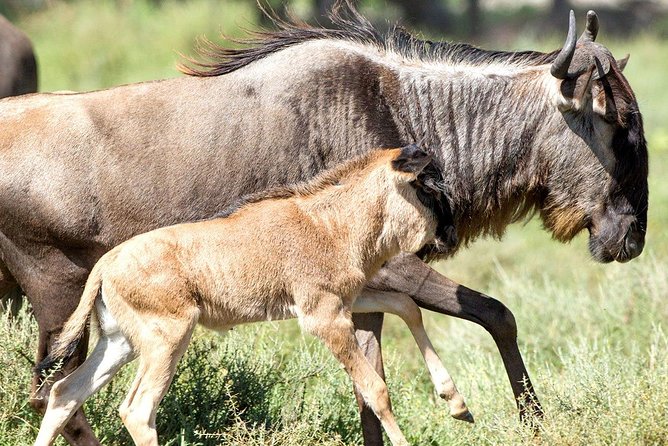
The main draw here is the chance to follow the Great Migration near the Grumeti River, where wildebeest face fast water, crocodiles, and waiting predators between May and July. I like the open-roof 4×4 and the promise of unlimited mileage, since your guide can keep searching instead of stopping when the clock says it is time to turn around.
I also like the strong mix of parks: elephant country in Tarangire, flamingos and baboons at Lake Manyara, three full Serengeti days, and a final visit to Ngorongoro Crater. The main caution is that the advertised length says eight days while the itinerary describes roughly six days, so confirm the exact schedule, accommodation, and payment arrangements before booking.
Key points to know before booking
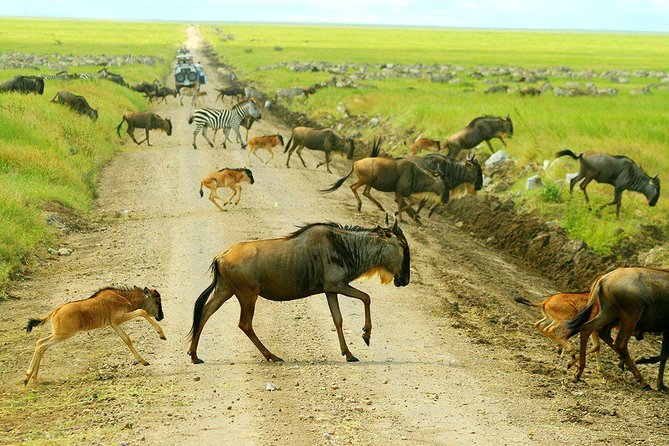
- Great Migration timing: The Grumeti River crossing is most likely between May and July, but wildlife never follows a tour company’s timetable.
- Unlimited game-drive mileage: Guides are not given a fixed mileage limit while searching for animals.
- Small group size: The vehicle holds a maximum of six people, useful for viewing and photography.
- Full safari package: Park fees, full-board accommodation, transport, guide service, taxes, and drinking water are included.
- Strong guide feedback: Mike is specifically praised for patience, timing, driving, and effort during Serengeti game drives.
- Check the details carefully: The title says eight days, while the supplied route covers six touring stops and is described as about six days.
Why the Grumeti River is the big prize
A Serengeti safari is rewarding at any time, but this route is aimed at one of Africa’s most dramatic seasonal events. Between May and July, large herds of wildebeest may move through the western Serengeti near the Grumeti River.
A crossing is not a scheduled show. The herds may gather, hesitate, turn back, or cross outside your viewing window. Still, the setting gives this trip a clear purpose. You are not simply ticking off animals from a list. You are following movement, water, predators, and changing conditions across a large park.
The supplied plan gives you one Serengeti day focused on reaching the western area and two more days of game viewing. That is useful. A quick drive through the park can give you a taste, but extra time gives your guide more chances to locate herds and predators.
You should also keep expectations sensible. Seeing wildebeest is far more likely than seeing an actual river crossing. If the migration is your priority, ask for the expected camp location and current herd position before you pay. The route may need to shift depending on where the animals are.
More Great Migration Safaris in Arusha
- 8 Days Great Wildebeest Calving Migration Safari from Arusha
★ 5.0 · 254 reviews - 7 days great migration safari
★ 5.0 · 77 reviews - 7-Day Great Migration Safari
★ 5.0 · 14 reviews
Tarangire starts with elephants and dry-country wildlife
The first full day heads from Arusha to Tarangire National Park after an early breakfast. You carry a packed lunch and spend about eight hours on the day’s drive and game viewing.
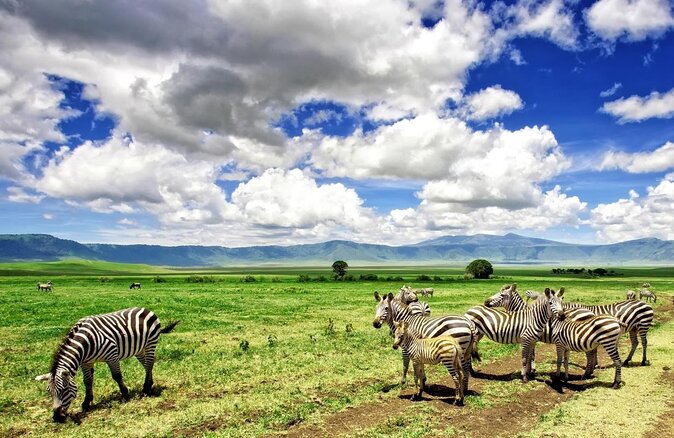
Tarangire is especially known for elephants. During the dry season, animals gather around the Tarangire River, including wildebeest, zebra, and gazelles. That concentration also brings predators, so lions, cheetahs, and leopards are possible sightings.
The park has a wider cast too. The plan names kudu, oryx, and gerenuk, animals that can be harder to find elsewhere. Birdlife is another major reason to include Tarangire, with a high number of breeding bird species.
I like the way this first day gets you into proper safari country quickly. You begin with a park that has its own character rather than treating it as a simple stop on the way to the Serengeti.
The drawback is the early start and long road day. You should expect a full schedule, not a gentle introduction. The evening transfer to your accommodation follows the game drive, and the accommodation is not named in the supplied details. Ask for the exact property before booking if room style and location matter to you.
Mto wa Mbu adds local life between the parks
The second day begins with a walking tour in Mto wa Mbu, a farming town near Lake Manyara. The town is described as home to more than 120 tribes, making it a useful place to see how different Tanzanian communities meet in one local setting.
The walk includes rice and banana plantations, a local beer factory, a school, and a carving factory. This gives you something that a vehicle-only safari cannot: a look at work, food production, craft, and daily routines outside the national parks.
I consider this one of the better choices in the itinerary. A safari can become a sequence of animal sightings viewed through glass or from a roof hatch. Time in Mto wa Mbu gives the trip a human side and lets you meet a farming community rather than spending every hour looking for wildlife.
The walk is followed by Lake Manyara National Park, only a short drive away. The park is known for its soda lake, pink-hued flamingos, baboons, and birdlife. You may also see giraffes, elephants, hippos, and buffalo.
The day lasts about seven hours. That is shorter than the Serengeti days, but it still combines a walking tour, a transfer, and game viewing. If you prefer a slower pace, ask how much time is planned for the town walk and how much for the park.
A Maasai visit leads into the Serengeti
The third day is the route’s major transition. After breakfast, you drive toward Serengeti National Park and stop at a Maasai village. The visit is intended to give you an insight into Maasai life and the traditions of these well-known East African pastoral communities.
The plan then moves into the Serengeti, with a picnic lunch followed by a game drive. This is also the day aimed at reaching the Grumeti River region, where the migration may be seen between May and July.
At about nine hours, this is another long day. You will spend much of it moving between places, but the route is worthwhile because the Serengeti is not a small park you can cross in an hour. The first arrival game drive can be productive, though it may also feel rushed if the road from Arusha and the village visit take longer than expected.
Ask how long the Maasai visit lasts and what it includes. The supplied details promise an insight into local life, but they do not specify the format, cost of any optional purchases, or whether photography rules apply.
More wildebeest migration trips in Arusha:
- 9 Days Safari To See Great Migration Crossing
★ 5.0 · 12 reviews - 7 days safaris to see great migration
★ 4.5 · 8 reviews - 7 Day 6 nights Great Migration Classic Tanzania Safari
★ 4.5 · 6 reviews - 8 Days Follow the Wildebeest Migration River Crossing Safari
★ 5.0 · 5 reviews
Three Serengeti days give the safari room to breathe
The fourth day begins early and is devoted to moving with the herds across the plains. This is the most direct migration-focused day in the plan.
The Serengeti is also the place to seek the Big Five: lion, elephant, leopard, rhino, and buffalo. No guide can promise all five, but three days in the park give you a better chance than a single passing game drive.
The fifth stop remains in the Serengeti, with a game drive in the central area. Central Serengeti is described as especially good for lions and leopards, with strong game viewing throughout the year. The day may also bring cheetahs, elephants, giraffes, hippos, ostrich, and possibly the rarely seen pangolin.
The plan allows about ten hours for each of these Serengeti days. That long window is valuable. You can leave early, cover more ground, stop for sightings, and keep searching rather than returning after a short morning outing.
The open-roof 4×4 matters here. You get a higher viewing position and an unobstructed view upward, which helps when watching birds or scanning open plains. The vehicle is shared, with a maximum of six people. That is small enough to keep the group manageable, though seating and window access can still matter when an animal appears on one side. Ask how seats are arranged.
The unlimited-mileage policy is one of the strongest practical features. It does not guarantee a sighting, but it means your driver is not forced to cut short a promising search because a mileage allowance has been used up. Guides are also expected to answer questions about wildlife and the savanna, which makes a real difference during long drives.
Two names appear in the feedback attached to this operator. Mike is praised for patience, driving, timing, and making a serious effort to find animals in central and northern Serengeti. Godfrey is also named, but in a serious complaint about payment and being left without support at Ngorongoro. That conflicting record means you should confirm who your guide and local contact will be before departure, and keep written proof of all payments and arrangements.
Ngorongoro Crater packs a final day with wildlife
The last listed stop is Ngorongoro Crater, with about seven hours for the drive and game viewing. The crater is described as sheltering close to 30,000 animals, including the Big Five.
Inside the crater, you may see zebra, buffalo, lions, wildebeest, baboons, elephants, flamingos, ostriches, hippos, cheetahs, and the rare black rhino. The enclosed setting can make animal viewing feel concentrated compared with the wide Serengeti plains.
The crater also supplies a visual finale. The plan points to changing colors and clouds across the crater, which can make the scenery feel almost unreal. Ngorongoro is recognized as one of Africa’s Seven Natural Wonders, but the real value for you is the combination of scenery and a strong range of wildlife in one final drive.
This is not a quiet ending. You have already had several long safari days, and the crater may be busy with vehicles. Still, it is a sensible final park because it offers a different setting from Tarangire and the Serengeti.
What the $4,984.62 price includes
At $4,984.62 per person, this is a major trip purchase. The value depends heavily on how many nights are included and the standard of the accommodation, since the properties are described only as recommended accommodation or camp rather than by name.
The package includes:
- 4×4 transport with a pop-up open roof for the full safari
- National park entrance fees
- Full-board accommodation listed for the route
- Unlimited mineral drinking water
- Government taxes
- An English-speaking guide, or another language if arranged
- Unlimited mileage during game drives
That is a useful bundle. Park fees can be a significant part of a northern Tanzania safari, and having transport, meals, water, guide service, and lodging combined makes budgeting easier.
The price is harder to judge without the exact hotel and camp names. A comfortable tented camp in or near the Serengeti can offer a very different experience from a basic lodge outside the park. Before booking, ask for the full accommodation list, the number of nights, and the precise start and end points.
Tips, travel insurance, and international flights are not included. Set aside a separate amount for gratuities, and make sure your insurance covers safari travel and any relevant medical needs.
Group size, timing, and practical details
The maximum group size is six people. That is a useful limit for a wildlife trip. You spend long hours in the vehicle, so a smaller group usually makes it easier to ask questions, share sightings, and position the vehicle.
Pickup is offered, and the stated start time is 7:30 a.m. Most people can participate, and the meeting area is near public transportation. Confirmation is provided when you book.
The schedule itself needs clarification. The experience is titled as an eight-day safari, the summary says six days approximately, and the detailed route lists six stops with days that add up to a shorter trip. Do not assume the difference is simply extra hotel nights. Ask for a day-by-day document showing every overnight, transfer, and return point.
Free cancellation is available if you cancel at least 24 hours before the local start time. Cancellations or changes made inside that window are not accepted for a refund.
Who should choose this safari
I would point this trip toward someone who wants a classic northern Tanzania route with extra attention on the Serengeti and migration. It suits you if you value long game drives, a small group, an open-roof vehicle, and a guide allowed to keep searching.
It is also a good match if you want more than animals. The Mto wa Mbu walk and Maasai village visit add contact with local communities, farming, craft work, and cultural traditions.
I would be more cautious if you need a tightly documented luxury itinerary, a guaranteed migration crossing, or a clearly named hotel at the time of booking. The route is ambitious, with several long days, and the accommodation details need to be pinned down.
The feedback connected with the operator is mixed. Several accounts praise the organization, friendly service, patience, driving, and effort made by Mike and the team. One serious account alleges advance-payment problems and being left stranded at Ngorongoro, followed by an apology from the company. That does not prove what will happen on your trip, but it is enough reason to verify the company contact, payment terms, guide assignment, emergency support, and accommodation before sending a large advance.
Should you book it?
Book this safari if the Great Migration is your main goal and you want three substantial Serengeti days rather than a rushed park visit. The combination of unlimited mileage, a six-person maximum, full-board arrangements, and several different wildlife areas gives the trip a strong foundation.
I would book only after confirming the eight-day versus six-day discrepancy and receiving the names of every lodge or camp. Pay attention to the timing of the trip: May through July gives you the best stated chance near the Grumeti River, but no operator can control the herds.
If the company provides clear written answers and a solid payment process, this could be a rewarding, wildlife-heavy safari with good variety. If the details remain vague, compare another operator before committing nearly $5,000 per person.
FAQ
Where does the safari start?
The safari starts in Arusha, Tanzania, with a stated start time of 7:30 a.m. Pickup is offered.
How long does the experience last?
The title describes an eight-day safari, while the tour summary says approximately six days and the detailed route lists six stops. Confirm the exact number of days before booking.
When might I see the Great Migration at the Grumeti River?
The wildebeest migration may be seen near the Grumeti River between May and July. A river crossing is a natural event and cannot be guaranteed.
How many people can join the tour?
The tour has a maximum of six travelers.
What vehicle is used?
Transport is provided in a 4×4 vehicle with a pop-up open roof for the full safari.
Are park fees and meals included?
All national park entrance fees and full-board accommodation are included. The package also includes unlimited mineral water, government taxes, and guide service.
What is not included in the price?
Tips, travel insurance, and international flights are not included.
More Eight-Day Trips in Arusha
- 8 Days 7 Nights Tanzania Wildlife & Culture Lodge Safari
★ 5.0 · 17 reviews - 8 Day Safari The Best of Tanzania & Lake Eyasi
★ 5.0 · 11 reviews - 8 Days Green Season Offer – Luxury Serena Safari
★ 5.0 · 10 reviews - 8 Days, Migrations Safari-River crossing -(July to October)
★ 5.0 · 9 reviews
Just added around Arusha
- From Arusha: 11 days The Classics Northern Tanzania safari★ 5.0 · 11 reviews
- 6-Day Mount Meru Climb through Momella Route Guided Tour★ 5.0 · 5 reviews
- Private Day Trip to Arusha National Park with a Walking Safari★ 5.0 · 4 reviews
- From Arusha : 11-day Amazing North Tanzania safari tour★ 5.0 · 4 reviews
- Walking Day Tour to Safari in Arusha National Park★ 5.0 · 5 reviews
- 2 Days Tanzania Midrange Group Join Safari★ 5.0 · 7 reviews
- Best 5 Days Tanzania Private Luxury Safari with luxury Lodges★ 5.0 · 12 reviews
- Waterfall & Coffee Walking Tour★ 5.0 · 6 reviews
Great Migration Safaris, compared.
8 Days Great Wildebeest Calving Migration Safari from Arusha
Read our review →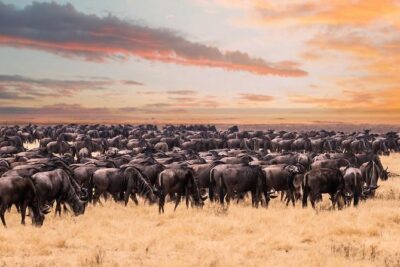
8 Day Spectacular Migration Serengeti mid -Range Tanzania Safari
Read our review →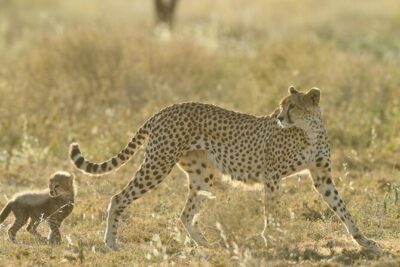
Private 6-Day Great Migration Ndutu Serengeti Safari Tour
Read our review →
6 Days Tanzania Budget Camping Safari with Migration
Read our review →10-Day Wildebeest Migration Calving Safari -All Inclusive
Read our review →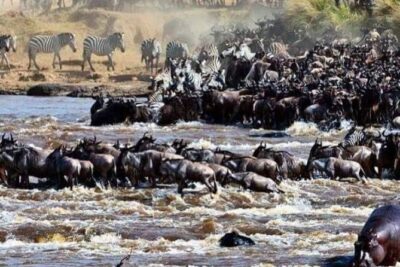
8 Days Great Wildebeest Migration – Mara River Crossing
Read our review →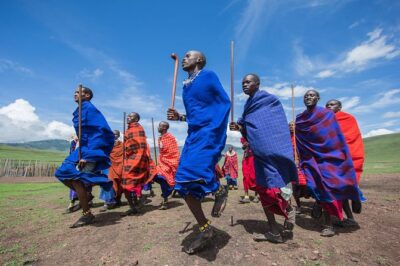
Tanzania Safari – The Great Migration in the North of the Serengeti and Lake Natron
Read our review →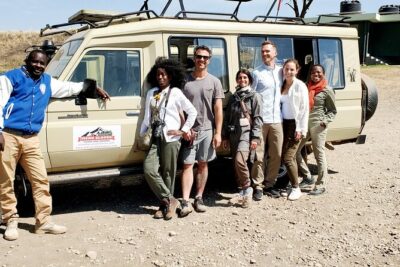
5-Days Private Serengeti Wildebeest Migration Lodge Safaris
Read our review →Browse the lists this tour appears in