
Reviewed · HISTORICAL TOURS
Dar es Salaam History and Architectural Tours
Dar es Salaam reveals itself in layers on this private seven-hour tour. You move from a 1903 cathedral and a Bavarian-style Lutheran church to traditional homes, carved ebony, fresh seafood, busy markets, modern shopping, and bold Tanzanian paintings. Guide Bernard brings the city’s past and present together with stories about religion, architecture, music, art, and daily life.
I like the wide range of stops and the fact that transport, entrance fees, water, snacks, and lunch are covered. I also like the personal approach: Bernard is described as warm, enthusiastic, and well informed, with a gift for making the city’s history feel connected to real people. The main drawback is the long day and brisk pace. Nine stops in roughly seven hours leaves limited time at several sites, and traffic can make the schedule feel tight.
Key points at a glance
- Bernard’s personal city tour: Expect a guide who explains Dar es Salaam through its architecture, religion, art, music, and society.
- Nine very different stops: The route moves from colonial-era churches to markets, museums, a mall, and Tingatinga paintings.
- A useful private format: Your group has its own transport and guide, with pickup offered and a mobile ticket.
- Food and comfort included: Local lunch, snacks before lunch, bottled water, admission fees, and taxes are included.
- A good first look at Dar: The tour gives you both historic city-center sights and modern commercial areas.
- A full schedule: Seven hours is enough for a broad introduction, but not for slow, detailed visits everywhere.
A seven-hour introduction to Dar es Salaam
This is not a tour built around one famous monument. Its strength is range. In one day, you see how Dar es Salaam’s faiths, trade, art, markets, and modern growth fit together.
The day begins at 9:00 a.m. with pickup offered. Because this is a private activity, the pace can be more personal than on a large coach excursion. You can ask questions as you go, and Bernard can connect one stop to the next rather than delivering a string of disconnected facts.
The schedule includes about six and a half hours of listed visits, plus driving and lunch. That makes the seven-hour estimate sensible, but you should expect a full day rather than a relaxed half-day outing. Dar es Salaam can be hot, so the supplied bottled water matters, especially during market visits and time spent moving between the vehicle and outdoor areas.
More history walks in Dar es Salaam:
- Bagamoyo Historical Tour – Everyday
★ 5.0 · 13 reviews - Bagamoyo Historical Tour – Everyday
★ 4.4 · 8 reviews - Private Tour in Historical Dar es Salaam with Lunch
★ 4.5 · 6 reviews
St. Joseph’s Cathedral and the city’s first layers
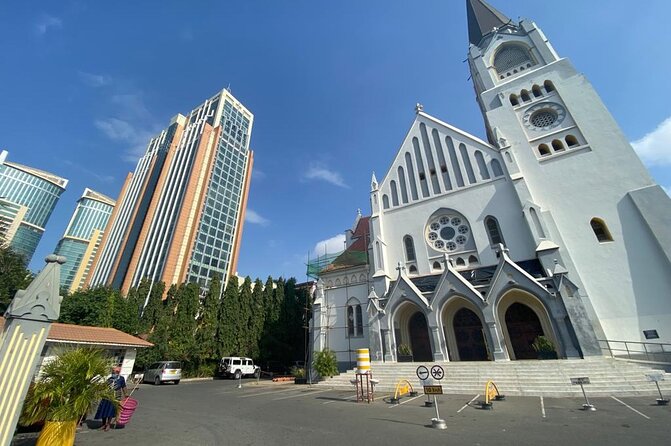
The first stop is St. Joseph’s Cathedral, built in 1903. The church occupies the same spot as the city’s first mosque, a detail that gives the site more weight than its architecture alone suggests.
You have about 30 minutes here, with admission included. That is enough for a focused look at the building and an explanation of its place in the city’s religious past. It is not enough for a long architectural study, so listen closely as Bernard explains what you are seeing.
This opening stop sets the tone for the tour. Dar es Salaam is not presented as a city with one simple origin story. Its buildings reflect different faiths, outside influences, and changing communities. If religious architecture interests you, this is one of the more useful early stops.
Azania Front Lutheran Church and Bavarian details
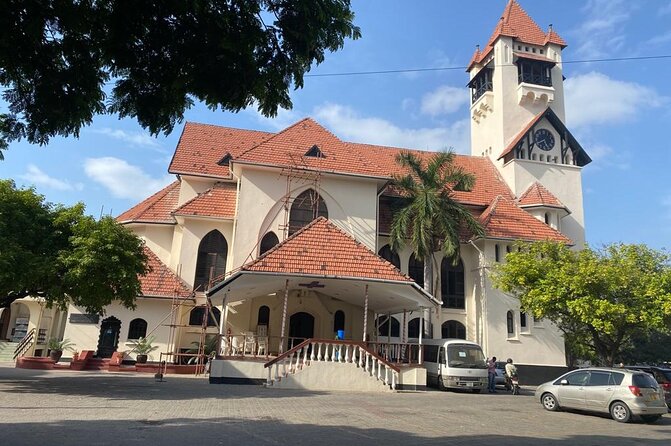
Azania Front Lutheran Church offers a sharp contrast to St. Joseph’s Cathedral. Its Bavarian style, palm-tree setting, and influences from churches in Latin America and India show how imported ideas were adapted to a tropical East African city.
You spend about 30 minutes here. The visit is brief, but the contrast between the two churches gives you something useful to compare. Look at the forms, setting, and decorative choices rather than treating the church as just another photo stop.
I like this pairing because it gives the tour an architectural thread at the start. You are not only seeing old buildings. You are considering how religion, trade, colonial contact, and local conditions shaped Dar es Salaam’s appearance.
Village Museum: traditional homes from across Tanzania
At the Village Museum, the focus shifts from city buildings to domestic life. This hands-on museum presents traditional homes and living conditions connected with a number of Tanzanian tribes.
You have about one hour here, which gives the stop more room than the two churches. The museum helps explain how people lived, built, and organized their homes in different parts of Tanzania. It is especially useful if the rest of your trip is centered on beaches, hotels, or wildlife and you want a clearer view of the country’s communities.
The phrase hands-on is important here. The museum is designed around traditional homes rather than only small objects in glass cases. You can expect a more physical sense of building styles and household space.
A few more Dar es Salaam trips worth comparing
- Dar es Salaam: City Tour
★ 4.7 · 159 reviews - Dar es Salaam City Center: Walking Tour
★ 4.8 · 102 reviews - Dar es Salaam City Tour – Everyday
★ 5.0 · 64 reviews - The Best/Top Rated Cultural City Tour in Dar es Salaam
★ 5.0 · 57 reviews
Mwenge Woodcarvers Market and the art of buying well
Mwenge Woodcarvers Market is devoted to carved work, including statues, masks, and chests made from strong black ebony wood. You have one hour to look around, compare pieces, and consider what you might take home.
A market stop is useful because it connects art with working commerce. You are seeing objects made for sale, not only art preserved behind museum barriers. The visit also gives you a chance to ask about materials and styles before deciding if anything belongs in your luggage.
Take your time and do not feel pressured to buy immediately. One hour sounds generous, but a market filled with carvings can pass quickly. If you are shopping, remember that a large chest or heavy sculpture may not be practical to transport. Smaller carved pieces may be easier to carry, though the tour information does not specify what sellers charge or how shipping works.
Kivukoni Fish Market and the working waterfront

Kivukoni Fish Market shows a more active side of city life. The market is known for freshly caught seafood and its role in Dar es Salaam’s fishing trade. You have about 30 minutes here.
This is a short visit, so think of it as an introduction rather than a detailed food tour. You can see the connection between the sea, local business, and everyday meals. The stop adds working life to a route that also includes formal churches and cultural institutions.
The market may feel more intense than the museum or churches. Fish markets are practical places, not staged attractions, and the atmosphere can be crowded or strongly scented. That is part of the point, but it may not suit you if you prefer a quiet sightseeing day.
The tour information says you can sample local seafood dishes, but it does not promise a specific tasting at this stop. Your included meal is listed separately as local lunch.
National Museum of Tanzania and a wider national view
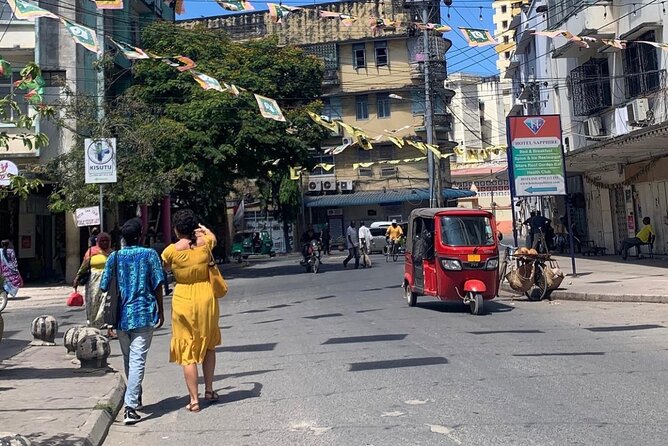
The National Museum of Tanzania gives the day a larger frame. It is a consortium of five Tanzanian museums, created to preserve and display material about the country’s history and natural environment.
You spend about one hour here. That allows time for a useful overview, though not a complete visit to everything the museum group represents. This stop is valuable because the tour is not limited to Dar es Salaam alone. It places the city within Tanzania’s wider story and natural setting.
After the markets and outdoor stops, the museum also offers a quieter change of pace. Pay attention to Bernard’s explanations, since his strength is connecting exhibits and buildings to the people and events behind them. The museum is likely to mean more if you already have questions about Tanzania’s past, rather than simply wanting a quick collection of photographs.
Kariakoo Market and the scale of urban trade

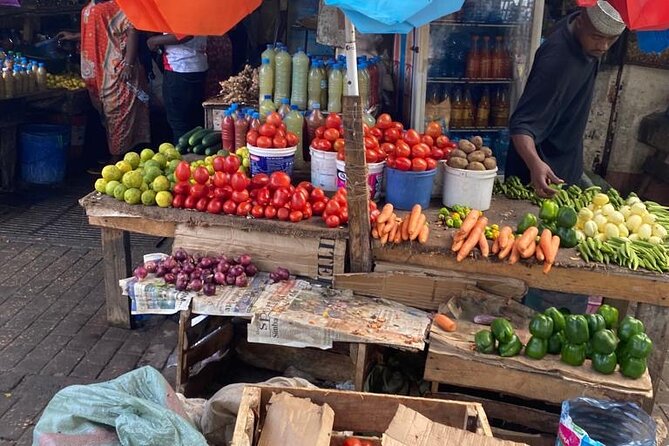
Kariakoo Market spreads over many city blocks and contributes heavily to Dar es Salaam’s commercial life. You have one hour here, making it one of the day’s more substantial city experiences.
This is where you get a feel for the scale of Dar es Salaam as a working city. The market is not a polished cultural display. It is a broad trading area, and the value lies in seeing how commerce shapes streets, movement, and daily routines.
Stay close to your group and keep track of your belongings in any busy market area. The supplied information does not promise a specific shopping list or food tasting, so treat Kariakoo as a guided look at city trade rather than a guaranteed shopping excursion.
The contrast with Mwenge is helpful. Mwenge centers on carved art and souvenirs. Kariakoo presents a much larger commercial world. Together, they show both the artistic and practical sides of buying and selling in Dar es Salaam.
Mlimani City Mall and modern Dar es Salaam
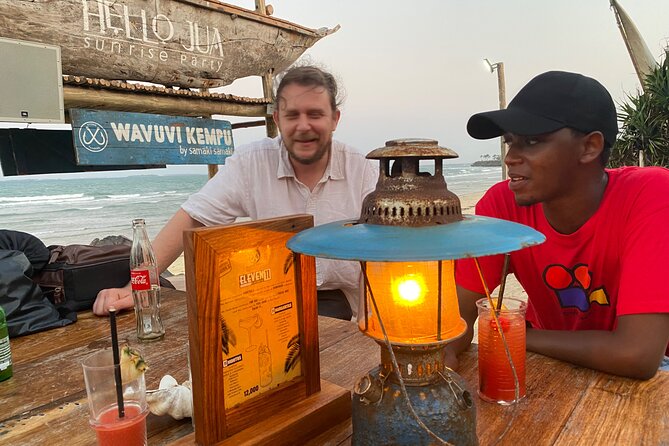
Mlimani City Mall is on Sam Nujoma Road in Ubungo and covers about 30,000 square meters. It is one of the largest malls in Tanzania, giving you a look at the city’s modern retail side.
You have one hour here. At first, a mall may seem out of place on an architecture and culture tour, but it makes sense as a contrast. After churches, traditional homes, craft markets, and older trading areas, Mlimani City shows how the city is changing and where contemporary shopping fits into urban life.
Do not expect this to be the most historic part of the day. Its value is comparative. You see that Dar es Salaam is not only an old port city or a market center. It is also a modern commercial hub with large-scale retail and newer patterns of city life.
Tingatinga paintings and a strong final color note
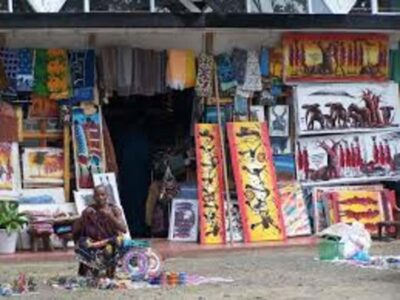
The final listed stop is the Tingatinga Arts Cooperative Society. Tingatinga painting developed in Tanzania during the second half of the 20th century. The works are known for strong colors and are often painted on masonite, a practical surface that makes them easier to carry home.
You have about 30 minutes here. That is enough for a compact introduction to the style and a look at available work, but probably not enough for a long discussion with artists. If you are considering art as a souvenir, this is one of the more meaningful places to make that choice because the paintings have a clear Tanzanian connection.
The stop also ends the tour on a lighter visual note. After churches, museums, markets, and urban trade, the bold painting style gives the day a clear artistic finish.
Lunch, snacks, and the practical value of the price
The price is $150 per person. That is not a budget city walk, but this is a private, full-day-style experience with transport and nine stops. Admission fees, taxes, bottled water, snacks before lunch, and local lunch are included, which makes the cost easier to assess.
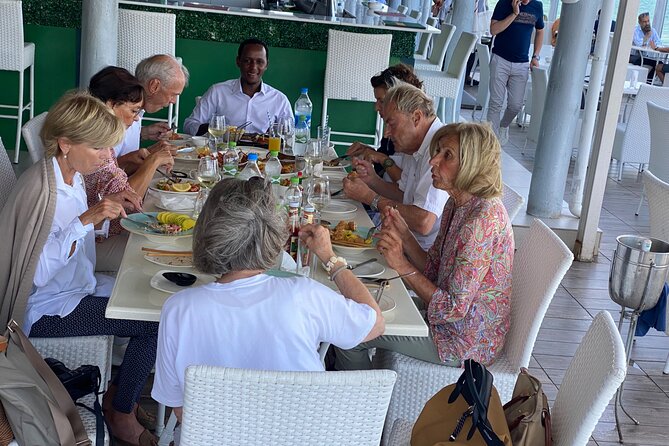
One lunch experience connected with this tour has been at Akemi, a revolving restaurant with broad city views. The supplied details identify local lunch as included, but they do not guarantee that restaurant for every departure. It is best to confirm the lunch location if the setting matters to you.
The food plan is practical. Snacks help bridge the long morning, while water is useful in Dar es Salaam’s heat. Dinner is not included because the tour ends in the evening, and you choose your own restaurant afterward. Alcohol is also excluded. If you want drinks at a bar or sports bar, an additional $30 to $50 per person is expected, and the age limit is 18 or older.
For a private tour, the cost can be reasonable if you value personal guiding and door-to-door movement. If you mainly want to see two or three central sights, it may feel expensive. You are paying for breadth, transport, interpretation, meals, and a full day of coverage.
Who will get the most from this tour
I would choose this tour if you are visiting Dar es Salaam for the first time and want a broad orientation. It suits people who enjoy switching between architecture, museums, markets, food, shopping, and art rather than spending the whole day in one district.
It is also a good fit if you want a private guide who can answer questions as they come up. Bernard’s style, based on the experience described, is especially useful for travelers who want context about religion, society, music, and architecture, not just names and dates.
The tour may be less suitable if you dislike busy commercial areas, prefer slow photography, or want long visits at every museum and church. Nine stops create variety, but they also require you to keep moving. Families and most visitors can participate, and service animals are allowed. The experience is near public transportation, though private transport is provided.
You receive confirmation at booking, and free cancellation is available up to 24 hours before the start time for a full refund. Changes or cancellations inside that window are not accepted, with cut-off times based on local time.
Should you book Dar es Salaam History and Architectural Tours?
Book it if you want one well-organized day that explains many sides of Dar es Salaam. The strongest reasons are Bernard’s personal guiding, the private vehicle, the mix of historic and modern sites, and the inclusion of lunch, snacks, water, and entrance fees.
Think twice if you want a slow architectural study or a short, low-cost outing. The schedule is packed, and the city’s traffic and heat can make the day tiring. For a first visit, though, the route gives you a useful base: churches for the city’s religious past, museums for Tanzania’s wider story, markets for working life, and art stops for its creative side.
FAQ
How long does the tour last?
The tour lasts approximately seven hours, beginning at 9:00 a.m.
What is the price?
The price is $150 per person.
Is this a private tour?
Yes. Only your group participates in the private activity.
Is pickup available?
Yes. Pickup is offered.
What is included in the price?
Private transportation, entrance fees, taxes, bottled water, snacks before lunch, and local lunch are included.
Is dinner included?
No. Dinner is excluded because the tour ends in the evening. You can choose your own restaurant afterward.
Are alcoholic drinks included?
No. Alcoholic beverages are excluded. The tour provider can take you to bars or sports bars, with an expected cost of $30 to $50 per person and an age limit of 18 or older.
Can most people participate?
Yes. Most people can participate, and service animals are allowed.
What is the cancellation policy?
You can cancel at least 24 hours before the start time for a full refund. Cancellations or changes made less than 24 hours before the tour are not accepted for a refund.
Just added around Dar es Salaam
- The Ultimate Guide for 2-Day Tanzania Safari from Mwanza★ 5.0 · 3 reviews
- 5 Days Tanzania Safari from Mwanza to Arusha★ 5.0 · 8 reviews
- Sunrise Beach Walk with Picnic Breakfast Activity★ 5.0 · 3 reviews
- Saadani National Park Day Tour★ 5.0 · 3 reviews
- Private Tour in Historical Dar es Salaam with Lunch★ 4.5 · 6 reviews
- Dar es salaam Private City Tour with Professional Guide★ 5.0 · 5 reviews
- Dar es salaam Airport Transfer (Private & Group)★ 3.5 · 7 reviews
- Full Day Private Tour in Dar es Salaam City★ 5.0 · 4 reviews
Historical Tours, compared.
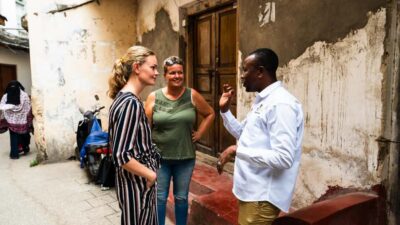
Stone Town Historical Cultural Walking Guided Tour
Read our review →
Arusha Guided Walking City Tour, Culture, Lifestyle & History
Read our review →
Zanzibar Stone Town Historical Tour and Spice Farm Tour
Read our review →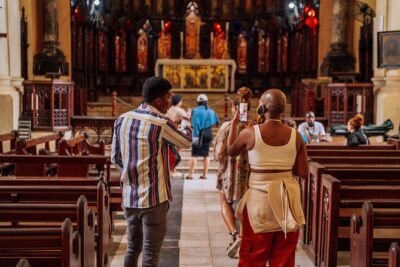
Stone Town Historical and Cultural Walk with Ally Jape
Read our review →
Stonetown Historical Walking Tour & Traditional Lunch
Read our review →
Cultural Walking Tour through Stonetown, a UNESCO World Heritage Site
Read our review →
City Walking Tour Historic and Modern Highlights
Read our review →Browse the lists this tour appears in