
Reviewed · HISTORICAL TOURS
Bagamoyo Historical Tour – Everyday
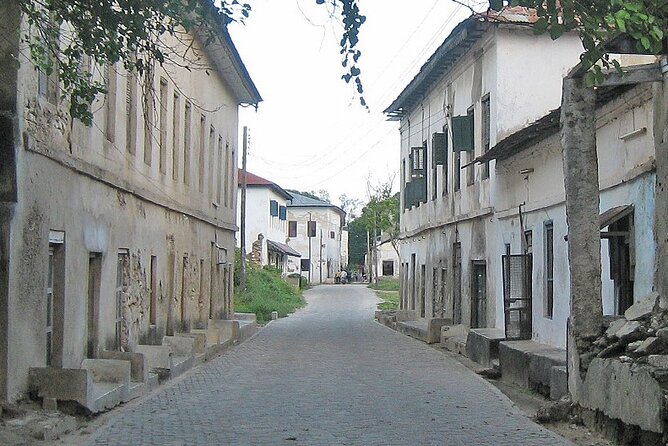
Bagamoyo gives Tanzania’s coast a human face. About 65 kilometers north of Dar es Salaam, this former port ties together Arab trade, the slave and ivory trades, German rule, Christian missions, and the quiet decay of an old coastal town. The most affecting stop is the former slave prison, where the name Bwagamoyo, meaning Here I throw down my heart, takes on a painful meaning.
I like the way this tour pairs Kaole Ruins with the later colonial sites, giving you a broad view rather than one narrow chapter. I also like the practical comfort of air-conditioned transport, hotel pickup, water, and soft drinks during an eight-hour day.
The main consideration is the English level of the guide. Several guests praised the historical explanations, but one reported that communication was difficult. Ask for clear narration when booking, especially if history is your main reason for going.
Key points at a glance
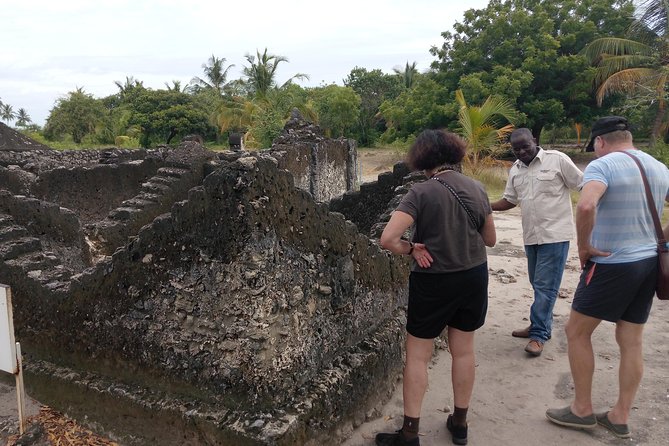
- Kaole Ruins: See about 30 tombs and what is described as the oldest mosque in East Africa, five kilometers south of Bagamoyo.
- Slave-trade history: Visit the former prison and learn why Bagamoyo became tied to one of the darkest chapters of the coast.
- German and British rule: Explore Old Boma, built in 1897, then visit the graves of German leaders who died during the First World War.
- Christian mission history: Visit the Catholic Museum, Livingstone’s former resting place, and the First Cross erected in 1867.
- A full day from Dar es Salaam: The tour lasts eight hours and includes hotel pickup, air-conditioned transport, an English-speaking guide, water, and soft drinks.
- A strong guide can shape the day: Recent arrangements have included Michael behind the wheel and Sedic providing detailed commentary on history, education, art, geography, and local life.
Why Bagamoyo is worth the drive from Dar es Salaam
Dar es Salaam can feel crowded and fast-moving. Bagamoyo offers a slower coastal setting, but its quiet streets conceal a complicated past. It was once one of the most important trading ports along the east-central African coast and later served as the formal capital of German East Africa.
That mixture is what makes the trip worthwhile. You are not visiting a single monument and heading back. You are following the rise and decline of a port shaped by Arab traders, Portuguese pressure, the slave and ivory trades, German colonial rule, British control, and Christian missionaries.
The drive itself is part of the experience. One recent account praised the change in mood as the road left Dar es Salaam, with the city’s congestion giving way to a more relaxed pace. The route also gives you a chance to see ordinary life along the road rather than only polished historic sites.
The tour costs $187 per person. That is a serious day-trip price, so the value depends on what you want. If you simply want a beach outing, this is more history than relaxation. If you want a guided look at Tanzania’s coast with transport arranged from your hotel, the price covers a long day, a private-feeling road journey, an English-speaking guide, and several separate historic sites.
More history walks in Dar Es Salaam:
- Dar es Salaam History and Architectural Tours
★ 5.0 · 36 reviews - Bagamoyo Historical Tour – Everyday
★ 5.0 · 13 reviews - Private Tour in Historical Dar es Salaam with Lunch
★ 4.5 · 6 reviews
Kaole Ruins and the remains of an older town
The first major historical stop is Kaole, about five kilometers south of Bagamoyo. The ruins belong to an older Arab settlement that declined after the Portuguese arrived in the 15th century.
The site includes around 30 tombs and the remains of what is described as the oldest mosque in East Africa. That gives Kaole a special role in the day. It takes you beyond the German and British periods and shows that the coast had established links with the wider Indian Ocean world long before European colonial rule.
I like this stop because it gives context to Bagamoyo itself. Without Kaole, it is easy to think of the town mainly as a colonial-era site. Here, you see an earlier coastal community and the effects of changing trade routes and outside powers.
Do not expect a complete old city with walls, shops, and intact buildings. These are archaeological remains, and the appeal comes from reading the fragments with a guide. The explanation matters. A good guide can help you understand why a mosque, tombs, and a declining port belong to the same story.
If ancient architecture is your main interest, Kaole may feel modest compared with larger archaeological sites elsewhere in Africa. Its value comes from the age of the remains and the way they connect to Bagamoyo’s later role.
The former slave prison and the meaning of Bwagamoyo
Bagamoyo’s slave-trade history is not a decorative part of the tour. It is central to understanding the town. You visit the prison where enslaved people were held during the slave and ivory trade.
The name Bwagamoyo is commonly explained as Here I throw down my heart. It reflects the despair of people who were forced away from home and expected never to return to Africa. That phrase gives the town’s history a personal weight that dates and trade figures alone cannot provide.
This part of the tour may be difficult. The site is a reminder of confinement, forced movement, and the human cost of commerce. I would not recommend treating it as a quick photo stop. Listen closely, ask questions, and allow the subject the seriousness it deserves.
The stop is especially useful for visitors who want to understand how the coast’s wealth and importance were connected to exploitation. Bagamoyo was not simply a pretty port with old buildings. Its position made it part of an international trading system that brought ivory, enslaved people, merchants, missionaries, and colonial officials through the same region.
The supplied tour information does not give a precise visit length or describe the prison’s current displays. Your guide’s explanation will therefore be important in making the site understandable. If the English narration is unclear, ask for simpler wording or a slower explanation.
Old Boma and the German colonial chapter
Later, you see Old Boma, a statehouse built by the Germans in 1897. After the First World War, the British took control of it.
This building helps you see how quickly political power changed hands. The German period was not an isolated chapter. The British inherited and adapted colonial structures after Germany lost its overseas territories following the war.
The building is valuable less as a grand architectural showpiece than as a physical marker of administration. It represents the government machinery that followed the earlier trading era. A guide can help connect the building to Bagamoyo’s role as the formal capital of German East Africa.
You also visit tombs connected with German leaders who died during the First World War. The graves bring a personal scale to a conflict that can otherwise feel distant. Here, the colonial story is not only about offices and titles. It is also about people who died far from Europe during a war that reshaped control of the region.
The tour information does not promise entry into every building or give the condition of each site. Expect a guided look at the historic area rather than a polished museum complex. Wear comfortable shoes and keep your schedule flexible, since the day combines driving, walking, and several stops.
A few more Dar Es Salaam trips worth comparing
- Dar es Salaam: City Tour
★ 4.7 · 159 reviews - Dar es Salaam City Center: Walking Tour
★ 4.8 · 102 reviews - Dar es Salaam City Tour – Everyday
★ 5.0 · 64 reviews - The Best/Top Rated Cultural City Tour in Dar es Salaam
★ 5.0 · 57 reviews
The Catholic Museum, Livingstone, and the First Cross
The Catholic Museum adds another layer to Bagamoyo’s past. You visit the museum and the former resting place of Dr. David Livingstone, the famous explorer.
Livingstone’s connection gives the site wide appeal, but the broader story is Christian mission work on the coast. The tour also includes the First Cross, erected by French missionaries in 1867.
This section of the day is useful because it shows how exploration, religion, and colonial expansion overlapped. Missionaries were not simply passing through. Their work became part of the changing social and political life of Bagamoyo.
You should also keep the site in perspective. This is not presented as a full Livingstone expedition or a stand-alone museum visit devoted only to him. His former resting place is one part of a larger Catholic and missionary story.
For visitors interested in religious history, the stop may be one of the day’s highlights. For others, it may feel less immediate than the slave prison or Kaole Ruins. The guide’s ability to explain the connection between the museum, the First Cross, and Bagamoyo’s wider history will make a difference.
A coastal pause after the history
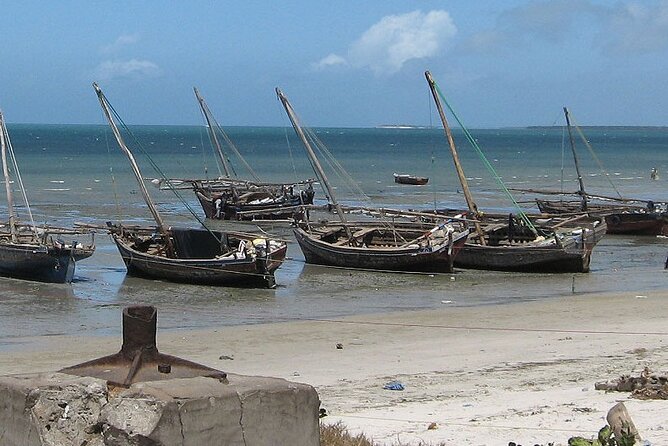
Bagamoyo is not only a place of difficult memories. The town also has beaches and hotels, and the tour allows you to experience its warm coastal hospitality after the main historical stops.
The supplied details do not include a specific beach hotel, swimming stop, or beach meal. Do not book this expecting a full resort day. Think of the coast as a gentler ending to a serious historical outing.
That balance is welcome. Eight hours of slavery, war, colonial rule, and religious history can feel heavy. A little time near the coast gives you space to absorb what you have seen.
Meals are not included, and alcohol is not included. The tour does include water and soft drinks, so you should confirm the meal plan before setting out. If you need lunch during the day, check what arrangements are available rather than assuming it is covered in the price.
How the transport and guiding affect the day
Hotel pickup is included. The driver waits in your hotel lobby with a sign showing your name, which removes much of the usual morning uncertainty.
Transport is air-conditioned, an important comfort on a long day along the coast. The tour lasts eight hours, including the road trip from Dar es Salaam and the visits around Bagamoyo. You should expect a full day rather than a quick excursion.
A recent tour arrangement included Michael as the driver. He was praised for safe driving and for making the journey pleasant. Sedic provided the historical narration, covering subjects such as immigration, leadership, education, art, geography, and local life.
Those names may not guarantee the exact staff assigned to your booking, but they show the sort of division that can work well: a driver focused on the road and a guide focused on the story. Strong guiding is especially important here because many of the sites are ruins or historic buildings without extensive interpretation on site.
The tour is offered in English and is listed as wheelchair accessible. Still, accessibility at individual ruins may differ from accessibility in the vehicle or museum areas. If you use a wheelchair, confirm the practical details before booking.
Who will get the most from this tour
I would choose this excursion if you like history, geography, archaeology, or the way major events shape ordinary towns. One recent visitor especially enjoyed the drive, the geography, and the change from Dar es Salaam’s hectic feel. That combination is a useful clue: the day is not only for specialists.
You will probably appreciate it most if you want:
- A guided introduction to Bagamoyo’s major historic periods
- A break from Dar es Salaam without arranging transport yourself
- Archaeological remains as well as colonial buildings
- Serious discussion of the slave trade and ivory trade
- Christian mission history connected to Livingstone and the First Cross
- A coastal setting at the end of a full sightseeing day
You may want a different outing if you mainly want swimming, a long beach stay, or an easy half-day schedule. Eight hours is substantial, and the subject matter can be emotionally demanding.
The English-language issue deserves attention. The overall rating is 4.4 from eight reviews, with strong praise for historical knowledge, the driver, and communication with the agency. One three-star assessment specifically found the guide’s English too weak. If precise explanation matters to you, contact Dove Adventure Tanzania in advance and ask who will guide the tour and how much time will be spent at each site.
Is $187 a fair price?
At $187 per person, this is not a budget bus ride. You are paying for a full eight-hour experience with pickup from your hotel, air-conditioned transport, a live English-speaking guide, water, soft drinks, and several historical stops.
The value is strongest if you are traveling without a car or do not want to arrange a driver, route, and local guide separately. You also get a planned sequence that moves from ancient Kaole to the slave-trade period, then German colonial rule and Christian mission history.
The value is weaker if you only want to reach Bagamoyo’s beach. Meals are not included, and the tour’s focus is clearly historical. Before booking, decide if you are paying for a day at the coast or for an interpreted history of the coast. At this price, the latter should be your answer.
Free cancellation is available up to 24 hours before the activity for a full refund, and you can reserve now and pay later. Those terms help if your Dar es Salaam plans may change.
Should you book the Bagamoyo Historical Tour?
Book it if you want a serious, guided look at one of Tanzania’s most important coastal towns. The combination of Kaole Ruins, the former slave prison, Old Boma, German war graves, the Catholic Museum, Livingstone’s former resting place, and the First Cross gives you a wide view in one day.
I would be most comfortable recommending it to history-minded visitors who value local explanation over a polished attraction. Ask in advance about the guide’s English, bring patience for a full day, and plan for a meal that is not included.
If those points suit you, the tour offers a useful break from Dar es Salaam and a much fuller understanding of Tanzania’s coast than a beach visit alone.
FAQ
Where is Bagamoyo located?
Bagamoyo is in Tanzania’s Pwani Region, about 65 kilometers north of Dar es Salaam on the coast opposite Zanzibar.
How long does the tour last?
The tour lasts eight hours.
What time does the tour start?
Starting times depend on availability. You need to check the available times when booking.
Is hotel pickup included?
Yes. The driver waits in your hotel lobby with a sign showing your name.
What language is the tour conducted in?
The live tour guide speaks English, and English is the listed tour language.
Is transportation air-conditioned?
Yes. Air-conditioned transportation is included.
Are drinks provided?
Water and soft drinks are included.
Are meals included?
No. Meals are not included in the tour price.
What sites are included?
The tour includes Kaole Ruins, the former slave prison, Old Boma, tombs of German leaders who died during the First World War, the Catholic Museum, Livingstone’s former resting place, and the First Cross erected in 1867.
Is the tour wheelchair accessible?
Yes. The activity is listed as wheelchair accessible.
Can I cancel for a refund?
Yes. You can cancel up to 24 hours in advance for a full refund.
Can I reserve without paying immediately?
Yes. The reserve-now, pay-later option lets you hold your place without paying on the day of booking.
Just added around Dar Es Salaam
- The Ultimate Guide for 2-Day Tanzania Safari from Mwanza★ 5.0 · 3 reviews
- 5 Days Tanzania Safari from Mwanza to Arusha★ 5.0 · 8 reviews
- Sunrise Beach Walk with Picnic Breakfast Activity★ 5.0 · 3 reviews
- Saadani National Park Day Tour★ 5.0 · 3 reviews
- Private Tour in Historical Dar es Salaam with Lunch★ 4.5 · 6 reviews
- Dar es salaam Airport Transfer (Private & Group)★ 3.5 · 7 reviews
- Dar es salaam Private City Tour with Professional Guide★ 5.0 · 5 reviews
- Full Day Private Tour in Dar es Salaam City★ 5.0 · 4 reviews
Historical Tours, compared.
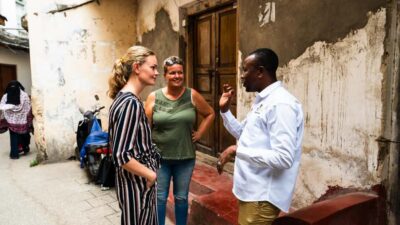
Stone Town Historical Cultural Walking Guided Tour
Read our review →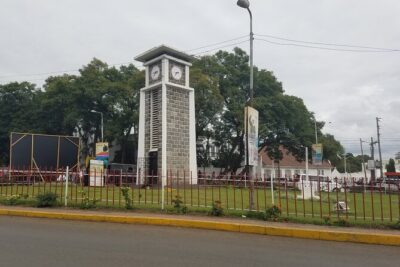
Arusha Guided Walking City Tour, Culture, Lifestyle & History
Read our review →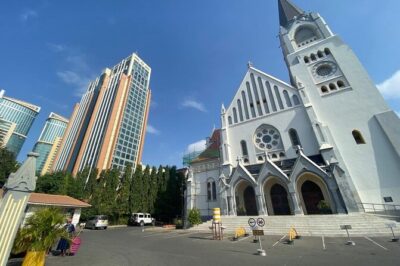

Zanzibar Stone Town Historical Tour and Spice Farm Tour
Read our review →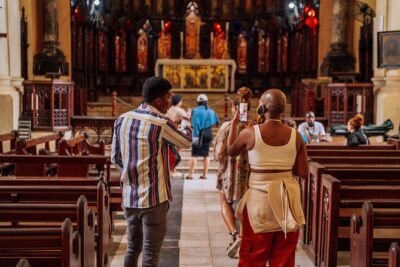
Stone Town Historical and Cultural Walk with Ally Jape
Read our review →
Stonetown Historical Walking Tour & Traditional Lunch
Read our review →
Cultural Walking Tour through Stonetown, a UNESCO World Heritage Site
Read our review →
Browse the lists this tour appears in