
Reviewed · HISTORICAL TOURS
Bagamoyo Historical Tour – Everyday
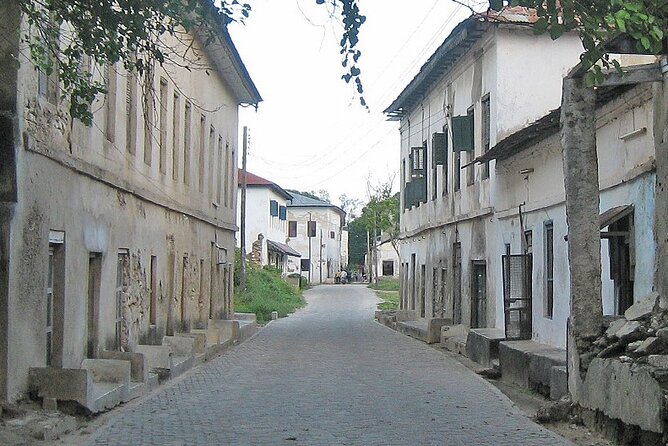
Bagamoyo is not just an old coastal town. It is a place where East African, Arab, German, and Christian histories meet, often in the same few streets. This private day tour brings that past into focus through an old prison, colonial buildings, ruined mosques, mission grounds, and the shoreline where captives once waited for transport overseas.
I like the private format, since you can spend more time at a site that catches your attention and less time waiting for a large group. I also like the range of stops, from Kaole’s archaeological remains to the emotional exhibits at the museum. The main drawback is the long day from Dar es Salaam, with lunch not included and some difficult subject matter that may feel heavy.
Key points to know before you go
- Bagamoyo’s past is layered: Arab trading, the slave trade, German rule, Christian missions, and coastal life all appear during the day.
- Old Arab Fort sets a serious tone: The building is tied to the confinement and movement of enslaved people toward the harbor.
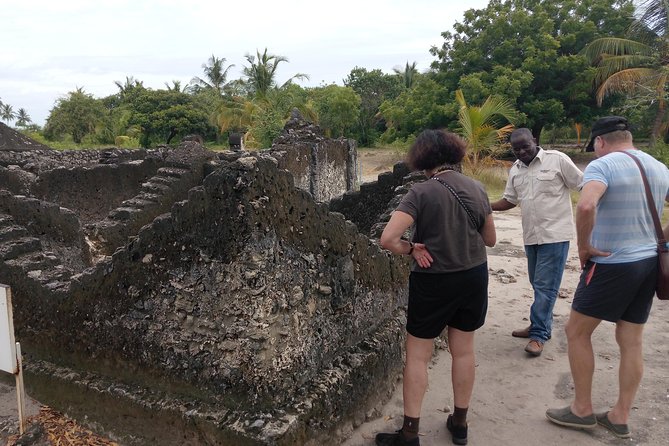
- Kaole Ruins add archaeology: You will see old mosques, tombs, houses, and wells near the Indian Ocean.
- The private tour gives you control: Your driver-guide can adjust the pace within the day’s schedule.
- Lunch costs extra: You can stop for lunch, but the meal is not part of the $199 price.
- Allow about eight hours: Pickup is offered, with an advertised 8:00 am start from Dar es Salaam.
Why Bagamoyo makes a strong history day trip
Bagamoyo was once an important trading center and later served as the capital of German East Africa for a short period. Its importance came from its position on the coast, where goods, people, religious ideas, and political power moved between the interior of East Africa and the Indian Ocean world.
That mix is what makes the town worth the drive. You are not looking at one isolated monument and then heading home. You are following a sequence of places that helps explain how Bagamoyo changed over time.
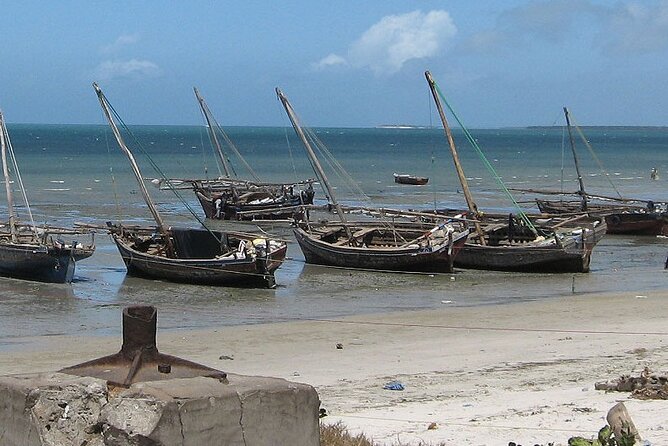
The day also deals with the slave trade. At Old Arab Fort, you hear about captives held before being moved through underground passages toward dhows in the harbor. The story is painful, but it is central to understanding Bagamoyo. The town’s name is often linked with heartbreak, a reference to the anguish of people forced away from home toward an unknown future.
I would not choose this tour if you want only light sightseeing and beach time. The subject can be difficult, particularly at the fort and museum. But if you want historical context rather than a quick photo stop, the seriousness is part of the value.
More history walks in Dar es Salaam:
- Dar es Salaam History and Architectural Tours
★ 5.0 · 36 reviews - Bagamoyo Historical Tour – Everyday
★ 4.4 · 8 reviews - Private Tour in Historical Dar es Salaam with Lunch
★ 4.5 · 6 reviews
The drive from Dar es Salaam and the private format
The tour begins at about 8:00 am and lasts roughly eight hours. Pickup is offered, and transport is in an air-conditioned vehicle. All listed entrance fees and taxes are included, which makes the price easier to understand before you book.
At $199 per person, this is not the cheapest way to spend a day near Dar es Salaam. The value depends heavily on your group size and priorities. For a solo visitor or couple, the price is a significant outlay. For a small private group, the cost can make more sense because you are paying for dedicated transport, a full day, admission fees, and a guide rather than simply buying a ticket to one attraction.
The private setup matters most at the historical sites. You can ask questions, pause over a difficult subject, or move along when a display has given you enough. You are not tied to the rhythm of a large public group.
The tour is advertised as private, though the general activity information gives a maximum of 100 participants. That upper limit appears to cover the overall activity rather than your individual vehicle, so confirm the exact group arrangement when booking if a genuinely private vehicle is important to you.
One highly useful detail is the driver and guide combination. Derrick is identified as a prompt, safe driver and good company, while Sadiq is noted for giving a thorough explanation of Bagamoyo’s history and culture. Staff can change, so treat those names as useful information to ask about, not a guarantee.
Old Arab Fort and Bagamoyo’s painful coastal story
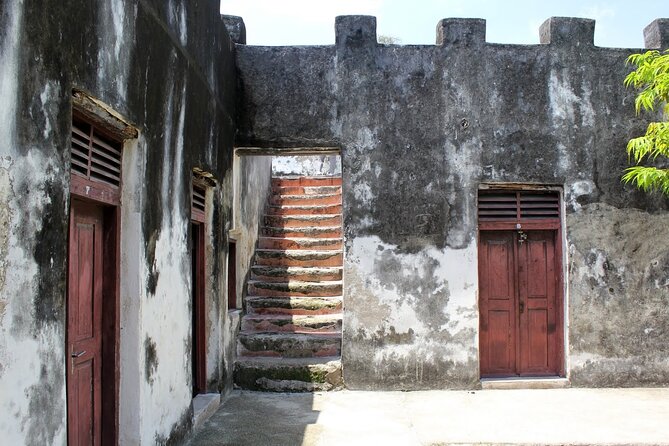
Your first major stop is the Old Arab Fort, with about an hour set aside and admission included. This is where the tour’s historical focus becomes clear.
The fort was used as a prison for enslaved people before they were moved toward the harbor. The route included underground passages leading to dhows, the sailing vessels that carried people away from the coast. Your guide explains how captives were held and how the coastal trading system connected Bagamoyo to a much wider world.
I appreciate the time allowed here. An hour gives you room to listen rather than simply walk in, take a picture, and leave. Ask your guide to connect the fort with the harbor and the later museum exhibits, since those places make more sense when considered together.
The fort may not offer a polished, entertainment-focused presentation. Its power comes from what happened there, not from elaborate displays. Some people may find the account of captivity and forced movement upsetting. I think that is a reason to approach the stop with care, not a reason to skip it.
The title of the stop can also cause confusion. The fort is described as an Arab fort, while other parts of the day focus on German rule and Christian missions. That is precisely the point: Bagamoyo’s story belongs to several eras and communities, and no single building explains it all.
Old Boma and the short German chapter
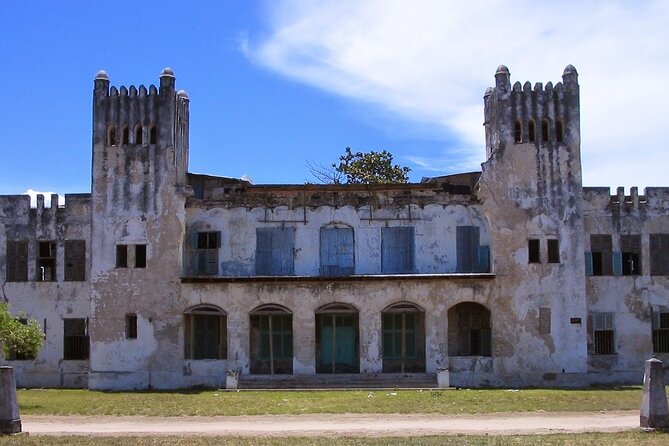
The Old Boma receives about 30 minutes. It was built by the Germans near the end of the 19th century as a residence for colonial leaders in the area.
This was once an old state house, but its official role did not last long. The German capital was moved to Mzizima, now Dar es Salaam, partly because Bagamoyo’s harbor had shallow water. That small practical fact helps explain a major change in the town’s fortunes.
I like this stop because it shows how geography and politics work together. A town can be important for trade and government, yet lose influence when ships cannot use its port as easily as needed. The building is also a useful counterpoint to Old Arab Fort. You move from an earlier coastal trading system into the colonial period, with German administration reshaping the town.
Thirty minutes is enough for an overview, though not a long architectural study. If you enjoy buildings, ask your guide what remains from the German period and how the Boma functioned. If you are more interested in social history, use the stop to ask why the capital moved and what that meant for Bagamoyo.
A few more Dar es Salaam trips worth comparing
- Dar es Salaam: City Tour
★ 4.7 · 159 reviews - Dar es Salaam City Center: Walking Tour
★ 4.8 · 102 reviews - Dar es Salaam City Tour – Everyday
★ 5.0 · 64 reviews - The Best/Top Rated Cultural City Tour in Dar es Salaam
★ 5.0 · 57 reviews
Kaole Ruins, mosques, tombs, and wells by the coast
Kaole Ruins are given about an hour and are among the most distinctive stops. The site lies southeast of Bagamoyo near the Indian Ocean and contains remains linked to an early Arab settlement.
Kaole was settled as a trading town as early as the 8th century. The visible remains date from roughly the 13th to the 16th centuries and include two mosques, around 30 tombs, houses, and water wells. Archaeological work has taken place here, so the stop is not simply a collection of old stones. It offers clues about how people lived, worshiped, traded, and managed water along the coast.
This is where I would slow down and let the setting do some of the work. The ruins are not presented as a giant monument. Their interest lies in the arrangement of smaller remains and in the questions they raise about the people who built them.
Your guide is especially useful here. Without context, a wall or tomb can be hard to read. With an explanation of the settlement’s trading role and connection to Arab visitors, the site becomes much easier to understand.
The stop may suit you less if you want a fully restored historic center or a large indoor museum. Kaole is an archaeological site, and the remains are partial. Still, it adds an earlier layer to the day, before German rule and before the mission buildings.
Bagamoyo Museum and the Holy Ghost Mission
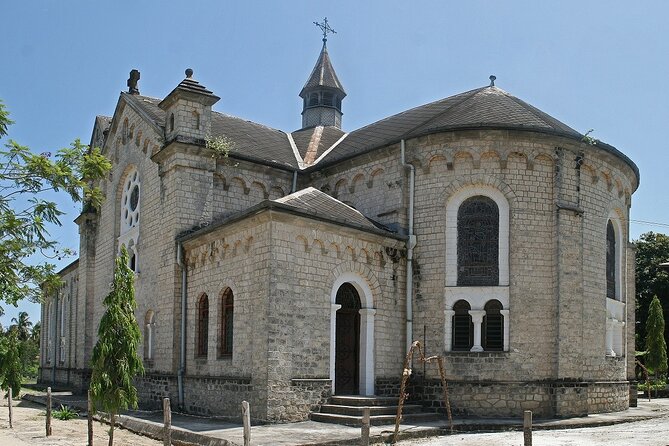
The Bagamoyo Museum receives about an hour. It is connected with the original Holy Ghost Church, built in 1872 and described as the oldest church on mainland East Africa. The church formed part of the Holy Ghost Mission, one of the earliest Christian mission centers in East Africa.
The site also includes the Livingstone Tower. David Livingstone was kept at the Holy Ghost Mission for one night in 1874, and the tower is named in his honor. That detail gives the mission a place in the wider story of European exploration and Christian work in the region.
The Sisters’ House, built in 1876, was later converted into the Roman Catholic Mission Museum. Its exhibits include photographs of enslaved people chained together, material on missionary work and conversion to Christianity, and books and booklets connected with the mission.
This may be the most emotionally demanding stop after the fort. The images of chained captives put human faces and bodies into a story that can otherwise feel distant. At the same time, the museum also presents the work of missionaries, so you are seeing both religious history and the complicated relationship between conversion, colonial power, and local communities.
I would listen closely to how your guide explains the material. A good explanation can help you hold several truths at once: missionaries provided religious and social services, while the period also unfolded alongside systems of foreign control and human exploitation. The supplied information does not promise a modern interactive museum, so set your expectations around historical exhibits, photographs, buildings, and explanation rather than high-tech presentation.
Beaches, mangroves, and the spaces between the monuments
The tour description also points to Bagamoyo’s beaches and nearby mangrove forest. These settings help you see the town as more than a string of historic buildings.
The coast explains Bagamoyo’s original importance. Trade depended on access to the Indian Ocean, while the harbor’s shallow water later helped push German administrative power toward Dar es Salaam. Mangroves, beaches, and coastal routes are part of the physical setting behind that story.
The exact time spent in these areas is not specified, so do not assume a long beach visit or a dedicated mangrove excursion. Think of them as part of the wider town experience and ask your guide how the day’s timing allows for them.
This is also where a private tour can work in your favor. If you want a short pause after the museum, you can ask about the best point in the schedule. The day already contains difficult material, and a quieter coastal interval may help you take it in.
Lunch, timing, and what the $199 covers
Lunch is not included, although you can stop to eat. Bring that extra cost into your budget, and remember that a meal stop uses part of an eight-hour day.
The price includes an air-conditioned vehicle, entrance fees, and taxes. Those inclusions are useful because you do not need to calculate separate admission charges at the fort, Old Boma, Kaole Ruins, or museum.
The strongest value comes from the guide. Bagamoyo is easier to appreciate when someone explains how the sites connect. A building without context can feel ordinary; the same building becomes meaningful when you understand its role in trade, imprisonment, colonial government, or mission work.
The experience has a 4.8 rating from 13 reviews and is recommended by 92 percent of participants. That is encouraging, though the number of ratings is still small. I would use those figures as a helpful sign, not as a reason to skip the practical questions about pickup, group size, lunch, and guide availability.
Free cancellation is available up to 24 hours before the start time. Inside that window, the payment is not refunded and changes are not accepted. The tour also depends on good weather and a minimum number of participants. If the operator cancels for either reason, you are offered another date or experience, or a full refund.
Who should book this Bagamoyo day trip?
I would choose this tour if you want a guided history day from Dar es Salaam and prefer a private pace. It suits people who want to understand the town’s role in Indian Ocean trade, the slave trade, German East Africa, and early Christian missions.
It is also a good fit if you value explanation over a checklist of photo stops. The fort, Kaole Ruins, and mission museum are much stronger when your guide connects them.
I would think twice if you have little patience for an eight-hour outing or if you want a relaxed beach day. The subject matter is serious, lunch costs extra, and the long route can make for a tiring schedule.
Should you book it?
Book this Bagamoyo tour if the town’s layered past is your main interest and you want transport, entry fees, and a guide handled in one day. The private format and the range of sites give you more substance than a quick coastal visit.
Before paying, confirm the pickup details, the exact group arrangement, who will guide your booking, and how much time is likely to be available for lunch and the beach or mangrove areas. If you do that and are ready for difficult history, the tour offers a useful, focused look at one of Tanzania’s most important coastal towns.
FAQ
Where does the Bagamoyo Historical Tour begin?
The tour begins in Dar es Salaam, with pickup offered. The advertised start time is 8:00 am.
How long does the tour last?
The experience lasts approximately eight hours.
Is the tour private?
The tour is described as private, allowing you to go at your own pace. The activity information also lists a maximum of 100 participants, so confirm the exact arrangement for your booking.
What sites are included?
Stops include the Old Arab Fort, Old Boma, Kaole Ruins, and Bagamoyo Museum. The experience also refers to Bagamoyo’s beaches and surrounding mangrove forest.
Are entrance fees included?
Yes. Admission fees and taxes are included in the tour price.
Is lunch included?
No. You can stop for lunch, but you pay for it separately.
What transport is provided?
Transport is provided in an air-conditioned vehicle.
Can most people participate?
Yes. The activity information says most travelers can participate.
Can I cancel for a full refund?
Yes, if you cancel at least 24 hours before the experience starts. Cancellations made less than 24 hours before the start time are not refunded.
Just added around Dar es Salaam
- The Ultimate Guide for 2-Day Tanzania Safari from Mwanza★ 5.0 · 3 reviews
- 5 Days Tanzania Safari from Mwanza to Arusha★ 5.0 · 8 reviews
- Sunrise Beach Walk with Picnic Breakfast Activity★ 5.0 · 3 reviews
- Saadani National Park Day Tour★ 5.0 · 3 reviews
- Private Tour in Historical Dar es Salaam with Lunch★ 4.5 · 6 reviews
- Dar es salaam Airport Transfer (Private & Group)★ 3.5 · 7 reviews
- Dar es salaam Private City Tour with Professional Guide★ 5.0 · 5 reviews
- Full Day Private Tour in Dar es Salaam City★ 5.0 · 4 reviews
Historical Tours, compared.
Stone Town Historical Cultural Walking Guided Tour
Read our review →
Arusha Guided Walking City Tour, Culture, Lifestyle & History
Read our review →

Zanzibar Stone Town Historical Tour and Spice Farm Tour
Read our review →
Stone Town Historical and Cultural Walk with Ally Jape
Read our review →
Stonetown Historical Walking Tour & Traditional Lunch
Read our review →
Cultural Walking Tour through Stonetown, a UNESCO World Heritage Site
Read our review →
City Walking Tour Historic and Modern Highlights
Read our review →Browse the lists this tour appears in