
Reviewed · CAMPING SAFARIS
4 Days Tanzania Camping Safari
Tarangire’s baobabs, the Serengeti’s open plains, and the Ngorongoro Crater all fit into one fast-moving safari from Arusha. The biggest appeal is the mix: elephants and dry-country scenery on day one, famous predator country on day two, then a crater rim view and another game drive before the trip ends. You cover three major wildlife areas in four days, which is a lot of Tanzania for one booking.
I like the private 4×4 with a pop-up roof, since your group can focus on its own questions, photo stops, and wildlife interests. I also like the practical inclusions: park fees, meals, water, guide, camping, binoculars, a field guide, and emergency evacuation insurance are built into the price. Guides named in past departures include Roger, Rashid, Alan, Ronald, Jonny, Francis, Musa, and others, though your assigned guide is not guaranteed.
The tradeoff is time. This is a compact safari with long drives, early starts, and basic camping rather than a leisurely lodge holiday. The published schedule details three sightseeing days, although the package includes four breakfasts, four lunches, and three nights, so you should confirm the exact fourth-day departure and drop-off plan before paying.
Key points before you book
- Three famous wildlife areas in four days: Tarangire, Serengeti, and the Ngorongoro Conservation Area give you a broad sample of northern Tanzania.
- Private vehicle and guide: Only your group participates, with unlimited mileage in a 4×4 fitted with a pop-up roof.
- Camping keeps the cost in check: Three nights, meals, water, park fees, and taxes are included, but campsite comfort is basic.
- Strong guide reputation: Roger, Rashid, Alan, Ronald, Jonny, and Francis are among the guides praised for animal spotting, driving, and care.
- Food is part of the experience: Cooks including Deo, Samuel, Co, and Sele received especially warm praise for filling safari meals.
- One detail needs clarification: The supplied plan lays out days one through three, while the package is sold as four days and three nights.
Three parks, one compact northern Tanzania route
This safari works because each stop offers a different kind of wildlife setting. Tarangire is known for giant baobabs and elephants. Serengeti is the big-name destination, with plains, predators, and the possibility of migration activity. Ngorongoro adds a dramatic crater setting and concentrated wildlife viewing.
You are not getting three slow, deep visits. You are getting a brisk sampler with enough time for game drives in each area. That makes the trip attractive if you have only a few days in Tanzania, but less appealing if you want long stays in one park or plenty of downtime at camp.
The advertised price is $1,479.49 per person. That is not a budget day trip, but it covers costly items that can quickly add up on an African safari: conservation and park charges, private transport, guide service, accommodation, meals, bottled water, taxes, and emergency evacuation insurance. You also receive a field guide book and binoculars.
I see real value here for a first-time safari visitor who wants one organized payment and no need to assemble a complicated route. The price is harder to judge for a solo participant, since private trips often cost more per person than a shared vehicle. Group discounts are offered, so the value should improve with more people in your party.
More Camping Safaris in Arusha
- 4 Days Group Camping Safari
★ 5.0 · 1,101 reviews - 5 Days Group Camping Safari
★ 5.0 · 730 reviews - 6 Days Tanzania Budget Camping Safari
★ 5.0 · 145 reviews
Day one: elephants and baobabs in Tarangire
Pickup is scheduled in the morning from the Four Points by Sheraton in Arusha. The drive to Tarangire takes much of the morning, followed by an afternoon game drive and picnic lunch.
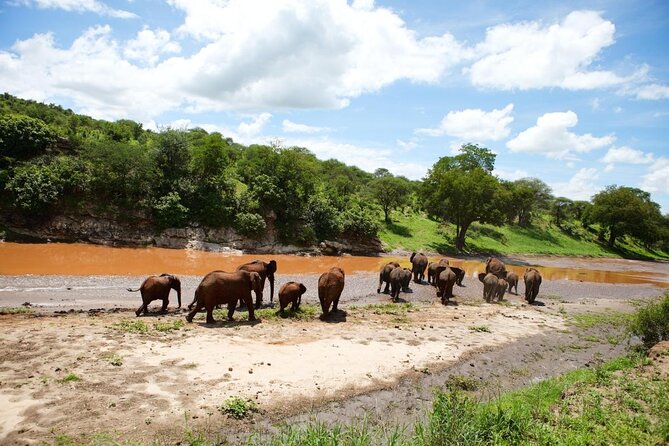
Tarangire is a fine first stop because it looks different from the parks that follow. The park is known for its huge baobab trees, sparse vegetation, dry riverbeds, and large elephant herds. In dry conditions, elephants may search for underground water in the riverbeds, while wildebeest, zebra, and buffalo gather around shrinking lagoons.
The open vegetation can help you spot animals. It also gives Tarangire a more sculptural feel than the broad grasslands of the Serengeti. You should keep expectations sensible, though. Wildlife sightings are never guaranteed, and the migration patterns of animals change with the season.
An afternoon drive is useful after the road from Arusha, but it also means your first day is not a full day inside the park. You will spend several hours on the road before reaching the animals. That is normal for this route, and the park’s elephant country makes the drive worthwhile, but you should not expect a gentle start with a late breakfast and a short transfer.
Day two: the long road into Serengeti
Day two is the trip’s longest stated park day, with about seven hours assigned to Serengeti National Park. The journey itself is part of the safari, but it can be tiring. You will spend substantial time in the vehicle, so bring a light layer, sun protection, and patience for rough or slow stretches.
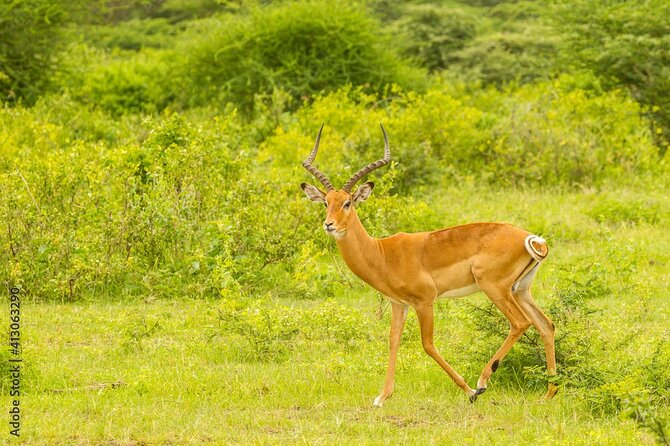
Serengeti is famous for the great migration of wildebeest and zebra. Timing and location matter, so a four-day trip cannot promise that you will see the migration itself. The park is still valuable outside the main movement period because its plains support lions, cheetahs, leopards, and other predators.
The schedule emphasizes reaching Serengeti and exploring its wildlife country rather than spending a full day in one small zone. Your guide’s skill matters greatly here. Past guide assignments have included Roger, who was praised for spotting animals at a distance, and Ronald, who was especially strong with bird identification. Rashid, Alan, Jonny, Francis, and Musa were also named as guides who combined animal knowledge with good care of their groups.
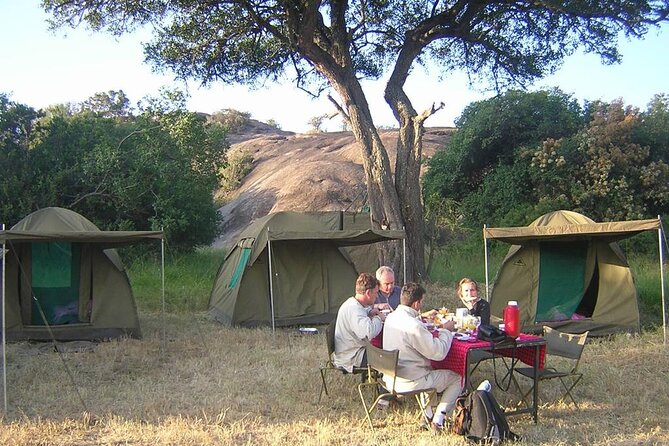
You sleep at Pimbi Campsite. This is camping, not a private room with hotel-style service. The appeal is simple: you stay close to the route and keep the trip affordable. The cost is less privacy and fewer comforts. If you need a hot shower every night, ask for exact campsite facilities before booking. One past response from the operator acknowledged that a hot shower was not available on one departure.
Day three: sunrise in Serengeti and the Ngorongoro rim
The third day begins with a Serengeti sunrise and a morning game drive. This is a smart time for wildlife viewing because the schedule specifically targets animals active during the morning, including lions and other predators on the hunt.
After brunch, you leave Serengeti and continue toward the Ngorongoro Conservation Area. The day includes a final game drive along the route to the crater rim, followed by views down into Ngorongoro before dinner.
Ngorongoro is a different sort of safari setting. The crater gives you a clear geographic focus, and the rim views provide one of the trip’s strongest visual moments. You are looking down into a huge natural basin rather than across open plains, so the experience feels distinct from Serengeti.
You spend the night at Simba Campsite. Again, expect practical camping rather than luxury. The high point is the setting and the next day’s access, not a long list of facilities.
The schedule needs careful checking here. The supplied plan ends its detailed sightseeing description on day three, but the tour is sold as four days and includes three nights. Ask the operator exactly when the crater descent happens, how long the final game drive lasts, and where you are dropped off on day four. This is the single most important planning question for the booking.
More Safaris in Arusha
- 7-Day Premium Luxury Tanzania Safari All-Inclusive
★ 5.0 · 426 reviews - 8 Days Great Wildebeest Calving Migration Safari from Arusha
★ 5.0 · 254 reviews - Group Safari 7 Days in Tanzania’s Main Parks
★ 5.0 · 240 reviews - Tanzania Simba Safari – 5 Days
★ 5.0 · 217 reviews
What the private 4×4 changes
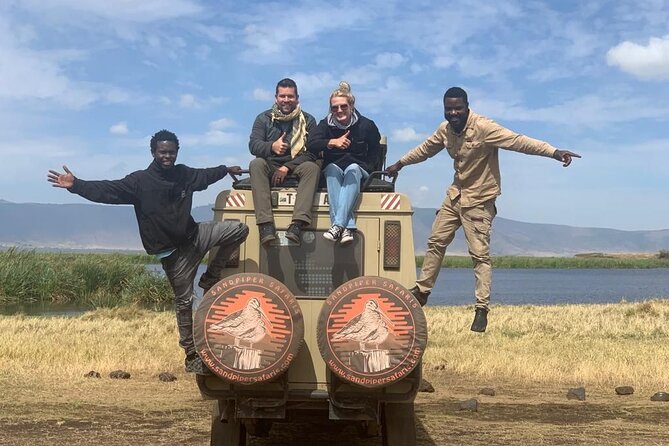
The tour uses a 4×4 with a pop-up roof and unlimited mileage. The roof matters because it lets you stand or sit higher for views and photographs while remaining in the vehicle. You are not walking among wildlife, and you should follow your guide’s instructions at all times.
A private departure means only your group takes part. That gives you more control than a large shared tour. You can ask for more time with a pride of lions, spend longer watching elephants, or ask questions about birds and animal behavior without adapting to strangers.
The guide is the key part of this setup. A good guide does more than drive. The strongest names associated with this operation, including Roger, Rashid, Alan, Ronald, and Jonny, were repeatedly praised for spotting distant animals, explaining what you were seeing, and creating a friendly atmosphere.
Still, private does not mean custom-built at every moment. Park rules, distances, road conditions, and wildlife locations shape the day. The route remains fixed around three major areas, so you should book it for the overall circuit rather than expect unlimited freedom.
Meals, camping, and what is actually included
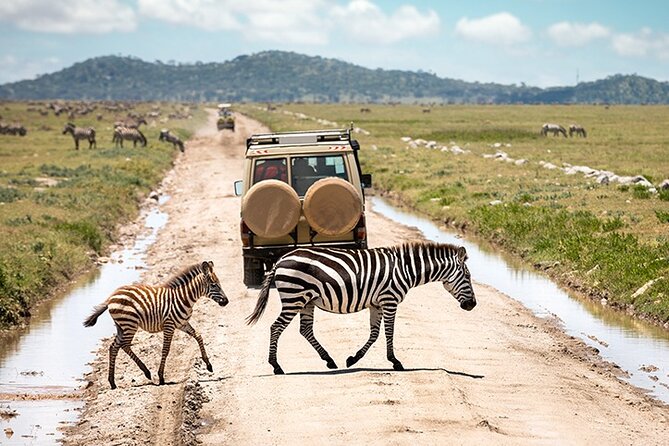
The package includes three nights of accommodation, breakfast, lunch, and dinner according to the itinerary. The inclusion list also specifies four breakfasts, four lunches, and three dinners. Bottled water, coffee, and tea are included as well.
The food appears to be one of the strongest parts of the camping setup. Cooks named Deo, Samuel, Co, and Sele were singled out for tasty meals and good kitchen service. That matters more than it may sound. After a long day in a safari vehicle, a dependable dinner is a real comfort.
Vegetarian meals are available, but you must request this when booking. Alcoholic drinks are not included. Personal items, cameras, visas, travel insurance, and tips are also your responsibility.
The suggested gratuity is $15 per day for the cook and $20 per day for the guide, divided among everyone in the vehicle. For a private group, decide in advance how you will share these tips so there is no awkward math at the end.
The supplied equipment includes a pair of binoculars and a birds and animal field guide book. That is a useful touch, especially for a first safari. Quality can vary, however. One operator response acknowledged that a pair of binoculars was not good enough and promised improvement, so bring your own if wildlife photography and distant sightings matter to you.
The good and the less comfortable parts
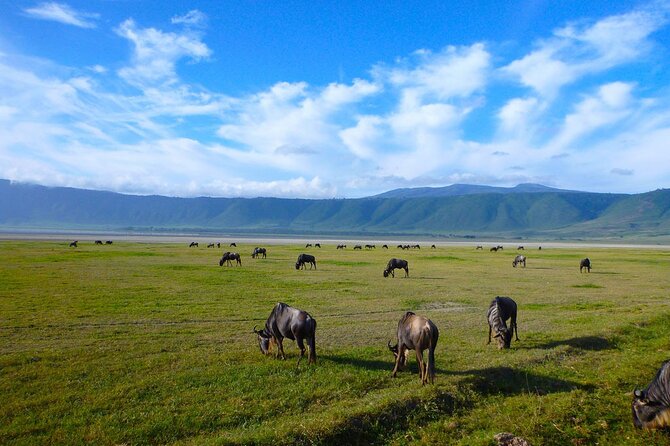
The strongest pattern is personal service. Multiple guide names come up for the right reasons: animal spotting, long game drives, clear explanations, good English, and a warm attitude. The food team also receives strong praise, which supports the idea that this is more than a vehicle-and-campsite operation.
The trip also seems well suited to people who want help with the full chain of logistics. Pickup and drop-off are included, along with park fees, taxes, emergency evacuation insurance, and meals. That reduces the number of small payments and decisions you need to manage.
Camping brings limits. You may not have reliable hot showers, and the amenities at Simba and Pimbi should not be compared with a lodge. Long drives are unavoidable on this route, particularly on the way to Serengeti.
There are also two serious complaints about backpacks damaged by a sharp edge inside the vehicle. The provider apologized and said it would take better care of belongings, but you should still protect camera bags and backpacks, check the vehicle for exposed metal, and keep valuables in a secure day bag.
The overall rating is 4.7 from 31 ratings, with 94 percent recommending the experience. Those figures suggest a strong overall record, but they do not erase the practical limits of camping or the need to confirm the fourth day.
Who should choose this safari
I would choose this trip if I had four days, wanted the major northern Tanzania highlights, and preferred a private vehicle over a large group. It suits active visitors who can handle early starts, long road days, and simple campsites.
It is also a good match if you care more about wildlife time and guide attention than about polished accommodation. Families, couples, and small groups can benefit from the private format, although the data says most travelers can participate without promising a special child or mobility setup.
I would look elsewhere if you want a slow itinerary, high-end lodges, guaranteed migration sightings, or a clearly detailed final day before booking. A longer safari would give you more time in Serengeti and reduce the feeling of moving from one major area to the next.
The tour offers free cancellation up to 24 hours before the start time for a full refund. Visa arrangements remain your responsibility, and the provided information says a visa must be obtained at the border or airport. Pre- and post-safari lodging and airport transfers can be arranged on request but are not included.
Should you book it?
Book this safari if your priority is a private, well-supported route through Tarangire, Serengeti, and Ngorongoro in a short window. The combination of experienced guides, included meals, private transport, and three major wildlife areas gives the $1,479.49 price reasonable value.
Before booking, get the day-four schedule in writing, confirm the exact campsites and shower arrangements, and ask which guide and cook are assigned. If those details suit you, this is a practical first safari with plenty of wildlife potential and a strong human touch. If comfort and slow pacing matter most, spend more on a lodge-based or longer itinerary.
FAQ
How long is the Tanzania camping safari?
The safari lasts approximately four days and includes three nights of accommodation.
Which parks and conservation areas does the safari visit?
The route visits Tarangire National Park, Serengeti National Park, and the Ngorongoro Conservation Area.
Is this a private tour?
Yes. Only your group participates in the activity.
What type of vehicle is used?
The safari uses a 4×4 vehicle with a pop-up roof for game viewing and unlimited mileage.
Are park fees and meals included?
Yes. National park fees, meals according to the itinerary, bottled water, coffee or tea, and government taxes are included.
Is camping included?
Yes. The package includes three nights of accommodation, with overnight stays listed at Pimbi Campsite and Simba Campsite.
Can I request vegetarian meals?
Yes. A vegetarian option is available, but you should request it when booking.
Are airport transfers and pre- or post-tour accommodation included?
No. Pre- and post-tour accommodation and airport transfers are not included, though they can be booked on request.
More Four-Day Trips in Arusha
- 4 Days safari Tour Tanzania
★ 5.0 · 159 reviews - 4 Days Mount Meru Trekking
★ 5.0 · 55 reviews - 4 days safari in Tanzania
★ 5.0 · 49 reviews - 4-Day Simba Safari – Mid Range Tour
★ 5.0 · 47 reviews
Just added around Arusha
- From Arusha: 11 days The Classics Northern Tanzania safari★ 5.0 · 11 reviews
- 6-Day Mount Meru Climb through Momella Route Guided Tour★ 5.0 · 5 reviews
- Private Day Trip to Arusha National Park with a Walking Safari★ 5.0 · 4 reviews
- From Arusha : 11-day Amazing North Tanzania safari tour★ 5.0 · 4 reviews
- Walking Day Tour to Safari in Arusha National Park★ 5.0 · 5 reviews
- 2 Days Tanzania Midrange Group Join Safari★ 5.0 · 7 reviews
- Best 5 Days Tanzania Private Luxury Safari with luxury Lodges★ 5.0 · 12 reviews
- Waterfall & Coffee Walking Tour★ 5.0 · 6 reviews
Camping Safaris, compared.
3 Day Serengeti National Park & Ngorongoro Crater Camping Safari
Read our review →
5-Day private Camping Safari Tour in Tanzania
Read our review →
5 Days Camping Tarangire, Serengeti & Ngorongoro crater & Visiting Maasai
Read our review →
Multi-Day Camping Safari Experience in Arusha
Read our review →
3-Day Tarangire, Ngorongoro and Lake Manyara Camping Safari
Read our review →Browse the lists this tour appears in