
Reviewed · HISTORICAL TOURS
Day Trip To Bagamoyo From Dar Es Salaam ..historical town
Bagamoyo is not just a seaside escape. It is a place where caravan routes, Indian and Arab trade, German rule, Christian missions, and the slave trade all meet in one walkable historic town. With a private guide, you explore far more than a beach and get a clearer sense of why this coast mattered.
I like the personal guiding and the range of stops, from the Bagamoyo Museum to Kaole’s coral mosques and old graves. I also like the simple finish: a Tanzanian lunch followed by time on the beach. The main drawback is the long round trip from Dar es Salaam for a visit that may feel short if you want to see every site at leisure.
Key points to know before you go
- Bagamoyo is about 75 kilometers north of Dar es Salaam, with an early 6:00 am departure.
- The private format keeps the day flexible, with only your group taking part.
- History comes first, including the museum, old buildings, slave-port remains, and Kaole sites.
- Guide quality matters, and Hamis the driver and Michael the town guide were specifically praised for making the day smooth and informative.
- Lunch, bottled water, an air-conditioned vehicle, and fees are included, but breakfast is not.
- Beach time gives the day a slower finish, after several hours of historical sightseeing.
Why Bagamoyo is worth a day from Dar es Salaam
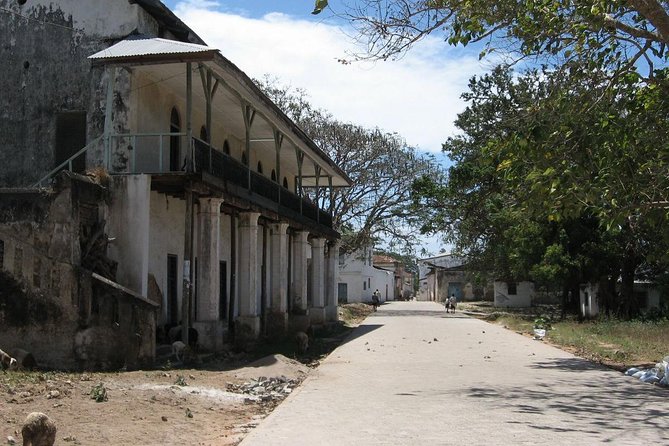
Dar es Salaam is Tanzania’s main commercial center, but Bagamoyo offers a very different pace. The town lies about 75 kilometers north along the coast, and its unpaved streets and old structures give the visit a more grounded feel than a quick city tour.
Bagamoyo means Lay down your heart. The name fits a place marked by departures, forced movement, trade, faith, and colonial power. For centuries, the town connected the coast with inland routes reaching toward Lake Tanganyika. Ivory, salt, and enslaved people moved through this network, making Bagamoyo one of the most important trading centers on the east-central African coast in the late 19th century.
That background makes the day more than a collection of old buildings. You are seeing the remains of a port town shaped by people from several regions and by systems that brought wealth to some while causing terrible suffering to others. A good guide can help connect those facts to the streets and buildings in front of you.
The town has also been designated Tanzania’s seventh World Heritage Site. The tour does not treat Bagamoyo as a polished museum district. You walk through ordinary streets and historic areas, which can make the visit feel immediate, though it also means you should expect uneven surfaces and a less formal sightseeing setting.
More history walks in Dar es Salaam:
- Dar es Salaam History and Architectural Tours
★ 5.0 · 36 reviews - Bagamoyo Historical Tour – Everyday
★ 5.0 · 13 reviews - Bagamoyo Historical Tour – Everyday
★ 4.4 · 8 reviews
The 6:00 am drive from Dar es Salaam
The day starts early. Pickup is offered at 6:00 am, and the tour uses an air-conditioned vehicle for the drive north. Breakfast is not included, so plan ahead before departure. Lunch and bottled water are provided later in the day.
The early start has two clear benefits. First, it gives you a better chance of fitting the main sights into an 8 to 12 hour outing. Second, it leaves room for the beach portion at the end rather than forcing you to choose between history and relaxation.
The tradeoff is time in the vehicle. One useful way to judge this trip is to think of it as a full-day outing, not a quick side trip. The round journey can feel long when compared with the time spent walking around Bagamoyo. If you dislike long drives, this may not be the best use of your day in Dar es Salaam.
The private setup helps. You are not tied to the needs of a large group, and the vehicle is reserved for your party. That makes it easier to ask questions, pause at sites, and adjust the pace within the day’s limits.
Hamis is identified as the driver who handled one particularly smooth round trip, while Michael guided the walking tour through town. The booking does not promise that these exact people will lead every departure, so treat their names as useful context rather than a guarantee. Still, the experience shows how much the day depends on a calm driver and an engaging local guide.
Inside the Bagamoyo Museum
The Bagamoyo Museum is a sensible first stop because it gives you a framework for the rest of the visit. Instead of meeting the town’s ruins without context, you can begin by learning how Bagamoyo grew as a trading center and how its connections reached inland.
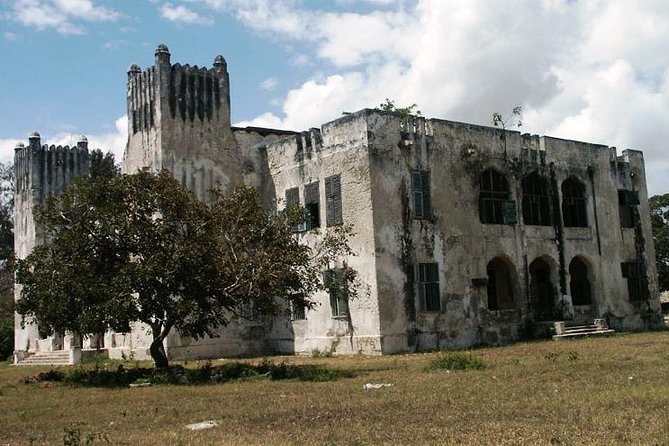
The museum portion is useful for sorting out the different forces that shaped the town. Indian and Arab traders played an important role in coastal commerce. German colonial rule brought another layer of administration and control. Christian missionaries added a religious presence that remains part of Bagamoyo’s story.
You should expect the museum to be an overview rather than the entire history of the town. The real value comes from carrying that information into the streets afterward. Details about trade, religion, colonial rule, and forced movement make the old buildings easier to understand.
The stop is also a good reason to choose a private guide. You can ask direct questions about what you are seeing instead of relying only on labels or a fixed group explanation. If history is your main reason for visiting, give this section your attention rather than rushing toward the beach.
Walking Bagamoyo’s old streets
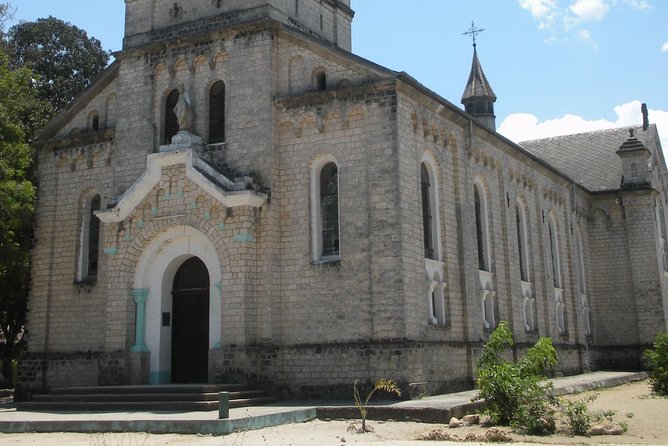
After the museum, the experience moves outdoors. You walk through Bagamoyo’s unpaved streets and see historic buildings, old graves, and reminders of the town’s former role as a port and caravan center.
This is where the private format feels most useful. A guide can point out details that are easy to miss when you are simply passing through town. You also have room to ask about how goods moved between the coast and the interior, why the town became important, and how its different communities shaped its character.
The walking is not described as a formal paved heritage trail. That is part of the appeal, but it also means comfortable shoes are sensible. The tour information says most people can take part, and anyone can join, but the unpaved streets may still be tiring for some people over several hours.
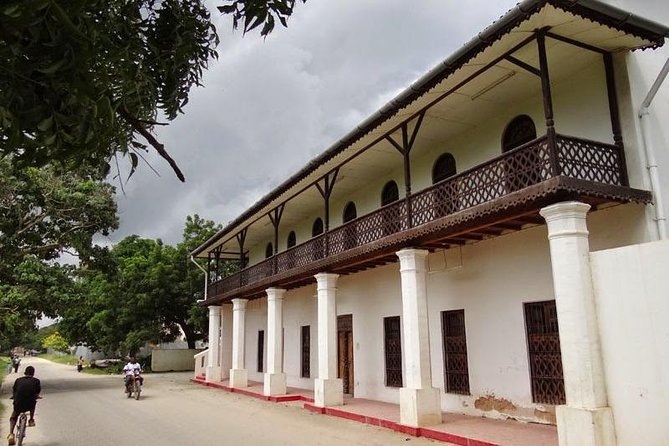
The town’s old buildings are valuable because they show history at street level. You are not only reading about Bagamoyo as a trading center. You are moving through the setting where that trade, missionary work, colonial activity, and human suffering took place.
A small artisan market is also worth seeking out. It is specifically recommended as an easy-to-miss part of the visit. If you like locally made objects or want a little time beyond the main historical stops, ask to include it if the day’s timing allows.
More day trips in Dar es Salaam:
- From Zanzibar: Mikumi Safari Day Trip with Flights and Meal
★ 4.7 · 1,470 reviews - Materuni Waterfalls & Chemka Hotsprings Day Trip
★ 5.0 · 214 reviews - Zanzibar: Nungwi Turtle Aquarium Guided Half-Day Trip
★ 4.4 · 197 reviews - Materuni waterfalls coffee tour & Chemka hot springs Day trip
★ 5.0 · 131 reviews
Kaole’s coral mosques and 13th-century remains
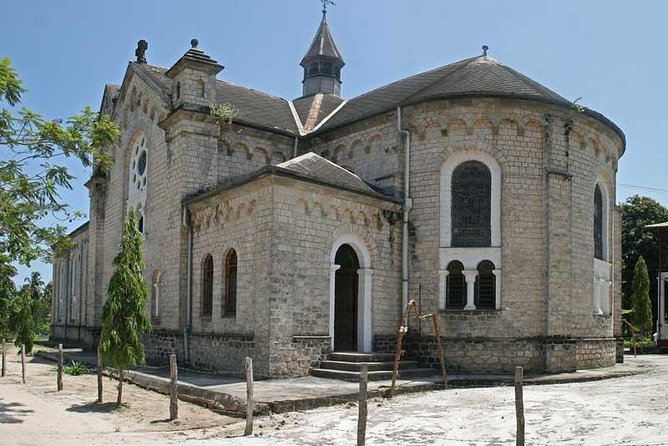
The itinerary includes Kaole, where you can see coral mosques and graves dated to the 13th century. This adds a much older layer to the outing than the late 19th-century trading story.
The site helps show that coastal settlement and Islamic influence in this part of Tanzania did not begin with European colonial rule. Coral construction is closely tied to the coast, and the remains give you a direct connection to earlier communities and religious life.
Kaole also helps prevent the day from becoming too narrowly focused on German colonial buildings or the slave trade. Those subjects are important, but Bagamoyo’s story reaches much further back. The combination of early ruins, later trade, and colonial history gives the trip a broader time span.
You should expect a historical site visit rather than a polished attraction with a long list of services. The experience is about seeing remains, listening, and asking questions. Your guide’s explanation will shape how much you take away from the stop.
The slave port and the difficult history of trade
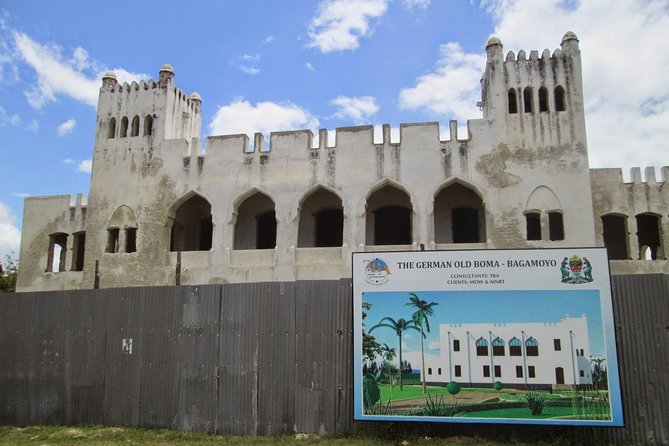
Bagamoyo’s importance cannot be separated from the slave trade. The town was part of routes that carried enslaved people as well as ivory and salt. The tour includes reminders of the former slave port, so this is not a trip that presents the coast only as a pleasant beach destination.
That honesty is one of the strongest reasons to visit with a guide. The subject is painful, and the physical remains may not explain themselves. A guide can help place the port within the wider network linking the coast to inland caravan routes and Lake Tanganyika.
I would approach this part of the day with patience. The history can be uncomfortable, but skipping it would give you a false picture of why Bagamoyo became so important. The town’s trade brought movement and wealth, yet it also depended on exploitation and forced movement.
The visit is especially useful if you want more than a standard coastal excursion. You get a chance to think about Tanzania’s past in a specific place, not as a distant chapter in a book. That said, anyone looking only for sightseeing and beach time may find this portion heavier than expected.
The old ferry and the Great Wami River
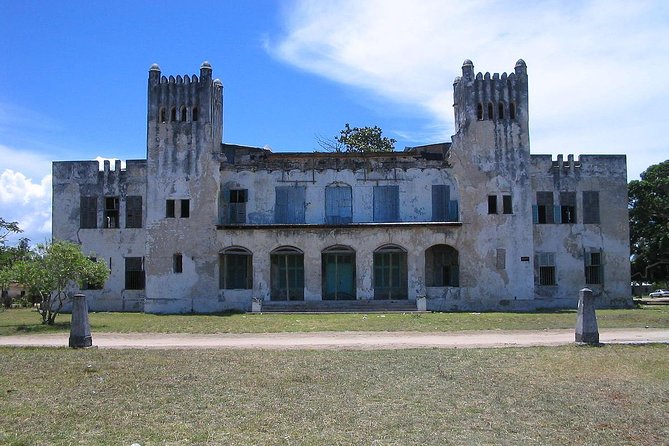
The route also includes the old ferry at the Great Wami River. This stop connects the town’s coastal position with the wider transport routes that made movement between inland areas and the sea possible.
The river stop gives the day a change of setting after the museum and town walk. It also helps explain why routes and crossings mattered before modern highways and vehicles made travel easier. The tour information does not provide details about the current ferry operation, so you should think of this as a historical point of interest rather than a promised ferry ride.
This kind of stop works best when your guide ties it back to the main story. Bagamoyo was important partly because it linked different regions. The old ferry is a physical reminder that trade routes relied on rivers, crossings, ports, and people who knew how to move goods over long distances.
Tanzanian lunch and time on the beach
Lunch at a local restaurant is included, giving you a proper break after the morning’s sightseeing. The meal is described as Tanzanian, though no fixed menu is provided. Expect the lunch to be practical and local rather than a special tasting menu.
The food stop matters because this is a long day. You have been walking, listening, and moving between sites, so a seated meal gives you time to rest and talk over what you have seen. One useful point to keep in mind is that the restaurant may be straightforward rather than polished. If your main concern is atmosphere or fine dining, adjust your expectations.
The day ends with beach time. This is a smart contrast to the serious historical stops and the long drive. You can slow down, enjoy the coast, and let the day finish at an easier pace.
The beach should be viewed as a relaxing add-on, not the central reason to book. The tour is strongest as a history-focused outing with a coastal pause at the end. If you want several hours of swimming and sun, the 8 to 12 hour schedule may not provide as much beach time as a dedicated beach trip.
What the $280 price includes
At $280 per person, this is not a budget day trip. The value depends on how much you care about having private transport, a private guide, a full historical route, and a simpler day outside Dar es Salaam.
The price includes:
- Air-conditioned vehicle
- Lunch
- Bottled water
- All fees and taxes
- Private tour service
- Pickup
That package removes several common costs and decisions. You do not need to arrange separate transport to Bagamoyo, find a restaurant, or organize each historical stop yourself. For a private group, the cost may feel more reasonable because the vehicle and guiding are not shared with a large crowd.
For a solo visitor, $280 is a serious expense for one day, especially when the drive is long. You should book it for the access and structure, not because it is the cheapest way to reach Bagamoyo. The value is best for people who want the town’s complicated past explained clearly and prefer a ready-made private outing.
The lack of included breakfast is minor, but it matters because of the 6:00 am start. Arrange your own breakfast before pickup or ask in advance what is practical for your departure.
Who should book this Bagamoyo trip
I would choose this outing if you have a full day in Dar es Salaam and want to understand the coast beyond the capital. It fits people who enjoy museums, old buildings, religious sites, local history, and guided walking.
It also works well for a private group that wants its own vehicle and guide. Families, couples, and friends can move at their own pace within the schedule, and anyone in the group can ask questions without waiting for a large crowd to catch up.
You may want to skip it if your priority is a short, easy excursion. The drive is long, the day begins early, and the historical material includes slavery and colonial rule. It is also not ideal if you want the beach to be the main event.
The overall rating is 4.7 from three published ratings, which suggests a strong start but is still a small sample. The most useful practical lesson is that the driver and guide make a real difference. Hamis was praised for a smooth round trip, while Michael was praised for answering questions during the town walk. Exact staff assignments are not guaranteed, but attentive service is worth confirming when you book.
Should you book it?
Book this Bagamoyo day trip if you want a private, history-led outing with transport from Dar es Salaam, a local lunch, and beach time at the end. Its best feature is the balance between serious history and a relaxed coastal finish.
Think twice if you dislike long drives or want a slow, beach-centered day. At $280 per person, the trip earns its price through private service, included transport, guiding, and a wide range of historic stops. For the right visitor, Bagamoyo offers a memorable look at Tanzania’s past that a simple seaside visit would miss.
The tour allows free cancellation up to 24 hours before the start time. Poor weather can also lead to a new date or a full refund. The experience is private, and most people can participate.
FAQ
How much does the Bagamoyo day trip cost?
The tour costs $280 per person.
How long does the experience last?
The trip lasts approximately 8 to 12 hours.
What time does the tour start?
Pickup and departure are scheduled for 6:00 am.
Is pickup available from Dar es Salaam?
Yes. Pickup is offered.
Is the tour private?
Yes. Only your group participates in the private tour or activity.
Is lunch included?
Yes. Lunch at a local restaurant is included.
Is breakfast included?
No. Breakfast is not included.
What transportation is provided?
Transport is provided in an air-conditioned vehicle.
What historic places are included?
The route includes the Bagamoyo Museum, historic buildings, old graves, slave-port reminders, Kaole’s coral mosques, 13th-century remains, and the old ferry area at the Great Wami River.
Can the tour be canceled for a refund?
Yes. You can cancel at least 24 hours before the experience starts for a full refund. If poor weather causes the cancellation, you will be offered another date or a full refund.
Just added around Dar es Salaam
- The Ultimate Guide for 2-Day Tanzania Safari from Mwanza★ 5.0 · 3 reviews
- 5 Days Tanzania Safari from Mwanza to Arusha★ 5.0 · 8 reviews
- Sunrise Beach Walk with Picnic Breakfast Activity★ 5.0 · 3 reviews
- Saadani National Park Day Tour★ 5.0 · 3 reviews
- Private Tour in Historical Dar es Salaam with Lunch★ 4.5 · 6 reviews
- Dar es salaam Airport Transfer (Private & Group)★ 3.5 · 7 reviews
- Dar es salaam Private City Tour with Professional Guide★ 5.0 · 5 reviews
- Full Day Private Tour in Dar es Salaam City★ 5.0 · 4 reviews
Historical Tours, compared.
Stone Town Historical Cultural Walking Guided Tour
Read our review →
Arusha Guided Walking City Tour, Culture, Lifestyle & History
Read our review →

Zanzibar Stone Town Historical Tour and Spice Farm Tour
Read our review →
Stone Town Historical and Cultural Walk with Ally Jape
Read our review →
Stonetown Historical Walking Tour & Traditional Lunch
Read our review →
Cultural Walking Tour through Stonetown, a UNESCO World Heritage Site
Read our review →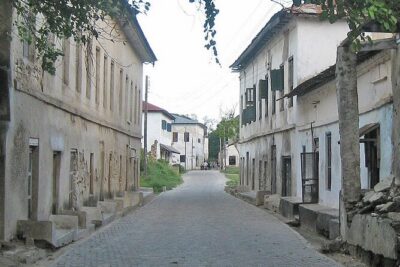
Browse the lists this tour appears in