
Reviewed · CAMPING SAFARIS
3-Days 2-nights Tanzania Private Budget Camping Safari
Elephants are the headline act at Tarangire National Park, where large herds move across open savannah dotted with baobabs. Over three days, you also reach the Ngorongoro Crater and Lake Manyara, giving you three very different wildlife settings in one compact safari.
I like the private format, since your group does not share the vehicle or schedule with strangers. I also like the practical package: park fees, airport transfers, guide, cook, meals, and camping are included. The main catch is the pace. Three parks in three days means long drives and limited time at each place, and the non-refundable booking policy calls for care before you pay.
Key points at a glance
- Tarangire comes first, with elephants, zebras, giraffes, and antelope across broad savannah.
- Ngorongoro Crater is the centerpiece, offering a concentrated wildlife day inside a UNESCO World Heritage Site.
- Lake Manyara fills the final day, followed by a drive back to Arusha.
- Your group travels privately, rather than joining a larger shared departure.
- Camping keeps the price in check, with a cook, dinners, breakfasts, lunches, and campsite stays included.
- The $1,467 price covers major safari costs, but flights, visas, and personal gear are extra.
Three parks in three days
This safari is built for you if you want a quick introduction to northern Tanzania without committing to a week-long route. The plan links three famous parks in a tight loop from Arusha: Tarangire, Ngorongoro, and Lake Manyara.
That variety is the main reason to consider it. Tarangire is known for big elephant sightings and open country. Ngorongoro offers a remarkable concentration of wildlife in a contained natural setting. Lake Manyara brings a different mood, with lush scenery and a final game-drive stop before you return to Arusha.
The trade-off is clear. You will spend part of every day on the road, and the schedule is described in broad blocks of about eight to ten hours. That is normal for a short safari, but you should not expect long, leisurely mornings at camp or several days in one park.
The experience begins in Arusha, with pickup available. Airport pickup and drop-off are included, which is useful if you are connecting this safari with an international arrival or departure. The published details also say that accommodation before and after the safari can be arranged by the provider or booked directly by you.
More Budget Safaris in Arusha
- 5 Days Budget Private Safari, Tanzania
★ 5.0 · 191 reviews - 6 Days Private Budget Safari
★ 5.0 · 163 reviews - 6 Days Tanzania Budget Camping Safari
★ 5.0 · 145 reviews
Day one: elephants and baobabs in Tarangire
Your first park is Tarangire National Park. The drive from the Kilimanjaro International Airport area takes you toward a park known for its open savannah, varied scenery, and large elephant herds.
Tarangire is a strong first stop because it tends to feel spacious and wild. You may see elephants crossing the grassland, zebras feeding nearby, and giraffes or antelope scattered across the park. The plan specifically highlights elephants, zebras, giraffes, and several antelope species, so this is the day to keep your camera ready for large mammals and broad views.
Your guide handles the route through the park and helps your group look for wildlife. Since the safari is private, you can discuss the pace and focus of the drive with your own group rather than adapting to a large mixed party. The exact vehicle setup and daily drive hours are not provided, so ask about these before booking if comfort or photography space matters to you.
Camping gives the first night a more direct connection to the setting. You stay at a budget campsite and have dinner prepared by the camp staff or cook. The idea is simple rather than luxurious: eat, rest, and listen to the sounds around camp before the next early start.
Budget camping can be a good value here, but it is not the right choice if you want a lodge room, private bathroom, or a polished evening service. The description promises a comfortable campsite, but it does not specify tent type, bathroom arrangements, bedding, or shower facilities. Ask for those details in advance.
Day two: the Ngorongoro Crater wildlife day
Day two takes you from Tarangire to the Ngorongoro Conservation Area, then down into the famous Ngorongoro Crater. This is the most wildlife-focused part of the route and likely the day many people will anticipate most.
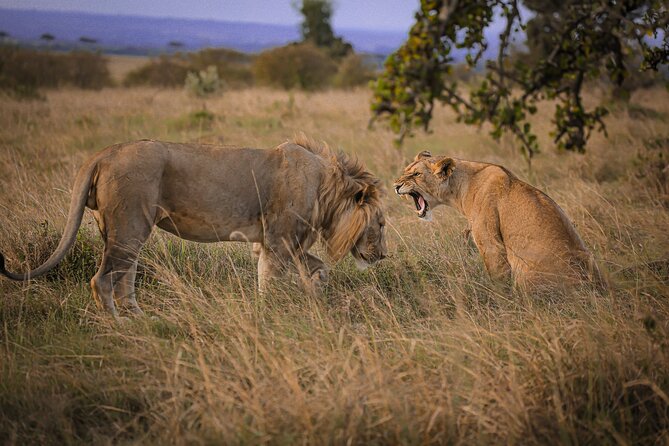
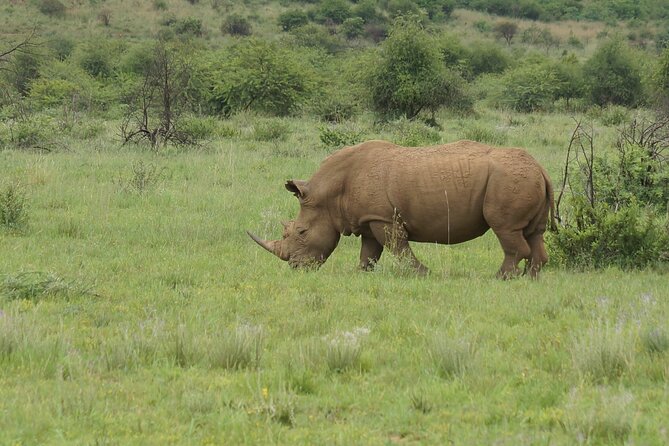
The crater is a huge natural bowl with a striking setting and a strong chance of seeing several major animal species in one game drive. The planned sightings include lions, elephants, rhinos, and other wildlife. Nothing in nature is guaranteed, of course, but the crater’s enclosed setting makes it a logical place to spend a full safari day when time is limited.
You should expect a long day. The schedule allows about eight hours, including the journey, crater access, game viewing, and lunch. A packed lunch is included, so you can eat during the day rather than leaving the crater for a restaurant.
This is also where the private format has real value. You can spend more time on a sighting that matters to your group, subject to park rules and the guide’s judgment. If one person wants photographs and another wants to keep moving, you still have a smaller group conversation than you would on a large shared tour.
The description says you return to a budget campsite after the crater visit. It does not clearly name that campsite or state whether the second night is near Ngorongoro or Lake Manyara. That is worth confirming, especially because campsite location affects how much driving you face on the final day.
The crater portion may be the strongest reason to choose this trip. It gives you one of Tanzania’s best-known wildlife areas without requiring a longer northern circuit. The drawback is that you get only one scheduled day there. If rhinos, lions, or photography are your main goals, a longer safari would give you more time and more chances.
Day three: Lake Manyara before returning to Arusha
The final day is assigned to Lake Manyara National Park and the journey back to Arusha. After breakfast at camp, you travel through the surrounding countryside before reaching the park and continuing toward town.
Lake Manyara adds a different setting to the trip. The supplied description calls it a lush area, which contrasts with the more open character of Tarangire and the crater’s enclosed bowl. The details do not specify the length of the Lake Manyara game drive or list guaranteed species, so treat it as a final wildlife stop rather than a full day dedicated only to the park.
The timing matters. This is listed as roughly a ten-hour day, and that includes the park visit and return to Arusha. You should be ready for a long ride after breakfast. The payoff is that you finish in Arusha rather than needing another transfer from a remote campsite.
Drop-off is available at your chosen location in Arusha, including a hotel or airport. Make sure the timing works with your onward flight, since the published schedule gives an approximate duration rather than a guaranteed arrival time.
There is a small wording issue in the day-three description: it says you bid farewell to Lake Manyara and then make your way back to Arusha, while the overall plan clearly presents Lake Manyara as the day’s park stop. Confirm the exact order and expected game-drive time before departure.
More Camping Safaris in Arusha
- 4 Days Group Camping Safari
★ 5.0 · 1,101 reviews - 5 Days Group Camping Safari
★ 5.0 · 730 reviews - 5-Day private Camping Safari Tour in Tanzania
★ 5.0 · 86 reviews - 4-Day fascinating Camping Safari in Tanzania
★ 5.0 · 35 reviews
What the $1,467 price really covers
At $1,467 per person, this is not a bare-bones park transfer. The price includes the guide, cook, porters, all listed fees and taxes, airport pickup and drop-off, gate transfers, campsite nights, and meals.
The food allowance is specific:
- Three lunches
- Two dinners
- Two breakfasts
That covers the two nights and the three safari days as described. It is useful to know exactly what is included, since food can become an extra cost on budget trips when only some meals are covered.
The package also includes hotel accommodation before and after the safari, but the wording gives you a choice: you can have it arranged by the provider or book it yourself. Confirm if the quoted price includes that hotel stay or only makes the arrangement available. This distinction can affect the true total.
You still pay for domestic and international flights, visas, and personal mountain trekking gear. Mountain trekking gear is an odd item in a wildlife safari package, so ask whether it is simply a standard exclusion carried over from other Tanzania trips. You should not assume specialized equipment is needed for this itinerary.
The value is strongest for a private group that can share the cost of a vehicle and guide. A solo participant may find the per-person price harder to justify. A couple or small family may appreciate the privacy, included meals, and airport transfers, especially if arranging each park separately would be more complicated.
The package also advertises group discounts. Ask how the discount works and whether it applies only to larger private groups. Do not assume the published per-person price automatically drops with every additional person.
Camping comfort and daily practicalities
The campsite is central to the budget promise. You spend both nights at budget campsites rather than lodges, which keeps the safari closer to the ground and reduces accommodation costs.
I would ask these questions before paying:
- Are tents already set up, or do you help with setup?
- Are sleeping bags, mattresses, and bedding supplied?
- Are showers and toilets shared?
- Is electricity available at camp?
- What time is breakfast served before game drives?
- How much luggage can fit in the vehicle?
The supplied details confirm a guide, cook, and porters, but they do not describe the exact camping equipment. That does not mean the basics are missing. It simply means you should get the equipment list in writing.
Pack for changing conditions, including warm daytime clothing, a layer for cool mornings, sun protection, insect repellent, and a small bag for the vehicle. Keep essential medication and valuables with you. Since your itinerary includes long drives, a refillable water bottle and a small day bag will make the hours on the road easier.
You should also clarify whether water, drinks, and snacks are included. The listed meals are clear, but beverages are not.
The private safari advantage
This is a private tour, and only your group takes part. That matters more than it may first appear.
On a short safari, your schedule is already tight. A private vehicle means you do not need to wait for unrelated people at a hotel, adjust to another group’s preferred pace, or split up when interests differ. If your group wants more time watching elephants in Tarangire or taking photographs in the crater, you can discuss that directly with your guide.
Privacy does not guarantee unlimited flexibility. Park rules, road conditions, opening times, and the day’s long distances still shape the route. The guide also decides what is practical and safe. Still, private travel gives you a better chance of making small adjustments than a large group departure.
The package includes a guide and cook, but no names are supplied. If personal connection or language ability matters to you, ask who will lead the trip and how long they have worked on this route.
The main drawbacks to consider
The first drawback is the compressed schedule. You visit three parks in three days, with the last day lasting about ten hours. You will see a lot, but you will not have much spare time.
The second is limited accommodation detail. The trip is clearly budget camping, yet the exact tent, bathroom, bedding, and campsite locations are not stated. Those details shape comfort more than the word budget does.
The third is the cancellation rule. The booking is non-refundable and cannot be changed for personal reasons. If poor weather forces the operator to cancel, you are offered a different date or a full refund. That protection applies to weather cancellation by the provider, not to a change of your own plans.
Finally, the published rating information is not enough to judge every part of this specific safari. The supplied written comments focus on high-altitude Kilimanjaro hikes rather than this three-day wildlife route, so I would not use them as evidence about camping, crater drives, or guide quality. Ask recent safari-specific questions before booking.
Who should book this Tanzania safari?
This trip suits you if you want a short private introduction to northern Tanzania, prefer a lower-cost campsite to a lodge, and want park fees and meals bundled into one arrangement.
It is a good match for a couple, family, or small group that values privacy and can share the cost. It also works well at the start or end of a wider Tanzania trip because pickup and drop-off in Arusha are included.
You may want a longer safari if you dislike long drives, need lodge comfort, want more time in each park, or have a specific wildlife goal. Three days gives you variety, but not much room for missed sightings, weather delays, or a relaxed pace.
Should you book it?
Book this safari if your priority is seeing Tarangire, Ngorongoro, and Lake Manyara in one private, budget-minded trip. The included guide, cook, meals, fees, transfers, and campsite stays give the $1,467 price real substance, especially for a small group.
Before committing, confirm the campsite standards, vehicle details, hotel inclusion, Lake Manyara timing, and the identity of your guide. If those answers suit you, this is a practical way to sample Tanzania’s northern parks without paying lodge prices. If comfort and extra wildlife time matter more than price, spend more days and choose lodge accommodation instead.
FAQ
Where does the safari start and finish?
The safari starts in Arusha, Tanzania, and ends back at the meeting point. Airport pickup and drop-off are included.
How long is the safari?
The experience lasts approximately three days and includes two nights of camping.
Which national parks and protected areas are included?
The route includes Tarangire National Park, the Ngorongoro Conservation Area and Crater, and Lake Manyara National Park.
Is this a private tour?
Yes. Only your group participates in the activity.
What meals are included?
The package includes three lunches, two dinners, and two breakfasts.
Are hotels included before and after the safari?
Hotel accommodation before and after the safari can be arranged by the provider or booked directly by you. Confirm the exact price and arrangement before booking.
Are flights and visas included?
No. Domestic and international flights and visas are not included.
More Safaris in Arusha
- 7-Day Premium Luxury Tanzania Safari All-Inclusive
★ 5.0 · 426 reviews - 8 Days Great Wildebeest Calving Migration Safari from Arusha
★ 5.0 · 254 reviews - Group Safari 7 Days in Tanzania’s Main Parks
★ 5.0 · 240 reviews - Tanzania Simba Safari – 5 Days
★ 5.0 · 217 reviews
More Private Tours in Arusha
- 5-Day Private Northern Tanzania Safari from Arusha
★ 5.0 · 182 reviews - 5-Day Private midrange Tour in Arusha with Airport Pickup
★ 5.0 · 160 reviews - Arusha National Park Private Safari
★ 5.0 · 59 reviews - 7-Day Private midrange Tour in Arusha with Airport Pickup
★ 5.0 · 47 reviews
Just added around Arusha
- From Arusha: 11 days The Classics Northern Tanzania safari★ 5.0 · 11 reviews
- 6-Day Mount Meru Climb through Momella Route Guided Tour★ 5.0 · 5 reviews
- Private Day Trip to Arusha National Park with a Walking Safari★ 5.0 · 4 reviews
- From Arusha : 11-day Amazing North Tanzania safari tour★ 5.0 · 4 reviews
- Walking Day Tour to Safari in Arusha National Park★ 5.0 · 5 reviews
- 2 Days Tanzania Midrange Group Join Safari★ 5.0 · 7 reviews
- Best 5 Days Tanzania Private Luxury Safari with luxury Lodges★ 5.0 · 12 reviews
- Waterfall & Coffee Walking Tour★ 5.0 · 6 reviews
Camping Safaris, compared.
3 Day Serengeti National Park & Ngorongoro Crater Camping Safari
Read our review →
5-Day private Camping Safari Tour in Tanzania
Read our review →
5 Days Camping Tarangire, Serengeti & Ngorongoro crater & Visiting Maasai
Read our review →
Multi-Day Camping Safari Experience in Arusha
Read our review →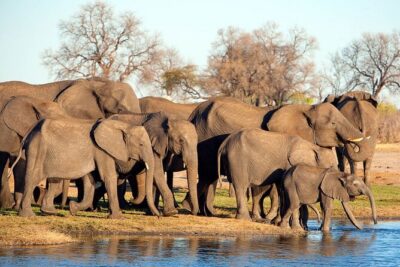
3-Day Tarangire, Ngorongoro and Lake Manyara Camping Safari
Read our review →Browse the lists this tour appears in