
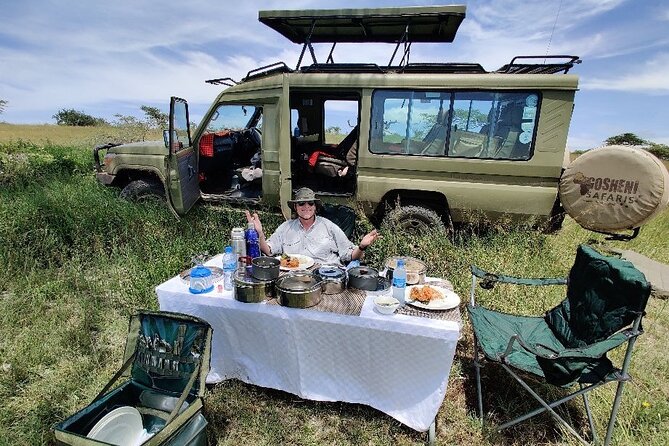
Reviewed · GREAT MIGRATION SAFARIS
8 Days Great Wildebeest Calving Migration Safari from Arusha
The real draw here is the wildebeest calving season, when the southern Serengeti and Ndutu area can fill with newborn animals, zebras, and predators. I like the route because it combines several very different parks, and I like that airport transfers, meals, lodging, park fees, and a private vehicle are bundled into one price. The main catch is the pace: seven nights cover a lot of ground.
I also appreciate the small maximum group of seven and the strong focus on driver-guides. Guides including William, Albert, George Mathias, Calvin Kileo, Ombeni, and Michael Sangiwa are praised for sharp animal spotting, safe driving, plant and wildlife knowledge, and patience with children. Still, wildlife is never guaranteed, and the calving period is seasonal, with the heaviest births occurring during a short window around February.
Key points to know before booking
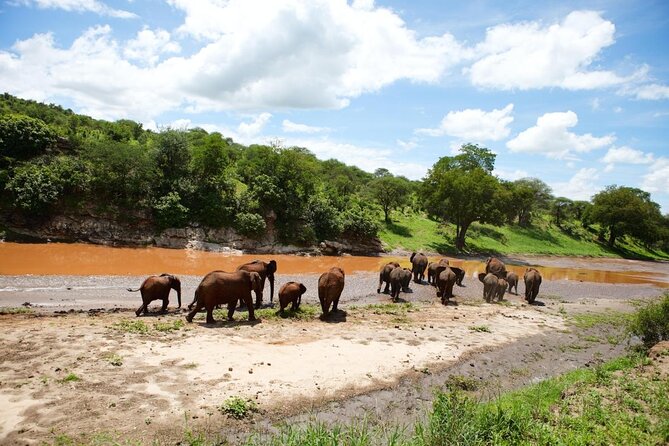
- Calving season is the centerpiece: Plan between December and April for the best chance of seeing young wildebeest and the predators that gather nearby.
- Ndutu gets the most attention: You spend a full game-drive day around swamps, woodland, soda lakes, and short grass plains.
- The route covers five major areas: Tarangire, Lake Manyara, Ndutu, central Serengeti, and Ngorongoro Crater.
- The package is close to all-inclusive: Lodging, meals, entrance fees, bottled water, transport, and airport transfers are included.
- A capable guide matters here: Gosheni assigns guides such as William David, Albert, George Mathias, and Calvin Kileo, all praised for wildlife spotting and calm driving.
- Expect long road days: This is an active safari with several transfers, not a stay-put lodge holiday.
Why the Ndutu calving season makes this safari special
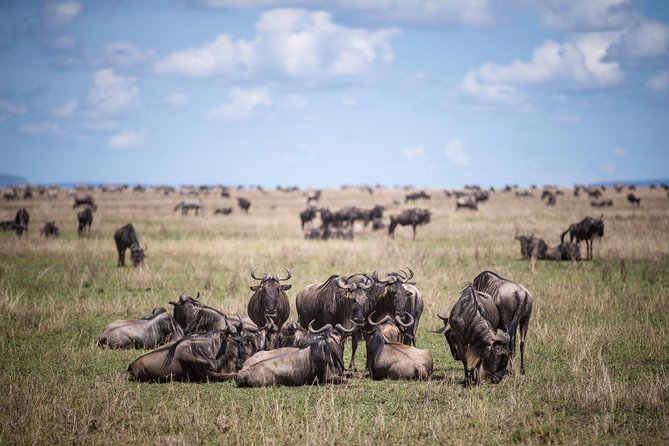
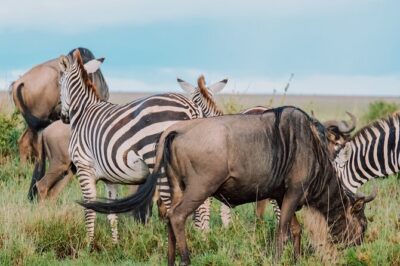
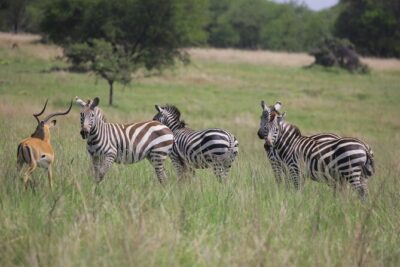
The southern Serengeti and Ndutu area are the heart of this trip. From December through April, the short grass plains can attract large numbers of wildebeest and zebras. Around February, the main calving burst may last only about three weeks, so your exact dates matter.
Newborn animals bring drama, but not always in the way you expect. Predators follow the herds, and game drives may bring sightings of lions and other hunters near the young animals. One account specifically describes seeing lions feeding on a zebra, while other trips with the same guiding team included repeated sightings of the Big Five and even a black rhino.
I would not book this safari on the promise of one exact sighting. I would book it for the setting, timing, and chance to watch a major natural event unfold. The Ndutu day is especially valuable because you are not simply passing through. You have a full day to look across several habitats and follow changing animal activity.
The timing also affects the feel of the trip. December to January can bring the beginning of the calving season, while February is the most important period for the main births. March and April remain part of the stated season, but conditions and animal locations can shift. Ask the operator for the expected migration position before you pay.
More Great Migration Safaris in Arusha
- 7 days great migration safari
★ 5.0 · 77 reviews - 7-Day Great Migration Safari
★ 5.0 · 14 reviews - 9 Days Safari To See Great Migration Crossing
★ 5.0 · 12 reviews
Day 1: A soft landing at Mount Meru Hotel
Your arrival day is designed to take the strain out of getting to Tanzania. You are collected at Kilimanjaro Airport and taken to Mount Meru Hotel in Arusha.
That first night matters more than it may seem. An international arrival followed by an immediate game drive would be tiring, especially if you are carrying camera equipment or traveling with children. Here, you have a hotel night before the safari proper begins.
The package includes airport pickup and drop-off, but confirm your flight details and arrival arrangements in advance. The advertised safari meeting point is in Arusha, with an 8:30 am start time. The itinerary also describes airport pickup on day one, so your exact first-day schedule should be confirmed when booking.
Day 2: Tarangire and its elephant country
The first park day takes you to Tarangire National Park. This is a strong opening because Tarangire has a character of its own. Large elephant herds, baobab trees, and the Tarangire River shape the experience.
The river flows throughout the year, making it an important water source and a useful place for animal viewing. The park is also known for tree-climbing lions, though that sighting is never assured.
I like the contrast here. You begin with big trees, open country, and elephants before moving toward the lake and plains later in the trip. The baobabs give Tarangire a distinctive look, and the river helps explain why wildlife gathers in the area.
You spend the night in a luxury tented camp. That sounds appealing for anyone who wants a closer connection to the setting without giving up the comfort promised by a luxury camp. Still, the term luxury tent can cover different standards, so ask for the exact camp name and room details before departure.
Day 3: Lake Manyara’s compact wildlife circuit
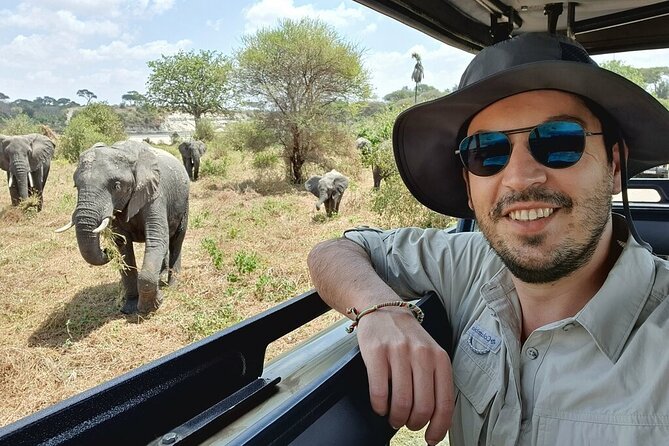
Lake Manyara National Park brings a change of scale. It is described as a compact game-viewing area with a wide range of habitats, which can make it a useful contrast to the larger Serengeti sections.
The lake itself is the visual focus, but the value of Manyara is the variety packed into a smaller area. You may spend less time driving between separate parts of the park and more time watching the surroundings from the vehicle.
The itinerary connects Manyara with Ernest Hemingway’s famous admiration of the area. You should come for the scenery and habitat variety rather than expecting this one park to match the vastness of the Serengeti.
Your overnight stay is at a luxury lodge. This is another reason the trip suits people who want wildlife viewing without giving up proper beds and organized meals. Because the tour provides breakfast, lunch, and dinner on the listed safari days, you do not need to plan separate restaurant stops.
More Safaris in Arusha
- 4 Days Group Camping Safari
★ 5.0 · 1,101 reviews - 5 Days Group Camping Safari
★ 5.0 · 730 reviews - 7-Day Premium Luxury Tanzania Safari All-Inclusive
★ 5.0 · 426 reviews - Group Safari 7 Days in Tanzania’s Main Parks
★ 5.0 · 240 reviews
Day 4: Entering the Ndutu area
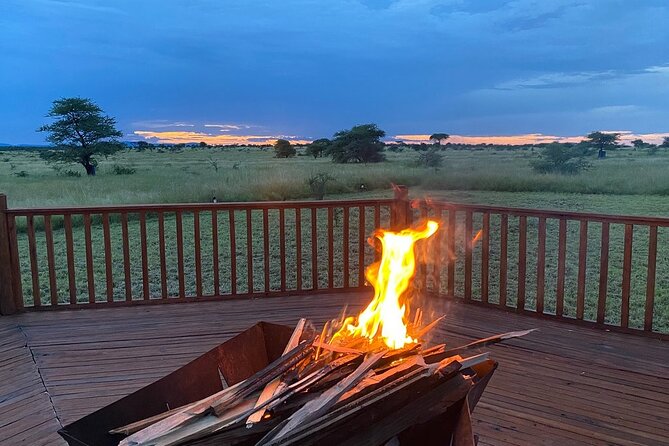
After breakfast, you travel toward Ndutu, part of the southern Serengeti ecosystem within the Ngorongoro Conservation Area. This is where the tour shifts from a broad northern Tanzania circuit to a more focused migration experience.
Lake Ndutu is alkaline, like many lakes in the Rift Valley, but its water supports a wide range of wildlife. The area includes soda lakes, swamps, woodland, and short grass plains. That mix gives you more than one type of game-viewing setting in a single region.
The transfer can be long, and that is one of the practical tradeoffs of the route. You are covering important ground, but you are not spending every day in one small park. The reward is that your itinerary reaches both the calving zone and central Serengeti.
You spend the night in a luxury tented camp. For this part of the trip, a tented camp can suit the setting better than a city-style hotel. Ask how far the camp is from the main game-drive area, since location can affect how much time you spend on the road each day.
Day 5: A full day around Ndutu
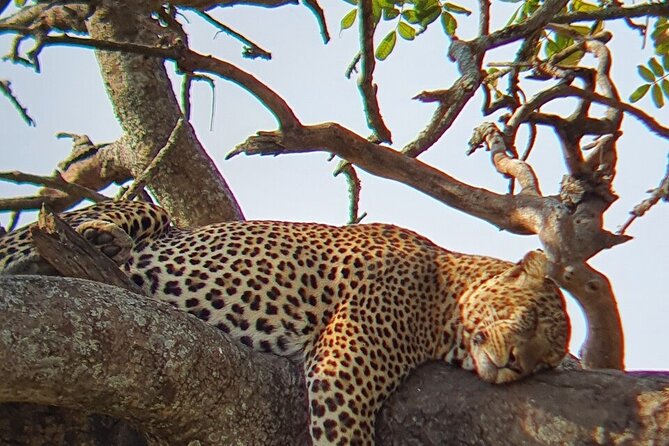
This is the most important day for the calving theme. You spend a full day exploring the Ndutu area, with possible routes through woodland, swamp, soda lake edges, and the short grass plains.
The advantage of a full day is flexibility. Your guide can spend more time with a promising sighting instead of rushing through the area to reach the next overnight stop. Guides such as William David and Albert are praised for spotting animals early, while George Mathias and Calvin Kileo are noted for patient, informed guiding and careful driving.
A good guide is particularly useful here. The plains can look empty at first glance, yet a trained eye may notice movement, tracks, or distant animals before you do. You should expect explanations about animal behavior, plants, and the migration, not just a drive from one sighting to the next.
The main limitation is seasonal timing. If you travel outside the peak February window, you may see herds and young animals but miss the most concentrated births. That does not make the safari pointless, but it changes the emphasis from newborns to the wider migration and predator activity.
Day 6: Tracking the central Serengeti
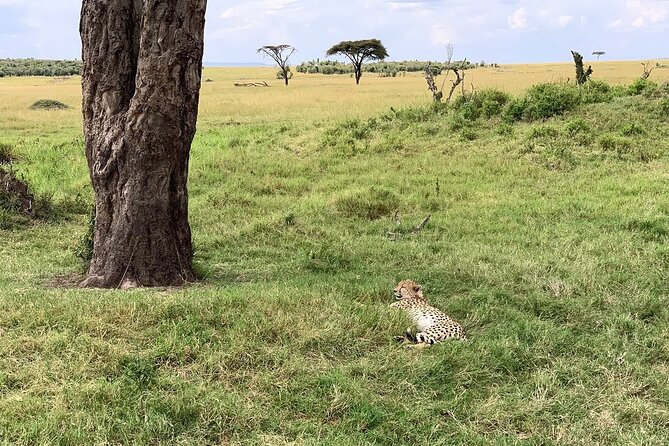
The next full day is in central Serengeti National Park. This gives you a chance to follow migration trails beyond the Ndutu area and see how different the country feels away from the calving plains.
The central Serengeti is important because it adds scale to the trip. You move from a focused wildlife event to a larger ecosystem where the animals may be spread out. Your guide’s judgment matters again, since the best route can change with recent sightings and animal movement.
The most praised guides on this safari are not simply drivers. William is praised for explaining wildlife, plants, and Maasai culture. Albert is described as having an unusually sharp eye for animals, while Ombeni is praised for his driving on rough roads, humor, and ability to keep the day enjoyable. These details matter because you spend many hours together in the vehicle.
The tour uses a private vehicle and caps the group at seven people. That should give you more room than a large shared vehicle, though the exact seating arrangement should be confirmed. If photography is a priority, ask how many people will share the vehicle and whether the roof or window setup works for your equipment.
Day 7: Ngorongoro Crater from above and below
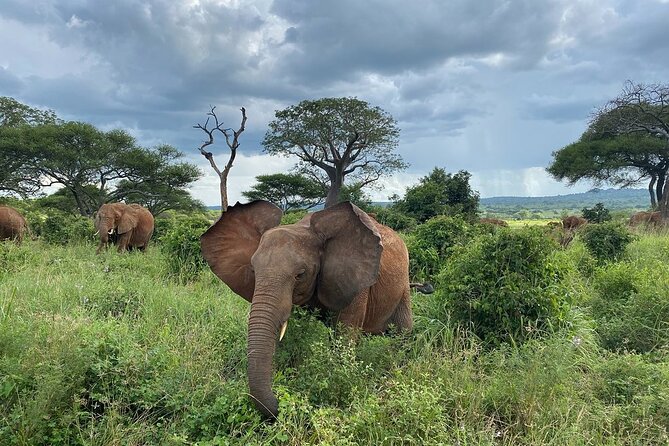
From the Serengeti, you drive to the Ngorongoro Conservation Area and descend about 600 meters into Ngorongoro Crater for wildlife viewing.
The crater is one of the most memorable settings on this route because the steep walls create a contained viewing area. You get a strong sense of geography before the game drive even begins. Inside, the chance to see a broad mix of animals makes this a fitting final park day.
The crater visit also gives the itinerary a different rhythm. Instead of tracking a moving migration across open plains, you spend time in a dramatic enclosed area. That variety is one of the tour’s strengths.
You spend the night at a luxury lodge. This overnight location provides a more settled end to the main safari section before the cultural visit and return to Arusha or the airport. Again, confirm the exact lodge because accommodation names and standards are not specified.
Day 8: Mto wa Mbu culture before departure
The final morning takes you to Mto wa Mbu for a cultural tour and walking safari, followed by a local lunch. This is a welcome change after several days focused on wildlife.
I like that the trip does not end with a simple drive straight to the airport. A walk and local meal give you a chance to see another side of the area and take in the views at a slower pace. The itinerary says you return to Arusha or continue to the airport in the afternoon.
Make sure your flight time allows enough margin. The tour includes drop-off, but the schedule should be checked against your departure details. A same-day flight plan needs careful coordination because road conditions and safari timing can vary.
What the $2,999.62 price really covers
At $2,999.62 per person, this is not a budget safari. The value comes from the number of costs bundled into one booking: seven nights of accommodation, meals listed in the itinerary, park entrance fees, airport transfers, bottled water, a private vehicle, and a driver-guide.
That package can be useful if you want one company to handle the moving parts. Park fees and transport can add up quickly on a multi-park itinerary, and having meals arranged keeps the days simple.
The price is easier to justify for someone who values comfort and a small group. It may feel less attractive if you mainly want a low-cost camping trip or if you prefer spending several nights in one park. The route covers a lot, so part of what you pay for is access to several distinct areas rather than one concentrated base.
Alcoholic drinks are not included, though they are available for purchase. Specific accommodation names, room arrangements, and any premium drinks should be confirmed before booking.
The guide can make or break the experience
Safari guiding is a major part of the value here. The strongest pattern across the available guide feedback is clear: people praised animal spotting, calm driving, warmth, and explanations that go beyond naming species.
William David is associated with repeated Big Five sightings and clear answers to questions. Albert is praised for finding animals before others could see them with binoculars. George Mathias is described as polite, energetic, professional, and eager to find wildlife.
Calvin Kileo is praised for patience, empathy, and a broad understanding of the natural world. Ombeni brings strong driving skills and humor, while Michael Sangiwa is especially praised for being patient with children.
You cannot choose a specific guide from the information provided, so treat these names as examples of the team rather than a guarantee. Still, I would ask the operator about guide assignment, language, and whether your interests can be noted before arrival.
Who should book this safari
I would recommend this trip to you if the calving season is your main goal and you want a broad introduction to northern Tanzania. It suits first-time safari visitors, families, and couples who prefer organized transport, comfortable lodging, and a guide handling the daily logistics.
It also works for people who want more than the Serengeti alone. Tarangire offers elephants and baobabs, Manyara adds a compact and varied park, Ndutu brings the calving focus, central Serengeti adds scale, and Ngorongoro provides a dramatic final game drive.
I would hesitate if you dislike long drives, need a slow holiday, or want complete control over every stop. The route is ambitious for eight days. You should also avoid booking solely for newborn wildebeest unless your dates line up with the main February calving period.
Free cancellation is available if you cancel at least 24 hours before the start time. Changes or cancellations inside that window are not accepted for a refund. Poor weather or failure to meet the minimum number of participants may lead to a new date, a different experience, or a full refund.
Should you book it?
Book this safari if you want to see Tanzania’s major northern parks in one carefully arranged trip, with the best chance of calving-season action centered around Ndutu. The included transport, meals, park fees, and small group size make the price easier to understand, especially for a first safari.
Choose a different plan if you want fewer road transfers or a cheaper, simpler camp-based trip. For the right dates, though, this is a strong all-round route, and the quality of the driver-guide can turn a good wildlife holiday into a memorable one.
FAQ
How long is the safari?
The experience lasts approximately eight days and includes seven nights of accommodation.
What is the price per person?
The listed price is $2,999.62 per person.
When is the wildebeest calving season?
The safari is scheduled during the December to April calving season. The main calving period is described as occurring around February and lasting about three weeks.
Which parks and areas does the route visit?
The itinerary includes Tarangire National Park, Lake Manyara National Park, the Ndutu area, central Serengeti National Park, Ngorongoro Crater, and Mto wa Mbu.
What is included in the price?
Accommodation, meals shown in the itinerary, airport pickup and drop-off, transport by private vehicle, bottled water, park entrance fees, and a driver-guide are included.
Are alcoholic drinks included?
No. Alcoholic drinks are not included, but they are available to purchase.
Where does the tour start?
The listed start point is Arusha in the Arusha Region, with an 8:30 am start time. Airport pickup from Kilimanjaro Airport is provided for arrival day.
How many people can join the tour?
The activity has a maximum of seven participants.
What happens if I need to cancel?
You can receive a full refund if you cancel at least 24 hours before the experience start time. Cancellations or changes made less than 24 hours before the start time are not refunded. If bad weather or an insufficient number of participants causes cancellation, you are offered another date, a different experience, or a full refund.
More Eight-Day Trips in Arusha
- 8 Days 7 Nights Tanzania Wildlife & Culture Lodge Safari
★ 5.0 · 17 reviews - 8 Day Safari The Best of Tanzania & Lake Eyasi
★ 5.0 · 11 reviews - 8 Days Green Season Offer – Luxury Serena Safari
★ 5.0 · 10 reviews - 8 Days, Migrations Safari-River crossing -(July to October)
★ 5.0 · 9 reviews
Just added around Arusha
- From Arusha: 11 days The Classics Northern Tanzania safari★ 5.0 · 11 reviews
- 6-Day Mount Meru Climb through Momella Route Guided Tour★ 5.0 · 5 reviews
- Private Day Trip to Arusha National Park with a Walking Safari★ 5.0 · 4 reviews
- From Arusha : 11-day Amazing North Tanzania safari tour★ 5.0 · 4 reviews
- Walking Day Tour to Safari in Arusha National Park★ 5.0 · 5 reviews
- 2 Days Tanzania Midrange Group Join Safari★ 5.0 · 7 reviews
- Best 5 Days Tanzania Private Luxury Safari with luxury Lodges★ 5.0 · 12 reviews
- Waterfall & Coffee Walking Tour★ 5.0 · 6 reviews
Great Migration Safaris, compared.
10-Day Serengeti Wildebeest Migration Safari from Arusha
Read our review →
7 Days Wildebeest Migration – Ndutu Calving Season
Read our review →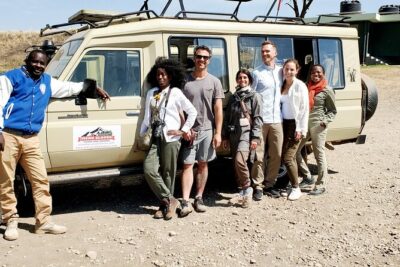
5-Days Private Serengeti Wildebeest Migration Lodge Safaris
Read our review →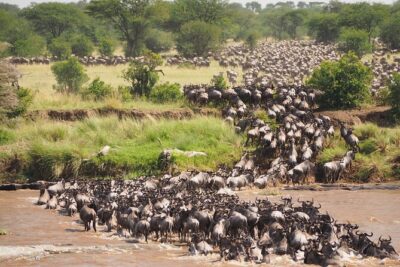
8-Day Grumeti Migration Safari-Luxury Tour May-July
Read our review →Browse the lists this tour appears in