
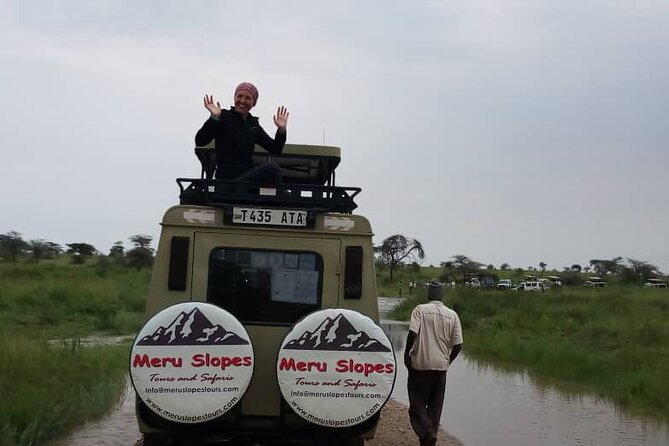
Reviewed · CAMPING SAFARIS
6 Days Tanzania Budget Camping Safari
The big draw here is variety: in six days you visit Tarangire, Serengeti, Ngorongoro Crater, and Lake Manyara, with a village walk at Mto wa Mbu added to the mix. You get elephants among baobabs, open Serengeti plains, a crater packed with wildlife, and a final park day beside a bird-filled lake.
I like the small-group limit of six and the practical package: park drives, meals, camping, water, airport or hotel transfers, Wi-Fi, and rescue cover are bundled together. I also like the human side of the trip, especially the Mto wa Mbu food and culture stop. The main consideration is pace. Long drives, early breakfasts, rough park roads, and several full days in a jeep demand energy.
Key points at a glance
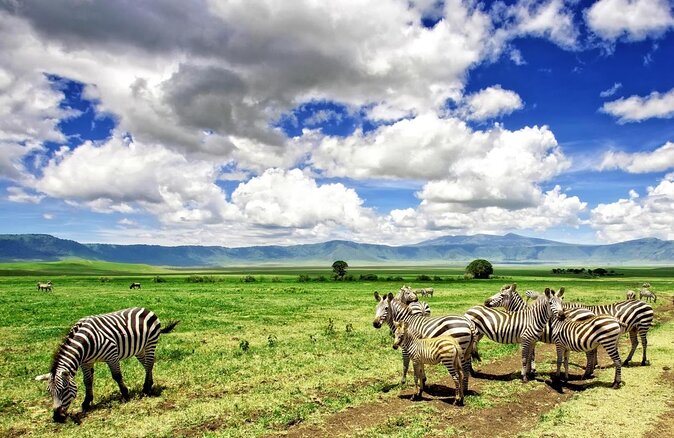
- Four major wildlife areas: Tarangire, Serengeti, Ngorongoro, and Lake Manyara fit into one busy six-day route.
- A real camping safari: Nights include campsite stays, with some departures using lodges or a mix of lodge and tent accommodation.
- Small groups matter: The maximum is six people, a useful limit when you are sharing a safari vehicle.
- Migration timing is seasonal: June to September offers the best chance for major movement and river crossings, while January to March is calving season.
- Mto wa Mbu adds local contact: Walk through the village, see banana plantations, and taste Tanzanian food.
- Strong practical coverage: Meals, mineral water, professional guiding, hotel pickup and drop-off, Wi-Fi in the safari jeep, and AMREF Flying Doctors emergency rescue are included.
Four parks in six days, with very little wasted time
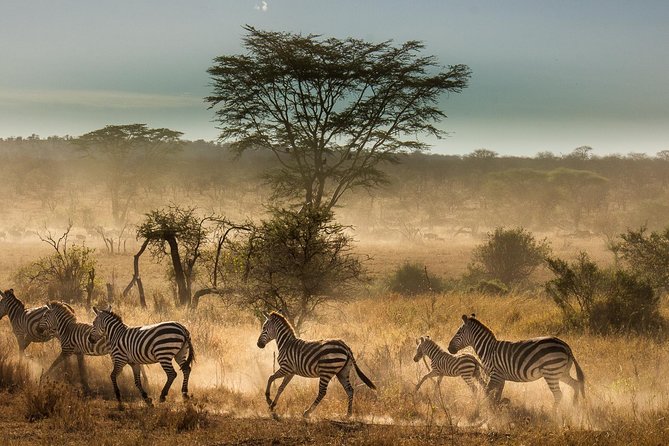
This is a classic northern Tanzania circuit, designed for people who want the main sights without spending a week or more on safari. You begin in Arusha and move through Tarangire, Serengeti, Ngorongoro, Mto wa Mbu, and Lake Manyara before returning to Arusha.
The route works because each park offers something different. Tarangire gives you elephant country and baobabs. Serengeti supplies the wide-open setting and the best chance of following the wildebeest at the right time of year. Ngorongoro is about dense wildlife viewing in a compact natural bowl. Lake Manyara brings forest, birds, hot springs, and the possibility of tree-climbing lions.
The trade-off is clear. You cover a lot of ground, so this is not a slow, lodge-based holiday with long afternoons beside a pool. You will leave early, sit in the jeep for extended stretches, and often combine driving with game viewing. For a first safari, that concentrated variety can be excellent value.
The advertised price is $1,600 per person. That is a substantial sum, but it covers most of the expensive parts of a Tanzania safari: park access, transport, guiding, food, accommodation, water, and emergency rescue cover. Two nights of hotel accommodation in Arusha are also included in the package details, though the day-by-day schedule should be checked carefully because it describes lodge and campsite nights in different places.
More Budget Safaris in Arusha
- 5 Days Budget Private Safari, Tanzania
★ 5.0 · 191 reviews - 6 Days Private Budget Safari
★ 5.0 · 163 reviews - 6 days Tanzania budget safari
★ 5.0 · 65 reviews
Day one: elephants and baobabs in Tarangire
Pickup is scheduled from an Arusha hotel at 8 a.m., followed by roughly a three-hour drive to Tarangire National Park. The park lies about 115 kilometers from Arusha and covers around 2,800 square kilometers.
Tarangire is a strong opening act. The Tarangire River draws animals to water, and the park is especially known for large elephant numbers, baobab trees, and pythons that can climb trees. You might also see lions, leopards, and other plains wildlife during the full-day drive.
I like starting here because the park has a distinct character. It is not simply a warm-up for Serengeti. The huge baobabs give the views a sculptural feel, and elephants are one of the main reasons this park earns a place on the route.
After the drive, you go to Jambo Lodge for dinner and the night. The schedule calls this a lodge stay, while other descriptions of the budget trip refer to a mix of lodges and tents. Confirm the exact accommodation arrangement before paying if the camping style is important to you.
Day two: the long road to Serengeti
Day two begins with breakfast, luggage loading, and an en-route game drive toward Serengeti National Park. Lunch is taken inside the safari jeep, so pack patience and keep your camera ready.
The route offers views toward the Rift Valley and Ngorongoro Crater before reaching the central Serengeti around 3 p.m. An evening game drive follows, including sunset viewing, then dinner and a night at Seronera campsite inside Serengeti.
This is a long day, listed at about 10 hours. That sounds demanding, and it is, but it also gets you into the park rather than using a whole day just to transfer there. The first view of the Serengeti’s open plains can make the drive feel worthwhile.
The central Serengeti is a practical base because wildlife is present year-round, even though animal locations change. The migration is not a fixed show that arrives on schedule. Your guide will use current sightings and reports to decide where to look, but no operator can promise a river crossing or a particular animal.
Day three: a full day among the Serengeti plains
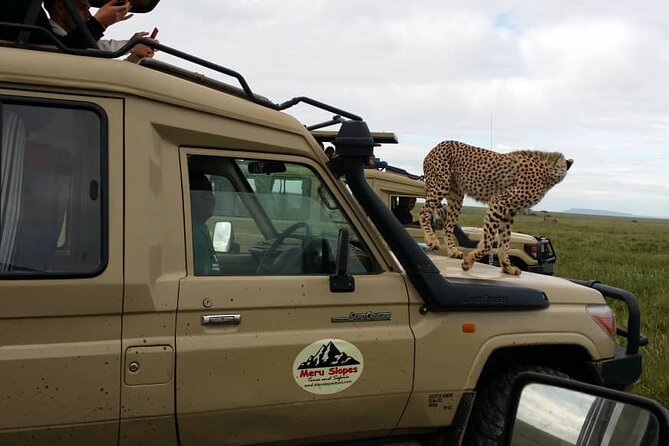
Day three gives you the most time in one park. After an early breakfast, you spend the day driving through key areas of the Serengeti, with lunch during the outing.
This is the day with the best chance to settle into safari rhythm. You can watch the plains, scan for movement, and take time with animals rather than treating every sighting as a quick photograph. Past departures have had guides such as Nuru, Robert, Mohamed, and Florian, and the guide’s skill in reading current sightings is a major part of the experience.
The safari focuses on the great wildebeest migration, which involves roughly 1.5 million wildebeest along with other herbivores and predators. Timing matters:
- June to September is described as the strongest period for major migration activity.
- July to September can offer a chance of reaching the northern Serengeti and seeing wildebeest cross the Mara River.
- January to March is calving season.
Those dates are useful, but they are not guarantees. Rain, grazing conditions, and animal movement change from year to year. If migration is your main goal, tell the operator your travel dates and ask which section of the Serengeti the route is expected to use.
You should also know that a full day in a safari vehicle can be tiring. Bring sun protection, water-friendly clothing, and something warm for early drives. The included unlimited mineral water helps, as does the stated Wi-Fi inside the vehicle, though the quality of a mobile connection can vary in remote areas.
More Camping Safaris in Arusha
- 4 Days Group Camping Safari
★ 5.0 · 1,101 reviews - 5 Days Group Camping Safari
★ 5.0 · 730 reviews - 5-Day private Camping Safari Tour in Tanzania
★ 5.0 · 86 reviews - 4-Day fascinating Camping Safari in Tanzania
★ 5.0 · 35 reviews
Day four: morning wildlife, then toward Ngorongoro
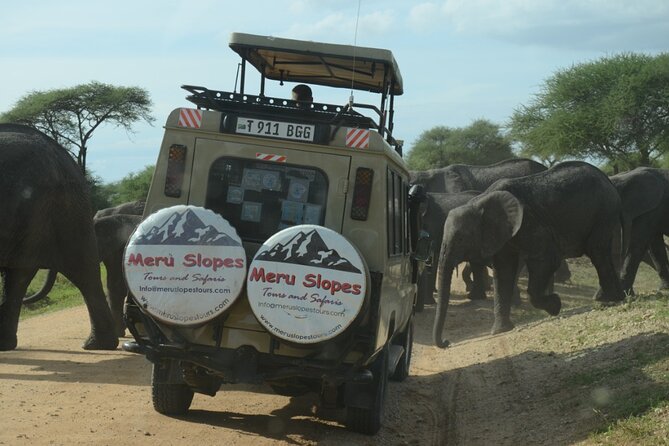
Day four starts at about 5:45 a.m. with breakfast and sunrise inside Serengeti. An early game drive continues until around 11:30 a.m., after which you return to camp for a hot lunch and pack the vehicle.
The schedule then combines another Serengeti drive with the journey toward the Ngorongoro Conservation Area. Dinner and the night are at Simba campsite.
This arrangement gives you one last chance to look for Serengeti wildlife before leaving, but it also creates another long day. The route is built around maximizing park time, not minimizing road time. You will appreciate it most if wildlife viewing matters more to you than a relaxed timetable.
The transition to Ngorongoro is one of the most memorable changes on the route. Serengeti’s open plains give way to the high crater area, and the next morning brings a very different style of wildlife viewing.
Day five: Ngorongoro Crater and Mto wa Mbu
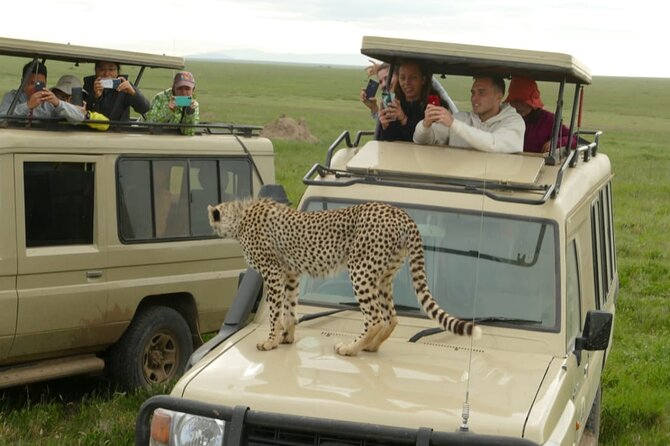
The day begins around 5:30 a.m. After breakfast, you descend into Ngorongoro Crater for six to seven hours of game viewing.
The crater floor is one of Tanzania’s strongest wildlife settings because animals are concentrated in a relatively compact area. The plan specifically includes the chance to see the Big Five, different bird species, black rhino, and flamingos. Lunch is eaten inside the crater while you continue watching the surroundings.
A crater drive can be especially rewarding for a first safari. You have a good chance to see several types of large animals in one day, and the enclosed setting makes the viewing feel different from the endless Serengeti plains. Still, it can be busy, particularly at well-known wildlife spots. The value here is the density and range of sightings, not solitude.
After the crater, the schedule sends you to Mto wa Mbu for a walking and cultural visit. This is one of the best details in the program because it breaks up the park routine. You can see banana plantations, walk through the village, learn about local life, and taste Tanzanian food.
Mto wa Mbu’s cultural program includes traditional activities and community projects. You should approach this stop with curiosity and respect. It is not a staged wildlife show. It is a chance to see a working community and understand more about the people living near the parks.
Dinner and the night are listed at Jambo Lodge. Because the supplied schedule places this lodge after the crater and village visit, while other package details mention different lodge and tent combinations, ask for a written night-by-night accommodation plan.
Day six: Lake Manyara and the trip back to Arusha
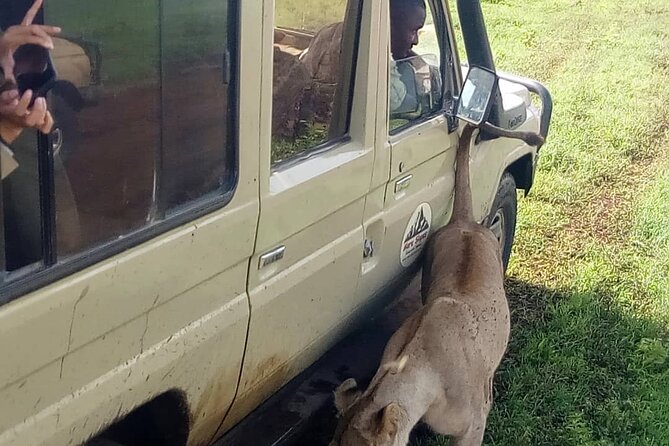
After breakfast, you head to Lake Manyara National Park for a full-day game drive. The park is known for flamingos drawn to algae in the lake, tree-climbing lions, and a hot spring.
Lake Manyara provides a different setting from the Serengeti and Ngorongoro. The lake, forested areas, birdlife, and hot spring give the final day a varied feel. Flamingos are seasonal and conditions can change, so treat them as a possibility rather than a promise.
The program also includes a visit to a Maasai boma, where you can learn about daily life, customs, and traditions. This adds another cultural layer, though the exact timing is not stated and the day already includes a full park drive. Ask how the visit fits into the schedule if you prefer more time inside the park.
Later, you drive back to Arusha. The listed timing is about eight hours, and the package notes dinner and overnight arrangements in Arusha. Since the advertised duration is six days but the inclusions also mention two Arusha hotel nights and six nights of accommodation, confirm the final night and end time before booking. The stated endpoint is back at the Arusha Tourist Inn meeting point, with hotel pickup and drop-off available.
Camping, lodges, food, and what the price covers
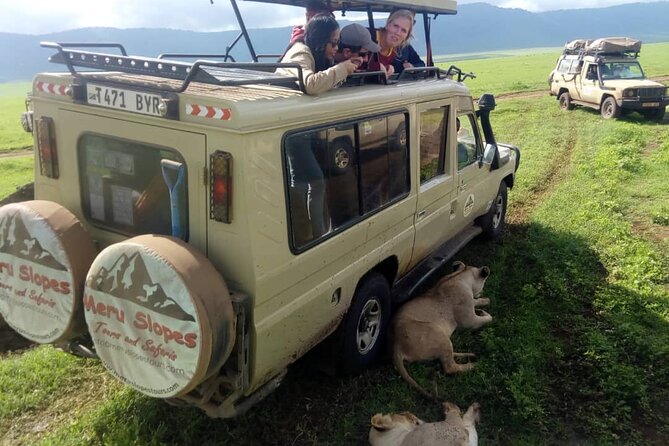
The word budget refers mainly to the style of accommodation, not a lack of basic support. Six nights are listed as included, along with breakfast, lunch, and dinner. The schedule names Jambo Lodge and campsites at Seronera and Simba, while the package information also includes two hotel nights in Arusha.
Past departures have used combinations such as three nights camping and three nights in a hotel or lodge. That means the exact mix may vary. If you want a tent every night, or a lodge every night, ask before booking.
Food is included according to the schedule, with seven breakfasts, seven lunches, and six dinners listed in the package details. Tea and coffee are included, while alcohol costs extra. Unlimited mineral water is a useful inclusion, since buying bottled water every day can add up quickly.
The safari jeep includes Wi-Fi, another practical touch. It may help with messages and basic online use, but you should not plan your trip around a strong signal in every park.
AMREF Flying Doctors emergency rescue cover is included. That does not replace comprehensive travel insurance, but it is a meaningful safety provision on a remote safari route.
The guide makes the difference
A safari vehicle and a good route are only part of the equation. Your guide decides how carefully to scan, when to stop, how to explain animal behavior, and when to move on.
The strongest praise attached to this trip centers on guides and staff. Names that appear in the available feedback include Nuru, Robert, Mohamed, Florian, and Jerome, with Gift also handling planning and special requests on some departures. Nuru is described as particularly strong at finding animals and explaining what you are seeing. Mohamed is noted for keeping track of current wildlife activity, while Florian is praised for spotting animals and managing the route.
You are not guaranteed one of these specific people, so ask who will lead your departure. Also ask if a separate cook is included. One six-day group had a guide named Florian and a cook named Saleem, while another praised Robert, Gideon, and Jerome as guide, cook, and contact person.
The group cap of six is important. In a crowded vehicle, every stop becomes a negotiation. A maximum of six gives you a better chance to see clearly, move your seat, and keep the mood comfortable during long drives.
Who should book this safari?
I would recommend this trip to a first-time safari visitor who wants the major northern Tanzania parks in one package. It also suits budget-conscious couples, friends, and solo participants comfortable joining a small group.
You should be happy with early mornings, simple accommodation, long drives, and changing plans based on wildlife movement. This is not the right fit if you want luxury rooms, slow days, or a guaranteed migration crossing.
The route is also a good match for anyone who wants more than animals. Mto wa Mbu and the Maasai boma bring local culture into a program that could otherwise be all game drives.
At $1,600, the value is strongest when you use the included services: transport, park visits, meals, water, guide, accommodation, Wi-Fi, and emergency rescue support. Flights and alcohol are extra, and anything not listed is also outside the price.
Booking details worth checking
Confirmation is provided at booking, and free cancellation is available up to 24 hours before the local start time. A cancellation inside that window is not refundable, and poor weather may lead to a different date or a full refund.
Children must be accompanied by an adult. Most people can participate, and the meeting point is Arusha Tourist Inn on Sokoine Road. Pickup from accommodation is available, but confirm the exact pickup time and location.
Before you pay, ask three simple questions: Which nights are in tents and which are in lodges? Who is the guide for my departure? And what is the exact plan for the final Arusha night? Those answers will remove most of the uncertainty in the schedule.
Should you book the six-day route?
Book it if you want a broad first look at Tanzania’s northern parks, value a small group, and can handle a quick pace. The combination of Tarangire elephants, Serengeti wildlife, Ngorongoro’s dense crater viewing, Lake Manyara, and two cultural stops gives you a lot for six days.
Think twice if your main goal is one precise migration event. The animals move on their own schedule, and the route may not reach the northern Serengeti at the right moment. For most people, though, the strength is the range: even if the wildebeest are elsewhere, you still have four very different parks and a capable guide working to find wildlife.
FAQ
How long is the safari?
The experience is advertised as six days, with approximately eight to ten hours of scheduled activity on most park days.
Which national parks are included?
The route includes Tarangire National Park, Serengeti National Park, Ngorongoro Conservation Area, and Lake Manyara National Park.
Is accommodation included?
Yes. Six nights of accommodation are included in the package details. The schedule names Jambo Lodge and campsites at Seronera and Simba, while other package information refers to a mix of hotel, lodge, and tent nights.
Are meals included?
Yes. Breakfast, lunch, and dinner are included according to the itinerary. Tea, coffee, and unlimited mineral water are also included. Alcoholic drinks cost extra.
What is the maximum group size?
The activity has a maximum of six travelers.
When is the best chance of seeing the wildebeest migration?
The strongest stated period for the main migration is June through September. July through September may offer a chance to see a Mara River crossing in northern Serengeti. Calving season is listed as January through March.
Where does the tour start and finish?
The listed meeting point is Arusha Tourist Inn on Sokoine Road in Arusha. The activity ends back at the meeting point, and pickup and drop-off from accommodation are available.
More Six-Day Trips in Arusha
- Tanzania Wildlife Encounters – 6 Days
★ 5.0 · 277 reviews - Tanzania Enticing Explorations – 6 Days
★ 5.0 · 106 reviews - 6 Day Tanzania Wildlife Mid range Safari
★ 5.0 · 54 reviews - 6-Day Private midrange Tour in Arusha with Airport Pickup
★ 5.0 · 29 reviews
More Safaris in Arusha
- 7-Day Premium Luxury Tanzania Safari All-Inclusive
★ 5.0 · 426 reviews - 8 Days Great Wildebeest Calving Migration Safari from Arusha
★ 5.0 · 254 reviews - Group Safari 7 Days in Tanzania’s Main Parks
★ 5.0 · 240 reviews - Tanzania Simba Safari – 5 Days
★ 5.0 · 217 reviews
Just added around Arusha
- From Arusha: 11 days The Classics Northern Tanzania safari★ 5.0 · 11 reviews
- 6-Day Mount Meru Climb through Momella Route Guided Tour★ 5.0 · 5 reviews
- Private Day Trip to Arusha National Park with a Walking Safari★ 5.0 · 4 reviews
- From Arusha : 11-day Amazing North Tanzania safari tour★ 5.0 · 4 reviews
- Walking Day Tour to Safari in Arusha National Park★ 5.0 · 5 reviews
- 2 Days Tanzania Midrange Group Join Safari★ 5.0 · 7 reviews
- Best 5 Days Tanzania Private Luxury Safari with luxury Lodges★ 5.0 · 12 reviews
- Waterfall & Coffee Walking Tour★ 5.0 · 6 reviews
Camping Safaris, compared.
3 Day Serengeti National Park & Ngorongoro Crater Camping Safari
Read our review →
5-Day private Camping Safari Tour in Tanzania
Read our review →
5 Days Camping Tarangire, Serengeti & Ngorongoro crater & Visiting Maasai
Read our review →
Multi-Day Camping Safari Experience in Arusha
Read our review →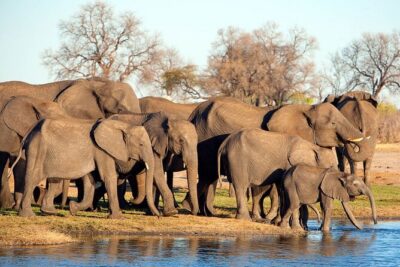
3-Day Tarangire, Ngorongoro and Lake Manyara Camping Safari
Read our review →Browse the lists this tour appears in