
Reviewed · CAMPING SAFARIS
Tanzania Wildlife Safari Budget Camping
Tarangire’s elephant families and baobab trees are the first big draw here, but the real prize is the four-park sweep: Tarangire, Manyara, Serengeti, and Ngorongoro Crater in five days. You get a quick look at several of northern Tanzania’s best-known wildlife areas instead of spending the whole trip in one park.
I like the strong wildlife mix and the price of $1,155 per person, which includes park fees, four dinners, five lunches, and five breakfasts. I also like the human side of the operation: Vincent has handled trip questions and problems directly, while guides James and Emmanuel, also called Manu, have been praised for sharp animal spotting. The drawback is simple: this is a busy route with long driving and game-drive days, and budget camping means comfort takes a back seat.
Key points to know before booking
- Four major parks in five days: You visit Tarangire, Lake Manyara, Serengeti, and Ngorongoro Crater.
- Wildlife begins on day one: Tarangire is especially good for elephant families and baobab scenery.
- A strong guide matters: James and Emmanuel, also known as Manu, have been praised for finding animals, including difficult sightings such as leopard and rhino.
- Basic camping keeps the cost down: Tents are set up and taken down for you, with a thicker mat and blanket mentioned as part of the arrangement.
- Long days are part of the deal: Most listed days run about six or seven hours, with early starts and picnic meals.
- Small enough to stay manageable: The maximum group size is 15, and pickup is offered from Arusha Airport or your hotel in Arusha.
Four parks, one fast-moving northern Tanzania route
This safari is designed for someone who wants the main northern circuit in a short stretch of time. You move from the dry, elephant-friendly country around Tarangire to the birdlife of Lake Manyara, then into the open Serengeti and finally the wildlife-filled bowl of Ngorongoro Crater.
That variety is the tour’s best feature. Each park has a different feel and a different reason to visit. You will not spend every day looking at the same type of scenery or hoping the same animals appear.
The trade-off is pace. You cover a lot of ground, and the schedule leaves little room for a slow morning at camp or a second chance at a favorite sighting. If you want a relaxed safari with long stays at one lodge, this is not that trip. If you want a first taste of Tanzania’s most famous parks at a controlled price, the route makes sense.
The start time is 7:00 a.m., with collection listed from Arusha Airport and pickup offered. The exact transfer arrangement should be confirmed when you book, especially if you are staying at a hotel rather than arriving at the airport.
More Budget Safaris in Arusha
- 5 Days Budget Private Safari, Tanzania
★ 5.0 · 191 reviews - 6 Days Private Budget Safari
★ 5.0 · 163 reviews - 6 Days Tanzania Budget Camping Safari
★ 5.0 · 145 reviews
Tarangire: elephants beneath giant baobabs
Day one takes you from Arusha to Tarangire National Park for a game drive and picnic lunch. The park is known for its elephant families, and the sight of several elephants moving slowly beneath baobab trees gives this first day a memorable visual hook.
Tarangire is also a place where water shapes the whole wildlife experience. In the dry season, animals can gather around the Tarangire River after moving long distances in search of water. That can create excellent viewing, though wildlife is never guaranteed and conditions change with the season.
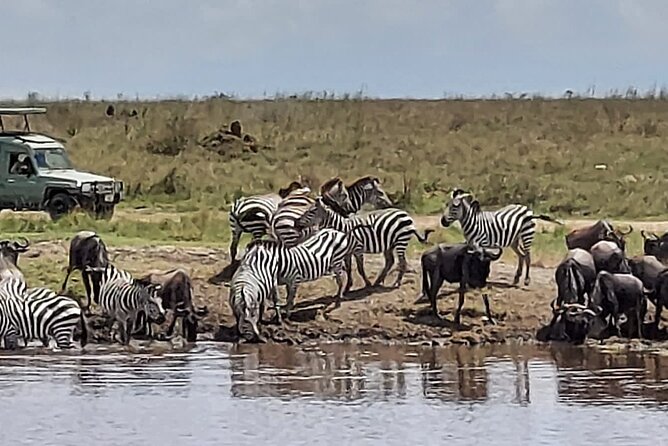
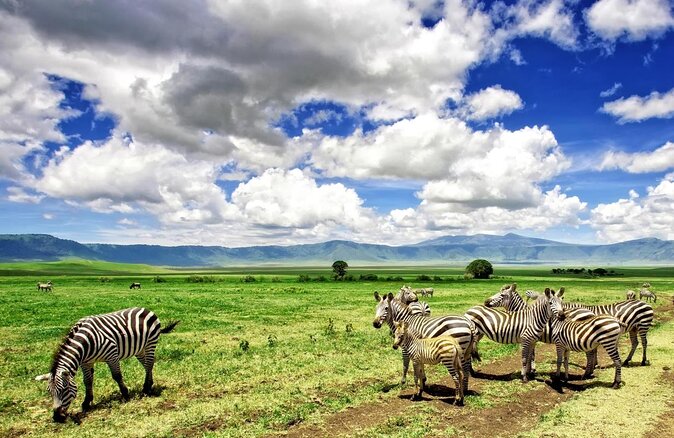
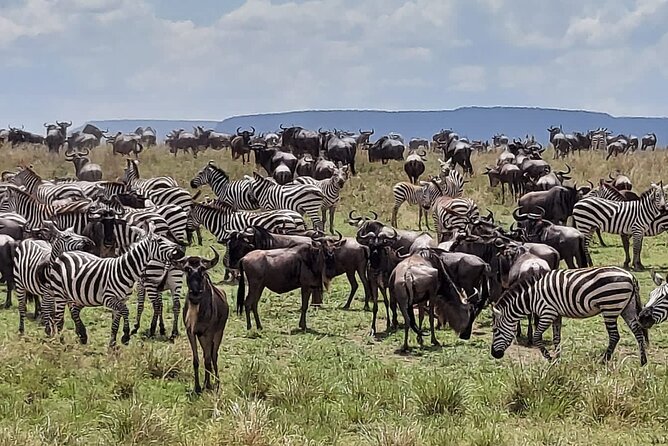
The park offers more than elephants. The supplied plan highlights giraffes, buffalo, wildebeest, and zebra elsewhere on the route, and Tarangire’s mix of trees and open ground gives you a good first look at how animals use different habitats.
You spend the night at a campsite after roughly seven hours of activity. That length includes travel and the game drive, so expect a full day rather than a gentle introduction. Bring patience for road time and keep your camera ready between formal stops. The baobabs are part of the show.
Lake Manyara: birds, plains, and volcanic views
After breakfast, you drive to Lake Manyara National Park. This is the shortest listed park day at about six hours, and it changes the rhythm of the safari by shifting attention toward birds and water.
More than 400 bird species have been recorded in the park. You might see flamingos, pelicans, cormorants, and storks, with the alkaline lake providing the setting. Bird lovers will get more from this stop than someone focused only on large mammals, but the park also gives you chances to see buffalo, wildebeest, zebra, and giraffes.
The scenery is a major part of the appeal. You move through forest and grassy floodplain, with views across the lake toward jagged volcanic peaks. The contrast between water, open grass, and higher ground makes Manyara feel different from Tarangire and prepares you for the wider Serengeti ahead.
Manyara is best treated as a varied wildlife stop, not a promise of one particular animal. The description calls attention to giraffes that can look almost black from a distance and to large herds on the plains. Your guide’s ability to read the area and respond to current sightings will matter more than any fixed checklist.
Olduvai Gorge and the road into Serengeti
On day three, the route heads toward the Serengeti through Olduvai Gorge. The archaeological site is associated with important evidence of prehistoric humans and includes a museum visit and on-site interpretation.
This stop adds a human story to a trip otherwise centered on animals. It also breaks up the road into the Serengeti, though you should still expect a long day of roughly seven hours. If you are mainly interested in wildlife, Olduvai may feel like a pause, but it gives the route useful context and keeps the day from becoming one continuous drive.
You continue to Serengeti National Park for an afternoon game drive. The park is famous for its large concentration of mammals, and even a first visit can feel different from the earlier parks because of the open scale and the sense of distance.
The night is at Seronera Public Campsite. Public camping is a budget choice, so do not expect lodge-style privacy or polish. The benefit is that your money goes toward access to the parks and a longer wildlife route instead of premium accommodation. The camping feedback describes tents being set up and dismantled for you, along with a thicker mat and blanket, which makes the arrangement more practical than carrying and assembling your own shelter.
More Camping Safaris in Arusha
- 4 Days Group Camping Safari
★ 5.0 · 1,101 reviews - 5 Days Group Camping Safari
★ 5.0 · 730 reviews - 5-Day private Camping Safari Tour in Tanzania
★ 5.0 · 86 reviews - 4-Day fascinating Camping Safari in Tanzania
★ 5.0 · 35 reviews
Serengeti at first light
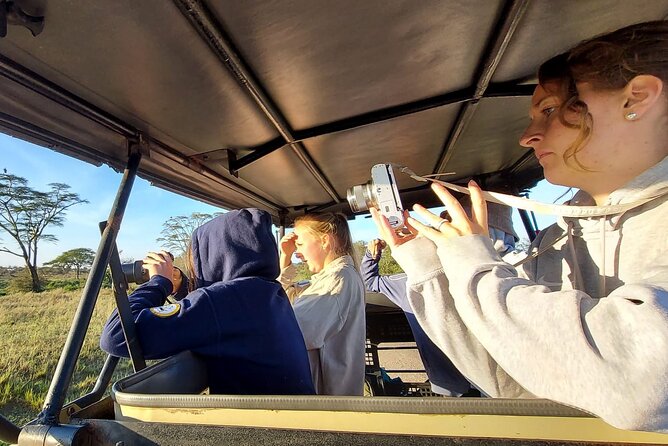
Day four starts with a picnic breakfast and an early morning game drive. This is one of the most important scheduling choices in the whole trip. Early hours give you more time in the park and may put you out during a period when animals are active.
The plan allows for the possibility of seeing a hunt or kill, but that is never something a responsible safari can promise. You may instead spend the morning watching ordinary behavior: animals moving, feeding, resting, or staying alert. Those quieter moments are often what make a sighting feel real rather than staged.
You return for lunch or choose a picnic lunch in the park, then travel toward the Ngorongoro Crater rim. The route ends at Simba Campsite. By this point, you will have had several early starts, road transfers, and long game drives, so energy levels matter. A small day bag with water, sun protection, and anything you need during the vehicle hours will be useful, though the supplied details do not specify a separate packing list.
The Serengeti portion is the strongest reason to choose this itinerary. It gives you an afternoon arrival drive, a full early morning, and a chance to see the park under different light and conditions. It is still a short stay, so you should think of it as a focused introduction rather than a slow, in-depth Serengeti visit.
Ngorongoro Crater: a compact final wildlife day
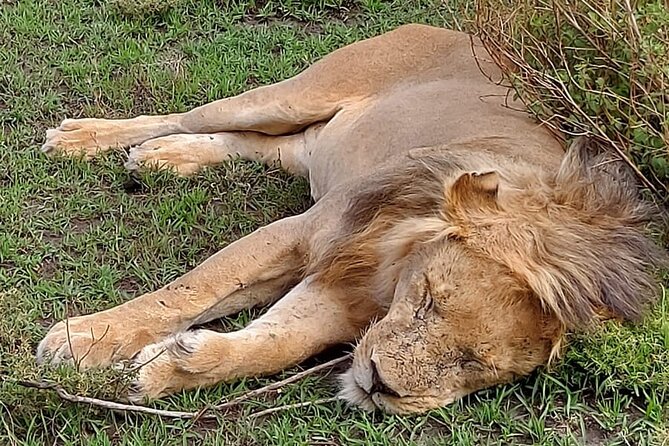
The final morning takes you down to the floor of Ngorongoro Crater after breakfast. The crater is a huge caldera formed by the collapse of an ancient volcano, and its permanent water and fertile soil support a dense animal population.
That natural enclosure makes Ngorongoro particularly rewarding on a short safari. You have a chance to see a wide range of animals in one area, including black-maned lions, giant-tusked elephants, and, if fortune cooperates, rhino. The supplied experience also records successful leopard and rhino sightings on the final day, but you should treat those as lucky outcomes rather than expected results.
The crater floor is the visual high point for many people. You descend through dramatic views, spend time on a game drive, then climb back to the rim before returning to Arusha. The final day is listed at about seven hours, so the return journey is part of the schedule rather than an afterthought.
There is a practical catch. Ngorongoro is not a quiet final stroll. You need to be ready for a full morning of driving and viewing after several active days. Still, ending with the crater gives this itinerary a strong finish and a better chance of seeing a wide range of animals than a route built around only one park.
What $1,155 includes, and where the budget shows
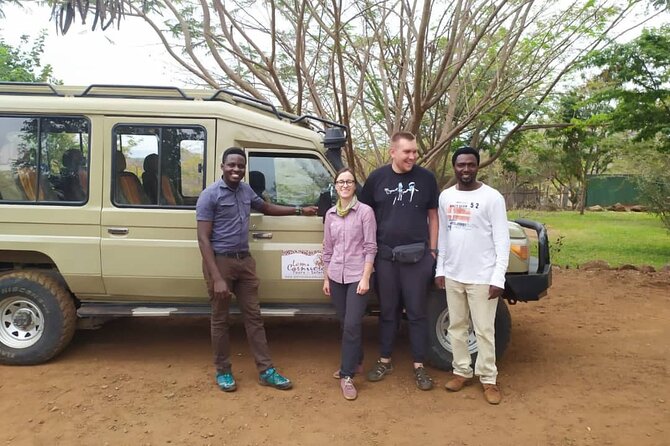
At $1,155 per person, the value depends on how much you want included. The price covers all fees and taxes, five breakfasts, five lunches, and four dinners. It also includes the core safari movement and game drives across four important parks, along with camping accommodation.
That is a useful package for a first Tanzania safari. Park access alone is a major part of the cost of visiting this region, and having meals included makes daily spending easier to control. You are also paying for a guide and vehicle service across a route that covers a lot of ground.
The budget label still matters. Camping is more basic than staying in lodges, and the schedule is demanding. Tips, personal purchases, and a visa are not included. Plan for those separately rather than treating the advertised price as your full trip budget.
The maximum group size is 15. That is not a private safari, but it is limited enough to remain more manageable than a large coach group. Your experience will depend partly on how the group handles meal stops, sightings, and time in the vehicle. A skilled guide can help, and names connected with strong animal spotting include James and Emmanuel, also called Manu.
The guide can make or break the wildlife hours
A safari vehicle is only as useful as the person reading the bush and communicating with you. The strongest personal feedback connected with this trip names James for his depth of wildlife knowledge and Emmanuel, or Manu, for exceptionally sharp sighting ability.
That matters most in the Serengeti and Ngorongoro, where several vehicles may be looking across the same broad area. A guide who notices movement, tracks animal behavior, and explains what you are seeing can turn a quick glimpse into a meaningful encounter.
Vincent is associated with the booking and support side. He has been described as responsive on WhatsApp and willing to handle problems directly, including help with onward travel to Dar es Salaam. That sort of contact is useful on a multi-day trip, especially when plans involve airport pickup, hotel collection, and several campsites.
You should still ask who your assigned guide will be before departure if that matters to you. The names above come from the supplied experience, but they do not guarantee that one of them will lead every departure.
Who should book this camping safari
I would choose this trip if you want to see the Northern Circuit’s headline parks in five days and you are comfortable trading comfort for coverage. It suits first-time safari visitors, couples looking for a lower-cost route, and people who want elephants, big cats, birds, open plains, and crater wildlife in one compact plan.
It also suits you if you value a guide who stays in contact and if you are happy with early starts, picnic meals, and basic camping. The positive guide feedback is strongest around animal spotting, including reported Big Five sightings, leopard, and rhino.
I would hesitate if you need a slow pace, private accommodation, or a guaranteed chance to see a specific animal. The route is ambitious, and four parks in five days means you will spend real time on the road. You also need to be comfortable with camping and with the possibility that wildlife sightings vary from day to day.
Free cancellation is available if you cancel at least 24 hours before the experience start time. Changes or cancellations inside that window are not accepted for a refund.
Should you book it?
Book this safari if your priority is maximum park variety at a budget camping price. Tarangire’s elephants, Manyara’s birds, Serengeti’s open country, and Ngorongoro’s dense wildlife make a strong first safari circuit.
Skip it if you want lodge comfort or a leisurely schedule. For everyone else, the combination of four famous parks, included meals and fees, a group capped at 15, and guides with a record of finding difficult animals makes $1,155 a fair price for a demanding but rewarding introduction to northern Tanzania.
FAQ
Where does the safari start?
The listed meeting point is Arusha Airport in Arusha, Tanzania, with a 7:00 a.m. start time. Pickup is also offered, and the first day describes collection from a hotel in Arusha.
How long is the safari?
The experience lasts approximately five days and four nights.
Which national parks are included?
The route visits Tarangire National Park, Lake Manyara National Park, Serengeti National Park, and Ngorongoro Crater.
What meals are included?
The package includes five breakfasts, five lunches, and four dinners.
Is camping included?
Yes. The experience is described as a camping safari, with nights at campsites including Seronera Public Campsite and Simba Campsite. The camping arrangement described includes tents set up and taken down, along with a thicker mat and blanket.
How large can the group be?
The maximum group size is 15 people.
Are park fees and taxes included?
Yes. All fees and taxes are included. Tips, personal purchases, and a visa are not included.
Can I cancel for a full refund?
Yes, if you cancel at least 24 hours before the experience start time. Cancellations made less than 24 hours before the start time are not refunded, and changes inside that period are not accepted.
More Wildlife Tours in Arusha
- Tanzania Wildlife Encounters – 6 Days
★ 5.0 · 277 reviews - 6 Day Tanzania Wildlife Mid range Safari
★ 5.0 · 54 reviews - 4 Days Wildlife Safari and Cultural Experience in Tanzania
★ 5.0 · 23 reviews - 8 Days 7 Nights Tanzania Wildlife & Culture Lodge Safari
★ 5.0 · 17 reviews
More Safaris in Arusha
- 7-Day Premium Luxury Tanzania Safari All-Inclusive
★ 5.0 · 426 reviews - 8 Days Great Wildebeest Calving Migration Safari from Arusha
★ 5.0 · 254 reviews - Group Safari 7 Days in Tanzania’s Main Parks
★ 5.0 · 240 reviews - Tanzania Simba Safari – 5 Days
★ 5.0 · 217 reviews
Just added around Arusha
- From Arusha: 11 days The Classics Northern Tanzania safari★ 5.0 · 11 reviews
- 6-Day Mount Meru Climb through Momella Route Guided Tour★ 5.0 · 5 reviews
- Private Day Trip to Arusha National Park with a Walking Safari★ 5.0 · 4 reviews
- From Arusha : 11-day Amazing North Tanzania safari tour★ 5.0 · 4 reviews
- Walking Day Tour to Safari in Arusha National Park★ 5.0 · 5 reviews
- 2 Days Tanzania Midrange Group Join Safari★ 5.0 · 7 reviews
- Best 5 Days Tanzania Private Luxury Safari with luxury Lodges★ 5.0 · 12 reviews
- Waterfall & Coffee Walking Tour★ 5.0 · 6 reviews
Camping Safaris, compared.
3 Day Serengeti National Park & Ngorongoro Crater Camping Safari
Read our review →
5-Day private Camping Safari Tour in Tanzania
Read our review →
5 Days Camping Tarangire, Serengeti & Ngorongoro crater & Visiting Maasai
Read our review →
Multi-Day Camping Safari Experience in Arusha
Read our review →
3-Day Tarangire, Ngorongoro and Lake Manyara Camping Safari
Read our review →Browse the lists this tour appears in