
Reviewed · CAMPING SAFARIS
5-Day private Camping Safari Tour in Tanzania
Tarangire’s giant baobabs, Serengeti’s open plains, and Ngorongoro’s crater floor give this five-day private safari a strong arc. You move from elephant country to big-cat territory, then finish with a wildlife-rich crater where water and grass draw animals year-round. The schedule is full, but it puts three of Tanzania’s best-known parks into one compact trip.
I like the private 4×4 vehicle and guide, since your group can focus on its own pace and questions. I also like the practical camping setup: four breakfasts, five lunches, and four dinners are included, while staff handle tents and meals. The main thing to consider is the amount of time on rough roads and in the vehicle. This is an active safari, not a relaxed lodge holiday.
Five details to know before booking
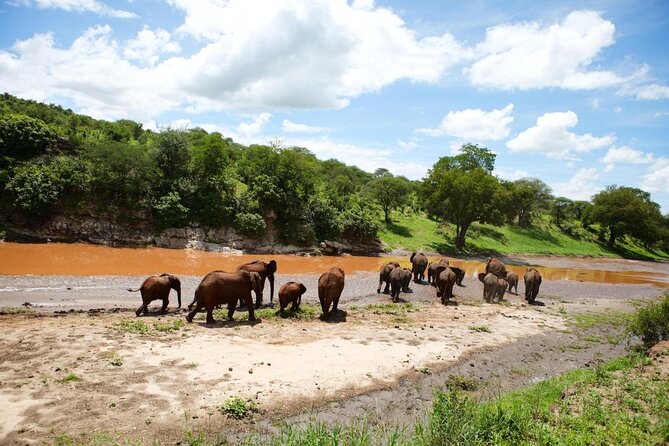
- Tarangire opens the trip with elephants and baobabs, plus a strong chance of zebra, wildebeest, and buffalo in the June to November dry season.
- Two nights in the Serengeti give you the best amount of time for repeated game drives rather than one quick pass.
- Ngorongoro ends the safari with a crater descent, Lake Magadi, dependable water, and a high concentration of animals.
- Guide quality matters here. Rocky, Mandela, Gordon, Fredy, Baraka, and Golden are among the guides praised by name for animal spotting, park knowledge, and good company.
- Camping is part of the value. You pay $2,300 per person for the five-day trip, with meals included, but airport or departure tax is extra.
- Check the final route carefully. The main schedule includes Tarangire, Serengeti, and Ngorongoro. Lake Manyara appears in the general description, but not in the detailed five-day plan.
Three major parks in five busy days
This safari is built around contrast. Tarangire has dry-country character and broad concentrations of elephants. Serengeti offers the biggest stretch of open country and two full days of searching. Ngorongoro provides a dramatic finale in a contained crater with water, grass, prey animals, and predators close together.
The tour begins at AIM Mall in Mbauda, Arusha, with departure after breakfast, around 8:30 or 9:00 a.m. From there, your private guide drives the group in a private 4×4 safari vehicle. Since the activity returns to the same meeting point at the end, you have a clear start and finish in Arusha.
The listed price is $2,300 per person. That is not a bargain-basement camping trip, but the price covers the core safari structure: private transport, park visits, camping, and meals. Its value depends on what private means for your booking, so confirm the number of people in your vehicle, the exact camping arrangement, and the final park order before paying.
More Camping Safaris in Arusha
- 4 Days Group Camping Safari
★ 5.0 · 1,101 reviews - 5 Days Group Camping Safari
★ 5.0 · 730 reviews - 6 Days Tanzania Budget Camping Safari
★ 5.0 · 145 reviews
Day 1: Tarangire brings the elephants first
After breakfast, you drive to Tarangire National Park and arrive at the lodge area for lunch before an afternoon game drive. The park is famous for its large elephant population and old baobab trees, which give the first day a strong visual identity even before you start counting animals.
Tarangire is especially appealing from June through November, when dry conditions concentrate wildlife around available water and food. The itinerary specifically points to large herds of zebra, wildebeest, and Cape buffalo during this period. You might also see giraffe, waterbuck, dik-dik, impala, eland, Grant’s gazelle, vervet monkeys, banded mongoose, and olive baboons.
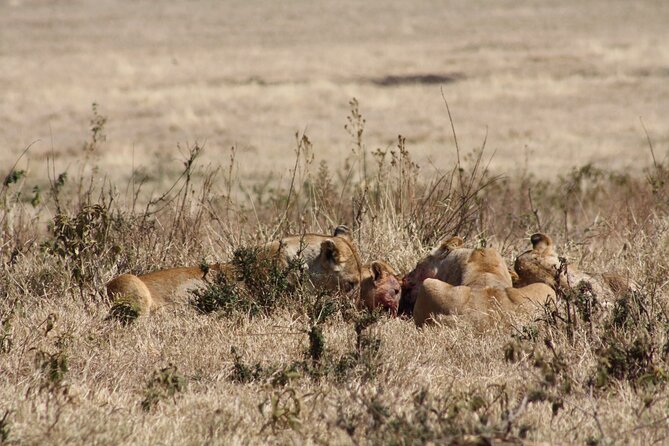
Predators include lion, leopard, cheetah, caracal, honey badger, and African wild dog. As always with a safari, no animal sighting is guaranteed, but the range of possible species is impressive for a first afternoon.
I like the order of this day. You get a proper introduction to safari country without immediately spending the whole day on the longest transfer. The drawback is that a six-hour park day, including driving and lunch, can feel short if you want a slow search for elusive cats.
Day 2: The long road to Serengeti
Day two starts after an early breakfast. You drive toward Serengeti National Park with a picnic lunch, passing through the Ngorongoro Conservation Area and enjoying game viewing along the route before reaching Seronera Campsite.
This is a transfer day with wildlife built in, not a simple point-to-point drive. The route lets you begin seeing the changing country as you approach the Serengeti, but you should still expect a long day in the vehicle. The listed activity time is about six hours, and road conditions can affect how the day feels.
Seronera is a practical base for the central Serengeti portion of the safari. The schedule gives you dinner and an overnight stay at the campsite, setting up two consecutive days in the park. A picnic lunch also keeps you from having to return to camp during the best part of the day.
The exact camping comfort is worth clarifying. Staff feedback describes well-organized tents, sleeping bags, hot meals, and strong food, with one account calling the camping setup closer to luxurious than basic. Still, this is camping. You should be comfortable with early starts, outdoor conditions, and nights away from hotel-style rooms.
Day 3: A full day where the wildlife is
Day three is the safari’s main search day. After early breakfast, you leave camp for a full-day game drive with a picnic lunch, take a short midday break, and continue until late afternoon before returning to Seronera for dinner and another night.
This is where the itinerary earns its place. Instead of spending every day packing and changing camps, you get a full day in one of Africa’s best-known wildlife parks. The longer time outside gives your guide more chances to follow animal activity, stop for photography, and explain what you are seeing.
Past guest feedback gives useful clues about the guiding style to expect. Rocky is repeatedly praised for explaining animal behavior and finding a wide mix of wildlife. Mandela is noted for answering questions and bringing a friendly, easygoing manner. Gordon, Fredy, Baraka, and Golden are also named positively for animal spotting, communication, and park knowledge.
That does not mean you can request a specific guide with certainty, but you can ask the operator whether Rocky, Mandela, or another named guide is available. A good guide is not just a driver. The guide reads tracks, uses radio communication with other vehicles, explains the animals, and helps decide when to wait and when to move on.
The possible downside is simple: full-day game drives are tiring. You spend many hours seated, watching, waiting, and driving over uneven roads. If you prefer a slower holiday, this five-day plan may feel compressed. If wildlife is your main reason for visiting Tanzania, the long day is part of the point.
More Private Tours in Arusha
- 5 Days Budget Private Safari, Tanzania
★ 5.0 · 191 reviews - 5-Day Private Northern Tanzania Safari from Arusha
★ 5.0 · 182 reviews - 6 Days Private Budget Safari
★ 5.0 · 163 reviews - 5-Day Private midrange Tour in Arusha with Airport Pickup
★ 5.0 · 160 reviews
Day 4: One last Serengeti morning, then Ngorongoro
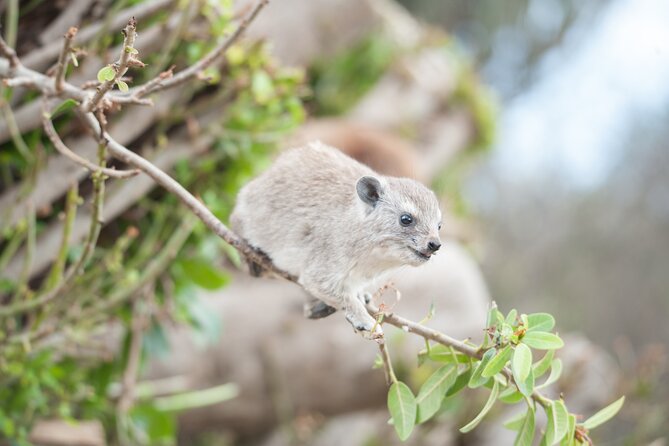
Day four begins with coffee, tea, and biscuits before an early game drive from about 8:00 a.m. to 2:30 p.m. You carry lunch boxes, continue viewing wildlife, and then leave for the Ngorongoro Conservation Area with game viewing along the route.
This split day works well because it protects another meaningful block of time in the Serengeti. You are not simply waking up and leaving at dawn. You get one more chance to look for animals before moving toward the crater area.
The timing also shows why you should pack a small day bag. Early refreshments are modest, and the main meal is a lunch box. Keep your camera, water, sun protection, and any personal items close by, since you will be outside for much of the day.
Dinner and overnight accommodation take place in the Ngorongoro Conservation Area. The schedule does not name the exact camp or lodge, so ask for that detail before departure if it matters to you.
Day 5: Down into Ngorongoro Crater
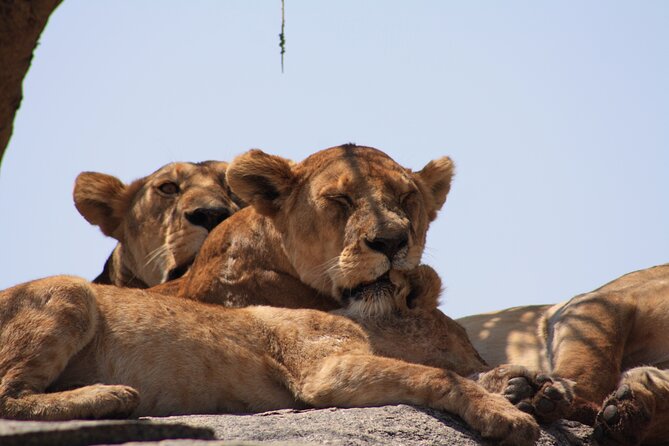
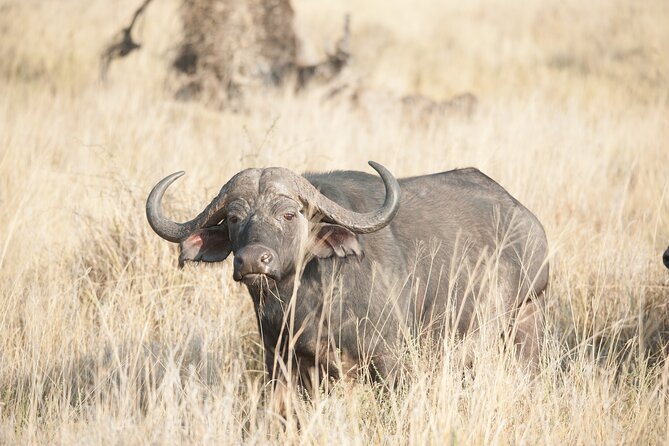
The final day starts with an early breakfast and a descent of more than 600 meters into Ngorongoro Crater. This is the trip’s most concentrated wildlife day, with a large water supply and grazing areas that support wildebeest, zebra, buffalo, eland, warthog, hippo, and giant African elephants.
The crater also gives you a good chance to look for predators, including lions, hyenas, jackals, cheetahs, and leopards. The leopard is described as elusive, so your guide’s ability to spot movement and read the area matters. You may see several major species in a single day, but you should not treat the Big Five as a promise.
Lake Magadi is another key stop. This large, shallow alkaline lake in the crater’s southwest is one of the area’s main features and can add birds and other wildlife to the day’s sightings. The crater’s compact shape makes it feel different from the open Serengeti. You have broad views, but the animals are often gathered around specific food and water areas.
The final day is listed at about eight hours, making it the longest day of the trip. That is useful for wildlife viewing, but it also means another early start and a late finish. At the end, the activity returns to the Arusha meeting point.
Camping, food, and the people who make the difference
The package includes four dinners, five lunches, and four breakfasts. That is a practical advantage because food logistics can be awkward on safari, especially when you are spending long hours away from camp. Picnic lunches and lunch boxes also let you stay in the parks rather than losing time returning for a meal.
Food receives unusually strong praise in the available feedback. Salim and James are named as chefs, and meals are described as fresh, varied, hot, and generous. One account specifically praises different dishes each day, while another highlights hot lunches and good organization around camp.
Do not assume camping means rough food. At the same time, do not assume it means hotel service. The experience depends on a working safari camp, early meals, shared outdoor routines, and a team that sets up and organizes tents. You should ask what type of tent is supplied and whether your booking is fully private in both transport and camp arrangements.
The word private is important. The tour information describes a private activity in which only your group participates. Some supplied accounts, however, refer to shared-tent or group safari arrangements. That may reflect different versions of the company’s five-day trips, not necessarily this exact booking. Get the private arrangement in writing before you go.
Is $2,300 per person good value?
At $2,300 per person, this is a substantial purchase. The value comes from the combination of three major wildlife areas, a private vehicle, a guide, camping support, park time, and included meals. Two Serengeti nights are particularly useful, since the park is too large to judge fairly from a rushed drive-through.
The price looks stronger if you are traveling with a small private group and want direct attention from the guide. It may look less attractive if your priority is a hotel room, a slower schedule, or a luxury lodge. The word private should mean something tangible, so confirm whether it covers the vehicle, guide, tents, and the whole group arrangement.
Airport or departure tax is not included. Build that extra cost into your budget. The activity offers free cancellation up to 24 hours before the start time, while cancellations made within 24 hours are not refunded and late changes are not accepted.
Who should book this safari?
I would recommend this trip to you if you want maximum wildlife variety in a short time and are happy to trade comfort for access and time in the parks. It suits first-time safari visitors, photography-minded guests, families who want a private vehicle, and small groups that want a guide focused on their questions.
It is also a good fit if you care more about the animals and scenery than about having a polished room every night. The food and camp operation sound like strong parts of the package, but the itinerary remains active and road-heavy.
I would hesitate if you dislike early breakfasts, picnic meals, long drives, or camping. I would also hesitate if Lake Manyara is essential to your plans. It appears in the general tour description and in some five-day route variations, but the detailed schedule supplied here lists Tarangire first, followed by Serengeti and Ngorongoro. Ask for written confirmation of the exact parks.
Should you book it?
Book this safari if you want a focused, wildlife-first route with Tarangire, two Serengeti days, and a final Ngorongoro crater visit. The strongest reasons are the private 4×4 format, the full Serengeti day, the included meals, and the team’s repeated praise for guides such as Rocky, Mandela, Gordon, Fredy, and Golden.
Before booking, confirm the exact itinerary, group size, camping standard, guide assignment, and extra taxes. If those details match your expectations, this is a well-packed way to see northern Tanzania without spending every night in a lodge.
FAQ
Where does the safari start and finish?
It starts at AIM Mall in Mbauda, Arusha, Tanzania, and returns to the same meeting point at the end of the activity.
How long is the safari?
The tour lasts approximately five days and includes four nights of camping.
Which national parks are included in the detailed schedule?
The detailed schedule includes Tarangire National Park, Serengeti National Park, and the Ngorongoro Conservation Area. Lake Manyara appears in the general description, so confirm whether it is part of your specific booking.
Is this a private tour?
The activity is described as private, with only your group participating, and includes a private 4×4 safari vehicle. Since some five-day versions have different arrangements, confirm the exact private setup before departure.
What meals are included?
The package includes four dinners, five lunches, and four breakfasts. Meals include picnic lunches or lunch boxes on game-drive days.
What animals might you see?
Possible sightings include elephants, zebra, wildebeest, buffalo, giraffe, impala, hippo, warthog, lions, hyenas, cheetahs, leopards, jackals, and many other species. Wildlife sightings are not guaranteed.
What is the cancellation policy?
You can cancel at least 24 hours before the local start time for a full refund. Cancellations or changes made less than 24 hours before the start time are not accepted or refunded.
More Five-Day Trips in Arusha
- 5 Days Best of Tanzania Luxury Safari Northern Circuit
★ 5.0 · 174 reviews - 5 Days Mid-Range Group Safari with Accommodation
★ 5.0 · 67 reviews - Best of Tanzania 5days 4nights safari
★ 5.0 · 55 reviews - 5 Days Safari Northern Circuit of Tanzania
★ 5.0 · 37 reviews
More Safaris in Arusha
- 7-Day Premium Luxury Tanzania Safari All-Inclusive
★ 5.0 · 426 reviews - 8 Days Great Wildebeest Calving Migration Safari from Arusha
★ 5.0 · 254 reviews - Group Safari 7 Days in Tanzania’s Main Parks
★ 5.0 · 240 reviews - Tanzania Simba Safari – 5 Days
★ 5.0 · 217 reviews
Just added around Arusha
- From Arusha: 11 days The Classics Northern Tanzania safari★ 5.0 · 11 reviews
- 6-Day Mount Meru Climb through Momella Route Guided Tour★ 5.0 · 5 reviews
- Private Day Trip to Arusha National Park with a Walking Safari★ 5.0 · 4 reviews
- From Arusha : 11-day Amazing North Tanzania safari tour★ 5.0 · 4 reviews
- Walking Day Tour to Safari in Arusha National Park★ 5.0 · 5 reviews
- 2 Days Tanzania Midrange Group Join Safari★ 5.0 · 7 reviews
- Best 5 Days Tanzania Private Luxury Safari with luxury Lodges★ 5.0 · 12 reviews
- Waterfall & Coffee Walking Tour★ 5.0 · 6 reviews
Camping Safaris, compared.
3 Day Serengeti National Park & Ngorongoro Crater Camping Safari
Read our review →
5 Days Camping Tarangire, Serengeti & Ngorongoro crater & Visiting Maasai
Read our review →
Multi-Day Camping Safari Experience in Arusha
Read our review →
6-day Private Camping Safari Tour from Kilimanjaro Airport
Read our review →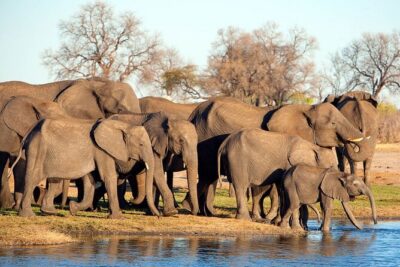
3-Day Tarangire, Ngorongoro and Lake Manyara Camping Safari
Read our review →Browse the lists this tour appears in