
Reviewed · HIKING & TREKKING
6-Day Mount Meru Climb through Momella Route Guided Tour
Mount Meru gives you a rare combination: a serious summit climb and a wildlife walk in the same trip. The first hiking day passes giraffes, zebras, antelope, buffalo, and possibly elephants, while the final approach follows a narrow crater ridge toward Socialist Peak at 4,562 meters.
I like the built-in acclimatization option on Little Meru and the care package of airport transfers, hotel nights, meals, medical checks, oxygen, and GPS tracking. I also like that the extra descent day makes this less rushed than the shorter version. The main consideration is the midnight summit push, followed by a long 12-hour day on steep, rocky ground.
Key points at a glance
- Wildlife starts on day one: The route through Arusha National Park can feel like a walking safari before the climb gets serious.
- A ranger joins the trek: An armed National Park ranger is required because of the wildlife along the trail.
- Little Meru helps with acclimatization: The optional 3,820-meter hike gives you extra height before summit night.
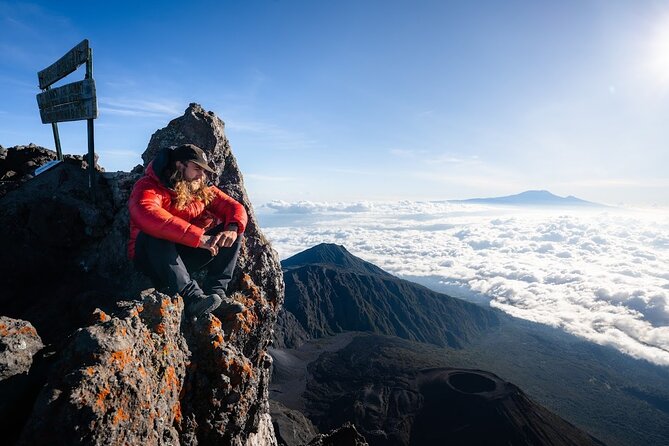
- The summit ridge is the main event: Rhino Point, Cobra Point, and Socialist Peak bring crater cliffs, the Ash Cone, Rift Valley views, and Kilimanjaro.
- The package covers much of the hard work: Guides, porters, cooks, huts, meals, transfers, medical checks, and airport pickup are included.
- The schedule is demanding: Summit day begins around midnight and can last about 12 hours.
Why Mount Meru is more than a Kilimanjaro warm-up
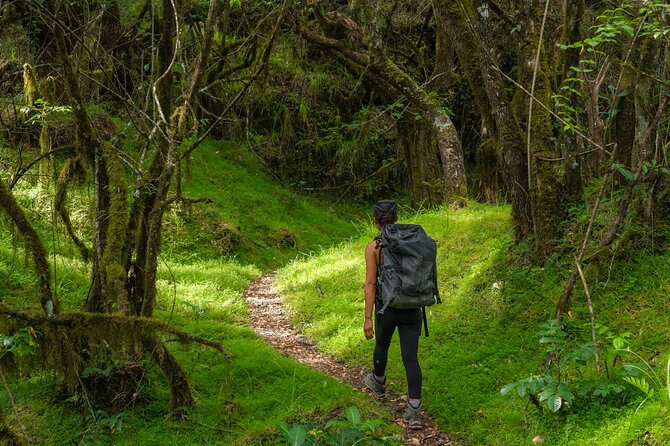
Mount Meru often gets second billing because Kilimanjaro is nearby. That is a mistake if you want a mountain trip with more than a straight uphill march. Meru rises above Arusha National Park, so the climb begins among animals and gradually shifts into forest, high mountain slopes, crater walls, ash, and exposed rock.
The volcano is around 500,000 years old. A major eruption blew out much of its eastern side, which explains the mountain’s unusual shape. Its crater reaches more than 1,500 meters in depth, giving the upper route a dramatic setting rather than a simple summit trail.
The mountain is dormant but still classed as active. Its last eruption was in 1910. You are not signing up for volcanic drama, but the geology explains the Ash Cone and the broken crater rim you see near the top.
At $1,892 per person, this is not a budget hike. The price makes more sense when you count the two hotel nights, airport transfers, park transport, mountain huts, porters, cooks, three daily meals on the trek, medical equipment, oxygen, GPS tracking, and licensed guides. You are paying for an organized expedition, not just a guide leading you up a trail.
More Trekking Tours in Arusha
- 4 Days Mount Meru Trekking
★ 5.0 · 55 reviews - Arusha: Napuru Waterfalls Guided Hike
★ 4.8 · 39 reviews - 4 Days Mount Meru Climbing | Hiking | Trekking Tour
★ 5.0 · 13 reviews
Day one: a soft landing in Moshi
Your arrival at Kilimanjaro International Airport is followed by a transfer to Aishi Machame or Altezza Lodge in Moshi. The hotel gives you a place to recover from the flight, take a hot shower, eat at the restaurant, use the internet, and, if the timing works, swim.
The transfer vehicles include Wi-Fi and bottled water. That is a small but useful touch after a long flight, especially if you need to contact family or sort out last-minute messages.
This first night matters because the climb starts early the next morning. Use it to organize your personal gear, check your boots, and sleep. Personal equipment rentals, airline tickets, visa fees, insurance, and hotel lunches and dinners are not included, so budget for those separately.
Day two: from Momella Gate to the mountain huts
The first true trekking day begins with a transfer to Momella Gate in Arusha National Park. While you register with Tanzania National Parks, the porters organize and pack the group’s gear. That division of labor lets you start walking with a lighter day pack.
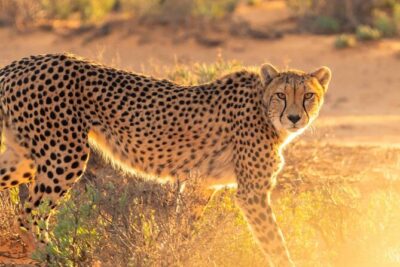
The opening section is the most unusual part of the route. You may see giraffes, zebras, antelope, buffalo, and possibly elephants near the trail. It is not a conventional safari, since you are walking toward a mountain rather than sitting in a vehicle, and the animals are part of the setting rather than a guaranteed show.
Because wildlife may be close to the route, an armed ranger hired through the park must accompany the group throughout the hike. This is an important safety rule, not an optional extra. It also means you should follow the guide and ranger closely, rather than wandering off for a better photograph.
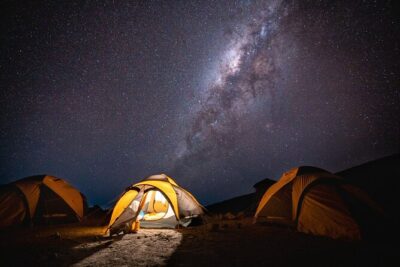
The route passes the Ngarenanyuki River and a waterfall. After roughly eight hours, you reach camp in the mountain huts. Huts are shared according to Arusha National Park rules, so this is not a private-room mountain holiday. The supplied sleeping mats are 8 centimeters thick, and the crew brings tables, chairs, cutlery, and crockery for camp use.
Day three: the saddle and Little Meru
After breakfast, the trail turns steeper as it climbs along the ridge of the saddle. You may still spot wildlife, but the main reward now is the view into Meru Crater and toward the Ash Cone.
The optional Little Meru hike reaches 3,820 meters. I consider this one of the best parts of the schedule. It gives you extra time at altitude and lets you test your legs before the summit attempt. You do not need to treat it as a race. The value comes from controlled acclimatization and a chance to see more of the mountain.
Dinner is served early because the summit start is around midnight. This is where the six-day plan demands discipline. You may have arrived expecting a pleasant multi-day trek, but summit night is a proper alpine effort. Eat what you can, prepare your clothing and headlamp, and rest even if you do not feel sleepy.
The guide team is licensed by Tanzania National Parks, and the guides are Wilderness First Responder certified. Guides named in the supplied experience include John, Peter, and Emmanuel. The crew also completes medical checks at least twice a day, using oximeters and medical kits as part of the safety system.
More treks and hikes around Arusha:
- 3 Days Mount Meru trekking
★ 4.5 · 7 reviews - 13 Days Adventure in Tanzania – Trekking and Wildlife Safari
★ 5.0 · 7 reviews - Mount Meru Arusha: Napuru Waterfall Hike by Kingstone Asilia
★ 5.0 · 5 reviews - Private Canoe or Hike Tour on Lake Duluti
★ 5.0 · 4 reviews
Day four: Rhino Point, Cobra Point, and Socialist Peak
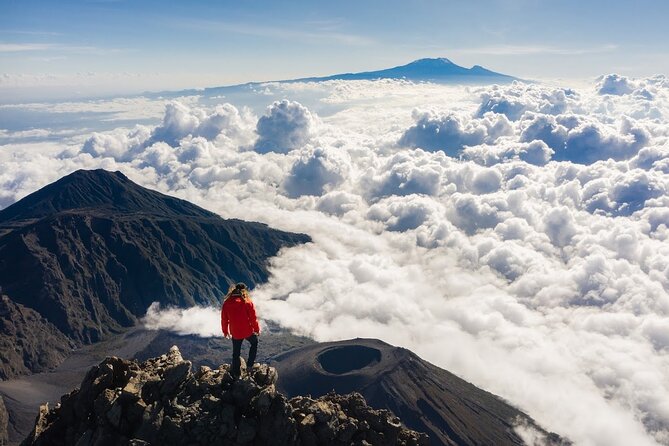
Summit day starts around midnight. The first major section is a steep, one-hour climb to Rhino Point at 3,800 meters. From there, the route follows a ridge of ash and rock to Cobra Point at 4,350 meters.
This is the part where the mountain demands steady pacing. The path is steep and exposed in places, and the air is thin. Your guide will set the pace, but you still need moderate physical fitness and the ability to walk for long hours on uneven ground.
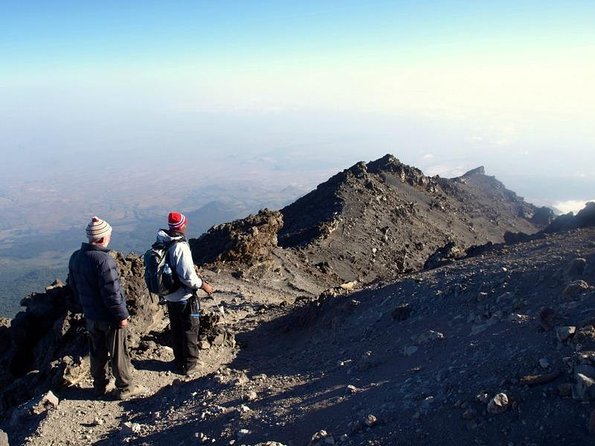
From Cobra Point, Socialist Peak is about another hour along a steep trail. The summit reaches 4,562 meters. Depending on your speed, sunrise may find you at Cobra Point or at the summit. Do not treat that difference as a failure. The ridge and crater views are the real prize, and a safe, steady ascent matters more than arriving at one exact minute.
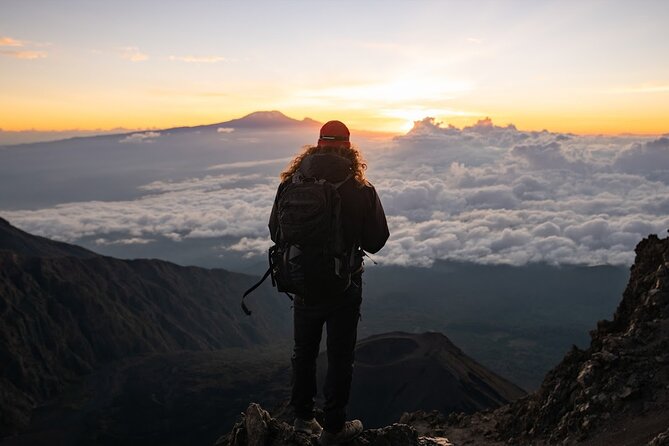
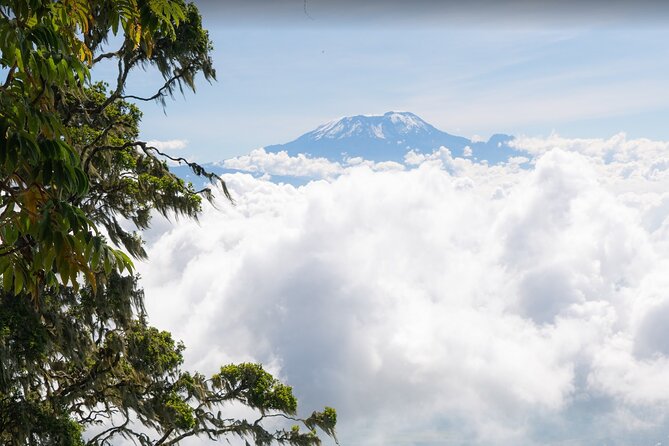
Near the top, you can see the crater cliffs, the Ash Cone rising from the crater floor, the Rift Valley, and Kilimanjaro across the morning clouds. On a clear morning, Kilimanjaro is the unforgettable companion view. The route back to Rhino Point follows a narrow ridge between the outer wall of the crater and the inner cliffs, so this descent deserves concentration even after the summit photo.
The full day lasts about 12 hours. That number is the practical warning to remember. You climb in darkness, reach high altitude, descend from the summit, and continue back toward camp. The route is rewarding, but it is not gentle. Your personal gear should be chosen for warmth, comfort, and reliable footing, since rentals are not included.
Day five: the northern route and a final wildlife chance
After breakfast, you take the northern route back to Momella Gate. The descent takes about two to three hours, a welcome change after summit day.
You may see giraffes, buffaloes, elephants, and black and white colobus monkeys again. The wildlife gives the trip a pleasing full circle: the climb begins and ends with the national park around you, not just a trailhead and a vehicle.
At the gate, the group gathers to celebrate the finish before a transfer to Moshi or Arusha town. The included end-of-trek pickup removes one more piece of planning from your hands. The extra descent day is also a good reason to choose this six-day version instead of trying to compress the climb into three days. You get more time to recover and less pressure to rush off the mountain immediately after the summit.
Day six: rest, airport transfer, or another Tanzanian stop
The final day is set aside for rest at the hotel and transfer to the airport if you are leaving Tanzania. Airport pickup and drop-off at Kilimanjaro International Airport are included.
The schedule also leaves room for a different plan if your flight is later or you are continuing with other activities. The tour itself does not include extra adventures, so confirm how your departure timing fits with the hotel and airport transfer arrangements.
Food, huts, and the practical level of comfort
You receive three meals a day during the trek. The package lists five breakfasts, four lunches, and three dinners, along with three nights of mountain accommodation in shared huts. The staff also handles cooking and camp equipment.
The hotel food receives particular praise, including the cookies. That may sound minor, but small food comforts matter after a flight and before a hard climb. Mountain meals are described as tasty and energy-rich, though you should still bring any personal snacks or dietary items you know you need. The supplied information does not list special dietary arrangements, so ask Altezza Travel before booking if that affects you.
The huts and mats provide more shelter than a tent-only trip, but shared accommodation means you should expect a basic mountain setup. Camping chairs, tables, crockery, and medical supplies make the operation more comfortable, not luxurious.
Unlimited oxygen and oximeters are included, along with GPS tracking and complete medical kits. These tools do not remove altitude risk, and they do not replace good pacing or insurance. Mountaineering insurance is not included, so arrange it separately.
How the guide and crew support affect the value
The strongest praise attached to this experience concerns the crew. Specific guides named in the information include Emmanuel, John, and Peter. The team is described as friendly, organized, and safety-focused, with close attention from planning through the trek.
That support matters on Meru. The route combines wildlife rules, park registration, a long summit day, shared huts, porters, cooks, and changing altitude. A professional crew handles the parts you would otherwise have to coordinate yourself.
The family experience is another useful clue. A family of four with children aged 15 and 17 completed the trek, and the service was praised from pre-departure planning through the time in Tanzania. That does not mean the climb is easy for young people. It means the structure can work for a fit family that is prepared for the long summit day.
The tour is listed as private, with only your group participating. That can make pacing and communication simpler than joining a large mixed group. The provided information does not state the maximum group size, so ask how many people will be in your party and how porters and guides are assigned.
Who should book this Mount Meru climb?
I would choose this trip if you want a serious mountain challenge with wildlife, crater scenery, and strong logistical support. It suits someone with moderate physical fitness who can handle steep trails, a midnight start, altitude, and a 12-hour summit day.
It also makes sense as preparation for Kilimanjaro. You practice walking at altitude, sleeping in mountain huts, following a mountain schedule, and managing a summit attempt. Still, Meru is worth choosing even if Kilimanjaro is not in your plans. The crater ridge and park setting give it a character of its own.
I would think twice if you dislike shared huts, early starts, or long days on rocky ground. This is also not a low-cost introductory walk. The price is easier to justify if you value airport transfers, hotel nights, a full crew, meals, medical monitoring, and organized park logistics.
You can cancel for a full refund up to 24 hours before the local start time. Changes or cancellations inside that window are not accepted, and poor weather may lead to a new date or a full refund.
Should you book it?
Book this Mount Meru climb if you want a well-supported six-day route with wildlife on the approach, an optional acclimatization summit, and a dramatic sunrise ridge above a deep crater. The extra descent day is a real benefit, not filler.
Before paying, confirm your insurance, personal gear, dietary needs, flight times, and the exact guide and group arrangements. If you are fit, ready for a midnight start, and comfortable with shared huts, the package offers strong value for a demanding and memorable mountain trip.
FAQ
How long does the Mount Meru climb take?
The experience lasts approximately six days, including arrival and departure arrangements, two hotel nights, the mountain trek, and the final transfer.
What route is used on Mount Meru?
The climb uses the Momella Route through Arusha National Park. The descent includes the northern route back to Momella Gate.
What altitude does Mount Meru’s summit reach?
Socialist Peak reaches 4,562 meters.
Is wildlife part of the experience?
Yes. On the first hiking day, you may see giraffes, zebras, antelope, buffalo, and possibly elephants. The descent may also offer sightings of giraffes, buffaloes, elephants, and black and white colobus monkeys.
Why does an armed ranger accompany the group?
An armed ranger hired through Arusha National Park is required because wildlife may be near the hiking trail.
Are meals and accommodation included?
Yes. The package includes two hotel nights, shared mountain huts, three meals a day during the trek, professional cooks, and group dining equipment.
What is not included in the price?
Personal gear rentals, flights to Tanzania, visa fees, hotel lunches and dinners, mountaineering insurance, and tips for the mountain crew are not included.
More Six-Day Trips in Arusha
- Tanzania Wildlife Encounters – 6 Days
★ 5.0 · 277 reviews - 6 Days Private Budget Safari
★ 5.0 · 163 reviews - 6 Days Tanzania Budget Camping Safari
★ 5.0 · 145 reviews - Tanzania Enticing Explorations – 6 Days
★ 5.0 · 106 reviews
Just added around Arusha
- From Arusha: 11 days The Classics Northern Tanzania safari★ 5.0 · 11 reviews
- Private Day Trip to Arusha National Park with a Walking Safari★ 5.0 · 4 reviews
- From Arusha : 11-day Amazing North Tanzania safari tour★ 5.0 · 4 reviews
- Walking Day Tour to Safari in Arusha National Park★ 5.0 · 5 reviews
- 2 Days Tanzania Midrange Group Join Safari★ 5.0 · 7 reviews
- Best 5 Days Tanzania Private Luxury Safari with luxury Lodges★ 5.0 · 12 reviews
- Waterfall & Coffee Walking Tour★ 5.0 · 6 reviews
- Love lives in Africa★ 5.0 · 3 reviews
Hiking & Trekking, compared.
7-Day Machame Kilimanjaro Summit Tour from Arusha
Read our review →
Private Full Day Hiking Experience to Marangu Route
Read our review →
4 days Best experience Kilimanjaro Hike, Serengeti &Ngorongoro
Read our review →
Best Kilimanjaro hiking day trip tour with Kilinge Adventures
Read our review →Browse the lists this tour appears in