
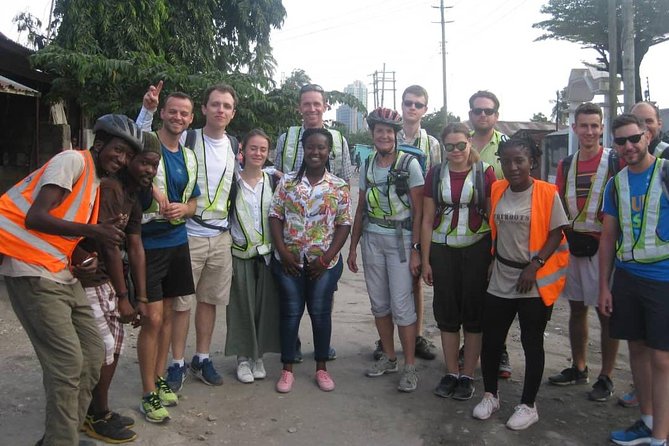
Reviewed · DAR ES SALAAM TOURS
Dar es salaam Reality Tour
Dar es Salaam’s daily life is the main attraction here. Instead of spending five hours on a standard city circuit, you move through local businesses and meet people earning a living in very different ways. The stops include a coffee maker, a Swahili breakfast kitchen, a traditional medicine place, and a khanga shop.
I like the small-scale, local focus, and I like that the tour uses a bicycle or bajaj rather than keeping you behind a tour-bus window. The half-day timing also works well, since you still have most of the day for another activity. The main drawback is booking reliability, with one reported case of no guide arriving after a booking made only 24 hours ahead.
Key points at a glance
- Meet local workers: The route introduces you to a coffee maker, Swahili breakfast sellers, traditional medicine practitioners, and khanga merchants.
- Choose two local ways to move: A bicycle or bajaj is provided as part of the experience.
- Start early: The tour begins at 8:00 am and lasts about five hours.
- Return to the Village Museum: Both the meeting point and end point are Kijiji cha Makumbusho in Mikocheni.
- Good for a quieter morning: The tour is designed to avoid crowds and offers a more personal look at the city.
- Check the drink details: Drinks are listed as included, but the information also says alcohol is not included.
A 8:00 am start at the Village Museum
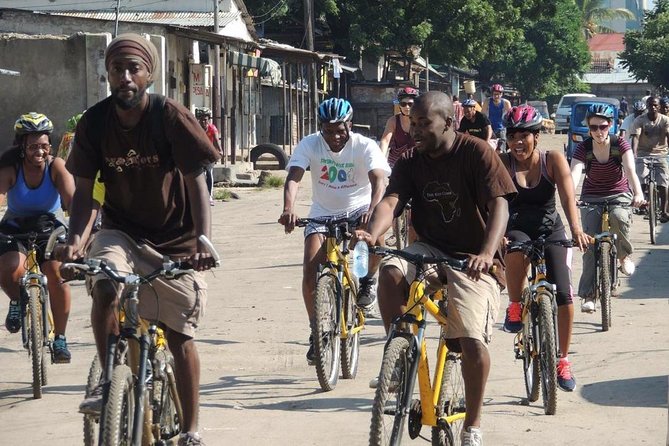
You meet at Kijiji cha Makumbusho, also called the Village Museum, in the Mikocheni area of Dar es Salaam. The tour starts at 8:00 am, so plan your morning around an early departure rather than a lazy hotel breakfast.
That start time is useful in a practical way. A five-hour activity finishing around midday leaves you with time for lunch and another plan. You can use the afternoon for a museum, beach time, shopping, or simply a slower look at Dar es Salaam on your own.
The meeting point also gives the tour a clear beginning and end. You do not need to arrange a second pickup location across town. The activity finishes back at the Village Museum, which makes the return trip easier to plan.
The exact route and order of stops are not specified, so you should expect the morning to have some flexibility. This is a people-focused outing, not a tightly timed list of major monuments. That can be a strength if you like room for conversation, but it may feel less predictable if you want a fixed schedule.
A few more Dar es Salaam trips worth comparing
- Dar es Salaam: City Tour
★ 4.7 · 159 reviews - Dar es Salaam City Center: Walking Tour
★ 4.8 · 102 reviews - Dar es Salaam City Tour – Everyday
★ 5.0 · 64 reviews
Seeing Dar es Salaam from a bicycle or bajaj
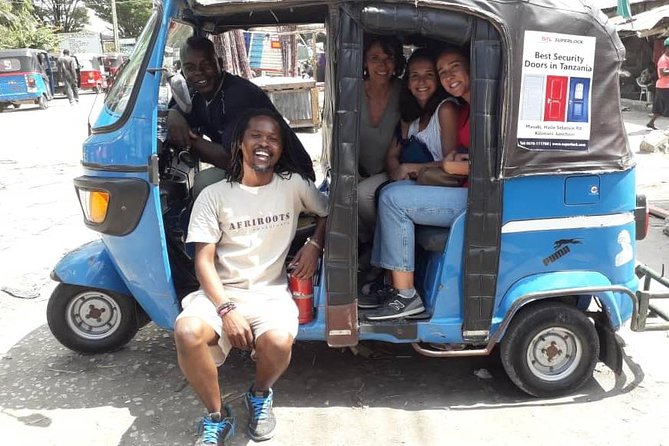
Transport is part of the experience. You use a bicycle or a bajaj, and the tour provides whichever form of transport is arranged for you. A bajaj is a three-wheeled local vehicle, while a bicycle gives you a closer connection to the streets and neighborhoods along the route.
This choice helps explain why the tour feels different from a conventional sightseeing drive. You are not simply being taken from one landmark to the next. You are moving through the city in ways tied to ordinary local transport.
The bicycle option may appeal to you if you want a more active morning and a slower view of the surroundings. The bajaj is likely the easier choice if you prefer to sit back or if cycling is not suitable for you. The available information does not say how transport is assigned, so it is sensible to ask Afri Roots Adventures before booking if you have a strong preference.
The group can include up to 30 people. That is not a private tour, and a larger group could affect how easily everyone gathers around a small business or speaks with the people you meet. Still, the use of bicycles or bajajs keeps the outing more connected to the street than a large vehicle would.
Meeting a coffee maker who sells his own coffee
One of the clearest human details in the morning is the visit to a coffee maker who also sells coffee as a source of income. This stop gives you a look at both the product and the work behind it.
The important point is not simply that you taste or see coffee. You are being introduced to a person using a trade to support himself. That makes the stop relevant to the tour’s larger purpose: showing how people from different economic backgrounds make a living in Dar es Salaam.
You should expect this to be a small, personal business visit rather than a formal coffee museum or a polished tasting session. The supplied details do not promise a full lesson on Tanzanian coffee, a set tasting menu, or a particular coffee variety. Go for the human contact and the chance to see a local income source up close.
This is also one of the moments when the guide’s role matters. A good guide can explain how the business fits into local life without turning the visit into a staged performance. Since no guide names are provided, you cannot choose a particular guide in advance.
A look at Swahili breakfast preparation
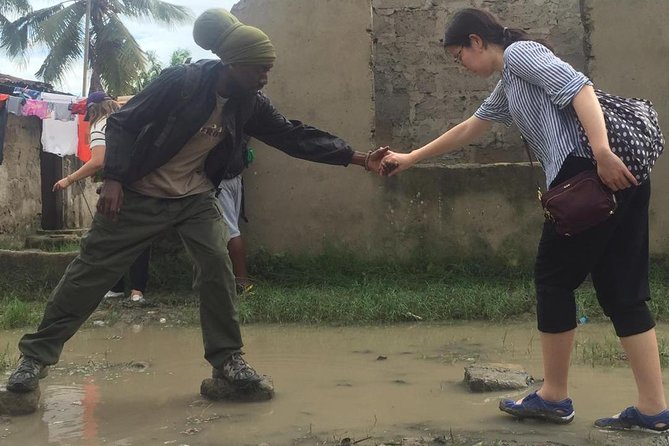
The next stop takes you to a place where Swahili breakfast is made. Food is a useful window into daily life, especially in a tour that aims to show how people work and eat rather than simply point out buildings.
You get to see the preparation of a traditional morning meal and learn about the people involved in selling it. The focus is on the place and the process, not on a restaurant meal included in the ticket.
This distinction matters. Food is not included, so you should not book this expecting breakfast to be served as part of the tour. The information does not specify whether you can buy food at the stop, so bring that question to the operator if eating there is important to you.
The stop may be especially useful if you have already visited Dar es Salaam’s main sights and want more context for ordinary routines. It puts local cooking and small-scale food work at the center of the morning. For a first-time visitor, that can reveal more about the city’s rhythm than another quick photo stop.
Same corner of Dar es Salaam, a completely different kind of day:
- The Best/Top Rated Cultural City Tour in Dar es Salaam
★ 5.0 · 57 reviews - Joining Safari from Mwanza
★ 5.0 · 54 reviews - Magical Mwanza 6 days Safari Package
★ 5.0 · 42 reviews - Dar Es Salaam City Tour (Full Day With Private Guide And Car)
★ 5.0 · 39 reviews
Traditional medicine and the khanga trade
The tour also visits a local traditional medicine place. This adds another side of everyday life, showing a form of health practice that exists outside the standard medical settings most visitors know.
The stop should be approached with curiosity and respect. The information does not promise a medical consultation, treatment, or advice for your own health. It is best understood as a chance to learn about a local practice and the people connected to it.
The final named stop is a khanga shop. A khanga is a colorful East African cloth often worn as clothing or used in practical ways. At the shop, you can expect to see the fabric and learn about the business of selling it.
The tour details do not say that a purchase is required, nor do they promise a shopping discount. If you like textiles, this could be one of the most useful stops because it connects an everyday item with a local retail business. If you do not want to shop, you can still treat it as a chance to see a product that is part of East African dress and commerce.
Together, these stops give the morning a useful range: coffee, breakfast, health practices, and clothing. Each one points to a different kind of work, which makes the tour broader than a single market visit.
What the five-hour format does well
A five-hour tour gives the experience enough time to include several stops without taking over your whole day. That balance is one of its strongest features.
Short city tours can feel rushed, especially when they try to include too many famous sights. This outing has a narrower aim. It spends the morning on local businesses and people, so the time can be used for conversation and observation rather than a long list of photo opportunities.
You should still keep your expectations realistic. The tour is not designed as a full history tour of Dar es Salaam, and the supplied information does not include major monuments, historical lectures, or a broad city overview. If you want those things, you may need another activity.
For me, the best match is someone who has already seen the basics or who prefers social and cultural contact over a landmark checklist. It also suits anyone with only one free morning. The tour’s half-day length leaves plenty of room to shape the rest of your day.
Price, group size, and what you receive
The price is $51.29 per person. That is a reasonable amount if the tour delivers the local access it promises, since the cost covers approximately five hours, transport by bicycle or bajaj, and visits to several small businesses.
The value depends less on entrance tickets and more on the quality of the guiding and the access to people working locally. You are paying for an organized route, transport, and introductions rather than a long list of paid attractions.
A maximum of 30 people is allowed. That ceiling keeps the tour from being completely open-ended, but it is still large enough that personal contact may vary from one departure to another. If the group is near capacity, you may spend more time listening than asking questions.
The experience has a 4.3 rating from 16 ratings, which suggests a generally positive response but not a spotless record. The most serious concern is operational, not cultural: one booking made 24 hours in advance reportedly ended with no one arriving and no immediate contact with the operator. I would confirm the meeting details with Afri Roots Adventures before the morning of the tour, especially if you are booking close to departure.
Drinks, food, and one important inconsistency
The tour information says drinks are included, and the highlights refer to drinks including alcohol. However, the included and excluded sections conflict: one says drinks are included, while another specifically lists alcohol as not included.
That is a detail you should clarify before paying. Do not assume alcoholic drinks are covered. Food is clearly listed as not included, so budget separately if you want breakfast or anything to eat during the morning.
This may sound minor, but clear expectations make a big difference on a five-hour outing. Ask what type of drinks are provided, whether alcohol is available at all, and whether you can buy food at the Swahili breakfast stop.
Who should book this Dar es Salaam tour?
I would recommend it to you if you want to see how people earn a living, prefer local businesses to crowded attractions, and enjoy moving through a city by bicycle or bajaj. It is also a good fit if you want a morning activity with time left for other plans.
It may not suit you if you need a private tour, a guaranteed food tasting, a detailed historical route, or a perfectly fixed timetable. The group limit of 30 is worth noting, and the conflicting drink information needs clarification.
The experience is also better for flexible visitors. The route centers on real businesses and working people, so the atmosphere may be less polished than a standard sightseeing product. That is part of the appeal, but it means you should come ready to observe and listen rather than expect a scripted show.
Should you book the Dar es Salaam Reality Tour?
Book it if you want a street-level look at local work and like the idea of meeting a coffee seller, seeing Swahili breakfast preparation, learning about traditional medicine, and visiting a khanga shop in one morning.
Before booking, confirm the transport option, drink policy, meeting arrangements, and the operator’s contact details. Give yourself more than 24 hours if possible, since a last-minute booking has carried a serious reliability concern. With those points settled, the $51.29 price can be good value for a personal, half-day introduction to everyday Dar es Salaam.
FAQ
Where does the Dar es Salaam Reality Tour begin?
It begins at Kijiji cha Makumbusho, also called the Village Museum, in Mikocheni, Dar es Salaam.
What time does the tour start?
The tour starts at 8:00 am.
How long does the experience last?
It lasts approximately five hours.
Where does the tour finish?
The activity ends back at the Village Museum meeting point.
How do you get around during the tour?
The tour provides either a bicycle or a bajaj as part of the experience.
What places are visited?
The tour visits a coffee maker who sells coffee, a place preparing Swahili breakfast, a traditional medicine place, and a khanga shop.
Is food included?
No. Food is listed as not included.
Are drinks or alcohol included?
The information says drinks are included but also says alcohol is not included. Confirm the exact drink policy with Afri Roots Adventures before booking.
Just added around Dar es Salaam
- The Ultimate Guide for 2-Day Tanzania Safari from Mwanza★ 5.0 · 3 reviews
- 5 Days Tanzania Safari from Mwanza to Arusha★ 5.0 · 8 reviews
- Sunrise Beach Walk with Picnic Breakfast Activity★ 5.0 · 3 reviews
- Saadani National Park Day Tour★ 5.0 · 3 reviews
- Private Tour in Historical Dar es Salaam with Lunch★ 4.5 · 6 reviews
- Dar es salaam Airport Transfer (Private & Group)★ 3.5 · 7 reviews
- Dar es salaam Private City Tour with Professional Guide★ 5.0 · 5 reviews
- Full Day Private Tour in Dar es Salaam City★ 5.0 · 4 reviews
Dar es Salaam Tours, compared.


Dar es salaam to Morogoro To/From transfer with comfortable car
Read our review →
A Nightlife Adventure with a Local Guide: Dar es salaam city
Read our review →Browse the lists this tour appears in