
Reviewed · FOOD & DRINK
Street Food and Community Walking Tour
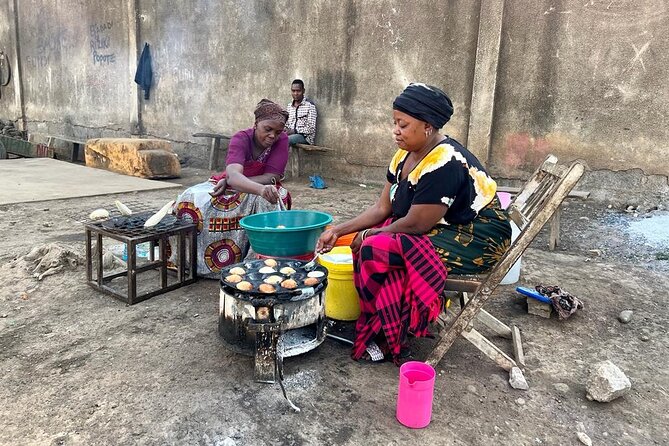
Arusha’s Sinoni district gives you something a standard city tour rarely can: a look at ordinary community life, with food shared along the way. You walk from Kajo Art Gallery near the Maasai Market, then head south into the neighborhood with a local guide who explains what you are seeing and introduces you to people at work.
I like the mix of street food and daily life, especially the stops at an urban farm, maize mill, recycling project, and carpentry shop. I also like the clear social purpose: 100% of the tour’s profits go to Jamii Imarika Foundation, which supports disadvantaged children, women, and young people.
The main thing to consider is that this is a walking tour through a working neighborhood, not a polished sightseeing route. You should be comfortable with a simple, local experience, changing food stops, and a finish in Sinoni rather than back at the starting point.
Key points to know before you book
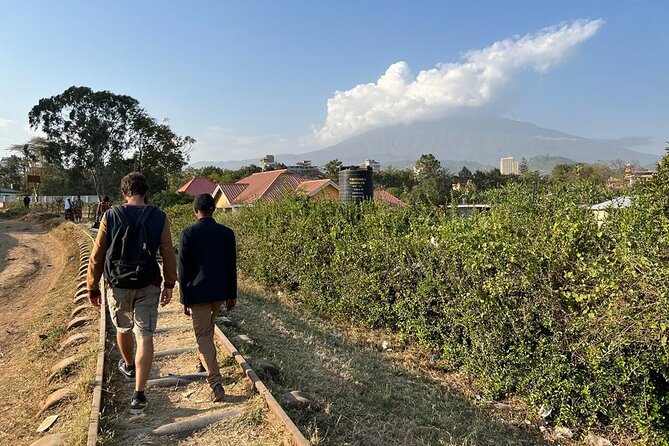
- Sinoni beyond the city center: Walk through a real Arusha district south of the main center, with daily work and community life as the focus.
- Several food tastings: Sweet and salty local foods from different vendors are included in the $25 price.
- Practical local stops: See urban farming, recycling, maize milling, carpentry, mud houses, and churches along the route.
- Small group size: The tour accepts a maximum of 10 people, which leaves more room for questions and conversation.
- A social purpose: All profits support Jamii Imarika Foundation and its work with children, women, and youth.
- Simple transport plan: The walk starts at Kajo Art Gallery and ends in Sinoni, with help offered for returning to your hotel.
Starting near the Maasai Market
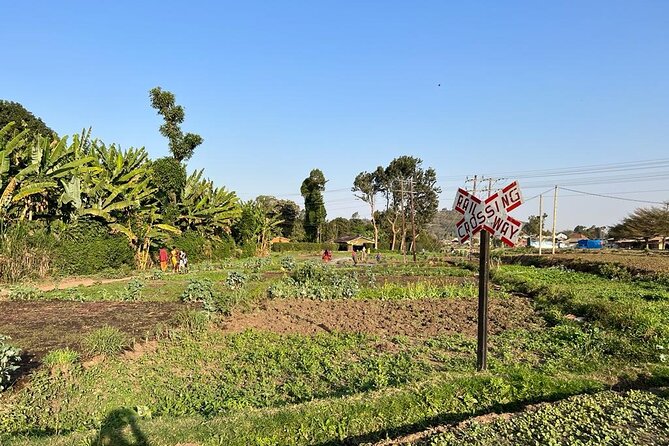
The meeting point is Kajo Art Gallery on Tanesco Road, near Arusha’s Maasai Market. This gives you a useful city starting point, but the tour itself is not a market visit. The market is mainly a recognizable place to meet before the walk begins.
From there, you set off toward Sinoni. The exact order of the stops can vary, but the route is built around the community rather than a fixed list of monuments. That matters because you are not simply looking at Arusha from a vehicle window. You are walking at street level and asking questions as the neighborhood unfolds around you.
The tour lasts about two to three hours, with the main walking portion listed at roughly two and a half hours. That is enough time to see several parts of the district without turning the outing into an all-day commitment. It also fits well on a day when you have other Arusha plans.
The group limit of 10 is a real advantage. A small party is better suited to narrow streets, food sampling, and conversations with the guide. It also gives you a fair chance to ask about things that catch your eye instead of staying at the back of a large group.
More Walking Tours in Arusha
- Arusha Guided Walking City Tour, Culture, Lifestyle & History
★ 5.0 · 150 reviews - Arusha; Walking City Tour History, Culture & Lifestyle
★ 4.9 · 63 reviews - 7-Day Private Tanzania Safari with Sunset Walking on the Crater Rim and Maasai
★ 5.0 · 40 reviews
Walking through Sinoni with local guides
Sinoni is the heart of the experience. Your guide explains everyday life in the area and gives context for the people and activities you encounter. The aim is not to rush from one photo stop to another. It is to help you understand how a community works.
One reported outing was led by Jackson and Given, who were praised for being friendly, helpful, and generous with local information. The useful lesson here is to engage with the guides. Ask about the food, work, homes, churches, and community projects as you go. The tour is designed for that exchange.
You also have the chance to speak with local people. This should be approached with normal courtesy. You are entering a place where people live and work, so listen first, ask before taking photographs, and let the guide set the tone for introductions.
The route includes several different kinds of stops:
- Urban farming: You can see how food production fits into a city neighborhood. This is a useful reminder that farming is not always far outside town.
- Recycling: The recycling stop shows another part of the local economy and gives you a better sense of how materials are reused.
- Maize milling: Milling is a practical food process, and it connects directly with the ingredients and meals you may taste during the walk.
- Carpentry: A working carpentry stop adds a trade and small-business angle to the tour.
- Mud houses: These homes offer a chance to ask about building materials and local housing.
- Churches: Religious buildings are part of the neighborhood’s social fabric, even if the tour does not present them as formal sightseeing sites.
These stops are valuable because they are ordinary. You are seeing work, housing, food production, and faith in the same walk. The tradeoff is that conditions may feel less predictable than on a standard city tour. You are visiting a living district, not a museum arranged for visitors.
What the food tasting adds
Food gives the walk its strongest sensory element. You taste sweet and salty local foods bought from different vendors along the way. The selection is not presented as a restaurant meal, so you should think of it as a series of small samples rather than lunch.
That format works well. A single dish can tell you something about local ingredients, habits, and small businesses, while several small tastings let you try more than one flavor. The guide can also explain what you are eating and how it fits into daily life.
The food is included in the tour price, along with taxes and fees. Still, arrive with sensible expectations. The supplied details do not promise a full meal, a fixed menu, or a choice for every dietary need. If you have allergies or strict food requirements, ask before booking and speak with the guide at the start.
A useful approach is to keep an open mind and ask questions. Find out which foods are sweet or salty, where they were made, and how local people usually eat them. The food is not just a snack break. It is one of the easiest ways to connect the neighborhood’s vendors, farming, milling, and household life.
Why the community purpose matters
The tour is run by the founders of Jamii Imarika Foundation, a local nonprofit group. Its stated goals include providing education and basic needs for disadvantaged children, empowering women, and educating young people.
The foundation directs 100% of the tour’s profits to its organization. That makes the $25 price do more than cover a guide and food tastings. Your booking helps fund the group’s wider work, though the tour does not specify how much supports each program.
I value this kind of structure when the experience remains worthwhile on its own. Here, the social purpose is paired with a direct visit to the community rather than a vague donation promise. You meet local guides, see neighborhood work, and spend money with food vendors during the walk.
You should still judge the tour by the experience itself. If you want major historic sights, polished exhibits, or a long list of famous landmarks, this is not the right choice. If you want your paid activity to connect with local people and a community organization, the purpose adds meaningful value.
Same corner of Arusha, a completely different kind of day:
- Tanzania Classic – 7 Days
★ 5.0 · 1,151 reviews - 4 Days Group Camping Safari
★ 5.0 · 1,101 reviews - 5 Days Group Camping Safari
★ 5.0 · 730 reviews - 7-Day Premium Luxury Tanzania Safari All-Inclusive
★ 5.0 · 426 reviews
Is $25 a fair price?
At $25 per person, the tour is reasonably priced for a private-feeling small group walk with food included. You are paying for about two and a half hours, a local guide, multiple tastings, all fees and taxes, and the chance to support a nonprofit project.
The price is especially fair if you would otherwise pay separately for a city walk and snacks. You also avoid the cost of private transportation because the tour is designed around walking.
The value depends on what you want from Arusha. This is not a sightseeing bus, and transportation to the start is not included. You also need to arrange your own return after finishing in Sinoni, although the tour team helps visitors get back to their hotel.
Tips are optional and not included. If the guide gives you useful context and handles the food stops well, a tip is an appropriate extra, but it is not part of the advertised price.
Finishing in Sinoni
The walk ends in Sinoni at the listed location near JM7M+65W. This is important when planning your day. You do not return automatically to Kajo Art Gallery or to your hotel.
The provider says the team helps with the return to your hotel. That is reassuring, but private transportation remains excluded, so you should still ask about the best onward plan before the tour ends. Keep your afternoon flexible rather than scheduling a tight connection immediately after the walk.
Ending in Sinoni also makes sense from the tour’s point of view. You finish where the community experience takes place, instead of being pulled back into the city center before you have had time to process what you saw.
Who will enjoy this Arusha walk?
I would choose this tour if you want to meet local guides, try small food samples, and see how people work and live in an Arusha community. It is a good match for curious visitors who prefer conversation and observation to a long list of formal attractions.
It also suits people who want a small group. With no more than 10 participants, the outing should feel easier to manage than a large coach excursion. The guides can respond to questions, and the food stops can remain personal rather than rushed.
The tour is listed as suitable for most participants, and service animals are allowed. It is near public transportation, but the supplied information does not give a precise accessibility description for the walking route. If you need a smooth surface, seating, or a particular pace, confirm those details before booking.
I would hesitate if you dislike unfamiliar foods, uneven or changing street conditions, or tours that do not follow a formal sightseeing route. The community setting is the point, but it also means the experience may feel more basic and less predictable.
Timing, booking, and weather
The typical booking lead time is 42 days, so reserve ahead if your Arusha dates are fixed. Confirmation is provided when you book, and mobile tickets make the meeting details easy to carry on your phone.
Free cancellation is available up to 24 hours before the start time for a full refund. Cancellations made within 24 hours are not refunded, and changes in that period are not accepted.
The tour depends on good weather. If poor weather causes a cancellation, you are offered another date or a full refund. The activity also needs a minimum number of participants. If that minimum is not reached, you are offered another date or experience, or a full refund.
Should you book the Sinoni street food tour?
Book it if you want local food, direct conversation, and community connections more than famous sights. The strongest parts are the small group, the range of everyday stops, the food tastings, and the fact that all profits support Jamii Imarika Foundation.
Go in expecting a working neighborhood walk, not a restaurant crawl or a conventional city highlights tour. Meet at Kajo Art Gallery, wear comfortable walking shoes, keep your return plans loose, and ask the guide about the foods and businesses you see.
For many people, this will be one of the more personal ways to spend a few hours in Arusha. The $25 price is fair, and the nonprofit purpose gives the outing extra weight. If that combination fits your style, this is a worthwhile choice.
FAQ
Where does the tour start?
It starts at Kajo Art Gallery near the Maasai Market on Tanesco Road in Arusha, Tanzania.
Where does the tour end?
The walking tour ends in Sinoni at the listed location near JM7M+65W in Arusha.
How long does the experience last?
The tour lasts about two to three hours, with the main itinerary taking approximately two hours and 30 minutes.
What food is included?
Sweet and salty local foods from different vendors are included. A fixed menu is not provided in the tour details.
Is transportation included?
Private transportation is not included. The team helps visitors return to their hotel after the walk.
How many people can join?
The tour has a maximum group size of 10 participants.
Are service animals allowed?
Yes, service animals are allowed.
Can I cancel for a full refund?
Yes. You can cancel at least 24 hours before the start time for a full refund. Cancellations within 24 hours are not refunded.
More Food Tours in Arusha
- Arusha: Traditional Tanzania Cooking Class & Food Market Tour
★ 5.0 · 34 reviews - Organic Coffee Tour and Local Food Experience in Arusha
★ 5.0 · 29 reviews - Arusha: Traditional Tanzania Cooking class& Food Market Tour
★ 4.9 · 12 reviews - Waterfalls, Coffee, Hotsprings, Food Cuisine, & Serval Wildlife
★ 5.0 · 6 reviews
Just added around Arusha
- From Arusha: 11 days The Classics Northern Tanzania safari★ 5.0 · 11 reviews
- 6-Day Mount Meru Climb through Momella Route Guided Tour★ 5.0 · 5 reviews
- Private Day Trip to Arusha National Park with a Walking Safari★ 5.0 · 4 reviews
- From Arusha : 11-day Amazing North Tanzania safari tour★ 5.0 · 4 reviews
- Walking Day Tour to Safari in Arusha National Park★ 5.0 · 5 reviews
- 2 Days Tanzania Midrange Group Join Safari★ 5.0 · 7 reviews
- Best 5 Days Tanzania Private Luxury Safari with luxury Lodges★ 5.0 · 12 reviews
- Waterfall & Coffee Walking Tour★ 5.0 · 6 reviews
Food & Drink, compared.

Stonetown: Food Markets and Street Food Walking Tour
Read our review →
Authentic Street Food Tours in Stone Town, Zanzibar
Read our review →
Traditional Tanzania Cooking Class & Food Market Tour
Read our review →
Organic Coffee Tour and Local Food Experience in Arusha
Read our review →
Stone Town Evening Walk Tour With Visit Food Markets
Read our review →

Blue Safari Full Day Private Trip Zanzibar With Sea Food BBQ
Read our review →
From Stone Town: Sandbank picnic with sea food BBQ Lunch
Read our review →Browse the lists this tour appears in