
Reviewed · GREAT MIGRATION SAFARIS
6-Day Essence of Serengeti & Ngorongoro Migration Safari
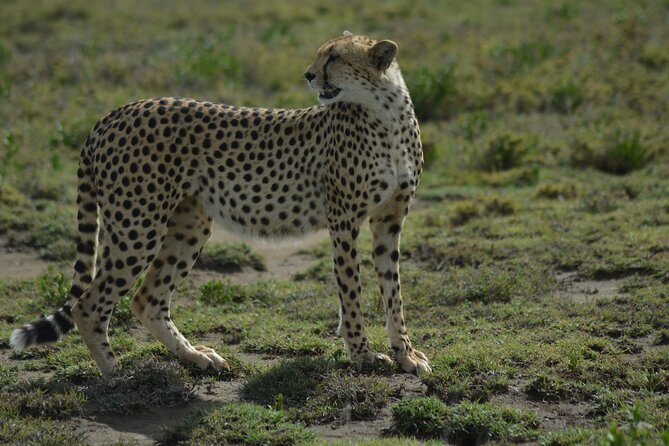
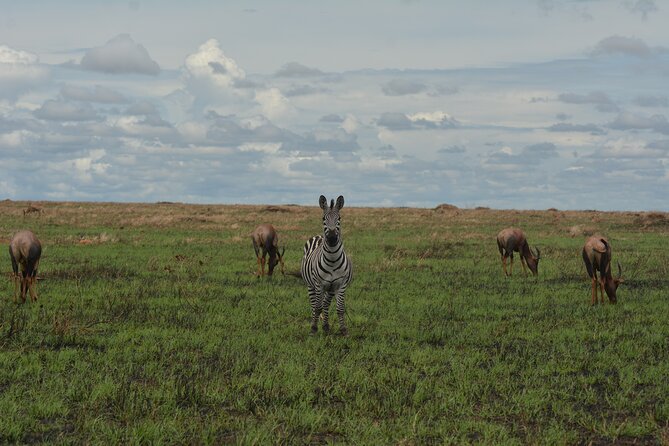
The main reason to book this safari is simple: you get several full days in Serengeti National Park, not just a quick drive-through. That gives you a better chance to see the moving herds, lions, cheetahs, leopards, hippos, and crocodiles in a park famous for open plains and big wildlife.
I like the strong Serengeti focus and the private format, where only your group takes part. I also like the inclusion of all breakfasts, lunches, dinners, park activities, and unlimited drinking water, which makes a $3,713 price easier to judge. The main caution is that the schedule is demanding, with long driving days and an itinerary that mentions Tarangire and Lake Manyara in the overview but does not clearly place them in the six-day plan.
Key points to know before booking
- Four major northern Tanzania parks are named: Serengeti, Ngorongoro, Tarangire, and Lake Manyara, though the detailed days focus mainly on the first two.
- Three substantial Serengeti days give you time to search for migrating herds and resident predators rather than relying on one lucky game drive.
- The Great Migration is seasonal: herd movements depend on rain, with southern calving generally around January and the main northern return during the longer April to June rains.
- Ngorongoro Crater is the final wildlife highlight: its enclosed setting and dense animal population can make sightings feel unusually concentrated.
- Private touring adds flexibility: only your group participates, and a professional guide-driver leads the safari.
- The schedule is physically and logistically serious: several days begin early and involve long drives, so confirm pickup time, accommodation, and the exact park route before paying.
Why the Serengeti gets most of your six days
This trip is built around the Serengeti. That matters because the Great Migration is not a staged event that waits in one place. More than a million wildebeest, along with huge numbers of zebra and antelope, move through the Serengeti-Mara ecosystem according to rainfall.
You may see enormous herds, but the exact location changes from year to year. A six-day safari cannot guarantee a river crossing, a predator kill, or a wall of animals on a particular morning. It can give you something more useful: time in the park, repeated game drives, and several chances to find wildlife.
The route begins after breakfast, with pickup listed from your hotel or airport. The first drive heads toward the Serengeti through the Ngorongoro Conservation Area. A short stop at the Ngorongoro Crater rim provides one of the finest views on the route before you descend toward the open plains.
This first day can last around 15 hours, including driving and game viewing. That is a long opening day. You will want a good breakfast, practical clothing, sun protection, and patience. The reward is that wildlife viewing begins on the way, rather than waiting until you reach camp.
More Great Migration Safaris in Serengeti
- 10-Day Serengeti Wildebeest Migration Safari from Arusha
★ 5.0 · 218 reviews - 8 Day Spectacular Migration Serengeti mid -Range Tanzania Safari
★ 5.0 · 161 reviews - 9-Day Serengeti Migration Footsteps Tanzania Safari
★ 5.0 · 96 reviews
Day one: from Arusha to the open Serengeti
The first day combines transport with an early introduction to northern Tanzania. You travel with a picnic lunch and may begin spotting animals before reaching the main Serengeti viewing areas.
The scenery changes as you leave the highlands behind. The crater rim gives way to broad grasslands that seem to run toward the horizon. This is the classic Serengeti setting, but it is not empty. Lions, hyenas, leopards, cheetahs, jackals, and giraffes are all listed as possible sightings.
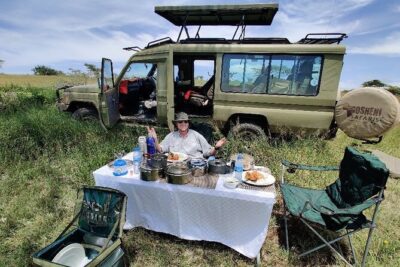
The first game drive ends with a picnic lunch inside the park. That saves time, though it also means the day is not built around a relaxed restaurant meal. This is a working safari day, with the emphasis on getting into the park and seeing as much as possible.
Check the exact pickup details before departure. The booking information gives a start time of 12:00 am, while the first day description says the guide arrives at 8:00 am. Those details do not match. Ask for the confirmed local pickup time, the pickup location, and the first night’s accommodation.
Days two through four: three different ways to see the Serengeti
The second day begins around 6:30 am and includes six to seven hours of game viewing. Early starts are worthwhile because animals are often more active in the cooler morning hours, and the light is better for photography.
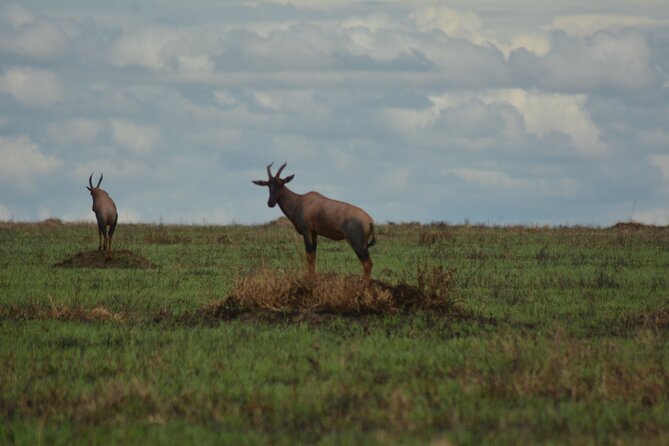
You may see impala, buffalo, hippo, crocodile, and a range of predators. The migration is the headline, but the resident wildlife is what keeps each drive interesting when the herds are elsewhere.
Day three is another full Serengeti game-drive day. The plan explains the migration cycle clearly: in November and December, the animals generally move from the northern woodlands and hills toward the southern grasslands. During the longer rains from April to June, they return north.
That timing is useful, but treat it as a broad pattern rather than a promise. Rainfall controls the movement, and conditions vary. Ask the operator where the route is expected to be during your dates. The answer should influence your expectations more than a fixed claim about seeing the migration.
Day four concentrates on central Serengeti and its short-grass plains. This is also the area associated with the annual calving period, usually around January and lasting roughly three weeks. About half a million wildebeest calves may be born during this remarkable period.
The open grass offers little cover. Newborn calves can run within minutes and become stronger within a few days, yet predators remain close. If your dates match the calving season, this can be one of the most compelling wildlife periods in East Africa. If they do not, central Serengeti still offers excellent habitat and a strong chance of seeing large herbivores and predators.
Three Serengeti days are a real strength of this tour. Many short safaris spend one or two nights here and then hurry on. This plan gives you time to cover different habitats and to recover from the chance nature of wildlife viewing. The tradeoff is that you spend less time at the other parks named in the overview.
Day five: sunrise, then the road toward Ngorongoro
Day five starts with an optional very early wake-up for a morning game drive and sunrise. This is a good choice if you can handle the early hour. Morning light can change the feel of the plains, and wildlife activity may be higher before the day becomes hot.
After the drive, you return to camp for brunch and continue toward Ngorongoro. The day includes around seven hours of activity, so it is shorter than the first Serengeti transfer but still not a lazy travel day.
Ngorongoro Crater covers about 102 square miles and has walls roughly 2,000 feet high. The crater is a vast enclosed setting, with grassland, a river, swamps, and a soda lake. It is also one of the rare places in Tanzania where you may see the black rhino.
The crater can feel very different from the Serengeti. Instead of a huge open plain that requires patient searching, the steep walls create a more contained wildlife area. That does not guarantee a sighting, but the dense animal population makes the crater one of Tanzania’s strongest places for concentrated game viewing.
More Safaris in Serengeti
- Serengeti Balloon Safari and authentic bush breakfast
★ 5.0 · 2,480 reviews - Balloon Safari & Bush Breakfast in Serengeti – Miracle Experience
★ 5.0 · 1,646 reviews - 3 Days Serengeti & Ngorongoro Group Camping Safari
★ 5.0 · 574 reviews - Safari Serengeti And Ngorongoro
★ 5.0 · 288 reviews
Day six: the crater floor and a final wildlife search
The final day begins with views of sunrise over the crater rim. After breakfast, you head down for a game drive in the Ngorongoro Conservation Area.
The crater formed about three million years ago. It is approximately 610 meters deep and covers about 260 square kilometers. Around 25,000 ungulates live within this enclosed area, along with more than 500 recorded bird species.
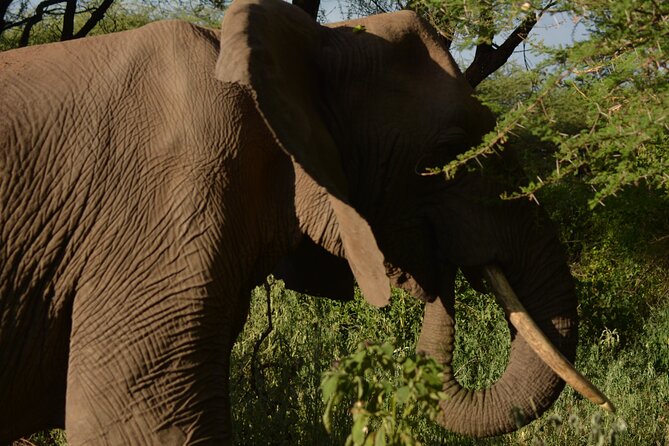
You may see wildebeest, zebra, gazelle, elephant, and many birds in a relatively compact setting. With luck, you may also find black rhino. The crater’s combination of scale, wildlife density, and high walls makes it a memorable closing scene.
The schedule allows about eight hours on the final day. Confirm where the tour ends and how the return transfer works, since the supplied details clearly describe pickup but do not specify the final drop-off arrangements.
Tarangire and Lake Manyara need clarification
The overview includes Tarangire National Park and Lake Manyara National Park. Tarangire is associated with old baobab trees, while Lake Manyara is known for tree-climbing lions.
Those are worthwhile reasons to include both parks. Tarangire adds a different setting and a chance to see baobabs, while Lake Manyara offers a distinctive forest and lake environment. But the day-by-day schedule provided here assigns all six days to Serengeti and Ngorongoro.
That is an important booking question. Ask the company to send the exact route, park sequence, overnight locations, and entry dates. You should know if Tarangire and Lake Manyara are included in the price, offered only on a modified route, or mentioned as general highlights rather than fixed stops.
Do not assume that four parks fit comfortably into six days without long transfers. More parks can sound better, but fewer parks with longer viewing time may suit you better if wildlife is the priority.
Guides, vehicles, and the private format
The safari includes a professional guide-driver and is private, meaning only your group participates. That gives you a more personal setup than a large shared departure. You can ask questions freely and discuss how much time to spend at a sighting.
Several guide names appear in the service history connected with this operator, including Amani, Abouh, and Innocent. Amani is described as accompanying a group from Kilimanjaro Airport through six days of northern Tanzania. Abouh is praised for friendly service and extra effort, while Innocent is noted for active email replies. Ask which guide will lead your trip rather than assuming one of these names will be assigned.
The vehicle is described in one account as good, and the camping tents as large and comfortable. Other accommodation is described as having good facilities, friendly staff, and varied food. Since the supplied details do not identify every camp or lodge, request the accommodation list before booking if room style matters to you.
Food is included as breakfast on all six days, six lunches, and five dinners. This makes the price easier to compare with trips where meals are added later. Unlimited drinking water is also included, a practical benefit on long game-drive days.
Is $3,713 good value?
At $3,713 per person, this is not a budget safari. The value depends on what is included in the final arrangement and how many people are in your private group.
The price covers all fees and taxes, the guide-driver, activities, water, breakfasts, lunches, and dinners. It excludes tips, a Tanzanian visa, and international flights. Those exclusions are normal expenses, but they still belong in your total budget.
The strongest value comes from the time allocation. Three full Serengeti days, a crater visit, and private guiding give you a serious wildlife program rather than a quick sample. If Tarangire and Lake Manyara are also genuinely included, the route becomes broader and the price may look more attractive.
If the six days mainly cover Serengeti and Ngorongoro, the cost is paying for park access, transport, guiding, meals, accommodation, and the ability to search at a sensible pace. Before booking, compare the exact accommodation and group size with other northern Tanzania safaris. Those details affect value more than the headline park list.
Who should book this safari?
I would point this trip toward you if the Great Migration is your main goal and you want repeated game drives in the Serengeti. It also suits people who prefer a private group, want meals handled, and value a guide who can explain wildlife and local culture along the way.
It is a good fit for photographers and wildlife enthusiasts who accept that nature sets the schedule. The early mornings, long drives, and changing animal locations require stamina and flexibility.
It may be less suitable if you want a slow holiday with short driving days or a fixed guarantee of seeing the migration in one precise location. It may also frustrate you if you expect all four named parks without first confirming the route.
Free cancellation is available when you cancel at least 24 hours before the local start time. Changes or cancellations inside that window are not accepted for a refund.
Final verdict: a strong Serengeti plan, with one route question
Book this safari if you want the Serengeti to be the heart of your trip. The three-day focus, private format, Ngorongoro finish, included meals, and professional guide-driver create a solid six-day wildlife program.
Before paying, get the final itinerary in writing. Confirm the pickup hour, accommodation, group size, guide name, final drop-off, and whether Tarangire and Lake Manyara are actual stops. If those points line up with your expectations, the price can make sense for a serious northern Tanzania safari.
FAQ
How long is the safari?
The experience lasts approximately six days.
Where does the safari start?
The tour is based in Arusha, Tanzania, and pickup is offered from a hotel or airport.
Which parks are included in the detailed schedule?
The detailed schedule covers Serengeti National Park and the Ngorongoro Conservation Area, including Ngorongoro Crater.
Are Tarangire and Lake Manyara included?
They are named in the overall tour description, but the detailed six-day schedule does not clearly assign days to either park. Confirm the exact route before booking.
Is this a private tour?
Yes. Only your group participates.
What meals are included?
The package includes breakfast on all six days, six lunches, and five dinners.
Is drinking water included?
Yes. Unlimited drinking water is included.
Are tips, visas, and international flights included?
No. Tips, a Tanzanian visa, and international flights are not included.
Can I cancel for a full refund?
Yes, if you cancel at least 24 hours before the experience start time. Cancellations or changes made less than 24 hours before the start are not accepted for a refund.
More Six-Day Trips in Serengeti
- From Arusha: 6 Day Classic Game Drive Serengeti & Ngorongoro
★ 5.0 · 49 reviews - 6 Days Serengeti Safari(hiking waterfalls &coffee tour)
★ 5.0 · 48 reviews - Private 6-Day Great Migration Ndutu Serengeti Safari Tour
★ 5.0 · 47 reviews - 6 Days lodge &camping tour Serengeti ,Tarangire ,Ngorongoro Crater and Manyara
★ 5.0 · 15 reviews
Just added around Serengeti
- Serengeti & Ngorongoro 3 days Fly Safari in from Zanzibar★ 5.0 · 21 reviews
- 3 Days Serengeti National Park from Zanzibar★ 4.5 · 3 reviews
- 4-Day Serengeti, Ngorongoro,Tarangire safari★ 5.0 · 3 reviews
- Serengeti 2-Day Safari from Mwanza★ 5.0 · 16 reviews
- Serengeti Day Trip Tour from Mwanza★ 5.0 · 4 reviews
- Full-Day Serengeti Tour from Mwanza★ 5.0 · 11 reviews
- Discover Our Best Guide for 1-Day Serengeti Safari from Mwanza★ 5.0 · 5 reviews
- Serengeti Day Trip Safari From Mwanza Tanzania★ 5.0 · 7 reviews
Great Migration Safaris, compared.
8 Days Great Wildebeest Calving Migration Safari from Arusha
Read our review →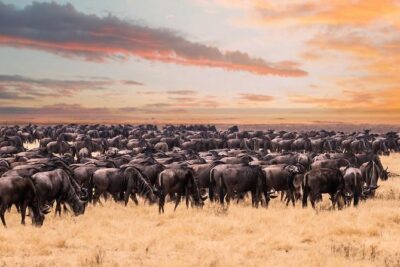
8 Day Spectacular Migration Serengeti mid -Range Tanzania Safari
Read our review →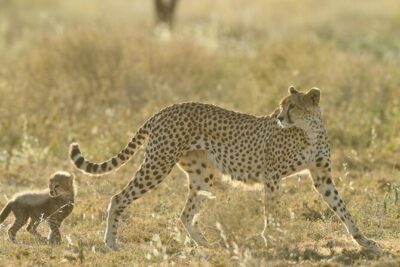
Private 6-Day Great Migration Ndutu Serengeti Safari Tour
Read our review →
6 Days Tanzania Budget Camping Safari with Migration
Read our review →10-Day Wildebeest Migration Calving Safari -All Inclusive
Read our review →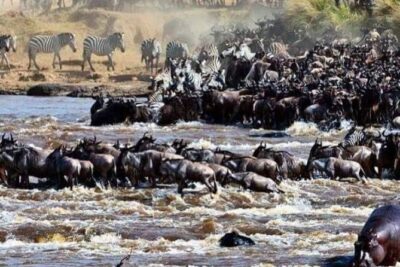
8 Days Great Wildebeest Migration – Mara River Crossing
Read our review →
Tanzania Safari – The Great Migration in the North of the Serengeti and Lake Natron
Read our review →
5-Days Private Serengeti Wildebeest Migration Lodge Safaris
Read our review →Browse the lists this tour appears in