
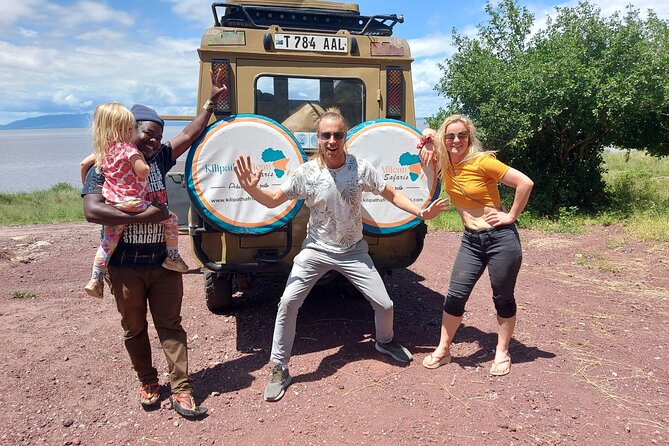
Reviewed · NATIONAL PARKS
3 Days Safari Ngorongoro Crater and Serengeti National Park
The most striking part of this three-day safari is the amount of Tanzania it packs into a short trip: open Serengeti plains, the rocky Moru Kopjes, Seronera Valley, and the wildlife-filled floor of Ngorongoro Crater. You get classic game viewing without committing a full week.
I like the small group limit of six, which gives you more room in the vehicle and makes questions for your guide easier. I also like that meals and camping are built into the price, keeping this at a relatively accessible $810 per person. The main drawback is the long road time, especially the roughly six-hour drive from Arusha to Serengeti on the first day.
Key points to know before booking
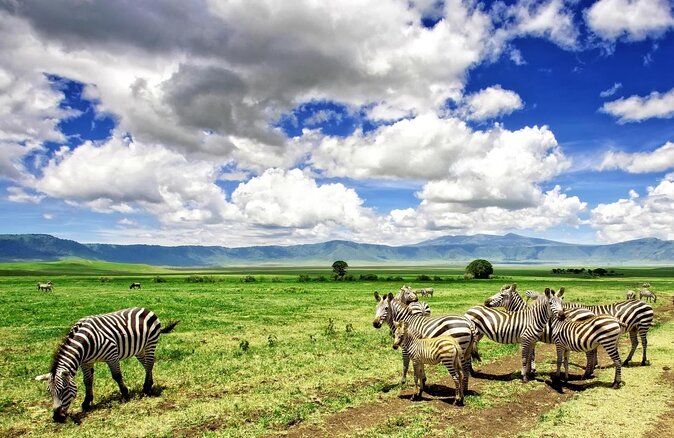
- Southern Serengeti on day one: Expect a long drive before reaching grazing country filled with wildebeest, zebra, gazelle, waterbuck, and impala.
- Seronera and Moru Kopjes: Day two focuses on central Serengeti, where rocky outcrops give predators a good view across the plains.
- Ngorongoro on the final day: The crater offers a compact setting for searching for buffalo, elephants, lions, rhinos, hippos, and other wildlife.
- Camping keeps the price down: Two breakfasts, three lunches, and two dinners are included, but tips for the guide and safari cook are extra.
- Guide quality matters: Felix, Simon, Christian, and Bulldozer have all been named in past bookings, with praise for their wildlife knowledge, patience, and friendly service.
- Check the start time: The schedule lists an 8 a.m. pickup after breakfast, while the booking information gives a 3 p.m. start time. Confirm the exact pickup time before departure.
What this three-day safari is really offering
This is a fast, classic northern Tanzania safari. You are not spending several days in one park. Instead, you move through two of the country’s best-known wildlife areas, using the road from Arusha to connect them.
That pace gives you variety. Serengeti offers huge open plains and a sense of distance. Ngorongoro gives you a more concentrated wildlife experience inside a vast volcanic crater. The trade-off is simple: less time resting, more time driving and searching.
At $810 per person, the tour sits in the budget-to-midrange camping category for a safari that includes both parks, meals, transport, park visits, and two nights under canvas. You are paying for access to famous places, not for a luxury lodge or a slow private itinerary. If your main goal is to see wildlife and experience the country’s famous parks without spending several thousand dollars, the price makes sense.
The group size is capped at six people. That matters in a safari vehicle. You will have less crowding than on a large coach trip, and you should have a better chance of getting a clear view when animals appear on either side of the vehicle.
More Safaris in Ngorongoro
- 3-Day Ngorongoro Crater Manyara and Tarangire Safari from Arusha
★ 5.0 · 49 reviews - Arusha: 3-Day Safari to Ngorongoro Crater and Serengeti
★ 4.1 · 43 reviews - 6 days 5 nights safari Ngorongoro, Serengeti and Tarangire National Parks
★ 5.0 · 39 reviews
Day one: the long road to southern Serengeti
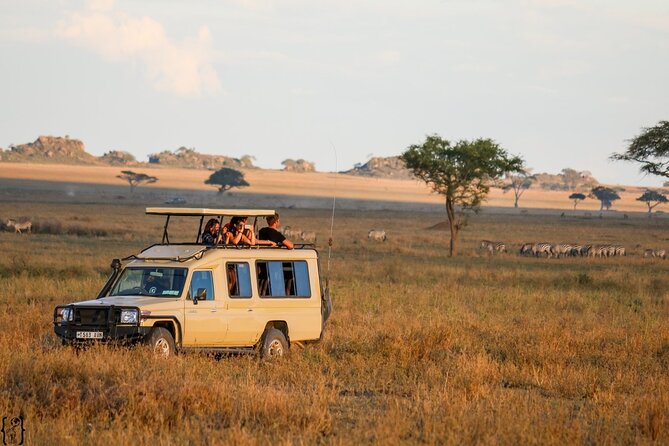
The first day begins with breakfast at 7 a.m. and a stated pickup at 8 a.m. from your accommodation in Arusha. The drive to southern Serengeti is listed at about 335 kilometers and six hours, with entry through the Ngorongoro gate.
That distance is the key fact about this day. You will spend a substantial part of it in the vehicle, so this is not the right trip if you dislike long road journeys. Still, the drive is part of the safari rhythm. Towns and settled areas give way to open country, and the scenery changes as you approach the park.
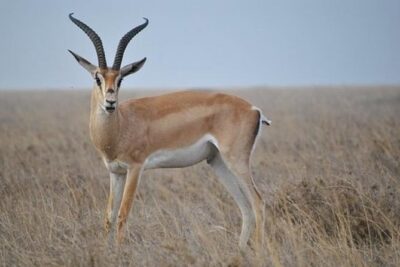
Once inside Serengeti, the game drive covers the southern zone, central areas, and Seronera Valley. The southern plains are especially important for grazing animals. You might see wildebeest, zebra, Coke’s hartebeest, waterbuck, Grant’s gazelle, Thomson’s gazelle, and impala.
The name Serengeti comes from the Maasai word Serengit, commonly explained as land of endless plains. That description becomes clear here. The grassland can feel almost limitless, with animals spread across the open ground rather than packed into one viewing area.
This first drive is also your introduction to the practical side of wildlife watching. Sightings are never guaranteed, and dry conditions can make animals harder to spot in parts of the park. One past booking made in October found Ngorongoro more rewarding than Serengeti because dry grass reduced the ease of seeing animals. If you travel at that time, keep your expectations flexible.
The upside is that the southern zone can offer excellent grazing-animal sightings, and those animals attract predators. Your guide’s skill matters greatly here. Guides such as Felix, Simon, Christian, and Bulldozer have been praised for explaining animals and terrain while also making the long drives more comfortable.
Day two: elephants, kopjes, and the Seronera Valley
The second day remains in Serengeti for about six hours of game viewing. This is useful because you do not lose the morning to a transfer. You have more time to search for wildlife in central Serengeti, rather than treating the park as a quick stop between destinations.
The central region includes Seronera Valley, one of the most important areas named in the schedule. It combines open grassland with water and rocky ground, creating good conditions for many kinds of animals. You might see elephants, wildebeest, zebra, gazelles, buffalo, and predators.
Moru Kopjes are one of the day’s most memorable features. These dark rock formations rise out of the grassland like small islands above a golden-green sea. They break up the flat view and create high points from which predators can watch the plains.
The kopjes also bring a change in plant life. Candelabra trees and short-lived flowers can appear among the rocks, adding detail to an otherwise broad and open setting. The area is also associated with rare black rhinos, though a sighting should be treated as a fortunate possibility rather than a promise.
References to gong rock and Maasai cave paintings add a cultural layer to the day. The paintings include elephants, shields, and abstract patterns. The supplied schedule does not specify exactly how long you will spend at each feature, so ask your guide how the day’s sightings and road conditions affect the route.
Elephants are another highlight of central Serengeti. Herds are matriarchal, and some areas hold large groups. Watching a family group move across the open plains is a different experience from seeing one elephant at a water source. You get a better sense of how the animals travel and stay together.
A second full day in the park improves your chances of seeing more than the headline animals. The famous Big Five are possible, and some past bookings reported seeing all five, but no safari can guarantee that result. You should think of the value here as time in good habitat, not a fixed checklist.
Day three: searching the Ngorongoro Crater
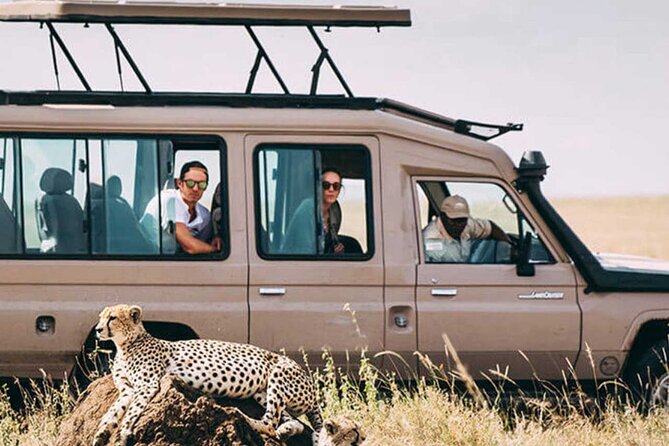
The final day takes you to the Ngorongoro Conservation Area for about six hours before the return to Arusha. The crater is the visual high point of the trip. From above, it appears as a broad enclosed basin, while the floor brings together grassland, wet areas, woodland, and wildlife in a relatively compact space.
Ngorongoro is often chosen for a short safari because it can offer varied animal sightings in one day. You might find wildebeest, gazelles, golden jackals, bat-eared foxes, hippos, buffalo, waterbuck, eland, leopards, and other ungulates.
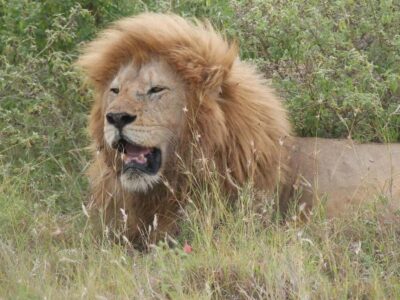
The Big Five are possible here as well. A black rhino may be seen, but it is not a certainty. Lions and buffalo are more realistic possibilities, while leopards can be elusive. Giraffes are rarely seen in the crater, as are cheetahs, spotted hyenas, topi, oribi, and impalas. Knowing this helps you judge the day fairly. Ngorongoro is not a place where every well-known African animal appears on demand.
The crater’s compact setting can make it feel more productive than the open Serengeti, especially when the latter is dry. One person who chose the basic camping option found the crater more rewarding in October, while still seeing plenty of animals overall.
The conservation area also has a human story. Maasai families live in circular homesteads called bomas, and the area connects with early human evolution research associated with Mary and Louis Leakey. The schedule does not promise a separate cultural visit or a museum stop, so treat these as context for the area rather than guaranteed activities.
After the crater visit, you return toward Arusha. The final day therefore combines game viewing with another road transfer. If you have an evening flight, do not assume the timing will be exact. The published details give an approximate duration, and wildlife stops, road conditions, and the crater route can affect your arrival time.
More national park trips in Ngorongoro:
- 4 Day Ngorongoro Crater Tarangire and Serengeti National Park
★ 5.0 · 44 reviews - 1 Day Joined Group Safari in Ngorongoro Crater National Park
★ 5.0 · 7 reviews - 3 Days Joined Group Safari Ngorongoro,Lake Manyara and Tarangire National Park
★ 5.0 · 4 reviews - 7 Days Tanganyika Wilderness Safari
★ 5.0 · 159 reviews
Camping, food, and the practical comfort level
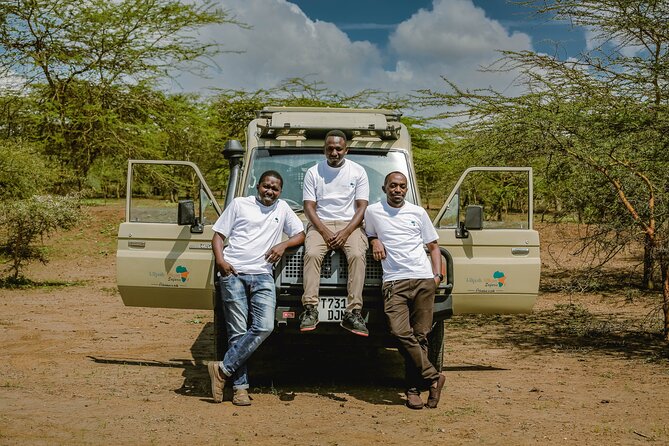
This is a camping safari, not a lodge safari. You spend two nights in tents, and the basic camping setup is presented as the least expensive option. That makes the tour accessible, but you should choose it for the outdoor experience and price, not for private rooms or polished hotel comfort.
Meals included are two breakfasts, three lunches, and two dinners. The food has received especially warm praise, with past bookings describing the safari cook as excellent and the meals as among the best they had in Tanzania. Another booking found the food totally fine, which is a useful reminder that expectations vary.
Lunch is described as taking place at picnic sites. That fits the day’s rhythm: eat during the park visit, then get back to the road or game drive. If you have dietary needs, contact the operator before departure. The available details do not specify a menu or dietary arrangements.
Tips for the driver-guide and safari cook are not included. Budget for them separately. Visas are also excluded, so check Tanzania’s entry requirements for your nationality before you book flights.
The guide can shape the entire experience
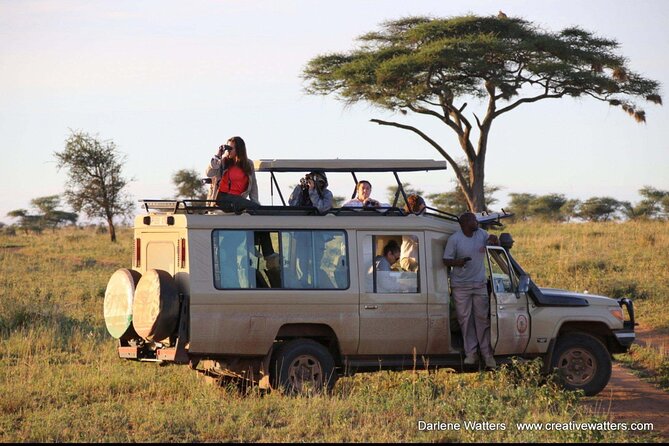
A safari vehicle is only part of the experience. Your guide decides how long to watch an animal, which road to take, how to position the vehicle, and how much detail to share.
Past bookings have singled out Felix, Simon, Christian, and Bulldozer by name. Felix has been described as responsive before the trip and very good at making people feel supported. Simon was praised for his friendly manner and strong understanding of the parks and wildlife. Christian was noted for being attentive on a first visit to Tanzania, while Bulldozer was credited with knowing the area and handling the day with confidence.
You may not receive one of these specific guides, so do not treat the names as a guarantee. The consistent point is more useful: guide quality has been one of the strongest parts of the operation. Clear communication through WhatsApp has also been repeatedly valued, especially when people needed help with bookings or trip planning.
Ask in advance about your exact guide, camping arrangement, pickup time, and sleeping location. One practical piece of advice is to be specific if you want input on accommodation. The trip is sold as basic camping, but the exact arrangement can still matter to you.
How good is the $810 value?
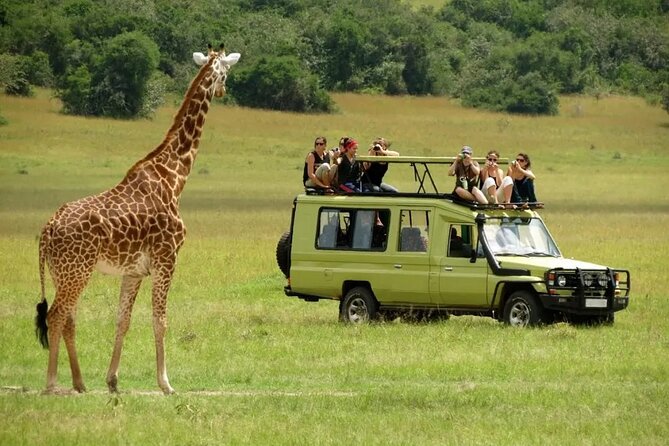
The price includes a lot for three days: transport from Arusha, access to Serengeti and Ngorongoro, game drives, camping, and seven included meals. A six-person maximum also gives the trip more appeal than a large group departure.
Still, the price does not buy a leisurely safari. You spend long hours on the road, and the itinerary has little spare time. You also pay tips separately and handle your own visa costs. If you want lodge comfort, a private vehicle, or several slow days in one park, you will need a different and more expensive arrangement.
For a first safari, the value is strong. You see two famous destinations and sample different types of wildlife country without committing to a week. Couples and solo visitors who are comfortable sharing a vehicle may find this a good entry point. Families should consider the long drives and basic camping before booking.
The booking pattern suggests people usually reserve about a week ahead. That is not a guarantee of availability, but it is a useful planning target. Free cancellation is available up to 24 hours before the local start time. Inside that window, the payment is not refunded and changes are not accepted.
Who should book this safari?
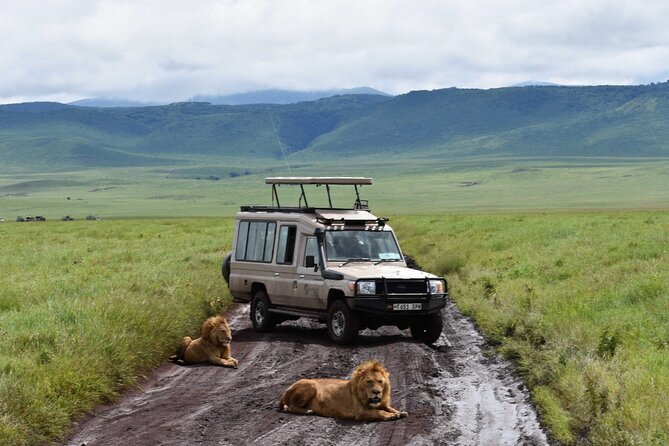
I would choose this trip if you want a short, affordable introduction to northern Tanzania and care more about wildlife than about hotel comfort. It suits people who can handle long drives, simple camping, and a busy schedule.
You should think twice if you need a relaxed pace, guaranteed animal sightings, or a precise arrival time in Arusha. You should also confirm the confusing start-time information before paying: the day-one schedule says 8 a.m. pickup after breakfast, while the booking details list 3 p.m. as the start time.
The experience has earned a 5 rating from 21 recorded bookings, with 100 percent recommending it. More important than the number is the pattern behind it: strong communication, capable guides, good food, and a satisfying mix of Serengeti and Ngorongoro.
FAQ
How long is the safari?
The safari lasts approximately three days.
Where does the safari begin?
It begins in Arusha, Tanzania, with pickup offered from your accommodation.
Which parks and conservation areas are included?
The trip includes Serengeti National Park and the Ngorongoro Conservation Area.
How many people can join the safari?
The group is limited to a maximum of six people.
Is camping included?
Yes. The experience is described as a camping safari with two nights of camping.
Which meals are included?
The price includes two breakfasts, three lunches, and two dinners.
Are tips included in the price?
No. Tips and gratitude for the driver-guide and safari cook are not included.
Are visas included?
No. Visa costs are not included.
Can I cancel for a full refund?
Yes, if you cancel at least 24 hours before the experience start time. Cancellations made within 24 hours are not refunded.
More Three-Day Trips in Ngorongoro
- 3 Days Serengati and Ngorongoro crate group tour and safari
★ 5.0 · 13 reviews - 3 days safari in North- Ngorongoro, Tarangire, Mt. Oldeani
★ 4.5 · 9 reviews - 3-Day Safari to Ngorongoro, Tarangire & Lake Manyara NP
★ 5.0 · 3 reviews - 3 Days Serengeti & Ngorongoro Group Camping Safari
★ 5.0 · 574 reviews
Just added around Ngorongoro
- 7 Days Rhino Ngorongoro Crater Safari Tour★ 5.0 · 5 reviews
- 1 days Tanzania Sharing Joining group Safari – Ngorongoro Crater★ 5.0 · 3 reviews
- 3 days safari in North- Ngorongoro, Tarangire, Mt. Oldeani★ 4.5 · 9 reviews
- 5-Day Private Adventure Tour to Ngorongoro Conservation Area★ 5.0 · 11 reviews
- Ngorongoro Crater Day Trip★ 5.0 · 5 reviews
- Ngorongoro Crater Day Trip★ 4.5 · 4 reviews
- 1 Day Private Ngorongoro Crater Safari★ 4.5 · 7 reviews
- Ngorongoro Crater Exclusive: A Journey into Africa’s Eden★ 4.5 · 7 reviews
National Parks, compared.
3 Day Serengeti National Park & Ngorongoro Crater Camping Safari
Read our review →
From Zanzibar: Nyerere National Park Game Drive with Lunch
Read our review →
6 days 5 nights safari Ngorongoro, Serengeti and Tarangire National Parks
Read our review →
1-Day Selous (Nyerere National Park) Fly-In Safari from Zanzibar
Read our review →
Private 4-Days Northern Circuit National Parks in Tanzania
Read our review →Browse the lists this tour appears in