
Reviewed · SAFARIS IN SERENGETI
3 Day Safari from Arusha: Serengeti and Ngorongoro
The great appeal here is the two-park contrast. The Serengeti gives you wide open plains and moving wildlife, while Ngorongoro Crater packs a remarkable number of animals into one enclosed setting. In only three days, you get both the feeling of distance and the thrill of close-range viewing.
I like the private 4×4 format, since your group controls the pace more than it would on a shared safari. I also like that meals, drinking water, lodging, park fees, and a driver-guide are bundled together. The tradeoff is the amount of road time: this is a fast safari, not a slow stay in one park, and the trip from Arusha to the Serengeti makes Day 1 a long one.
Key points to know before booking
- Seronera is the main Serengeti wildlife area: You head toward the central park, where the Seronera River draws animals and supports a broad mix of species.
- Ngorongoro is a concentrated wildlife experience: The crater floor has water and grazing areas year-round, making it a strong final game drive.
- The tour is private: Only your own group participates, which allows a more personal schedule and a quieter safari feel.
- Two nights of accommodation are included: You spend one night in the Serengeti area and one night near Ngorongoro Crater.
- The vehicle is built for viewing: A 4×4 safari jeep with a pop-up roof gives you a raised position for watching animals.
- The price covers the main safari costs: Park fees, meals, water, a driver-guide, transport, and lodging are included, but Arusha lodging, flights, transfers, tips, and personal costs are extra.
Why this three-day safari works
This trip is designed for someone who wants Tanzania’s biggest names without committing to a week-long safari. You leave Arusha, reach the Serengeti, spend time around Seronera, then move to Ngorongoro for a final game drive before returning to town.
That sounds simple, but the geography matters. Arusha sits outside the two parks, and the Serengeti is far enough away that the first day combines a major transfer with an afternoon game drive. You are not getting three full, unhurried days inside the parks. You are getting a carefully packed introduction to two of northern Tanzania’s most important wildlife areas.
I like that balance for a first safari or a short trip added to a larger Tanzania visit. The private setup also helps. You are not joining a large group that must follow a fixed pace, and the guide can focus on your group’s interests. The experience is still governed by park roads, wildlife movement, and daylight, but the format feels more personal.
The advertised price is $1,460.52 per person. That is a serious amount, yet it includes several costs that can add up quickly on safari: park access, a private 4×4, a driver-guide, two nights of lodging, three lunches, two breakfasts, two dinners, and 1.5 liters of water during the safari. You should compare the total package price, not just the number on the booking page.
More Safaris in Serengeti
- Serengeti Balloon Safari and authentic bush breakfast
★ 5.0 · 2,480 reviews - Balloon Safari & Bush Breakfast in Serengeti – Miracle Experience
★ 5.0 · 1,646 reviews - 3 Days Serengeti & Ngorongoro Group Camping Safari
★ 5.0 · 574 reviews
Day 1: From Arusha to the Seronera area
The meeting point is Msumbi Coffees at TFA Shopping Complex on Sokoine Road in Arusha. Departure is set for 8:30 a.m., following a short safari briefing. From there, you head through the high farmland around Karatu and the Ngorongoro Conservation Area before descending toward the Serengeti.
This first part gives you a change of scenery before the game drive begins. The route leaves the higher country behind and opens into the broad plains associated with the Serengeti. You will spend a good part of the day on the road, so it helps to view the transfer as part of the safari rather than as dead time.
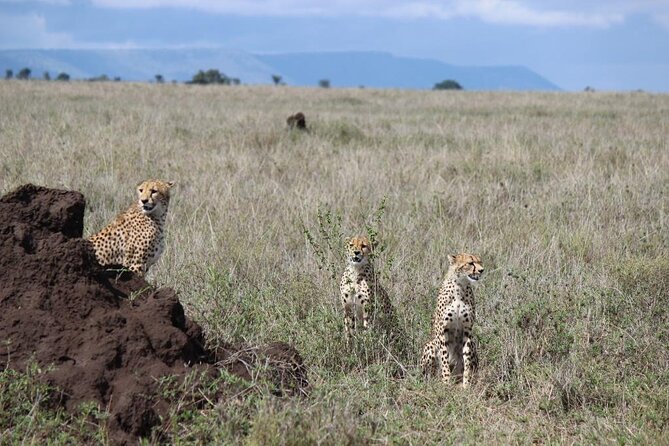
You are scheduled to reach the Serengeti in time for lunch, followed by an afternoon game drive. The central Seronera area is a sensible target because its river provides water and draws wildlife. It is also described as one of the park’s strongest general wildlife areas, with the possibility of seeing a wide range of Serengeti species.
The afternoon timing has an advantage: you begin looking for animals soon after arriving instead of spending the entire day checking into camp. It also gives you a first chance to learn how your guide reads the park, spots movement, and positions the vehicle.
The main limitation is clear. Day 1 is listed at about six hours, but the full journey from Arusha to the central Serengeti can feel demanding because the route includes a long approach. If you want maximum time in the park, ask for a clear breakdown of driving and game-viewing time before you book.
Seronera game drives and the value of two nights
Day 2 begins with an early breakfast and a morning game drive in the Serengeti. Early hours are important on safari because they give you time to search while the day’s viewing is still cool and active. The schedule then includes lunch before you leave for the Ngorongoro Conservation Area, with another game drive along the route.
This is one of the best features of the plan. You do not simply arrive at the Serengeti, take one afternoon drive, and leave immediately the next morning. You get an additional morning period in the Seronera area, then continue toward Ngorongoro while still keeping your eyes open for animals.
The itinerary gives Day 2 about four hours. That figure likely refers to the planned activity time rather than every minute of transport, meals, and the transfer to Ngorongoro. You should expect the day to involve several changes: breakfast, a morning drive, lunch, a road transfer, and viewing along the way.
One night in the Serengeti area is not enough for a slow exploration of the park, but it is enough to sample the central zone. Wildlife sightings can never be promised, and no short safari can cover the whole Serengeti. Still, Seronera’s permanent water source gives this brief visit a logical focus.
The next night is spent near the crater. That location matters because it positions you for an early descent on Day 3 instead of requiring another long approach from the Serengeti or Arusha.
Day 3: Ngorongoro Crater’s compact wildlife viewing
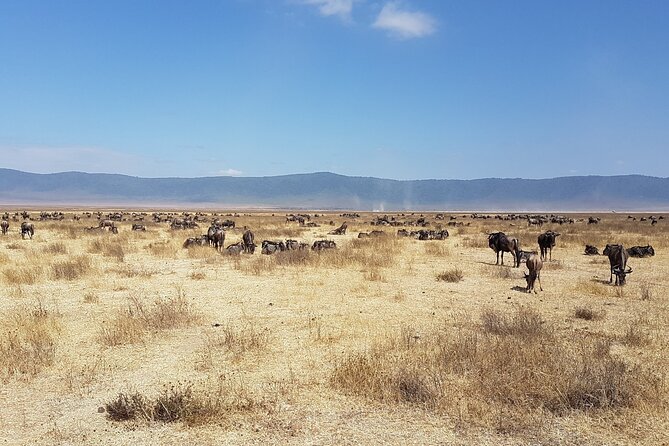
After breakfast, you descend into Ngorongoro Crater for the final game drive. The crater is a large enclosed wildlife setting with a year-round water supply and grazing areas. That combination supports many animals in a relatively concentrated area.
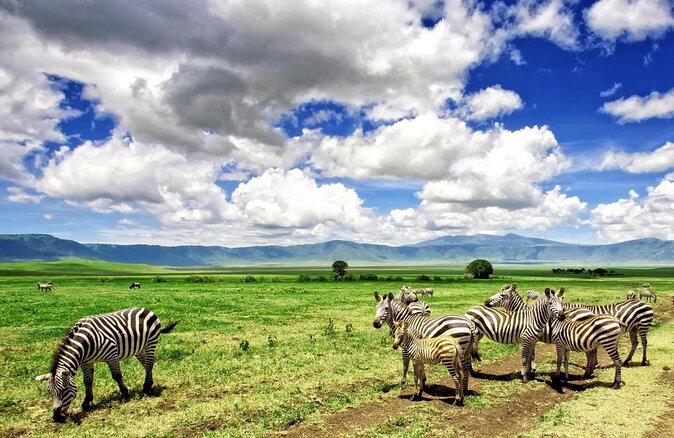
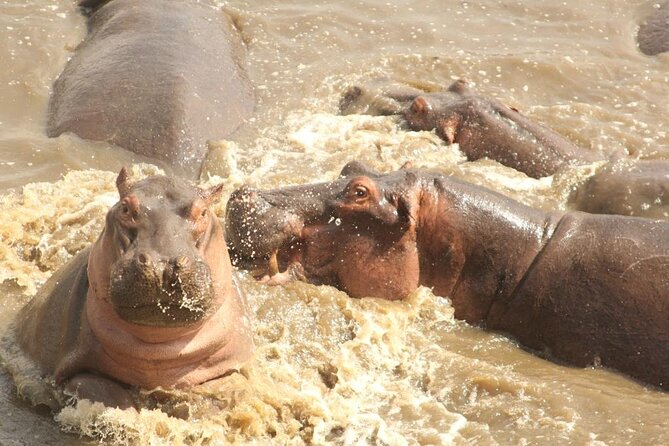
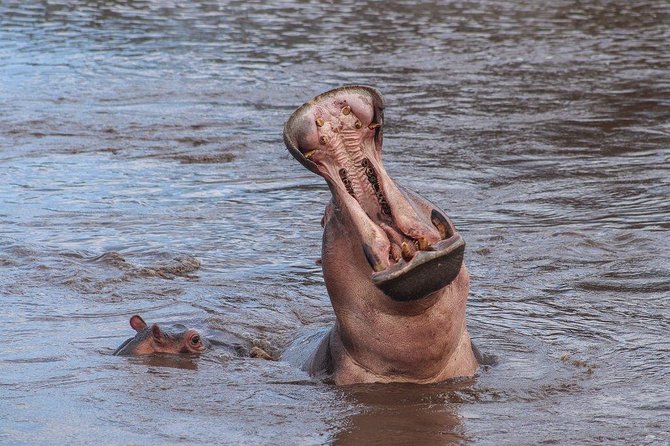
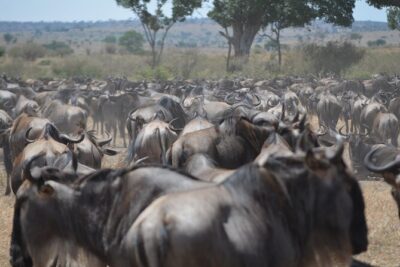
The stated animal list includes wildebeest, zebra, buffalo, eland, warthog, hippo, and African elephants. Predators include lions, hyenas, jackals, cheetahs, and the much harder-to-find leopard. The crater is also home to some of Tanzania’s remaining black rhinos, which gives the drive a conservation angle as well as a wildlife one.
This is a different experience from the Serengeti. In Seronera, the eye travels across wide plains and the search can feel expansive. In Ngorongoro, the setting is more contained, so you may spend less time wondering where animals could be and more time comparing different species in the same area.
The itinerary states an estimated 30,000 animals in the crater. That does not mean you will see every species, and game viewing is never a checklist. It does explain why the crater is such a strong choice for a short safari: the habitat supports a high concentration of animals without requiring several days of searching across a huge park.
You have a picnic lunch on the crater floor, then drive back to Arusha in the late afternoon. The full day is listed at about six hours. Since the return drive follows the crater visit, you should be ready for another substantial road segment at the end of an already active day.
More Serengeti safaris to compare:
- Safari Serengeti And Ngorongoro
★ 5.0 · 288 reviews - 3-Day Classic Serengeti Safari
★ 5.0 · 263 reviews - 10-Day Serengeti Wildebeest Migration Safari from Arusha
★ 5.0 · 218 reviews - 2 Day Serengeti Safari Experience from Mwanza
★ 5.0 · 198 reviews
What the private 4×4 changes
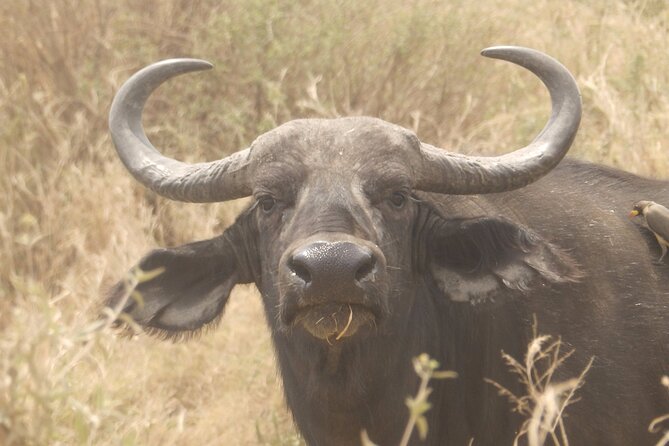
The safari uses a 4×4 jeep with a pop-up roof. That roof is one of the practical details that matters most. You get a raised viewing position and a better chance to look over grass and low brush than you would from an ordinary car.
The private arrangement means only your group participates. That can make a real difference when you want to spend longer at a sighting, move on from a less interesting stop, or ask more questions about what you are seeing. It also avoids the awkwardness of negotiating space with strangers around the roof opening.
The guide is a central part of the experience. The available feedback specifically praises the guide’s familiarity with the work, communication, and ability to make the accommodation arrangements feel good. No guide name is provided, so you should not expect a named guide to be guaranteed in advance.
A private tour does not remove the normal limits of safari travel. Roads, park rules, animal behavior, weather, and time all shape the day. Private means more control within those limits, not a promise of a particular sighting or route.
Meals, water, and accommodation
The package includes two breakfasts, two dinners, and three lunches. That covers the meal pattern for the three-day schedule, including the picnic lunch on the crater floor. It also includes 1.5 liters of water during the safari.
The meals are useful because you are moving through remote park areas where finding your own food is not a practical part of the day. Still, 1.5 liters of water may not be enough for every person across a hot, active safari day. The supplied information does not say whether more water can be purchased or added, so ask before departure and bring any extra amount you personally need.
Two nights of accommodation are included, one during the Serengeti portion and one near Ngorongoro Crater. The exact properties are not named. The available feedback describes the accommodation as quite nice, but you should request the names and room details if the standard of lodging is important to you.
Your night in the Arusha area is not included. Airport transfers, flights, laundry, telephone use, beverages, tips, personal purchases, balloon rides, and local village visits are also outside the package. Keep those extras in your budget.
Is $1,460.52 a fair safari price?
At $1,460.52 per person, this is not a budget day trip. The price makes more sense when you count what is bundled: a private vehicle, driver-guide, park fees, two nights of accommodation, six main meals, and water.
The value is strongest for a small group that wants a private safari without organizing each part separately. If you are traveling alone, the per-person cost may feel harder to justify. If several people share the vehicle, the private format can become more appealing because you gain control without paying for a large number of separate activities.
The short duration also affects the price. You are paying for access to two major parks and a lot of transport in a compressed schedule. A longer safari may offer a lower daily pressure and more time in each area, but it would cost more overall. This trip is best understood as a compact introduction, not a full survey of Tanzania’s parks.
Before booking, confirm the accommodation names, vehicle arrangements, and exact driving plan. Those details help you judge the price more accurately than the headline figure alone.
Who should book this safari?
I would recommend it to you if you have three days available, want both Serengeti and Ngorongoro, and prefer a private schedule. It also suits first-time safari visitors who want the main wildlife settings without planning a complicated route themselves.
It is a good match for people who value a guide’s attention, included meals, and a ready-to-use 4×4. The itinerary also works for a larger private party that can share the vehicle and spread the cost.
I would hesitate if you dislike long drives, need a slow pace, or want several days in one park. The first and final days include major road sections, and the Serengeti visit is focused on the central Seronera area rather than a broad tour of the entire park.
The booking terms are fairly flexible: you can cancel for a full refund up to 24 hours before the start time. Changes made inside that 24-hour window are not accepted, and a weather cancellation offers a different date or a full refund.
Final verdict: a smart short safari with long road days
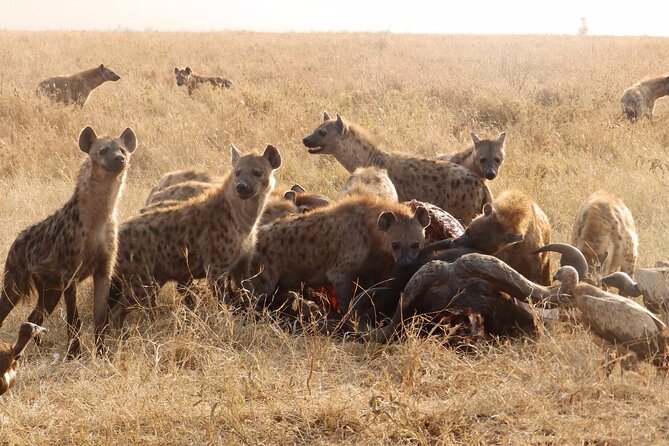
This three-day route gives you a strong pair of wildlife settings. The Serengeti offers open space and classic game-drive searching, while Ngorongoro gives you a concentrated final day with the possibility of seeing an impressive range of animals.
I like the private vehicle, the included costs, the morning and afternoon Serengeti viewing, and the overnight position near the crater. The main caution is the pace. You will spend meaningful time driving, and you should book this as a focused introduction rather than a leisurely safari.
If your priority is seeing both Serengeti and Ngorongoro from Arusha in a private 4×4, this is worth serious consideration. If your priority is rest, long stays, or a low price, choose a longer planning window and compare a slower itinerary.
FAQ
Where does the safari start?
It starts at Msumbi Coffees, TFA Shopping Complex, JMFH+RR3, Sokoine Road, Arusha, Tanzania.
What time does the safari begin?
The stated start time is 8:30 a.m.
Where does the safari end?
The activity ends back at the meeting point in Arusha.
How long is the safari?
The safari lasts approximately three days.
Is this a private tour?
Yes. Only your group participates in the activity.
What vehicle is used?
The safari uses a 4×4 safari jeep with a pop-up roof for game viewing.
Are meals included?
Yes. The package includes three lunches, two breakfasts, and two dinners.
Is drinking water included?
Yes. The tour includes 1.5 liters of water during the safari.
Are park fees included?
Yes. All fees and taxes are included, along with the driver-guide and safari vehicle.
Are flights and airport transfers included?
No. Flights and airport transfers are not included. Lodging in Arusha is also separate.
Can I cancel for a full refund?
Yes. You can cancel at least 24 hours before the experience start time for a full refund. Cancellations or changes made less than 24 hours before the start time are not accepted for a refund.
What happens if bad weather cancels the safari?
If poor weather causes the experience to be canceled, you will be offered a different date or a full refund.
More Three-Day Trips in Serengeti
- 3 Day Serengeti National Park & Ngorongoro Crater Camping Safari
★ 5.0 · 142 reviews - 3 Days Small Group Safari to Serengeti NP and Ngorongoro Crater Tour in Tanzania
★ 5.0 · 77 reviews - 03 days Serengeti and Ngorongoro Crater group (camping)
★ 5.0 · 75 reviews - 3 Days 2 Nights Group Joining Serengeti and Ngorogoro Safari
★ 5.0 · 56 reviews
Just added around Serengeti
- Serengeti & Ngorongoro 3 days Fly Safari in from Zanzibar★ 5.0 · 21 reviews
- 3 Days Serengeti National Park from Zanzibar★ 4.5 · 3 reviews
- 4-Day Serengeti, Ngorongoro,Tarangire safari★ 5.0 · 3 reviews
- Serengeti 2-Day Safari from Mwanza★ 5.0 · 16 reviews
- Serengeti Day Trip Tour from Mwanza★ 5.0 · 4 reviews
- Full-Day Serengeti Tour from Mwanza★ 5.0 · 11 reviews
- Discover Our Best Guide for 1-Day Serengeti Safari from Mwanza★ 5.0 · 5 reviews
- Serengeti Day Trip Safari From Mwanza Tanzania★ 5.0 · 7 reviews
Safaris in Serengeti, compared.
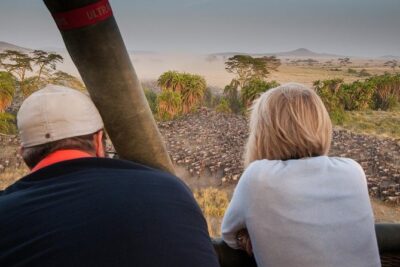
Serengeti Balloon Safari and authentic bush breakfast
Read our review →
3 Days Serengeti & Ngorongoro Group Camping Safari
Read our review →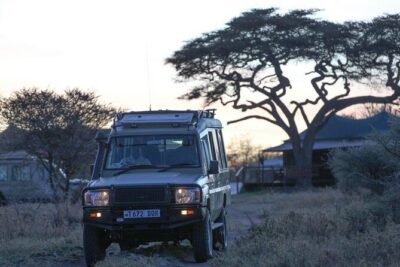
4 Days Tanzania Lodge Safari With Two Nights at Serengeti
Read our review →
6 Days Serengeti Safari(hiking waterfalls &coffee tour)
Read our review →
Top Best 5 Days Tanzania Luxury Safari to Serengeti
Read our review →
Tanzania Safari – The Great Migration in the North of the Serengeti and Lake Natron
Read our review →
3days Serengeti National park and Ngorongoro Crater Tanzania Safari
Read our review →Browse the lists this tour appears in