

Reviewed · STONE TOWN TOURS
Stone Town Historical Walking Tour
Stone Town is best understood on foot, one shaded lane and carved doorway at a time. This private walk connects the old city’s African, Persian, Portuguese, and Omani past with places you can actually see, including the Old Fort, Forodhani Garden, Jaws Corner, and Darajani Market.
I like the tour’s personal scale, since only your group takes part, and I like its clear focus on Zanzibar’s slave-trade story rather than only its prettiest buildings. The other strong point is the guides’ flexible style: Alfa, Alpha, Khalfan, Rabik, and Sultan are praised for answering questions, slowing down for children, and allowing time for photos or souvenirs.
The main consideration is meeting at the House of Wonders, an area affected by construction and confusing map directions. Confirm the exact meeting spot before setting out, and remember that the former slave-market entrance fee, transport, taxes, and tip are not included.
Key points to know before you book
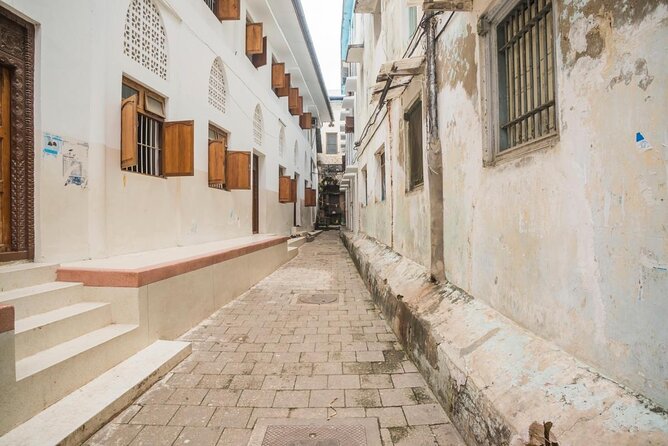
- A private three-hour walk: Your group has the guide to itself, with no shared coach or fixed sightseeing crowd.
- A serious look at slavery: The former slave-market site and East African slave trade receive proper attention, with an extra entrance fee of $5 per person.
- Stone Town’s essential sights: Expect the Old Fort, House of Wonders, Darajani Market, churches, Forodhani Garden, Jaws Corner, and Freddie Mercury’s former home.
- Guides who adapt well: Alfa, Alpha, Khalfan, Rabik, and Sultan are named in the feedback, with praise for clear explanations and patient pacing.
- Good value at $20: The price covers a certified guide, but not entrance fees, transport, or personal purchases.
- A walking tour in a working city: You will see markets, food stops, traffic, sellers, and daily life, not just polished monuments.
Why Stone Town makes a strong first-day tour
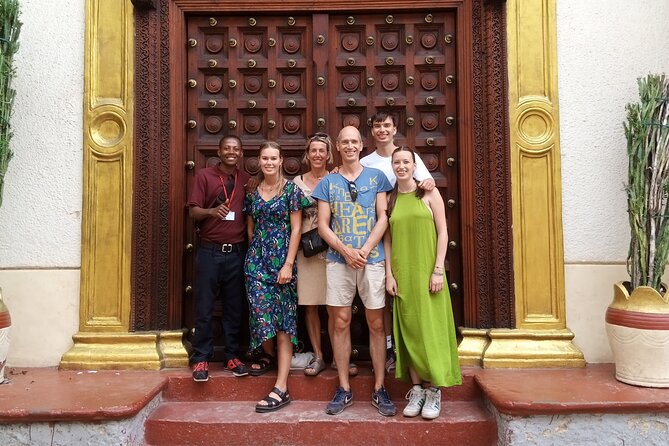
Stone Town can feel confusing at first. Its lanes twist around old buildings, market stalls, small cafés, carved doors, and courtyards. A guide gives you a useful thread through it all.
The city’s story is not one simple tale. Local African communities, Persian settlers, Portuguese influence, the Omani Sultanate, Indian merchants, Islam, Christianity, and European colonial power all left marks here. A good guide helps you connect those forces to the buildings in front of you.
I would choose this as one of my first activities in Zanzibar because it gives you a map in your head. After three hours, you should recognize the central sights and feel more comfortable returning on your own for food, shopping, or a second look at the old doors.
The private format matters. You can stop for a photograph without holding up a large group, ask about a detail that catches your eye, or spend longer in the market. Families also benefit. Rabik is specifically praised for keeping children aged seven and twelve interested during a walk lasting more than three hours.
More Walking Tours in Zanzibar
- Stone Town Private Walking Tour
★ 5.0 · 371 reviews - Zanzibar: 3 Hours Private Stone Town walking Tour with Guide
★ 4.6 · 301 reviews - Zanzibar: Stone Town Historical Cultural Walking Guided Tour
★ 4.5 · 179 reviews
Meeting at the House of Wonders
The tour begins at the House of Wonders on Sokoku Street. This is a sensible starting point because it places you near several major Stone Town sights, but the meeting point deserves attention.
Construction around the House of Wonders has caused confusion for at least one group, which followed a map pin into a closed construction area and spent about 30 minutes searching. I would not simply walk toward the pin without checking the exact instructions. Contact the operator if the location looks unclear, and avoid entering any fenced or closed area.
The House of Wonders itself is an important landmark, though its condition may disappoint you. One guide, Sultan, reportedly pointed out that the building was falling into disrepair. Treat the exterior as a historical reference point rather than expecting a fully restored museum visit.
You also should not assume that you will go inside every building named along the route. The supplied details describe a walking circuit and identify the former slave-market entrance as an extra paid visit, but they do not promise admission to the House of Wonders, Old Fort, or churches.
The old lanes and Stone Town’s carved doors
The best part of the walk may happen between the headline sights. Stone Town’s narrow streets are lined with old doors, some with elaborate carving and metal studs. The doors reflect the city’s mix of cultures and the status of the families who commissioned them.
Sultan is praised for spending time on these doors rather than rushing from one famous building to the next. That is exactly the kind of flexibility I want from a private walking tour. You see more when you are allowed to pause and look carefully.
The lanes also show present-day life. You might pass small businesses, market activity, food sellers, and people moving through the old quarter on ordinary errands. This is not a silent museum district. The city remains a working part of Zanzibar City, and that can make the walk noisier and less orderly than a formal heritage site.
Wear comfortable shoes and expect the full three hours to be spent on foot. No transport is included, and the activity returns to the House of Wonders rather than dropping you at your hotel.
Old Fort, Forodhani Garden, and Jaws Corner
The Old Fort is one of the tour’s main landmarks. It gives the guide a natural place to explain the changing powers that shaped Zanzibar, including Portuguese and Omani influence. The fort is also useful as a visual anchor because its heavy walls contrast with the tight streets around it.
Forodhani Garden brings a different mood. It is a waterfront gathering area where you can connect Stone Town’s past with its food culture and evening social life. The tour description includes the garden as a sightseeing stop, but it does not promise a meal or food tasting.
Jaws Corner is another useful pause in the city’s daily rhythm. It is known as a local meeting point, and its inclusion helps keep the tour from becoming a procession of grand buildings. You get a sense of where people gather, talk, and take a break.
These stops may sound quick on paper, but a good guide can make them useful. Alfa is praised for a clear narrative and for answering many questions. That matters here because the same building can have several layers of meaning, depending on whether you are looking at it through a political, religious, commercial, or social lens.
More Stone Town walks:
- Zanzibar: Stone Town, Spice Tour, Prison Island with Lunch
★ 4.4 · 1,219 reviews - Zanzibar: Prison Island, Stone Town, & Spice Farm Tour
★ 4.5 · 579 reviews - Zanzibar; Prison Island, Nakupenda, StoneTown Tour with BBQ
★ 4.3 · 457 reviews - Zanzibar: Stone Town, Spice tour & Prison Island with Lunch
★ 4.6 · 453 reviews
Darajani Market and the taste of daily Zanzibar

Darajani Market is where the tour becomes most sensory. You may see produce, fish, spices, and local shoppers rather than a tidy display prepared for sightseeing. One account describes trying jackfruit and seeing the fish market, though you should not treat those as guaranteed tastings or activities.
The market is valuable because it shows Stone Town as a living town, not just a heritage label. It also gives you a chance to ask your guide about foods, customs, prices, and the difference between a souvenir shop and an ordinary market stall.
This is where advice from a local guide can save you time and money. One guide is praised for helping with souvenir purchases, while another allowed the group to stop for shopping as requested. Still, keep your own budget and judgment. Personal spending is not included, and the guide cannot turn every market stop into a bargain guarantee.
The market may also be crowded, warm, or visually intense. If you are sensitive to noise or strong smells, tell the guide early. Since the activity is private, the pace can be adjusted more easily than on a large group tour.
The churches and Stone Town’s many faiths
The route includes both the Anglican and Catholic churches. These stops are important because they broaden the story beyond palaces, forts, and trade.
The Anglican church is connected with the former slave-market area, making it a particularly serious stop. The tour specifically covers slavery in East Africa and Stone Town, then offers the former slave-market entrance for an additional $5 per person.
That fee is not part of the $20 tour price. Bring enough cash or arrange local currency in advance. One solo visitor appreciated a guide lending $5 for an entrance ticket before she had changed money, but you should not count on that kind of help being available.
The Catholic church adds another religious and architectural layer. Together, the churches show how different communities shaped Stone Town and how religion, commerce, and colonial power overlapped.
Expect the slavery section to be sobering. This is not a light sightseeing stop to rush through between photo opportunities. If you want a tour that deals honestly with Zanzibar’s past, this is one of its strongest features. If you prefer a purely architectural walk, you may find the subject matter heavier than expected.
Freddie Mercury’s Stone Town connection

The route also passes the house associated with Freddie Mercury, the lead vocalist of Queen. The tour presents this as the home where he lived, giving music fans a personal link to the city.
Do not expect a long concert-history presentation or a guaranteed museum visit unless specifically confirmed. The appeal is seeing the place connected with one of Stone Town’s most internationally famous former residents.
This stop also works well as a contrast with the older historical sites. The tour moves from sultans, churches, forts, and slave trading to a modern music icon. That range helps you see Zanzibar as a place with a continuing story, not only a preserved old quarter.
What the guide adds to the experience
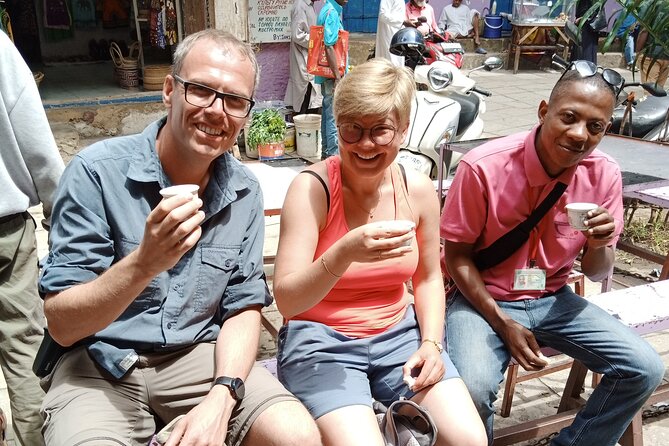
The guide is the make-or-break part of a walking tour, and the feedback points to a consistent strength: clear explanations, patience, and a willingness to answer questions.
Several guides are named. You may be assigned Alfa or Alpha, Khalfan, Rabik, or Sultan. Alfa is repeatedly praised for his presentation and ability to tailor the route. Khalfan is described as patient, safety-conscious, and helpful with stops for photographs and souvenirs. Rabik handled a family group well, while Sultan spent extra time on Stone Town’s doors.
That does not mean every guide delivers the same personality or exact route. It does mean you should use the private format to speak up. Tell the guide if you care most about architecture, slavery, markets, music, religious buildings, or photography. The tour can then feel less like a checklist.
One guide even helped a couple meet their ride back to the hotel at the end. That is a thoughtful touch, but the stated end point is the House of Wonders, so arrange your own onward transport.
Is $20 good value?
At $20 per person, this is a strong price for a private two to three-hour introduction to Stone Town. You are paying mainly for the guide’s time and local interpretation, not for a bundle of admissions or transport.
The value improves if you use the walk to orient yourself for the rest of your stay. You can return to Darajani Market, Forodhani Garden, or the Old Fort later without paying for another guided circuit.
Budget separately for the former slave-market entrance, listed at $5 per person. Also allow for drinks, snacks, souvenirs, hotel transport, taxes, and a tip. The tour price does not cover these costs.
A private tour usually costs more than joining a large group, but $20 keeps this one accessible. For a solo visitor, the price may feel especially fair if the guide gives a full three hours and adapts the pace. For a larger group, the per-person cost becomes even better, though the guide may use an additional partner for groups of ten.
Who should book this walk?
I would recommend it for a first day in Zanzibar, especially if you want the main Stone Town sights explained rather than photographed without context.
It is a good match for:
- First-time visitors who want help finding their way around the old quarter
- Families needing a guide who can slow down and keep children engaged
- Solo visitors who prefer a private guide and local orientation
- History-minded people who want slavery and cultural change included
- Shoppers who would like advice around markets and souvenirs
- Photographers who want time for doors, streets, and architectural details
It may be less suitable if you dislike walking, want extensive interior visits, or need a fully fixed schedule with every admission included. The route is also not ideal for anyone expecting hotel pickup, because transport is not provided.
You can cancel for a full refund up to 24 hours before the start time. Changes or cancellations inside that window are not refunded, and poor weather may lead to a new date or full refund. Keep that timing in mind when arranging flights, ferries, or connecting tours.
Should you book the Stone Town Historical Walking Tour?
Yes, if you want an affordable, private introduction that balances famous sights with harder history and ordinary city life. The best parts are the flexible pacing, strong guide feedback, market visit, carved doors, and serious treatment of the former slave market.
Book it with two cautions: confirm the meeting point because of construction near the House of Wonders, and budget for the extra $5 admission. If Alfa, Khalfan, Rabik, or Sultan is assigned to your group, use the private setting well by asking questions and naming your priorities.
For $20, this gives you a useful first look at Stone Town and enough local context to make the rest of your Zanzibar stay easier to navigate.
FAQ
How long does the Stone Town Historical Walking Tour last?
The walk lasts about two to three hours, with the usual route taking around three hours.
Where does the tour start and end?
It starts at the House of Wonders on Sokoku Street in Stone Town and ends back at the same meeting point.
Is this a private tour?
Yes. Only your group participates, rather than joining a shared public group.
Is the former slave-market entrance included?
No. Entrance to the former slave-market site costs an additional $5 per person.
What does the $20 price include?
The price includes a professional certified guide. Transport, taxes, personal spending, souvenirs, entrance fees, and a tip are not included.
Can I cancel for a full refund?
Yes, if you cancel at least 24 hours before the scheduled start time. Cancellations or changes made less than 24 hours ahead are not refunded. If poor weather cancels the activity, you can receive a full refund or choose another date.
More History Walks in Zanzibar
- Stone Town’s Hidden History: Private Guided Walking Tour
★ 4.6 · 94 reviews - Private Historic Stone Town Tour
★ 5.0 · 79 reviews - Stone Town Historical Walking Tour
★ 5.0 · 40 reviews - Zanzibar Stone Town Historical Tour and Spice Farm Tour
★ 5.0 · 30 reviews
Just added around Zanzibar
- Walking in Stone Town with a Expert Tourguide★ 3.7 · 3 reviews
- Stone Town Tour★ 5.0 · 16 reviews
- Jet Ski Experience from Kendwa Beach★ 5.0 · 21 reviews
- Turtle Snorkeling, Jozani Forest, Kuza Cave, Rock Restaurant★ 3.7 · 8 reviews
- Zanzibar boat rental/charters★ 5.0 · 6 reviews
- Prison island(Changuu island) & stone town walking tour★ 5.0 · 6 reviews
- Full Day Private Zanzibar Triple Delight Tour★ 4.5 · 3 reviews
- Zanzibar Tumbatu Island Cultural Experience★ 5.0 · 4 reviews
Stone Town Tours, compared.

Stone Town, Spice Tour, Prison Island with Lunch
Read our review →
Prison Island, Nakupenda, StoneTown Tour with BBQ
Read our review →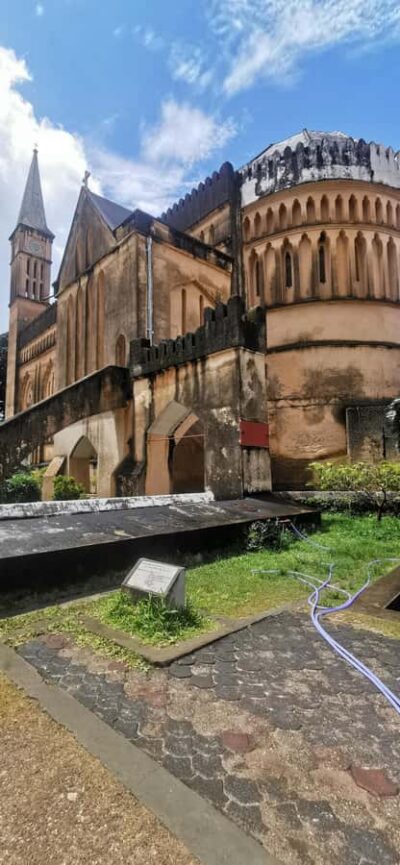
3 Hours Private Stone Town walking Tour with Guide
Read our review →
Stone Town Historical Cultural Walking Guided Tour
Read our review →
Stonetown: Food Markets and Street Food Walking Tour
Read our review →

Zanzibar full day Jozani forest + Spice farm and stone town
Read our review →
Browse the lists this tour appears in