

Reviewed · STONE TOWN TOURS
Stone Town Historical Walking Tour
Stone Town is best understood on foot, where carved doors, sea air, minaret calls, old forts, and market noise crowd into a compact old city. This private tour gives you a useful route through that mix, from the Portuguese and Omani eras to Zanzibar’s royal past and modern musical fame.
I like the private format, since your guide can adjust the pace and explain the subjects that interest you most. I also like the chance to connect Stone Town’s grand buildings with difficult subjects, including the slave trade and the pressures facing Zanzibarians today. The main drawback is that some key stops require separate admission, so the $25 price is not quite the final cost.
Key points to know before you book
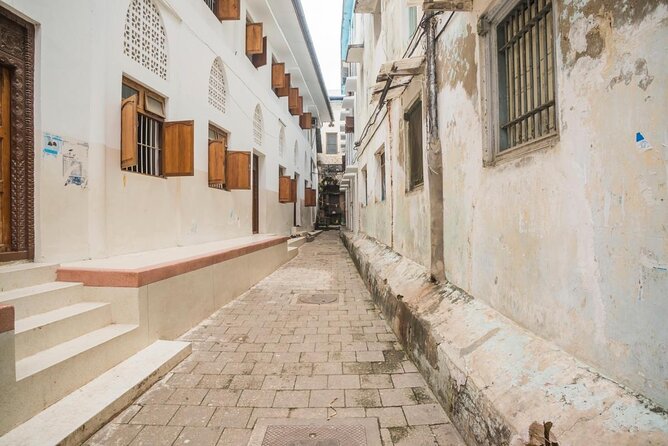
- Private walking tour: Only your group participates, making it easier to ask questions and set the pace.
- A strong historical route: The Old Fort, Palace Museum, Christ Church Cathedral, and former slave-market site give the tour a clear historical arc.
- Local life is part of the route: Darajani Bazaar and Forodhani Gardens bring food, commerce, and daily Zanzibari life into the picture.
- Modern culture gets a stop: The Freddie Mercury Museum adds a personal connection between Stone Town and global music.
- Plan for added costs: A $5 entrance fee is listed, while food, drinks, and some attraction tickets are not included.
- Short but full schedule: The tour lasts about 2 to 3 hours and covers seven stops, so comfortable walking shoes matter.
Why Stone Town makes a good walking tour
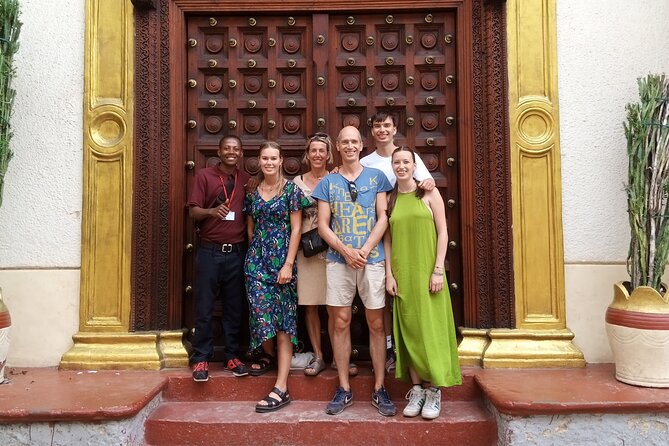
Stone Town is the old center of Zanzibar City, and its appeal comes from the way many cultures meet in a small area. African, Arab, Persian, Indian, and European influences appear in the buildings, food, faiths, language, and trading traditions.
You will see old colonial structures beside Islamic architecture, Hindu influences, market stalls, and the heavy wooden doors for which the city is known. The tour also points to peaceful connections among Islam, Christianity, and Hinduism. That does not erase Zanzibar’s troubled past, but it helps you see the city as more than a collection of old buildings.
The route also makes sense geographically. It begins around Forodhani, moves through the waterfront and fort area, then heads toward the bazaar, palace, cathedral, and Freddie Mercury Museum. The streets are narrow and winding, so a guide is useful for keeping the route together and adding meaning to details you could easily pass without noticing.
The tour is private, which matters here. You can stop to ask about a carved door, spend more time on Zanzibar’s trading past, or move faster through a subject that does not hold your attention. One booking with Ahmed described a guide who adjusted the pace to match personal interests and also discussed present-day challenges in Zanzibar. If Ahmed is assigned to your group, you can ask for that same balance of past and present. Guide assignments are not guaranteed, so it is sensible to ask when arranging the tour.
More Walking Tours in Zanzibar
- Stone Town Private Walking Tour
★ 5.0 · 371 reviews - Zanzibar: 3 Hours Private Stone Town walking Tour with Guide
★ 4.6 · 301 reviews - Zanzibar: Stone Town Historical Cultural Walking Guided Tour
★ 4.5 · 179 reviews
Forodhani Gardens and the waterfront beginning
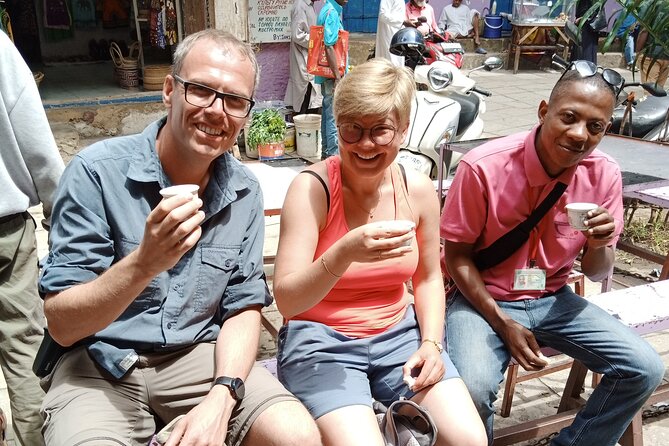
Forodhani Gardens is the meeting point and one of the best places to begin getting your bearings. During the day, it is a waterfront park. After sunset, it becomes a popular food market where local people and tourists gather around grilled seafood, samoosa, cassava, potatoes, and other Kiswahili and Zanzibari dishes.
The tour allocates about 30 minutes here. If your walk takes place before the evening food market is active, you may see the setting rather than the full food scene. That is worth knowing because the gardens have two different personalities depending on the hour.
If you return later, Forodhani is a natural place to sample local food, but food and drinks are not part of the tour price. Use ordinary care with any busy food market, and ask your guide which dishes and stalls fit your preferences. The point is not simply to eat. The food shows how African, Arab, Indian, and coastal influences meet in Zanzibari cooking.
The Old Fort and Zanzibar’s changing rulers
The Old Fort, also called Ngome Kongwe, receives about 40 minutes, making it the longest scheduled stop. It is described as Stone Town’s oldest building, dating to around 1560, and its walls help explain the struggle among Portuguese, Omani, and local powers.
The Portuguese occupied Zanzibar before the Yarub forces expelled them following the capture of Mombasa. Oman later took control in 1698. A guide can make those changes easier to follow, since the names and dates can otherwise blur together during a short visit.
The fort is free to enter on this tour, so it offers substantial historical value without another ticket. Give yourself time to look at the heavy masonry and consider its original defensive purpose. The building is not just a scenic backdrop. It is a physical record of the competition for control of Indian Ocean trade.
One practical point: the Old Fort can feel more like a place to explore independently than a formal museum. Your experience will depend heavily on how much context your guide provides. Ask direct questions about the Portuguese occupation, the Omani takeover, and the fort’s role in Stone Town today.
Darajani Bazaar, where Stone Town feels most local

Darajani Bazaar brings you into everyday commerce. Expect displays of produce, spices, seafood, clothes, and crafts, along with vendors calling attention to their goods. The market is a useful counterweight to the grander stops because it shows how Stone Town functions as a living city, not just a preserved old quarter.
The scheduled visit is about 18 minutes, which is enough for an introduction but not a long shopping session. If you want spices or crafts, tell your guide early so you do not spend the whole market visit simply following the route.
This is also one of the places where your senses do much of the work. You might notice spice scents, seafood, close-packed stalls, and the constant exchange between sellers and buyers. The market can feel hectic, especially if you prefer quiet sightseeing, but that energy is part of its value.
Use the time to ask about foods you do not recognize. The tour describes chances to interact with vendors and sample traditional food, but it does not include food purchases. Keep some local currency handy only if you plan to buy something, and treat any purchase as optional rather than an expected part of the tour.
More Stone Town walks:
- Zanzibar: Stone Town, Spice Tour, Prison Island with Lunch
★ 4.4 · 1,219 reviews - Zanzibar: Prison Island, Stone Town, & Spice Farm Tour
★ 4.5 · 579 reviews - Zanzibar; Prison Island, Nakupenda, StoneTown Tour with BBQ
★ 4.3 · 457 reviews - Zanzibar: Stone Town, Spice tour & Prison Island with Lunch
★ 4.6 · 453 reviews
The People’s Palace Museum and the Sultan’s world

The People’s Palace Museum, also known as the Palace Museum, introduces Zanzibar’s royal past. The former Sultan’s residence contains artifacts and exhibits connected with the island’s rulers, culture, and court life.
The visit is scheduled for about 18 minutes, so do not expect an extended museum visit. It works best as a focused stop within the walking route. Your guide can explain why the palace mattered and how it fits into Zanzibar’s wider connection to Arab and Indian Ocean trade.
You might find traditional music or craft demonstrations associated with the museum experience, but these are not guaranteed details of every visit. The important point is that the palace gives you a look at the people who governed Zanzibar, rather than only at the merchants, fortifications, and markets around them.
Because the stop is short, ask what your guide considers the most important exhibit or story. A clear explanation can turn a quick palace visit into a useful link between the city’s architecture and its political past.
Christ Church Cathedral and the former slave market
Christ Church Cathedral is one of the most serious stops on the route. It occupies the site of the former slave market, and the guide explains that connection during the visit.
The subject deserves time and care. Zanzibar was a major point in slave-trade routes, and the cathedral site forces you to consider how commerce, religion, empire, and human suffering were tied together. A walking tour that only praises Stone Town’s architecture would leave out the part of its past that most needs attention.
Admission is not included at this stop. The information lists a $5 entrance fee for the experience, while the cathedral is also marked as requiring a separate ticket, so confirm the exact payment details before you set out. This is one of the practical points that can otherwise catch you by surprise.
The scheduled time is about 18 minutes. That is brief for such a weighty subject, but the guide can help you use the stop well. If you want more time with the slavery history, say so. The private format makes that request more realistic than it would be in a large group.
Freddie Mercury Museum and modern Zanzibar

The Freddie Mercury Museum changes the mood and adds a modern cultural link. Freddie Mercury was born in Zanzibar, and the museum connects his early life and Zanzibari background with his later career as the singer of Queen.
You can expect personal belongings, memorabilia, and artifacts related to his life and music. The stop lasts about 18 minutes, which makes it a compact introduction rather than a lengthy music museum visit.
I like this addition because it prevents the tour from treating Stone Town as a place frozen in the past. The city is connected not only to sultans, forts, trade, and religious buildings, but also to a person who became known around the world.
Admission is not included, so check the current ticket arrangement before visiting. If you are a major Queen fan, you may want to ask whether there is enough time for the museum at the planned pace. If not, you can decide if it is the stop you would most like to extend.
What $25 really gets you

At $25 per person, the tour is reasonably priced for a private guide and a route covering seven important parts of Stone Town. The value comes from interpretation and organization. You are paying someone to connect the Old Fort, market, palace, cathedral, and museum instead of finding each place on your own.
The price does not cover everything. Food and drinks are extra, transfers from other parts of Zanzibar are extra, tips are not included, and entrance charges need attention. Pick-up from a hotel in Stone Town can be arranged if you request it and send a message in advance. Otherwise, the listed meeting point is Forodhani Gardens.
The tour begins and ends at the meeting point. Since the scheduled stops add up to close to three hours, allow room for walking between them and for the guide’s explanations. Wear comfortable shoes, especially because Stone Town’s old streets are the heart of the activity.
Confirmation arrives at booking, and mobile tickets are supported. Free cancellation is available if you cancel at least 24 hours before the start time. Inside that window, you cannot receive a refund, and changes are not accepted.
Who should book this Stone Town walk
I would choose this tour if you want a first look at Stone Town with a guide who can move between architecture, local life, religion, politics, and difficult history. It suits couples, families, and small private groups who prefer questions and flexible pacing over a fixed large-group script.
It is also a good fit if you want more than attractive doors and photographs. The former slave-market site, the Portuguese and Omani story at the Old Fort, and the Sultan’s palace give the walk substance. The market and Forodhani Gardens then bring you back to present-day food and commerce.
You may want a different plan if you dislike walking, want long museum visits, or need every attraction included in the initial price. The schedule is compact, and several stops receive only 18 minutes. You should also confirm the entrance arrangements before booking if keeping to a strict budget matters.
Should you book it?
Book this Stone Town tour if you want a private, affordable introduction that covers both Zanzibar’s beauty and its harder stories. The strongest reasons are the flexible format, the well-chosen route, and the chance to ask a guide about current Zanzibari life as well as the past.
Skip it if you prefer to explore slowly and independently, or if the short museum visits would frustrate you. For most first-time visitors staying in Stone Town, though, $25 is a fair starting point, provided you budget for admission, food, and any tip separately.
FAQ
How long does the Stone Town Historical Walking Tour last?
The tour lasts approximately 2 to 3 hours. The scheduled stops together total close to three hours.
How much does the tour cost?
The listed price is $25 per person. Entrance fees, food, drinks, transfers from other parts of Zanzibar, tips, and personal expenses are not included.
Is the tour private?
Yes. Only your group participates in this private activity.
Where does the tour start and finish?
The meeting point is Forodhani in Zanzibar, Tanzania. The activity ends back at the meeting point.
Can I be picked up from my Stone Town hotel?
Hotel pick-up from Stone Town can be arranged, but you need to request it and send a message in advance. Transfers from other parts of the island are not included.
Which places are included in the walking route?
The route includes Stone Town, the Old Fort, Forodhani Gardens, Darajani Bazaar, the People’s Palace Museum, Christ Church Cathedral, and the Freddie Mercury Museum.
What is the cancellation policy?
You receive a full refund if you cancel at least 24 hours before the experience start time. Cancellations or changes made within 24 hours are not accepted for a refund.
More History Walks in Zanzibar
- Stone Town Historical Walking Tour
★ 5.0 · 143 reviews - Stone Town’s Hidden History: Private Guided Walking Tour
★ 4.6 · 94 reviews - Private Historic Stone Town Tour
★ 5.0 · 79 reviews - Zanzibar Stone Town Historical Tour and Spice Farm Tour
★ 5.0 · 30 reviews
Just added around Zanzibar
- Walking in Stone Town with a Expert Tourguide★ 3.7 · 3 reviews
- Stone Town Tour★ 5.0 · 16 reviews
- Jet Ski Experience from Kendwa Beach★ 5.0 · 21 reviews
- Turtle Snorkeling, Jozani Forest, Kuza Cave, Rock Restaurant★ 3.7 · 8 reviews
- Zanzibar boat rental/charters★ 5.0 · 6 reviews
- Prison island(Changuu island) & stone town walking tour★ 5.0 · 6 reviews
- Zanzibar Tumbatu Island Cultural Experience★ 5.0 · 4 reviews
- Full Day Private Zanzibar Triple Delight Tour★ 4.5 · 3 reviews
Stone Town Tours, compared.

Stone Town, Spice Tour, Prison Island with Lunch
Read our review →
Prison Island, Nakupenda, StoneTown Tour with BBQ
Read our review →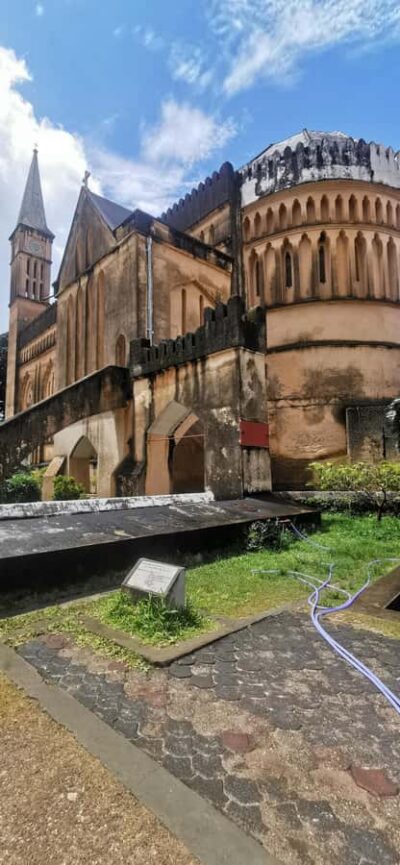
3 Hours Private Stone Town walking Tour with Guide
Read our review →
Stone Town Historical Cultural Walking Guided Tour
Read our review →
Stonetown: Food Markets and Street Food Walking Tour
Read our review →

Zanzibar full day Jozani forest + Spice farm and stone town
Read our review →
Browse the lists this tour appears in