
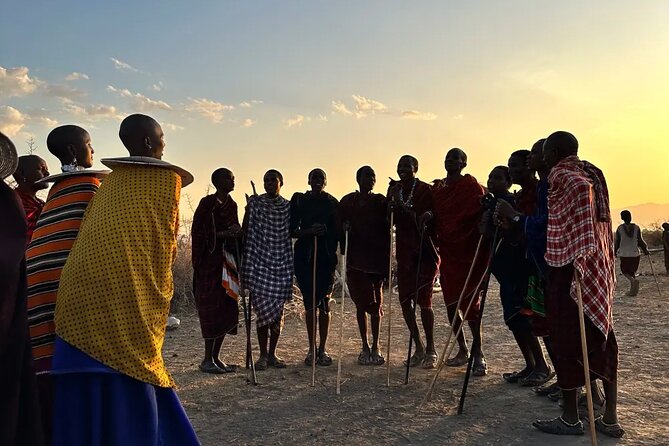
Reviewed · MAASAI VILLAGE TOURS
2 Day Massai Village Experience (all-incl.)
The most unusual part of this two-day trip is simple: you sleep in a traditional Maasai hut at Oltukai, a local village near Lake Manyara. This is not a quick cultural stop between safari drives. You spend enough time to watch village routines, meet Kipe Laizer and his family, and take part in ordinary tasks such as milking cows, herding goats, and making crafts.
I like the direct community benefit. Kipe Adventure gives 20 percent of its profit to support vulnerable children and orphans in Oltukai, with help aimed at clean water, food, and education. I also like the small maximum group of 15 people, which should make conversations and shared activities easier. The main consideration is comfort: a night in a traditional hut and a day around a rural village require a moderate level of physical fitness and an open mind.
Key things to know before you book
- One night in a traditional hut: You spend the night inside the Maasai community rather than returning to a standard hotel.
- Kipe Laizer leads the experience: He is a Tanzanian Maasai warrior and wildlife conservationist from the Lake Manyara region.
- Practical village activities: Expect opportunities to milk cows, herd goats, make traditional crafts, and learn about Maasai customs.
- A social purpose built into the price: Twenty percent of Kipe Adventure’s profit supports vulnerable children and orphans in Oltukai.
- Day two offers a choice: You may spend time at a local school or visit a waterhole, depending on the plan for your day.
- Private transport and meals are included: Dinner and breakfast are covered, while transport away from the village to the main road costs an extra $20 if needed.
What makes Oltukai different from a brief cultural stop
Many safari itineraries near Lake Manyara are built around wildlife viewing. This experience shifts attention toward the people who live in the region and the routines that shape their days. At Oltukai Maasai Village, you have time to ask questions, observe daily work, and take part in simple tasks instead of spending only a few minutes looking around.
That extra time matters. You might begin by learning about Maasai customs, beliefs, and family life, then move into practical activities. Milking cows and herding goats are not staged versions of a museum demonstration. They are examples of the work that keeps a rural community running.
The setting also adds to the experience. Oltukai is near Lake Manyara National Park, one of Tanzania’s well-known safari areas, so you get views across the African savannah and a sense of the close relationship between village life, livestock, wildlife, and conservation.
You should keep your expectations grounded. This is not presented as a luxury cultural retreat. It is a community stay, and the appeal comes from contact, simplicity, and participation. If you need a private bathroom, hotel bedding, and a tightly controlled schedule, this may not be the right two days for you.
More Maasai village visits in Tanzania:
- 5 Days Camping Tarangire, Serengeti & Ngorongoro crater & Visiting Maasai
★ 5.0 · 229 reviews - Maasai village visit, Materuni waterfalls & coffee experience
★ 4.5 · 95 reviews - 5 Days Camping Tarangire, Serengeti & Ngorongoro crater & Visiting Maasai
★ 5.0 · 58 reviews
Meeting Kipe Laizer and learning about conservation
Kipe Laizer, also known as Kipe Olesisian, is described as a Maasai warrior and wildlife conservationist from northern Tanzania. His background gives the experience a useful connection between Maasai culture and the nearby protected areas.
That connection is important because the Maasai have a long-standing relationship with livestock, land, and wildlife. The program gives you a chance to learn about the community’s role in conservation rather than treating the village as separate from the national park next door.
The experience is operated through Small World Social Travel, with Kipe Adventure directing part of its profits toward local needs. Twenty percent of profit goes to support vulnerable children and orphans in Oltukai. The stated goals include clean water, food, and education.
You should still ask questions during the visit. A responsible cultural experience should allow you to understand how the money is used and what the community needs most. The information provided here does not specify a detailed project report or a precise schedule for donations, so you should see the social contribution as a meaningful feature while keeping your expectations practical.
Day one at the village: work, customs, and a night under a traditional roof
Day one is planned as a long 12-hour visit, giving you most of the day to get settled and spend time with the community. The meeting point is the TotalEnergies Makuyuni Service Station at the junction to Karatu on Dodoma Road in Makuyuni.
Private transportation is included, and pickup is offered. Still, confirm the pickup details at booking because the published meeting point is specific. The experience returns you to that meeting point at the end, so it is worth planning your wider route around Makuyuni.
Once you reach Oltukai, the focus is on daily Maasai life. You may help milk cows, herd goats, and make traditional Maasai crafts. These activities give you something to do with your hands, which often leads to better conversations than simply standing and listening.
You also have time to learn about customs, beliefs, and local practices. The available details do not promise a fixed sequence, so the day may develop around village routines and the community’s schedule. That can be a strength, since the visit feels less like a performance, but it also means you should not expect every activity to happen at an exact time.
The night is the defining feature. You sleep in a traditional Maasai hut, an experience that brings you closer to the physical realities of village life. It also means you should prepare for basic conditions. The information does not specify bedding, toilets, electricity, or washing facilities, so ask the operator before arrival if those details matter to you.
Dinner is included. One especially appealing part of the experience is the chance to share tea and dinner in Kipe’s mother’s hut, a detail that gives the stay a family and household setting rather than a formal tourist presentation.
A parent may also consider this trip for an older child. A nine-year-old accompanied a parent on one visit and was welcomed into Kipe’s family. That does not remove the need to judge your own child’s comfort with a basic overnight stay, but it suggests the experience can work for families who are ready for a less polished setting.
Sunrise, school time, or the waterhole on day two
Day two begins with sunrise over Lake Manyara. The morning view is one of the quieter rewards of staying overnight. You are already near the village, so you do not lose the early hours to a long transfer from a distant hotel.
The day then offers two possible directions. You may spend time at a local school, where the focus is on shared activities with children, learning, laughter, and personal connection. The exact school program is not described in detail, so do not book this expecting a formal volunteer placement or a teaching assignment.
The other option is a visit to a waterhole. Water is a basic concern in dry rural areas, and this stop helps you understand the effort involved in sustaining people and animals. It also connects directly with the community support goals around clean water.
The school and waterhole options give day two a different tone from day one. The first day centers on village life and practical work. The second places more attention on children, water, and the conditions that shape the community’s future.
The schedule is again described as roughly 12 hours. That is a full day, so you should be prepared for time outdoors and a moderate level of physical activity. The tour does not provide a detailed accessibility statement, but it specifically asks for moderate physical fitness.
More two-day trips in Tanzania:
- 2 Day Serengeti Safari Experience from Mwanza
★ 5.0 · 198 reviews - 2 Days Tarangire and Ngorongoro Group Camping Safari
★ 5.0 · 146 reviews - 2 Days 1 Night Mikumi National Park from Dar es salaam
★ 5.0 · 60 reviews - 2 Day Safari To Mikumi National Park + transfers from Dar Es Salam
★ 5.0 · 56 reviews
What the $468.65 price covers
At $468.65 per person, this is not a low-cost overnight add-on. The value depends on what you want from a Tanzania trip.
The price includes private transportation, dinner, breakfast, and a conservation fee. You do not need to pay an extra conservation charge at the village. You are also paying for a two-day experience with an overnight stay, a local guide connection, community activities, and a stated social contribution through Kipe Adventure.
That makes the price easier to understand than a simple village entrance fee. Part of the cost supports the structure needed to host you, while 20 percent of profit goes toward vulnerable children and orphans. You also avoid arranging separate transport, meals, and village access on your own.
There are limits. The price does not include a $20 transfer to the main road if you want to leave the Maasai village during your visit. That extra cost is small compared with the full booking price, but it is useful to know in advance. The available information also does not state that drinks, personal purchases, or additional safari activities are included.
For a budget-conscious visitor who only wants a short cultural encounter, the cost may feel high. For someone who values an overnight stay and direct community support, the two days offer more substance than a brief roadside visit.
Group size, transport, and physical demands
The maximum group size is 15 people. That is small enough for a more personal experience, though it is not the same as traveling alone or with only one companion. If you want the most relaxed conversations, ask how many people are booked for your date.
Private transportation is included, and pickup is offered. The listed start and end point is the TotalEnergies Makuyuni Service Station, which sits on the A104 at the junction toward Karatu and Dodoma Road. The activity ends back at that meeting point.
The published operating hours cover every day from midnight to 11:30 p.m., but that broad window is not a precise departure time. Confirm your start time and pickup arrangement directly after booking.
Plan for a moderate fitness level. You may spend time walking around the village, helping with animals, visiting a school or waterhole, and remaining outdoors for long stretches. Since the accommodation is a traditional hut, bring a patient attitude toward basic facilities and ask ahead about anything you need for sleep or personal care.
The mobile ticket is convenient, and confirmation is normally provided at booking. If you book within four days of departure, confirmation may arrive within 48 hours and depends on availability.
The strongest reasons to choose this experience
I would choose this trip if you want cultural contact to be a major part of your Tanzania visit, not a short break from wildlife viewing. The overnight stay gives you time to adjust to the village rhythm and notice details that can be missed on a quick stop.
The social purpose is another strong reason. Money alone does not guarantee a responsible experience, but the stated 20 percent contribution and focus on water, food, education, children, and orphans give the program a clear local aim.
The welcome also sounds personal. Kipe’s family has hosted visitors for tea and dinner in his mother’s hut, and the experience is designed around local interaction rather than a large commercial camp. That family setting may be the part you remember most.
The main reason to hesitate is comfort and predictability. The details do not spell out sleeping arrangements, bathroom facilities, or the exact timing of activities. You should ask those questions before paying, especially if you are traveling with a child or have specific medical or mobility needs.
Who should book this Maasai village stay
This experience suits you best if you:
- Want a direct introduction to Maasai daily life near Lake Manyara
- Are comfortable with basic overnight conditions
- Enjoy hands-on activities such as animal care and craft making
- Prefer a small group over a large cultural show
- Want part of your spending to support children and community needs
- Have moderate physical fitness and can manage a long day outdoors
- Are combining cultural experiences with a Tanzania safari itinerary
It may not suit you if you want a luxury lodge, a fully fixed timetable, or a short and effortless excursion. It is also not the right choice if you expect a formal volunteer program, since the school visit is described as time with children rather than structured teaching work.
Book at least three full days before the start time if you want the option of a full refund. Cancellations made less than three full days ahead are not refunded, and late changes are not accepted. The experience also requires a minimum number of bookings. If that minimum is not reached, you are offered another date or experience, or a full refund.
Should you book the Oltukai overnight?
Book it if you want to sleep in a traditional hut, meet a Maasai family, and spend real time with a community near Lake Manyara. The strongest points are the personal setting, the chance to take part in ordinary activities, and the built-in support for vulnerable children and orphans.
Before committing, confirm the practical details of the hut, bathroom arrangements, pickup time, and day two schedule. If you can accept simple conditions and some flexibility, this $468.65 experience offers a thoughtful counterpoint to a standard safari. If your priority is comfort and a polished itinerary, spend your money on a lodge-based cultural visit instead.
FAQ
Where does the Maasai village experience start?
It starts at the TotalEnergies Makuyuni Service Station on A104, at the junction to Karatu and Dodoma Road in Makuyuni, Tanzania.
Does the experience include pickup?
Pickup is offered, and private transportation is included. Confirm the exact pickup arrangement and time after booking.
Where does the activity end?
The activity ends back at the meeting point at the TotalEnergies Makuyuni Service Station.
Is food included?
Dinner and breakfast are included in the experience.
Is the conservation fee included?
Yes. The conservation fee is included and does not need to be paid separately.
Can I cancel for a full refund?
Yes, if you cancel at least three full days before the experience start time. Cancellations made less than three full days in advance are not refunded.
Just added around Tanzania
- Walking in Stone Town with a Expert Tourguide★ 3.7 · 3 reviews
- Stone Town Tour★ 5.0 · 16 reviews
- Jet Ski Experience from Kendwa Beach★ 5.0 · 21 reviews
- Turtle Snorkeling, Jozani Forest, Kuza Cave, Rock Restaurant★ 3.7 · 8 reviews
- Zanzibar boat rental/charters★ 5.0 · 6 reviews
- Prison island(Changuu island) & stone town walking tour★ 5.0 · 6 reviews
- Full Day Private Zanzibar Triple Delight Tour★ 4.5 · 3 reviews
- Zanzibar Tumbatu Island Cultural Experience★ 5.0 · 4 reviews
Maasai Village Tours, compared.
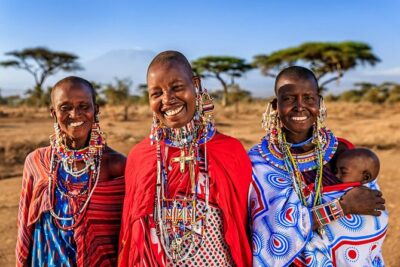
Maasai village visit, Materuni waterfalls & coffee experience
Read our review →
5 Days Camping Tarangire, Serengeti & Ngorongoro crater & Visiting Maasai
Read our review →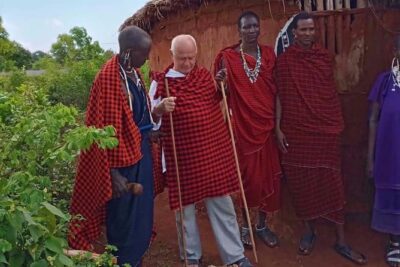
7-Day Private Tanzania Safari with Sunset Walking on the Crater Rim and Maasai
Read our review →
Maasai village visit and Chemka hot-springs with hot lunch.
Read our review →
5- Days Best Mid-range Safari and Maasai Village experience
Read our review →Browse the lists this tour appears in