
Reviewed · GREAT MIGRATION SAFARIS
8-Day Grumeti Migration Safari-Luxury Tour May-July
The main reason to choose this safari is its attempt to cover both the western Serengeti and central Seronera, giving you two strong wildlife areas during the May to July migration season. The Grumeti River crossing is never guaranteed, but this route gives you a sensible chance to be near the action while also seeing resident wildlife.
I like the private format, where your group has its own guide, and I like the care built into the daily meals. Guides such as Calvin Kileo, Bariki, William, and Ombeni are praised for patient driving, animal spotting, and thoughtful attention to comfort. The main drawback is the amount of time on the road, plus some itinerary wording that should be clarified before you pay.
Key points to know before booking
- Grumeti focus: May to July is the intended season for seeing wildebeest in the western Serengeti and possibly at the Grumeti River.
- Two Serengeti zones: You visit the western corridor and central Seronera, not just one migration area.
- Private safari: Only your group participates, with a professional driver-guide.
- Luxury with long drives: Lodges and tented camps are described as luxury properties, but daily transfers can still be tiring.
- Strong guide element: Calvin Kileo, Bariki, William, and Ombeni are names associated with careful driving and keen wildlife spotting.
- Broad wildlife circuit: Tarangire, Lake Manyara, Serengeti, and Ngorongoro Crater give you more than a migration trip.
Why the Grumeti River matters in May to July
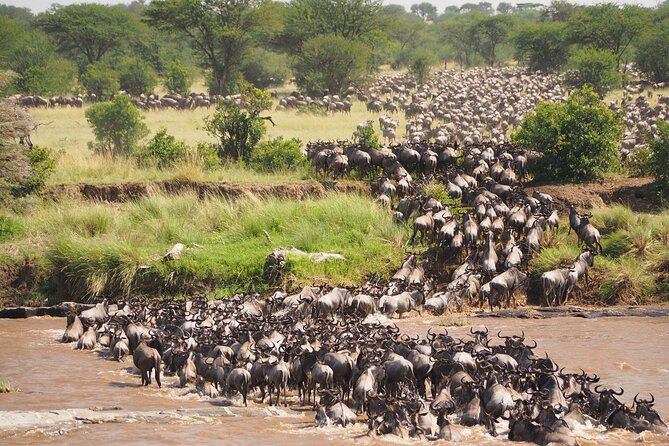
The wildebeest migration is not a single event that happens on a fixed date. It is a moving cycle shaped by rain, grass, and instinct. From May to July, many herds generally move northwest through the Serengeti toward the western corridor, where the Grumeti River becomes one of the better-known crossing areas.
That timing makes this safari appealing. Instead of spending all eight days in one part of the park, you move through Tarangire, Manyara, central Serengeti, western Serengeti, and Ngorongoro. You get a chance at migration action, but you also have several days focused on lions, elephants, birds, and other resident animals.
Still, you should keep expectations sensible. A river crossing depends on the herds’ exact position and the day’s conditions. You may see large groups gathering near the river, or you may see wildebeest moving through open country without a dramatic crossing. The route improves your odds, but no safari company can schedule nature like a train.
More Great Migration Safaris in Moshi
- 6 Days Tanzania Budget Camping Safari with Migration
★ 5.0 · 31 reviews - 10-Day Wildebeest Migration Calving Safari -All Inclusive
★ 5.0 · 30 reviews - 5 Days Tanzania Safari – Migration and Big 5 Safaris
★ 5.0 · 14 reviews
Day 1: Kilimanjaro Airport to Arusha
The trip begins with pickup at Kilimanjaro Airport and a transfer to Arusha for dinner and an overnight stay. Arusha sits near Mount Meru and serves as a practical starting point for northern Tanzania’s parks.
This first day is more about getting settled than sightseeing. The listed transfer takes about four hours, so confirm the exact pickup time and route if your flight arrives late. You should also check if your airport transfer includes a private vehicle for your group and whether the Arusha hotel is part of the quoted price.
The overnight stop is useful. Rather than pushing directly into a long park drive after an international flight, you get a bed, dinner, and a short briefing before the safari begins properly.
Day 2: Tarangire’s elephants and quiet roads
After breakfast and a safari briefing, you drive to Tarangire National Park for a full game drive. The park is especially known for elephants, birds, and a quieter feel than some of Tanzania’s more famous parks.
Tarangire is a good opening act because it gives you a broad introduction to wildlife without making the migration the only goal. The park is also known for its elephant movement, so you have a strong chance of seeing large herds during the game drive, although sightings are never promised.
Lunch is prepared in the park, with soup, bread rolls, a main dish, fruit salad, wine, tea, and coffee. That sounds generous, and it removes the need to return to a lodge in the middle of the day. It also means your day remains focused on wildlife rather than dining logistics.
The tradeoff is the length of the day. An eight-hour park program followed by a lodge transfer can feel full, especially after the arrival day. Ask for the location of the Tarangire lodge and the expected driving time from the park gate.
Day 3: Lake Manyara and a strong bird day
Lake Manyara National Park provides a different kind of safari setting. More than 400 bird species have been recorded here, and the park is known for elephants and the possibility of seeing lions in acacia trees.
You should think of Manyara as a bird and habitat day rather than a guaranteed big-cat day. The park’s narrow strip between the lake and the escarpment creates varied scenery, and the drive can produce a long list of smaller sightings alongside larger animals.
The same hot lunch arrangement is used here, with a shaded table near the vehicle and a full meal. You will appreciate that setup if you prefer not to carry a packed sandwich through a long day. The supplied vehicle is described as air-conditioned, another useful detail during warm afternoon drives.
Manyara can be affected by water levels and local conditions, so the experience may vary. It is also another full eight-hour day, followed by dinner and an overnight stay at the lodge. If your main goal is the migration, this stop adds variety but also takes time away from the Serengeti.
More Luxury Safaris in Moshi
- 8-Day Essence of Tanzania Safari – Luxury
★ 5.0 · 72 reviews - 7-Day Magical Tanzania Safari -Premium High End Package
★ 5.0 · 53 reviews - Tanzania Luxury Safari
★ 5.0 · 48 reviews - 5-Day Majestic Tanzania Safari – High End All Inclusive
★ 5.0 · 44 reviews
Day 4: Entering the Serengeti
The fourth day takes you into Serengeti National Park, with the focus on big cats and the Big Five. The Serengeti is valuable even without the migration because it supports large numbers of resident animals, including lions and other predators.
The drive into the park is part of the experience, but you should prepare for a long day in the vehicle. The itinerary describes an afternoon hot lunch, continued game viewing, and then a late transfer toward Ngorongoro for the night.
That sequence needs clarification before booking. The following day is assigned to the western Serengeti and Grumeti area, so you should confirm exactly where you sleep on night four and how the route connects. It may be a simple wording issue, but the difference between sleeping inside the Serengeti and near Ngorongoro affects both driving time and your morning start.
Day 5: The western Serengeti and Grumeti area
This is the safari’s most migration-focused day. You head toward the western Serengeti, spending the day near the Grumeti area while looking for wildebeest movement, river activity, big cats, and other wildlife.
The Grumeti River crossing is the headline attraction, but patience matters. A crossing can happen quickly, slowly, or not at all while you are in the area. You may spend time watching herds move, waiting near a likely crossing point, or following other animals while the wildebeest remain elsewhere.
This is also where a good guide matters most. Bariki is praised for explaining animal behavior and locating animals that are easy to miss. William is praised for spotting wildlife, identifying species, and driving carefully over rough roads. You should ask for a guide who is comfortable explaining both the migration and the wider ecosystem, not just pointing out animals.
The day includes another prepared lunch and continues until evening. Staying close to the western corridor is a major advantage, since long morning transfers can cost you valuable viewing time.
Day 6: Central Seronera’s year-round wildlife
The route then shifts to central Serengeti and the Seronera area. This is a useful counterpoint to the migration search because Seronera is known for resident wildlife and strong big-cat viewing.
Here, you are not relying entirely on the wildebeest being in the right place. Lions, elephants, and other animals may remain in the area across seasons, giving the itinerary more balance. If the Grumeti crossing does not happen, this day helps protect the trip from becoming a single-purpose gamble.
You again have breakfast, a full game drive, a hot lunch, and an evening return to camp or lodge. The repeated meal pattern is practical, though the schedule can feel similar from one day to the next. Bring patience, comfortable clothing, and a willingness to spend many hours watching rather than constantly moving.
Day 7: Moving toward Ngorongoro
The seventh day includes more Serengeti game viewing before an afternoon or late transfer to Ngorongoro. The route description again uses broad timing, so ask how much time you will actually spend inside the park before leaving.
This day is valuable because it gives you another chance at predators and plains wildlife. It also positions you for the final morning at Ngorongoro Crater rather than trying to reach the crater from farther away.
The drive can be tiring. You are covering large distances across northern Tanzania, and the word luxury refers mainly to the lodging style and service level, not to short travel days. Ask how many nights are in tented camps and how many are in permanent lodges, since comfort standards can differ from one property to another.
Day 8: Ngorongoro Crater and the return to Arusha
The final morning starts early with a drive into Ngorongoro Crater. The crater is a huge volcanic caldera, about 20 kilometers across and roughly 600 meters deep, with an area of about 300 square kilometers.
A crater game drive is a fitting final scene. The enclosed setting can make wildlife viewing feel concentrated, and Lake Magadi is included as one of the places visited. The itinerary includes lunch under the vehicle shade before the return drive to Arusha and airport drop-off.
The listed crater portion says four minutes, which is clearly not a realistic description of the actual activity. Treat it as a data error and confirm the day’s timing directly. Your flight departure time matters, since a crater visit followed by a road transfer to the airport can make for a tight final day.
What the $6,276 price really covers
At $6,276 per person, this is a major purchase. The value depends on what you want from a safari and on the exact accommodation category included.
The price covers park fees for non-residents, a professional driver-guide, airport transfers, eight breakfasts, seven lunches, and seven dinners. It also includes a private tour, so you are not sharing the vehicle with an unknown group. That privacy can make a real difference when you want to stop longer, ask questions, or adjust the pace.
The quoted price does not include international flights, extra nights before or after the safari, tips, insurance, visa fees, or personal purchases. A tipping guideline of $15 per person per day is provided, so budget at least that amount in addition to the tour price.
You should ask for the names and locations of the lodges and camps before booking. A luxury tented camp can offer a close-to-nature setting, but luxury standards vary. Confirm room types, bathroom arrangements, electricity, laundry, and whether all listed nights are included.
The guide can make or break the safari
Wildlife knowledge matters, but so do road skills, patience, and communication. The strongest guide comments attached to this experience focus on careful driving, spotting ability, explanations, and personal attention.
Calvin Kileo is described as especially conscientious, kind, and careful, with a sharp eye for finding animals and a habit of keeping water available. Bariki is praised for animal stories and for taking time to answer questions. William is noted for patient driving, knowledge of species, and familiarity with road conditions.
Ombeni is described as attentive to temperature and seating comfort, which sounds minor until you spend eight hours in a safari vehicle. These details tell you what to ask for: a guide who checks on the group, explains what you are seeing, and does not treat the drive as a race.
The provider is Gosheni Safaris (T) Limited. Since the tour is private, request the guide’s name when possible and discuss your priorities before departure. If migration viewing is your main goal, say so clearly.
Comfort, meals, and the reality of safari roads
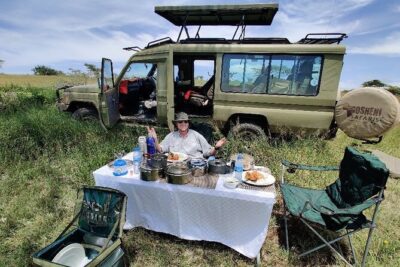
The meal setup is one of the more distinctive practical features. Instead of relying only on boxed lunches, the driver prepares a hot meal with soup, bread, a main course, fruit salad, wine, tea, and coffee. Tables are set under the vehicle shade, giving you a proper break during long game drives.
The vehicle is described as air-conditioned, which is helpful in warm weather. Still, air conditioning does not remove the bumps, dust, or fatigue that come with long park roads. Pack a light layer, sun protection, water, and any medication you need during a full day away from the lodge.
The experience is best for couples, families, or friends who want a private schedule and are comfortable with long drives. It is less suitable if you want a slow hotel holiday with short excursions and plenty of free time.
Booking details worth checking first
Confirmation is provided at booking, and most people can participate. The tour starts with pickup at Kilimanjaro Airport, not directly in central Moshi, so confirm your arrival details carefully.
The cancellation policy allows a full refund if you cancel at least 24 hours before the experience begins. Changes or cancellations inside that window are not accepted, and poor weather may lead to a different date or a full refund.
Before paying, ask for four clarifications: the exact accommodation list, the night-by-night route, the real timing of the Ngorongoro days, and the plan if the wildebeest are not at the Grumeti River. Clear answers will help you judge the luxury claim and the practical value.
Should you book this safari?
You should book it if you want a private, high-end northern Tanzania circuit with a serious attempt at the western Serengeti migration. The combination of Grumeti, Seronera, Ngorongoro, Tarangire, and Manyara gives you more depth than a short migration-only trip.
You should think twice if your schedule cannot handle long drives or if you need a guaranteed river crossing. Nature sets the timetable, not the itinerary. At this price, I would also insist on written confirmation of every lodge and the route between Serengeti and Ngorongoro.
For a couple, family, or small group that values privacy, strong guiding, prepared meals, and broad wildlife coverage, this is a promising choice. Just verify the accommodation and route details before booking, then go for the animals, not a guaranteed postcard moment.
FAQ
How long is the safari?
The experience lasts approximately eight days.
When is this safari scheduled?
It is designed for the May to July period, when wildebeest are often found in the western Serengeti and around the Grumeti area.
Where does the safari start?
Pickup is offered at Kilimanjaro Airport in Tanzania.
Is this a private tour?
Yes. Only your group participates in the tour.
Which parks and areas are included?
The route includes Tarangire National Park, Lake Manyara National Park, Serengeti National Park, the western Grumeti area, central Seronera, Ngorongoro Conservation Area, and Ngorongoro Crater.
Are meals included?
Breakfast is included for eight days, lunch for seven days, and dinner for seven days.
Are park fees included?
Park fees for non-residents are included.
What is not included in the price?
International flights, extra accommodation before or after the safari, tips, travel insurance, visa fees, souvenirs, and other personal items are not included.
More Eight-Day Trips in Moshi
- 8-Day Tanzania Private Safari Tour with Airport Pickup
★ 5.0 · 12 reviews - 8 Days 7 Nights Private Lodge Safari
★ 4.0 · 4 reviews - 8 Days Tanzania Adventure Tented Camps Safari
★ 5.0 · 4 reviews - 8 Day Tanzania Family Safari
★ 5.0 · 3 reviews
More Safaris in Moshi
- Big Five Safari In Tanzania
★ 5.0 · 99 reviews - 6 Days 5 Night Safari
★ 5.0 · 57 reviews - 4-day Tanzania Safari
★ 5.0 · 53 reviews - 4 days adventure camping safari
★ 5.0 · 44 reviews
Just added around Moshi
- Day trip to Materuni waterfall, Coffee tour and Moshi Nightlife★ 5.0 · 6 reviews
- Sip & Paint: Unleash Your Inner Artist!★ 5.0 · 7 reviews
- Rau Forest Bike tour★ 5.0 · 12 reviews
- Private Market Tour and Tanzanian Cooking Class in Moshi★ 5.0 · 7 reviews
- Moshi city bike day trip★ 5.0 · 17 reviews
- Full-Day Moshi Private Forest Walk and Local Market Tour★ 5.0 · 4 reviews
- Private guided tour to the night lifestyle of Moshi town★ 5.0 · 13 reviews
- Savannah Escape & Active Culture Tour★ 5.0 · 9 reviews
Great Migration Safaris, compared.
8 Days Great Wildebeest Calving Migration Safari from Arusha
Read our review →
8 Day Spectacular Migration Serengeti mid -Range Tanzania Safari
Read our review →
Private 6-Day Great Migration Ndutu Serengeti Safari Tour
Read our review →
6 Days Tanzania Budget Camping Safari with Migration
Read our review →10-Day Wildebeest Migration Calving Safari -All Inclusive
Read our review →
8 Days Great Wildebeest Migration – Mara River Crossing
Read our review →
Tanzania Safari – The Great Migration in the North of the Serengeti and Lake Natron
Read our review →
5-Days Private Serengeti Wildebeest Migration Lodge Safaris
Read our review →Browse the lists this tour appears in