
Reviewed · WORKSHOPS
Private Traditional Pottery Class near Arusha
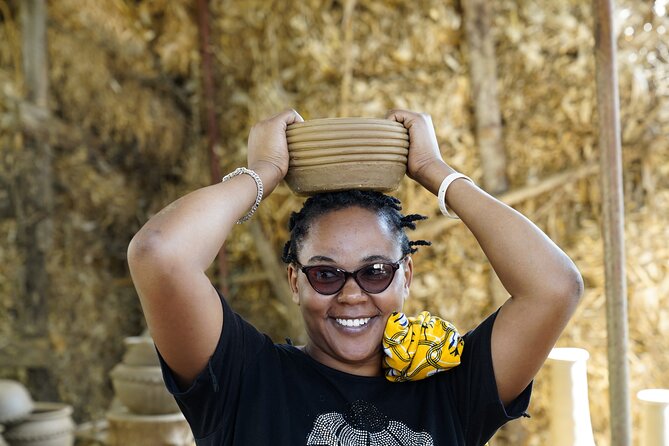
The best part of this Arusha outing is getting your hands on locally mined Tanzanian clay and shaping it on a foot-powered wheel. A local potter guides you through preparing, turning, trimming, and firing your piece, so you are not just watching a demonstration. You make something yourself, then take it home.
I like the direct connection to village craft and the chance to learn about the Meru people from a local guide such as Reuben. I also like that the visit supports The Small Things, a nearby project working with vulnerable children and families. The main drawback is practical: lunch is not included in the stated price, and hotel pickup from Arusha is not provided.
Key points to know before booking
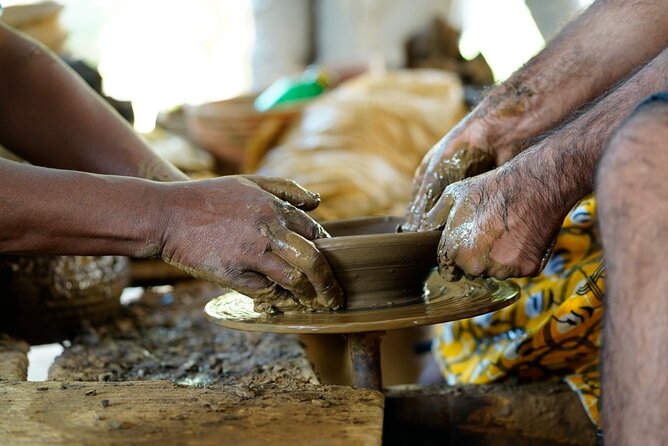
- Your pottery is made with local clay: You prepare and shape the material yourself, then take your finished creation home.
- The wheel is powered by foot: This gives the class a traditional feel and makes the process more hands-on than a standard studio lesson.
- The Small Things is part of the visit: You learn about its work with orphaned and vulnerable children and local families.
- Guides add cultural context: Reuben is named in the visitor information, while Kitomary is the artist associated with the pottery instruction.
- The class is small: A maximum of eight people allows for direct help at the wheel.
- Lunch costs extra: Bottled water, tools, equipment, and materials are included, but lunch can be arranged for $10.
Shaping clay the traditional way in Tengeru
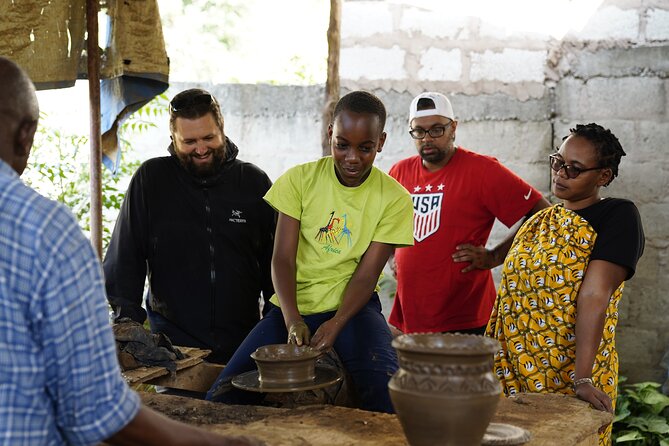
This is a compact two-hour class near Arusha, but it gives you a clear look at how pottery is made from start to finish. The setting is Tengeru, an area outside the city where local potters use clay mined nearby rather than imported studio material.
That detail matters. The clay connects the finished pot to the place where you are visiting. Your pot may not be perfectly symmetrical, and that is part of the charm. You are learning a working craft, not producing a factory item.
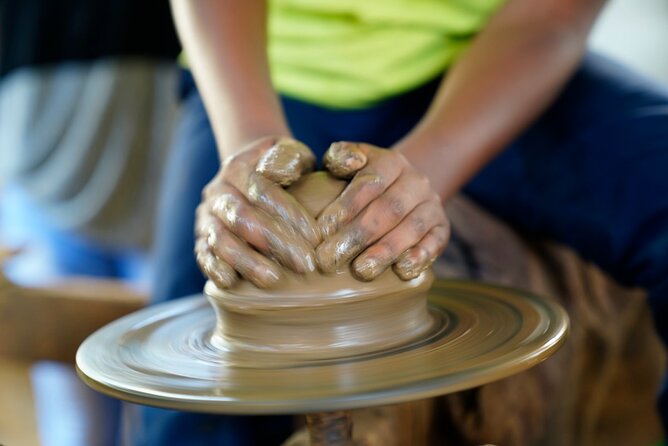
The process begins with preparing the clay. You learn how it is handled before it reaches the wheel, then move on to turning it into shape. The class also covers trimming and firing, giving you a complete picture rather than a short session focused only on making a rough form.
Your wheel is foot-powered. It requires a little coordination, since one part of you controls the wheel while your hands guide the clay. That can feel awkward at first, especially if you have never worked with pottery. The instructor is there to help, and the small group limit means you should have room to ask questions and correct your technique.
Kitomary is identified as the pottery artist who teaches the clay work. His role is more than showing you where to put your hands. The class introduces the skill behind traditional pottery, including the patience needed to keep the clay centered and the shape under control.
More Private Tours in Arusha
- 5 Days Budget Private Safari, Tanzania
★ 5.0 · 191 reviews - 5-Day Private Northern Tanzania Safari from Arusha
★ 5.0 · 182 reviews - 6 Days Private Budget Safari
★ 5.0 · 163 reviews
A visit to The Small Things before the class
The outing also includes a visit to The Small Things. This organization supports orphaned and vulnerable children, along with families in the local community. You learn about its work before continuing to the pottery area in Tengeru.
This stop gives the activity a wider purpose. You are not only paying for a craft lesson. Part of the outing connects tourism income with a local project that works directly with families and children.
It is worth approaching this visit with respect and an open mind. The information provided does not promise a long tour of the organization or a particular set of activities with children. Instead, expect to hear about its work and understand how the program fits into the day.
One visitor described taking part in an activity with children from The Small Things, but that should not be treated as a guaranteed part of every booking. The listed program centers on learning about the organization and then making pottery. If meeting children or joining a volunteer activity matters to you, ask the provider what is planned for your date.
Learning about the Meru people with a local guide
The pottery is the main event, but the cultural explanation adds useful context. Your guide discusses the history and culture of the Meru tribe, whose communities are associated with the area around Arusha and Mount Meru.
This is one reason a local guide matters. Pottery can be reduced to a quick craft demonstration, but the discussion helps place the work within local life. You can ask about how pottery is made, how it is used, and how the tradition fits into the community.
Reuben is named as a guide connected with the outing. Andrew is also mentioned in the visitor information, and Kitomary is the artist associated with the pottery class. The exact guide team may vary, so you should not assume that all three will be present.
The strongest praise for the guides focuses on friendliness, clear teaching, and the welcoming feel of the day. One family of five found the class easy to enjoy together, and a solo participant also found the pottery studio friendly. That makes this a good choice if you want a social activity without joining a large bus group.
What you actually make and take home
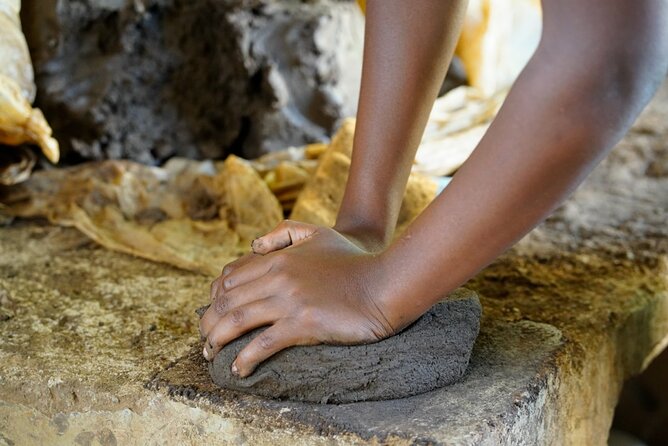
The main souvenir is the piece you create. The class is designed so you can take your pottery home as a personal reminder of Tanzania. That gives the activity more value than a demonstration where you leave with only photographs.
The finished object may show the marks of your learning. Do not expect every piece to look like the instructor’s work. Pottery takes practice, and the point here is to try the method, feel the clay, and understand how the form develops.
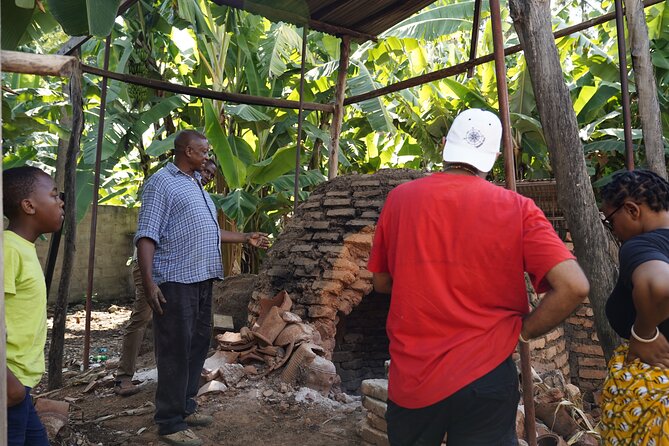
The class covers preparing, turning, trimming, and firing. Firing is done in a traditional kiln, which is an important part of the process. It also means the final result depends on a stage you do not fully control yourself. Ask the guide how and when the piece will be fired, especially if you need to know when it will be ready to take home.
The available information says you can take your creation home, but it does not specify its size, packing method, or how it is handled after firing. If you are continuing to another destination, bring a little space in your luggage and ask about safe wrapping.
More hands-on workshops in Arusha:
- Cooking and Sewing & Jewelry Workshops in Arusha
★ 5.0 · 14 reviews - Zanzibar: Spice Farm Tour with Traditional Cooking Lesson
★ 4.8 · 77 reviews - Gifts and art lessons
★ 5.0 · 35 reviews - A private half day spice farm with a cooking lesson
★ 5.0 · 13 reviews
How the $50 price compares with the day
At $50 per person, this is priced above a simple one-hour craft demonstration, but the value comes from the full combination of activities. You receive instruction, local tools, equipment, materials, bottled water, cultural interpretation, a visit to The Small Things, and a handmade souvenir.
The group limit also matters. With no more than eight people, the instructor can give more attention than you would normally get in a large workshop. Pottery needs hands-on correction, so this is one area where a small group can justify the price.
The price does not include hotel pickup from Arusha. You need to arrange your own way to the meeting point on Unnamed Road, Tanzania. The activity finishes back at that meeting point, so include transport time and cost when working out the real budget.
Lunch is the other cost to watch. The highlights describe lunch as part of the day, but the detailed inclusion information says lunch is not included. Lunch can be provided at The Small Things for an additional $10. I would budget for that extra charge rather than assume food is covered.
For a two-hour class, $50 is reasonable if you care about making something and meeting local instructors. It is less appealing if you want a long cultural tour, a full meal, or transportation from your hotel included in the same price.
Who will enjoy this class most
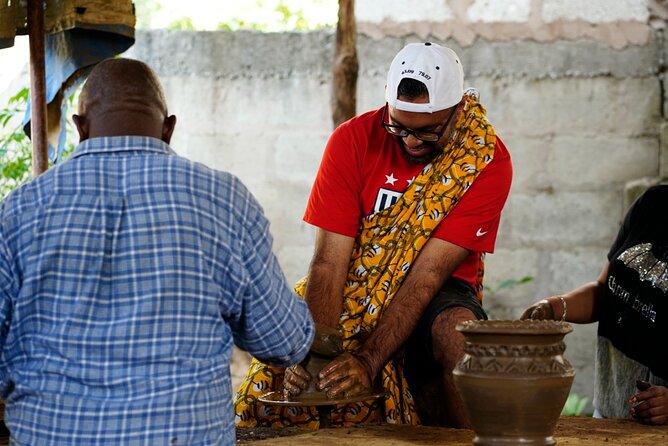
This works well for families, couples, solo visitors, and small groups. A family of five has enough room to participate together, and the maximum group size of eight keeps the lesson manageable.
You do not need to be an experienced potter. Most people can participate, and all tools and materials are supplied. The foot-powered wheel may take a few attempts, but the class is structured around learning rather than perfect results.
It suits people who prefer a slower cultural activity over a packed sightseeing schedule. You will spend time handling clay, listening to instruction, and talking with local people. If you want constant movement or a long list of attractions, the two-hour format may feel limited.
It is also a good option for anyone who wants a meaningful souvenir. A shop-bought object can be attractive, but your own uneven pot carries a direct memory of the place, the instructor, and the process.
The activity may be less suitable if you have very limited time in Arusha and cannot arrange transport to the meeting point. Since there is no hotel pickup, the transport plan needs to be settled before the class begins.
Practical details for your visit
The class lasts about two hours. The stated maximum is eight participants, which should keep the teaching fairly personal. Confirmation is provided when you book, and the activity is available with a mobile ticket.
The meeting point is on Unnamed Road, Tanzania. The activity returns to that same meeting point rather than ending at a hotel or another central stop. Public transportation is nearby, and service animals are allowed.
Most people can take part. The provided information does not list specific physical requirements, but pottery involves handling clay and using a foot-powered wheel. If you have mobility concerns, contact the provider before booking and ask about the setup.
The activity requires good weather. If poor weather forces a cancellation, you are offered another date or a full refund. You can also cancel for a full refund if you do so at least 24 hours before the start time. Changes or cancellations made later are not accepted for a refund.
The experience is often booked well ahead, with an average booking lead time of about 62 days. That suggests you should reserve early if your dates are fixed, especially if you want a small group or are visiting during a busy safari season.
Lunch, clothing, and simple preparation
Clay work is hands-on, so wear clothes that can handle dust or a smear of wet clay. The provided details do not list a dress code, but practical clothing is a sensible choice. You should also expect to wash your hands after working.
Bottled water is included. Lunch is optional at The Small Things for $10, but it is not part of the $50 cost according to the inclusion details. Confirm the lunch arrangement when booking so you know if you need to bring food or cash.
All tools, equipment, and materials are supplied. You do not need to bring clay, a wheel, or firing equipment. Your most useful extras are transport money, a phone for the mobile ticket, and enough room to carry the pottery home safely.
Is the pottery class worth booking?
I would book this if you want a small, hands-on activity that connects craft, local culture, and community work. The strongest reasons are the use of local clay, the traditional foot-powered wheel, the personal instruction, and the chance to take home something you made yourself.
The class is especially appealing for families and solo visitors who want an easy way to meet local people. Reuben’s guiding, Kitomary’s pottery instruction, and the visit to The Small Things give the outing more substance than a standard craft lesson.
I would pause if you need hotel pickup, a full meal included, or a long sightseeing program. You must reach the meeting point yourself, lunch costs another $10, and the class lasts only about two hours.
For most visitors who value direct contact with local craft, $50 is fair. Book it early, confirm lunch and transport, and treat the finished pot as a handmade record of your time near Arusha rather than a perfect studio piece.
FAQ
How long does the pottery class last?
The activity lasts approximately two hours.
Where does the activity take place?
The pottery class takes place in Tengeru, near Arusha, Tanzania.
What is the price?
The listed price is $50 per person.
Is lunch included?
Lunch is not included in the stated price. It can be provided at The Small Things for an additional $10.
Is bottled water provided?
Yes. Bottled water is included.
Are pottery tools and materials provided?
Yes. All tools, equipment, and materials are included.
Can I take my pottery home?
Yes. You can take your pottery creation home as a souvenir.
Is hotel pickup available from Arusha?
No. Pickup from local hotels or Arusha is not included. You must meet the group at the stated meeting point.
How many people can join the activity?
The maximum group size is eight participants.
What happens if bad weather cancels the class?
If poor weather causes a cancellation, you can choose another date or receive a full refund. You can also cancel up to 24 hours before the start time for a full refund.
Just added around Arusha
- From Arusha: 11 days The Classics Northern Tanzania safari★ 5.0 · 11 reviews
- 6-Day Mount Meru Climb through Momella Route Guided Tour★ 5.0 · 5 reviews
- Private Day Trip to Arusha National Park with a Walking Safari★ 5.0 · 4 reviews
- From Arusha : 11-day Amazing North Tanzania safari tour★ 5.0 · 4 reviews
- Walking Day Tour to Safari in Arusha National Park★ 5.0 · 5 reviews
- 2 Days Tanzania Midrange Group Join Safari★ 5.0 · 7 reviews
- Best 5 Days Tanzania Private Luxury Safari with luxury Lodges★ 5.0 · 12 reviews
- Waterfall & Coffee Walking Tour★ 5.0 · 6 reviews
Workshops, compared.
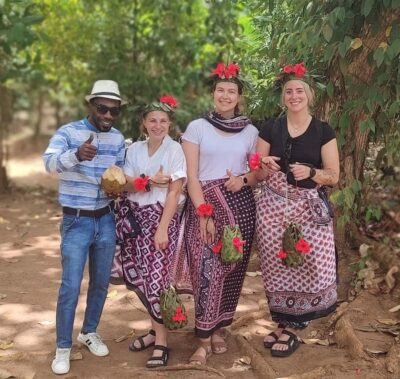
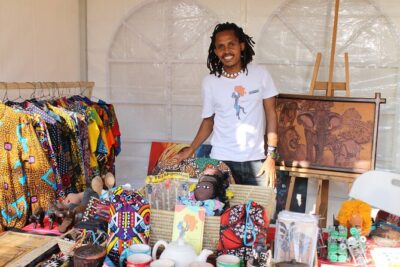
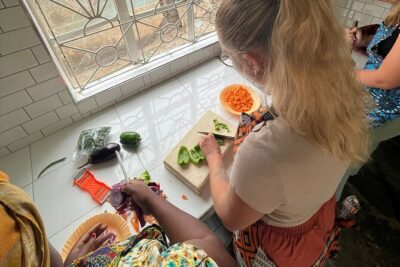
Cooking and Sewing & Jewelry Workshops in Arusha
Read our review →Browse the lists this tour appears in