
Reviewed · DAY TRIPS IN NGORONGORO
Ngorongoro Crater Day Trip
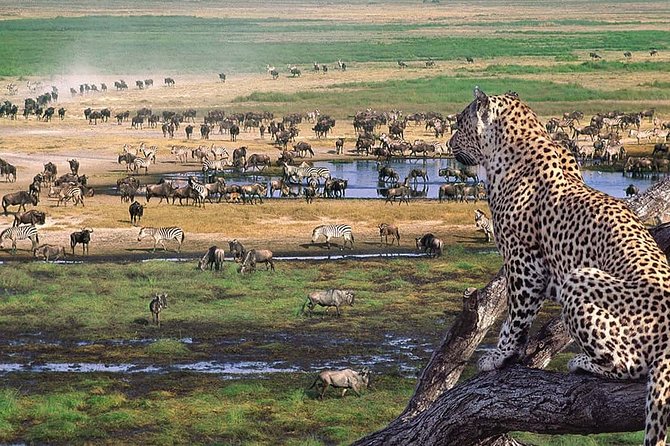
The Ngorongoro Crater is the star here: a huge collapsed volcano where open grassland, forest, lake, and swamps sit inside one dramatic bowl. From Arusha, you set out before sunrise, descend roughly 2,000 feet, and spend a half-day looking for lions, rhinos, hippos, hyenas, elephants, antelope, and birds.
I like the small maximum group of six, which gives you a better chance of seeing from the vehicle without a crowd of elbows. I also like the picnic lunch beside crater swamps, where hippos and birds add some life to your midday break. The main concern is reliability: one vehicle broke down inside the crater and left its passengers waiting about four hours, so ask about rescue arrangements before you pay.
Key points at a glance
- A full crater safari from Arusha: You descend into a collapsed volcanic bowl for a concentrated wildlife outing.
- Six-person maximum: A small group can make vehicle seating and game viewing more comfortable.
- Wildlife in several habitats: Forest, open grassland, lake, and swamp areas offer different chances for animal sightings.
- Picnic lunch near hippos and birds: The midday stop is part of the setting, not just a quick meal in a parking area.
- Guide support in three languages: The professional guide is listed as speaking English, Spanish, and French.
- Plan for a very early start: The meeting time is 5:00 a.m., while the day plan also refers to a 6:00 a.m. departure.
Why Ngorongoro Works as a One-Day Safari
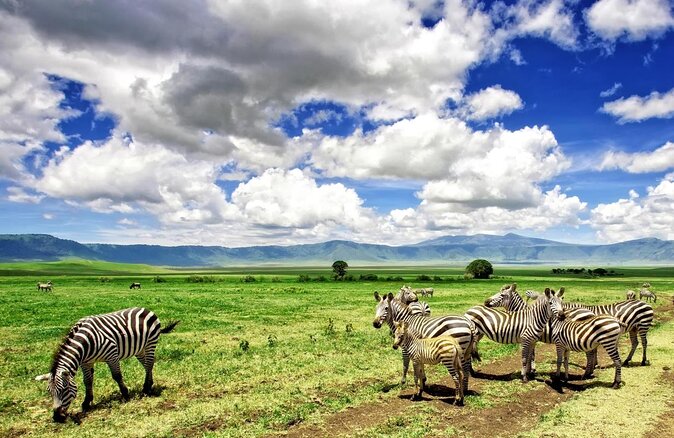
Ngorongoro suits you if you want a serious wildlife experience but do not have time for a longer safari circuit. The crater packs several habitats into a compact area, so you can spend one day seeing forest, open savannah, lake edges, and swamp country rather than driving between widely separated parks.
The setting is unusual even before the animals appear. You travel down into a vast volcanic depression formed by a collapsed volcano. The crater is described as stretching across 102 miles, and the route drops about 2,000 feet to the floor. That change in height gives the day a strong sense of arrival.
I would not treat this as a casual sightseeing drive. The start is extremely early, the ride from Arusha takes planning, and the wildlife sightings are never guaranteed. Still, the chance to see a lion in open grassland, flamingos near the lake, or hippos in a swamp makes the long day worthwhile for many safari first-timers.
The activity is listed at about six and a half hours, although the schedule also gives a six-hour outline and says you return to Arusha or the airport in the evening. Those details do not line up perfectly. Before booking, confirm the actual pickup time, expected return time, and whether an airport drop-off is available for your travel date.
More Day Trips in Ngorongoro
- Ngorongoro Crater Day Trip
★ 5.0 · 72 reviews - Full-Day Trip to Ngorongoro Crater from Arusha Town
★ 5.0 · 37 reviews - Ngorongoro Crater Day Trip – Shared Group Safari
★ 5.0 · 16 reviews
The 5:00 a.m. Start from Arusha
The day begins early, with the meeting time listed as 5:00 a.m. Another part of the schedule says you start from Arusha at 6:00 a.m. with a lunch box. Treat this as a point to settle before departure, not a minor detail. A one-hour difference matters when you are arranging a hotel breakfast, airport transfer, or a night before an onward trip.
Breakfast is included, along with drinking water and soft drinks. Lunch is also included, and the plan calls for a packed meal for the crater. Dietary requirements can be requested, but you should provide those details when booking rather than waiting until the morning of the trip.
Pickup is offered, and the activity begins and ends in Arusha unless an airport return has been arranged. Since the published plan mentions both a drive back to Arusha and a possible airport drop-off, ask the operator to confirm your exact end point in writing.
This is a mobile-ticket experience, and confirmation is provided at booking. Public transportation is nearby, though most people joining a pre-dawn safari will use the arranged pickup rather than try to reach a meeting place on their own.
Descending 2,000 Feet Into the Crater
The descent is more than a transfer between two points. You leave the city and move toward a contained wildlife area where the crater walls frame the day. The scenery changes as you drop toward the floor, and the forest section is especially useful for seeing how different habitats support different animals.
The forest is described as a place where you might see monkeys and elephants. It is not just a scenic backdrop. Forest cover means animal sightings can be less open than on the grassland, so your guide’s ability to spot movement matters here.
Once you reach more open ground, the viewing becomes easier in some places. The crater floor includes open savannah, lake areas, and swamps. These settings give you different chances to see large mammals and birds, but you should keep your expectations sensible. A safari is a search, not a scheduled parade.
The operator provides a professional driver and guide. Guide support is listed in English, Spanish, and French, which is useful if you want explanations in one of those languages. No individual guide names are supplied, so if a particular language or guide matters to you, confirm who will lead your departure.
Lions, Rhinos, Hippos, and Smaller Signs of Life
The central appeal is the range of animals in a relatively concentrated area. The planned sightings include lions, rhinos, hippos, hyenas, antelope, elephants, monkeys, and flamingos. That list covers predators, large herbivores, water animals, and birds, giving the day more variety than a drive focused on one species.
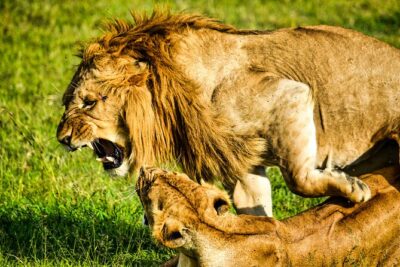
Lions hunting in the open savannah are singled out as a highlight. Open ground can make an action scene easier to follow than a sighting in thick vegetation, though nobody can promise a hunt on your particular morning. Your guide will need to watch animal behavior and position the vehicle carefully without turning the sighting into a noisy chase.
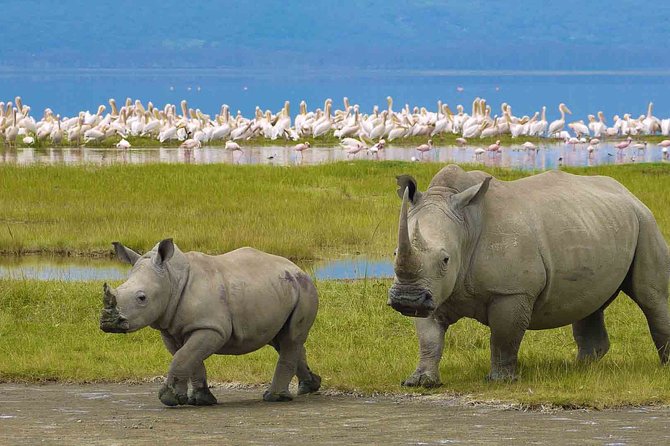
Rhinos are another reason this trip attracts safari newcomers. They are listed among the possible animals, but sightings are not guaranteed. Keep your camera ready, yet do not measure the entire day by one rare animal. Hippos, hyenas, elephants, and antelope can make the outing worthwhile even if the rhinos stay out of view.
The lake area brings a different mood. Flamingos near the water add color, while the swamps support hippos and birds. These stops break up the open savannah and give you a better sense of how water shapes life inside the crater.
Same corner of Ngorongoro, a completely different kind of day:
- 3-Day Ngorongoro Crater Manyara and Tarangire Safari from Arusha
★ 5.0 · 49 reviews - 4 Day Ngorongoro Crater Tarangire and Serengeti National Park
★ 5.0 · 44 reviews - Arusha: 3-Day Safari to Ngorongoro Crater and Serengeti
★ 4.1 · 43 reviews - 6 days 5 nights safari Ngorongoro, Serengeti and Tarangire National Parks
★ 5.0 · 39 reviews
A Picnic Lunch Beside the Crater Swamps
At about 1:00 p.m., you are scheduled to stop for a picnic lunch at a site with views toward swamps, hippos, and birds. This is one of the better details of the day because lunch is tied to the crater setting rather than treated as an unrelated pause.
The meal is included, as are breakfast, water, soft drinks, fees, and taxes. Other dietary needs can be arranged on request. The food is carried as a lunch box, so expect a practical safari meal rather than a restaurant service.
A picnic stop also gives you a chance to rest after the early start. Six hours of game viewing can be tiring, especially if the road is rough or the vehicle is crowded. The listed six-person limit helps here, although the actual comfort will still depend on the safari vehicle and how many seats are occupied.
Pay attention to the safety instructions at the picnic area. Hippos may look slow and harmless from a distance, but they are wild animals. The provided information does not spell out the site rules, so follow your guide’s directions and stay within the permitted area.
How the Six-Person Limit Affects Value
The maximum group size is six. That is a useful feature for a day built around looking through vehicle windows and sharing limited viewing angles. A small group can also make it easier to ask questions, adjust seating, and hear the guide.
The value depends on what is included. At $270 per person, the price covers breakfast, lunch, drinking water, soft drinks, taxes and fees, the professional driver-guide, and the safari outing itself. It does not cover visas, international flights, travel insurance, or tips for the driver-guide and safari cook.
For a one-day trip, $270 is a substantial spend. I would compare it with the cost of arranging transport, crater access, food, and a guide separately. The included services reduce the number of moving parts, which is valuable when you have only one free safari day.
The price is harder to justify if you are booking mainly for a guaranteed rhino sighting or a relaxed schedule. It makes more sense if you value a small group, a guided crater visit, included meals, and the convenience of returning to Arusha or possibly the airport the same day.
This experience is commonly reserved well in advance, with an average booking lead time of about 60 days. That suggests you should not leave it until the last moment if your dates are fixed, especially if you want a small group or a particular guide language.
The Vehicle Breakdown You Should Take Seriously
The main warning comes from a serious mechanical problem. One safari vehicle broke down just after entering the crater, leaving the passengers waiting for about four hours before help arrived. The operator apologized, explained that the rescue request reached the office late, and issued a refund.
That response matters, but it does not erase the lost day. A vehicle failure inside a large protected area can turn an exciting safari into a long wait. This was described as unusual, not as a regular feature of the trip, yet it is still the most important practical risk in the available information.
Before booking, ask how vehicles are inspected, what happens if a breakdown occurs, and how quickly a replacement vehicle can reach the crater. Also ask whether the guide carries a working phone or radio and who handles emergency coordination. These are fair questions for any remote safari.
I would not automatically reject the trip because of one breakdown. Mechanical trouble can happen on long safari drives. But I would choose a provider that answers rescue questions clearly, and I would avoid scheduling a tight international flight immediately after the excursion unless the operator confirms the timing.
Languages, Food, and What to Confirm
The guide is listed as speaking English, Spanish, and French. That is a real advantage if you want animal behavior and safety information explained in a language you understand well. Confirm the language in advance, since no named guide is provided.
Food coverage is strong for a day tour. Breakfast and lunch are included, along with drinking water and soft drinks. You can request other dietary requirements. Tell the operator about allergies or restrictions before departure and confirm what the packed lunch will contain.
All fees and taxes are included. Tips are not. The price also excludes visas, international flights, and travel insurance. You should budget separately for gratitude toward the driver-guide and safari cook if a cook is part of your arrangement.
Free cancellation is available until 24 hours before the start time for a full refund. Cancellations made less than 24 hours before departure are not refunded, and late changes are not accepted. The cut-off follows local time in Tanzania, so check the clock carefully if you are arranging the tour from another country.
Who Will Get the Most From This Day
I would recommend this trip to a first-time safari visitor who has one open day in Arusha and wants the strongest wildlife setting available within that limit. It also suits people who prefer a small group and want meals, water, a guide, and fees handled together.
It is a good fit for photographers who value variety. Forest, open savannah, lake, and swamp areas offer different scenes, while lions, elephants, flamingos, hippos, and birds provide a broad list of possible subjects. Still, bring patience. Wildlife may be close one moment and hidden the next.
Families and older visitors should consider the early start and the amount of time spent in the vehicle. The information says most people can participate, but it does not give specific mobility details. If you need special seating or assistance, ask before booking.
I would be more cautious if you have a flight soon after the tour, dislike long drives, or need a guaranteed schedule. The published times are not fully consistent, and the breakdown incident shows why a little extra buffer is wise.
Should You Book the Ngorongoro Crater Day Trip?
Book it if your priority is a concentrated crater safari from Arusha, especially if you value the six-person limit, included meals, multilingual guide support, and the chance to see wildlife in several habitats. The picnic lunch near the swamps is a pleasant touch, and the crater gives a one-day visitor plenty to look for.
Think twice if your schedule is tight or if a vehicle failure would create a serious problem. Confirm the 5:00 a.m. versus 6:00 a.m. start, the expected return time, airport transfer details, vehicle backup plan, and guide language before paying.
With a published rating of 4.5 from four reviews, the overall signal is positive but based on a small sample. I would treat the trip as a promising, good-value one-day safari with one clear operational concern. Ask direct questions, leave time around the excursion, and book it for the setting and wildlife possibilities rather than for promises of a perfect sighting.
FAQ
Where does the Ngorongoro Crater day trip start?
The activity starts in Arusha, Tanzania. Pickup is offered, and the listed meeting time is 5:00 a.m.
How long does the experience last?
The duration is listed as approximately 6 hours and 30 minutes. The itinerary also describes a six-hour crater visit and an evening return, so confirm the exact schedule before departure.
What animals might I see?
Possible sightings include lions, rhinos, hippos, hyenas, antelope, elephants, monkeys, flamingos, and other birds.
Is lunch included?
Yes. Breakfast and lunch are included. Lunch is carried as a packed meal and is scheduled at a picnic site near swamps with hippos and birds.
How many people can join the tour?
The maximum group size is six travelers.
Which languages can the guide speak?
The professional driver-guide is listed as speaking English, Spanish, and French.
What is included in the price?
The $270 price includes breakfast, lunch, all fees and taxes, drinking water, soft drinks, and the professional driver-guide. Visas, international flights, travel insurance, and tips are not included.
Just added around Ngorongoro
- 7 Days Rhino Ngorongoro Crater Safari Tour★ 5.0 · 5 reviews
- 1 days Tanzania Sharing Joining group Safari – Ngorongoro Crater★ 5.0 · 3 reviews
- 3 days safari in North- Ngorongoro, Tarangire, Mt. Oldeani★ 4.5 · 9 reviews
- 5-Day Private Adventure Tour to Ngorongoro Conservation Area★ 5.0 · 11 reviews
- Ngorongoro Crater Day Trip★ 5.0 · 5 reviews
- 1 Day Private Ngorongoro Crater Safari★ 4.5 · 7 reviews
- Ngorongoro Crater Exclusive: A Journey into Africa’s Eden★ 4.5 · 7 reviews
- Ngorongoro Crater Day Trip★ 5.0 · 3 reviews
Day Trips in Ngorongoro, compared.
1 Day Tanzania Sharing Budget Group joining Tour to Ngorongoro
Read our review →Browse the lists this tour appears in