
Reviewed · GREAT MIGRATION SAFARIS
6Days Migration Safari
The great appeal here is the route: you move from Ngorongoro Crater into the Serengeti’s Lobo, Grumeti, and Wagakuria areas, following the places where wildebeest commonly gather at different times of year. I like the small maximum group of six, and I like that the safari includes full-board accommodation and transfers rather than leaving you to piece together the costly parts.
The main thing to consider is timing. The migration does not keep a fixed appointment, and the Lobo, Grumeti, or Wagakuria sightings depend on the month. The six-day plan is also busy, with long safari days and a final transfer to Kogatende airstrip, so you should be comfortable with early starts, road travel, and a schedule built around wildlife rather than relaxation.
Key points to know before booking
- The route follows three important Serengeti zones: Lobo, the Grumeti River area, and Wagakuria in northern Serengeti.
- Migration timing matters: Lobo is most likely around July and August, with another passage in late October and November. Wagakuria is usually favored from August to October.
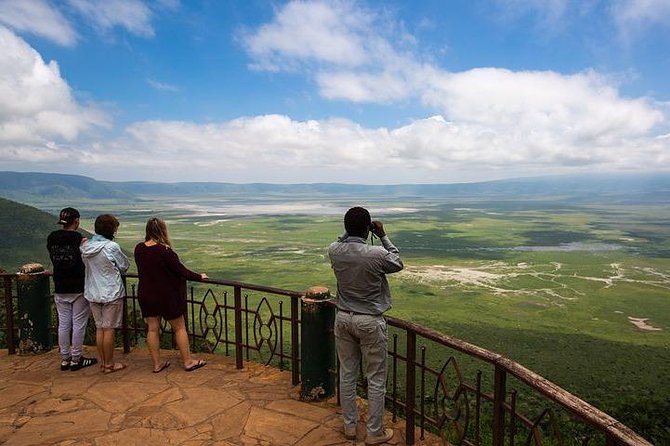
- Ngorongoro adds a different kind of safari: you descend more than 600 meters into the crater for an afternoon wildlife drive.
- The group is capped at six people, a useful limit when you want room for views and fewer delays at stops.
- Full-board safari accommodation and transfers are included, while the Tanzania visa is extra.
- Guides associated with the operator include Laurent and Raymond, with particular praise for clear explanations, safe driving, flexibility, and helpful communication.
Why this six-day route works for a migration safari
This is a focused safari for people who want to spend most of their time in northern Tanzania’s prime wildlife areas. You are not simply visiting one park and hoping for luck. The route places you in several parts of the Serengeti where the wildebeest may pass at different points in the year.
That said, the word migration can create false expectations. The herds move according to rain, grass, and water. No operator can guarantee a river crossing or a wall of animals on a particular day. What this trip does well is give you several chances in different areas, while also adding resident wildlife that remains in place year-round.
I especially like the balance between Ngorongoro and Serengeti. The crater gives you a compact afternoon of wildlife viewing in a dramatic enclosed setting. The Serengeti then opens into a much larger area, where the search itself becomes part of the experience.
More Great Migration Safaris in Moshi
- 6 Days Tanzania Budget Camping Safari with Migration
★ 5.0 · 31 reviews - 10-Day Wildebeest Migration Calving Safari -All Inclusive
★ 5.0 · 30 reviews - 5 Days Tanzania Safari – Migration and Big 5 Safaris
★ 5.0 · 14 reviews
Day 1: Descending more than 600 meters into Ngorongoro Crater
The first safari day centers on an afternoon game drive in Ngorongoro Crater. The route takes you down more than 600 meters from the crater rim to the floor, where wildlife viewing happens within a contained area.
This is a strong opening because you get a concentrated introduction to Tanzania’s animals before heading farther west and north. The crater’s enclosed form can make it easier to spend an afternoon looking for wildlife without covering the huge distances required in the Serengeti.
The timing also matters. An afternoon drive gives you a clear first taste of the safari, but it means this is not a full day of crater exploration. You should see it as one substantial game drive rather than an all-day program.
The published schedule calls this stop Arusha, although the activity itself is the Ngorongoro Crater descent. I would confirm the exact first-night location and road plan before paying, especially because the listed meeting point is Kilimanjaro Airport and the safari description begins with Arusha and Ngorongoro.
Day 2: From Ngorongoro to the Lobo area
The second day brings you into the Serengeti, specifically the Lobo area. Lobo is important during the migration because wildebeest commonly pass through around July and August on their way north, then again in late October and November as they move toward the southern Serengeti.
Those dates are useful, but they are not a promise. If you travel outside those windows, Lobo can still be worthwhile because the area has resident game throughout the year. That makes this route more sensible than a trip built only around a narrow migration forecast.
Expect a full eight-hour safari day. That does not necessarily mean eight hours of nonstop driving. It means you should plan for a long day in the vehicle, with time shaped by animal sightings, road conditions, and the distance between safari areas.
The move from Ngorongoro to Lobo also gives you a sense of how large northern Tanzania is. This is not a quick park transfer. The distance is part of the cost and part of the reason a six-day safari can offer more than a short wildlife outing.
Day 3: Resident wildlife and the Grumeti River
Day three remains in the Lobo area and around the Grumeti River. This is a smart use of time. Instead of changing camps every morning, you have another day to search a productive zone and respond to where the animals are actually found.
The Grumeti River adds a different wildlife focus. You may find large pods of hippos and large crocodiles, giving the day variety beyond wildebeest. Hippos and crocodiles are not dependent on the migration in the same way, so this part of the route still has value when the herds are elsewhere.
The area is also described as having good resident game throughout the year. That is important for your expectations. A migration safari is not only about catching the exact moment a herd moves. The permanent wildlife gives your guide something to look for on every drive.
Guide quality matters most on days like this. The operator has used guides including Laurent and Raymond. Laurent is associated with careful service, safe driving, and the ability to adjust safari timing to suit the group. Raymond is associated with clear answers and useful explanations. You should confirm which guide will lead your departure, but those names indicate the kind of guiding approach the company presents.
More Safaris in Moshi
- Big Five Safari In Tanzania
★ 5.0 · 99 reviews - 8-Day Essence of Tanzania Safari – Luxury
★ 5.0 · 72 reviews - 6 Days 5 Night Safari
★ 5.0 · 57 reviews - 7-Day Magical Tanzania Safari -Premium High End Package
★ 5.0 · 53 reviews
Day 4: Searching northern Serengeti around Wagakuria
The route then shifts to northern Serengeti, around the Wagakuria area. Wildebeest can usually be found here from August to October, making this the part of the program most closely tied to the classic northern migration season.
The word searching is the right way to think about this day. Even in the strongest months, animals may be spread out, moving quickly, or gathered in another part of the region. Your guide’s ability to adjust the day matters more than following a rigid timetable.
This is another eight-hour safari day, so bring patience. You may spend time driving between sightings, but that movement is what gives you a chance to find changing concentrations of animals. The small group limit helps here because six people create less crowding than a large vehicle, and decisions can usually be discussed more easily.
Northern Serengeti can also feel like a distinct phase of the safari. The earlier days focus on Lobo and Grumeti, while Wagakuria puts you closer to the migration’s better-known northern route. If your dates fall in August through October, this section may be the strongest reason to choose the trip.
Day 5: Waterholes, crocodiles, and crowded wildlife scenes
Day five continues in the Serengeti and returns attention to the Grumeti River and nearby waterholes. Large hippo groups and crocodiles are possible along the river, while wildebeest may gather at waterholes during the middle of the morning.
The description of the herds clustering around waterholes gives you a useful picture of what a good sighting can look like: many animals packed into one place rather than scattered across open ground. Still, you should treat this as a possibility, not a scheduled event.
A midmorning waterhole stop also explains why flexible timing is valuable. If your guide learns that animals are gathering, you may want to stay longer than planned. If the area is quiet, moving on may be the better choice. The safari works best when you accept that the day belongs to the animals.
This is an eight-hour day again. By now, the repeated drives may feel tiring, especially if you prefer a slower holiday. I would choose this tour for wildlife priority, not for a resort-style break. Full-board accommodation keeps the basic routine simple, but the days themselves remain active.
Day 6: Kogatende airstrip and the journey back
After breakfast, you leave the lodge for Kogatende airstrip, with a game drive on the way. This is a useful final chance to see animals rather than treating the departure as a simple road transfer.
The published plan then takes you to Arusha, and the experience ends at Kilimanjaro International Airport. Because the description refers to Kogatende airstrip and also includes transfers in both directions, I would ask the operator to spell out exactly what is included in the air connection, ground transfer, and airport timing. The supplied details do not state whether a flight ticket is part of the $3,700 price.
The final six-hour schedule is shorter than the other safari days, but you still need to allow for delays caused by wildlife viewing and road conditions. Do not book a tightly timed onward flight without confirming the actual arrival plan with Ungitours.
What the $3,700 price buys you
At $3,700 per person, this is a major purchase. Its value depends on how much you want a private-feeling, migration-focused safari rather than a basic park visit.
The price includes all fees and taxes, full-board accommodation during the safari, and transfers in both directions. Those inclusions matter. Park fees, lodging, transport, and meals can quickly turn a lower headline price into a much larger final bill.
The group cap of six also helps explain the cost. You are not paying for a giant vehicle packed with people. You get a smaller operating group, which should make it easier to share viewing space and discuss changes to the day.
The price does not include the Tanzania visa. The stated cost is $50 for United States and Canadian passport holders, or $100 for other listed passport categories in the supplied information. Check the current visa rule that applies to your passport before departure.
I would still request a written breakdown of the accommodation names, vehicle arrangements, and any air transfer from Kogatende. The price can be good value if the route, lodging, and airport connections match your needs. It is harder to judge fairly if those parts remain unclear.
Guides, group size, and the feel of the safari
A safari guide can shape the entire trip. You are with the same guiding team for long hours, asking questions, watching driving choices, and relying on clear decisions when wildlife appears.
The company’s named guides include Laurent and Raymond. Laurent is associated with friendly service, safe driving, and flexibility when a group wants to adjust safari hours. Raymond is associated with detailed explanations and the ability to answer questions about what you are seeing.
Faiza is the main contact described in the supplied information. Her role includes organizing bookings, tailoring plans, and providing a local number for communication. That kind of direct contact is useful when you need to clarify airport transfers, guide assignments, or the exact accommodation plan.
The group maximum is six. That is not the same as a private safari for one couple, but it is small enough to keep the vehicle from feeling crowded. If you are booking a honeymoon, the company has also handled honeymoon itineraries and tailored arrangements, though you should confirm what is included in your own package rather than assume special extras.
Who should book this safari
I would recommend this trip to you if the migration is the main reason you are visiting Tanzania and you can travel in or near the strongest seasonal windows. It also suits you if you want Ngorongoro plus several Serengeti zones in one trip, rather than choosing only one park.
It is a good fit for people who value a small group, full-board arrangements, and an experienced guide who can adjust the day. The named guides and direct contact with Faiza are useful signs for anyone who wants help before and during the safari.
I would be more cautious if you need a slow pace, dislike long vehicle days, or expect guaranteed migration crossings. I would also ask extra questions if you are comparing this with a package that clearly includes internal flights, named lodges, or more time in one location.
You can cancel for a full refund if you do so at least 24 hours before the experience start time. Changes or cancellations made inside that window are not accepted for a refund under the stated policy.
Should you book the six-day migration route?
Book it if you want a concentrated northern Tanzania safari with a real chance of following the wildebeest route through Lobo and Wagakuria, while still seeing year-round wildlife around Grumeti. The six-person limit, full-board plan, and flexible guiding style add practical value to a demanding route.
Before booking, confirm the season for your dates, the exact lodges, your assigned guide, and how the Kogatende to Arusha and Kilimanjaro Airport transfer works. If those details are clear and your priority is wildlife rather than leisure, $3,700 can be a reasonable price for six days across Ngorongoro and several prime Serengeti areas.
FAQ
Where does the safari start?
The stated meeting point is Kilimanjaro Airport in Kilimanjaro National Park, Tanzania.
Where does the safari end?
The stated end point is Kilimanjaro International Airport on Kilimanjaro Airport Road, Tanzania.
How long is the experience?
The safari lasts approximately six days.
What is the maximum group size?
The maximum group size is six people.
Is pickup offered?
Yes. Pickup is offered, and transfers in both directions are included.
What accommodation arrangement is included?
Full-board accommodation during the safari is included.
Are park fees and taxes included?
Yes. All fees and taxes are included.
Is the Tanzania visa included?
No. The visa is not included. The stated cost is $50 for United States and Canadian passport holders, and $100 for the other passport category specified in the tour details.
Can I cancel for a full refund?
Yes. You can receive a full refund if you cancel at least 24 hours before the experience start time. Cancellations or changes made less than 24 hours before the start time are not refunded or accepted.
More Six-Day Trips in Moshi
- 6 Days Private Safari Tour
★ 5.0 · 18 reviews - 6-Day Northern Safari
★ 5.0 · 18 reviews - 6 Days Essence of Tanzania Wildlife Safari
★ 5.0 · 8 reviews - 6 Days Tanzania Northern Circuit Safari
★ 4.5 · 7 reviews
Just added around Moshi
- Day trip to Materuni waterfall, Coffee tour and Moshi Nightlife★ 5.0 · 6 reviews
- Sip & Paint: Unleash Your Inner Artist!★ 5.0 · 7 reviews
- Rau Forest Bike tour★ 5.0 · 12 reviews
- Private Market Tour and Tanzanian Cooking Class in Moshi★ 5.0 · 7 reviews
- Moshi city bike day trip★ 5.0 · 17 reviews
- Full-Day Moshi Private Forest Walk and Local Market Tour★ 5.0 · 4 reviews
- Private guided tour to the night lifestyle of Moshi town★ 5.0 · 13 reviews
- Savannah Escape & Active Culture Tour★ 5.0 · 9 reviews
Great Migration Safaris, compared.
8 Days Great Wildebeest Calving Migration Safari from Arusha
Read our review →
8 Day Spectacular Migration Serengeti mid -Range Tanzania Safari
Read our review →
Private 6-Day Great Migration Ndutu Serengeti Safari Tour
Read our review →
6 Days Tanzania Budget Camping Safari with Migration
Read our review →10-Day Wildebeest Migration Calving Safari -All Inclusive
Read our review →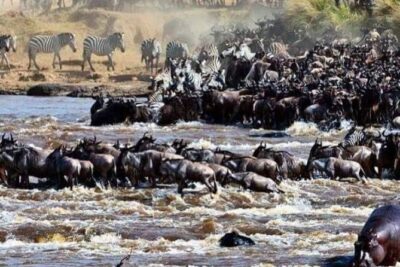
8 Days Great Wildebeest Migration – Mara River Crossing
Read our review →
Tanzania Safari – The Great Migration in the North of the Serengeti and Lake Natron
Read our review →
5-Days Private Serengeti Wildebeest Migration Lodge Safaris
Read our review →Browse the lists this tour appears in