

Reviewed · STONE TOWN TOURS
Stone Town Tour
Stone Town’s real appeal comes from its contrasts: a medieval fort, a former slave market, a fish market alive with sharp smells, carved Zanzibar doors, and the waterfront all sit within a compact old town. This private walk with guide Nouman gives you a useful first look without asking you to solve Stone Town’s maze alone.
I like the small private format, which lets you stop for photos, ask questions, and set a calmer pace. I also like the serious historical focus, especially at the former slave market and Anglican Cathedral. The main drawback is the heat, and the guide’s energy may vary. Taxi costs are not included, and the meeting-point details should be confirmed before you go.
Key points to know before you book
- The former slave market is the emotional center: You visit the site beneath and around the Anglican Cathedral, where Zanzibar’s role in the slave trade is explained.
- The walk covers Stone Town’s main landmarks: The route takes in the Old Fort, House of Wonders, Darajani Bazaar, Forodhani Gardens, and the waterfront.
- You get a private guide: Your group has personal attention rather than a large shared tour, with time for questions and photographs.
- The local market adds real atmosphere: Fish, fruit, meat, spices, and the close-packed market lanes show daily Stone Town life.
- Freddie Mercury’s birthplace is an optional paid stop: The house and museum are included in the route, but museum admission is not included.
- Plan for a hot walking tour: You need moderate physical fitness, water, sensible clothing, and comfortable shoes.
Why this short Stone Town walk works
Stone Town can feel confusing at first. Narrow lanes twist between coral-stone buildings, shops, courtyards, mosques, markets, and grand doors. A private guide gives you a thread to follow, and this route covers the major sights in about two to three hours.
The tour is best understood as an introduction rather than a slow architectural study. You move from landmark to landmark, with short stops for historical explanation and photographs. That makes it a good choice for your first day in Zanzibar, especially if you want to understand the old town before returning later on your own.
The price is $25 per person, which is fair for a private walking tour if your group is large enough to share the cost. Old Fort and former slave-market admission are included, bottled water is provided, and you receive individual attention from the guide. You will still need to budget for transport if a taxi is required, personal purchases, and the Freddie Mercury Museum ticket.
The experience has received a 4.9 rating and a 98 percent recommendation rate from 55 ratings. The strongest pattern is clear: people value the guides’ patience, friendly manner, local knowledge, and ability to adjust the pace. Several people specifically appreciated being given time to take photos and browse shops.
More Stone Town walks:
- Zanzibar: Stone Town, Spice Tour, Prison Island with Lunch
★ 4.4 · 1,219 reviews - Zanzibar: Prison Island, Stone Town, & Spice Farm Tour
★ 4.5 · 579 reviews - Zanzibar; Prison Island, Nakupenda, StoneTown Tour with BBQ
★ 4.3 · 457 reviews
Meeting Nouman near Forodhani Gardens
The stated meeting point is Cape Town Fish Market, beside the Forodhani area. The activity ends back at the meeting point. The tour description also refers to hotel pickup and drop-off, but taxi costs are listed as excluded, so I would confirm the exact pickup arrangement before booking.
That small check matters. If you are staying close to Stone Town, walking to the meeting point may be simple. If you are staying farther away, you may need a taxi both ways. Do not assume that hotel transport is included just because pickup is mentioned in the description.
The guide’s name appears as Nouman, with some customer comments spelling it Norman. Nouman is the guide most closely connected with this activity. He is described as friendly, patient, sociable, and willing to let people stop at shops or take photographs. One solo customer felt safe walking through town with him, which is useful if you are visiting alone.
The private format also gives you room to speak up. If the group wants more time at the slave-market site, less time shopping, or a slower pace in the heat, you can ask. The listed itinerary gives approximate stop times, but the total duration includes walking between sites.
Old Fort: a strong opening view of Stone Town

Your first main stop is the Old Fort, also known as Ngome Kongwe. Built as a defensive structure, it is one of Stone Town’s most recognizable buildings and a useful place to begin because it gives you a physical sense of the town’s past.
The planned visit lasts about 20 minutes, with admission included. Expect historical background from the guide and a chance to look across the fort’s open areas. The stop is not designed as a long museum visit. Instead, it gives you the basic setting: Stone Town was shaped by trade, outside powers, sultans, and the Indian Ocean.
I like starting here because the fort helps you get your bearings. It also gives you a break from the tight lanes before the route moves into more difficult and emotional subjects.
The Anglican Cathedral and the former slave market
The former slave market is the most important stop on the walk. The site is connected with the Anglican Cathedral, described as one of the oldest Anglican church buildings in the area. You spend about 30 minutes here, and admission is included.
This part of the tour needs a respectful pace. The guide explains the site’s connection to the African slave trade and the conditions people faced. You are not simply looking at an old building. You are confronting a period that shaped Zanzibar, East Africa, and the wider Indian Ocean trade.
One person described this stop as overwhelmingly sad, and that is a fair warning. The visit can be difficult, but it gives the rest of Stone Town more meaning. The market, the waterfront, and the grand buildings are not separate pieces of scenery. They are tied to the money, power, and human suffering that helped shape the town.
If you prefer a light sightseeing walk with little historical detail, this stop may feel heavy. If you want to understand Zanzibar beyond beaches and spice shops, it is essential.
A few more Zanzibar trips worth comparing
- Zanzibar: Quad Bike Adventure departing from Kendwa or Nungwi
★ 4.9 · 1,233 reviews - From Kendwa: Mnemba Boat Trip and Dolphin Snorkel Adventure
★ 4.8 · 1,043 reviews - Zanzibar: Prison Island and Nakupenda Boat Trip with Lunch
★ 4.1 · 882 reviews - Skydive Zanzibar | Tandem Skydive
★ 5.0 · 877 reviews
Freddie Mercury’s birthplace, with an extra ticket
The route continues to the house associated with Freddie Mercury, who was born in Zanzibar. The stop lasts about 15 minutes. You can see the birthplace and visit the museum inside, but admission is not included in the $25 price.
This is a short stop, so you should not expect a full music-history visit. Its value depends on your interest in Freddie Mercury and modern cultural history. It also adds a different note after the fort and slave-market sites.
Ask the guide or museum staff about the current admission cost before entering. Since the ticket is separate, you can decide on the spot if you want to go inside. If you are mainly interested in Stone Town’s older architecture and history, viewing the exterior may be enough.
Darajani Bazaar: the most sensory part of the tour

Darajani Bazaar brings you into the working side of Stone Town. The market has operated since the 19th century and sells spices, fish, fruit, meat, and other everyday goods. The planned stop is about 20 minutes, with admission included.
This is where the tour becomes less about monuments and more about ordinary life. You will see goods being sold, hear market activity, and notice strong smells, especially around the fish and meat areas. One solo customer particularly enjoyed the market’s sights and smells, while also appreciating the guide’s company there.
You should keep your expectations practical. This is a local market, not a polished food hall. The lanes may feel crowded, the air may be intense, and some sights may be uncomfortable if you are unused to open displays of meat or fish. That is also what makes the stop useful. It shows you a working Zanzibar market rather than a version built only for sightseeing.
Keep your belongings secure and follow the guide’s lead about where to walk and when to stop for pictures. The market is a place to observe first and photograph second.
House of Wonders and the sultan’s Stone Town

The House of Wonders, or Beit-el-Ajaib, is one of the town’s best-known landmarks. It was associated with the sultan’s residence in the 19th century, and the guide explains why it gained its remarkable name.
The stop lasts about 20 minutes. The tour information says you will see the House of Wonders, but the included admission list specifically names the Old Fort and former slave market, not a separate House of Wonders ticket. Ask what access is available on the day, particularly if you expect to enter rather than view the building from outside.
This is a good point in the walk to connect architecture with political history. The building represents the wealth and authority of the sultanate, while the nearby market and former slave-market site show other sides of the same society. Stone Town makes more sense when you look at those contrasts together.
Forodhani Gardens, Zanzibar doors, and the waterfront
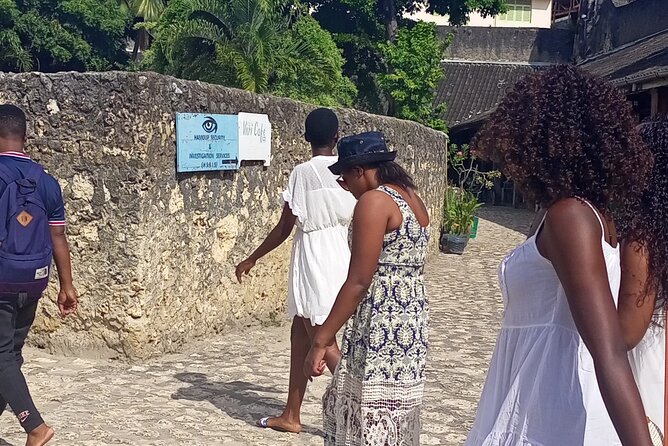
The final section takes you to Forodhani Gardens, the waterfront area known for its evening food market, then through the center of the old town to see Zanzibar doors and a Stone Town panorama. The planned time is about 20 minutes.
Forodhani is especially worth seeing later in the day if your schedule allows, when the night market is active. This tour’s short stop gives you an introduction, but it may not overlap with the full evening food-market atmosphere depending on the start time.
The carved doors are among Stone Town’s most memorable details. They are not just decoration. They reflect the town’s Indian, Arab, Swahili, and wider Indian Ocean connections. Your guide can point out design details that are easy to miss when you are simply trying to find your way through the lanes.
The closing panorama gives you a final view of the old town and waterfront. It is a pleasant way to finish, though the route is still a walking tour, not a dedicated sunset viewpoint visit. If photographs matter to you, tell the guide early so you have time to stop.
What the private format changes
A private tour is more than a smaller group. In Stone Town, it changes how easily you can manage the heat, narrow streets, shopping stops, and difficult historical material.
You can ask for extra explanation at the Anglican Cathedral, move more quickly through a shop, or pause when the sun feels strong. You also avoid the common problem of losing a guide’s voice in a large group.
The feedback connected with Nouman repeatedly points to patience. People describe him as willing to wait while they looked at shops, answered questions, and took photos. That suits you if you prefer a relaxed walk rather than a strict march between landmarks.
The limitation is that a private tour depends heavily on the individual guide assigned to you. One person found the guide less energetic on a very hot day, although that same person later found his help with transfers useful. Heat affects both guide and customer, so do not expect constant high-energy commentary in the middle of the afternoon.
Heat, walking, clothing, and pacing
You need moderate physical fitness for this activity. The listed stops are short, but you walk through Stone Town between them, and the combined movement adds up.
Wear comfortable shoes and clothing suitable for a historic town and religious sites. Carry water, even though a bottle is provided. A hat or other sun protection is sensible, especially if the tour runs during the hottest part of the day.
The experience requires good weather. If poor weather causes cancellation, you are offered another date or a full refund. The activity also requires a minimum number of participants, though it is described as private for your group. If that minimum is not met, you are offered another option or a refund.
Free cancellation is available up to 24 hours before the start time. Inside that window, you may not receive a refund, and changes are not accepted. The cut-off follows local time in Zanzibar.
Who should book this Stone Town tour?
I would choose this tour if you want a short, guided introduction to the old town and prefer personal attention. It suits first-time visitors, solo customers, couples, and families who want the main sights explained without committing to a full-day program.
It is also a good fit if you care about history. The former slave market, Old Fort, sultan’s buildings, and market scenes give you more than a quick photo walk. You come away with a clearer sense of how Stone Town developed.
I would think twice if you want a slow museum tour, a food tour, or a long evening at Forodhani Gardens. The route covers many places in a short time, and the Freddie Mercury Museum costs extra. You should also confirm transport because taxi expenses are not included.
Should you book it?
Book this Stone Town tour if you want the essential landmarks, a serious look at the slave-trade site, and a private guide who can help you navigate the old town. At $25 per person, it offers good value when you want orientation, included Old Fort and slave-market admission, and the freedom to ask questions.
Before paying, confirm the pickup location, taxi arrangement, guide name, and any ticket cost for the Freddie Mercury Museum or House of Wonders. Go early or plan around the heat if possible. With those details clear, this is a practical way to meet Stone Town through its forts, markets, difficult history, and waterfront rather than simply passing through its narrow streets.
FAQ
How long does the Stone Town Tour last?
The tour lasts approximately two to three hours, including the stops and walking between them.
How much does the tour cost?
The listed price is $25 per person.
Is this a private tour?
Yes. Only your group participates in the private activity.
Where does the tour start?
The stated meeting point is Cape Town Fish Market, at the Forodhani area of Zanzibar.
Where does the tour end?
The activity ends back at the meeting point.
Is hotel pickup included?
The tour description mentions hotel pickup and drop-off, but taxi costs are listed as not included. Confirm the exact pickup arrangement before booking.
Which entrance fees are included?
Admission to the Old Fort and former slave market is included. Admission to the Freddie Mercury Museum is not included.
Can I cancel for a full refund?
Yes, if you cancel at least 24 hours before the experience start time. Cancellations made less than 24 hours in advance are not refunded.
Just added around Zanzibar
- Walking in Stone Town with a Expert Tourguide★ 3.7 · 3 reviews
- Stone Town Tour★ 5.0 · 16 reviews
- Jet Ski Experience from Kendwa Beach★ 5.0 · 21 reviews
- Turtle Snorkeling, Jozani Forest, Kuza Cave, Rock Restaurant★ 3.7 · 8 reviews
- Zanzibar boat rental/charters★ 5.0 · 6 reviews
- Prison island(Changuu island) & stone town walking tour★ 5.0 · 6 reviews
- Zanzibar Tumbatu Island Cultural Experience★ 5.0 · 4 reviews
- Full Day Private Zanzibar Triple Delight Tour★ 4.5 · 3 reviews
Stone Town Tours, compared.

Stone Town, Spice Tour, Prison Island with Lunch
Read our review →
Prison Island, Nakupenda, StoneTown Tour with BBQ
Read our review →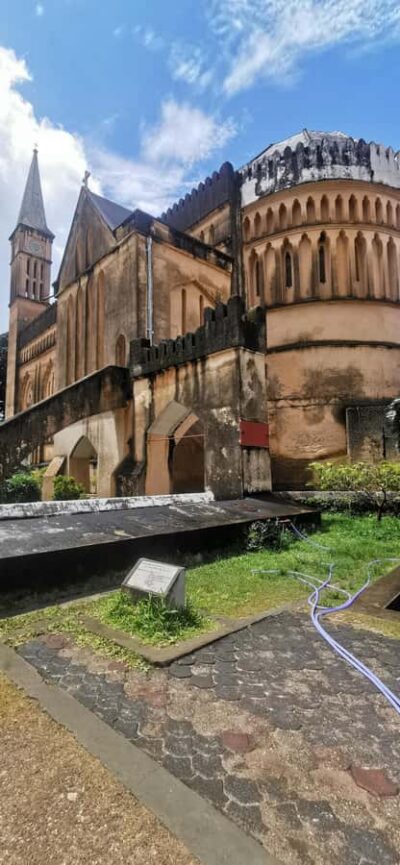
3 Hours Private Stone Town walking Tour with Guide
Read our review →
Stone Town Historical Cultural Walking Guided Tour
Read our review →
Stonetown: Food Markets and Street Food Walking Tour
Read our review →

Zanzibar full day Jozani forest + Spice farm and stone town
Read our review →
Browse the lists this tour appears in