
Reviewed · WALKING TOURS
Private Walking Tour with Giraffes
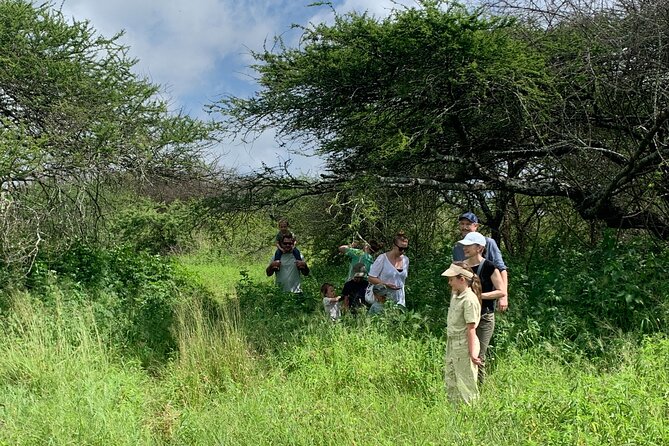
Getting within a few feet of a giraffe is the star of this small private outing near Arusha. You walk through a sanctuary rather than watching from a vehicle, so the animals feel close, tall, and wonderfully real. Guides such as Jerome, Nic, and Nick explain giraffe behavior, land restoration, and the work behind the centre.
I like the one-to-one guide time, which lets you ask as many questions as you wish. I also like the centre’s wider purpose: its Eco-Ag program links giraffe protection with better farming and community education. The main consideration is the rough road to the centre and the fact that the visit depends on good weather.
Key points to know before you go
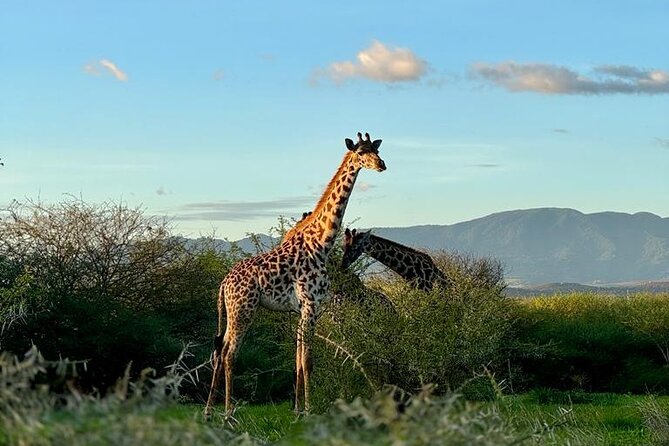
- Walk within about five feet of giraffes: The encounter is on foot and can feel far more personal than a standard wildlife drive.
- A private guide leads your group: Only your party takes part, giving you room to set the pace and ask questions.
- Conservation goes beyond the animals: The visit covers wildlife, the environment, local communities, and Eco-Ag farming methods.
- Plan for about 80 minutes: The visit includes a guided education session and a walk through the centre.
- Choose morning or afternoon: Two time options make this easy to fit around other Arusha plans.
- Allow for a country road: The final approach may be rough, and a moderate level of fitness is advised.
Meeting giraffes on foot outside Arusha
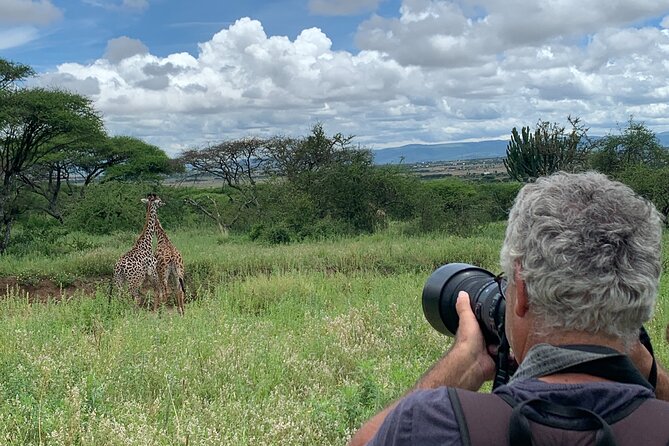
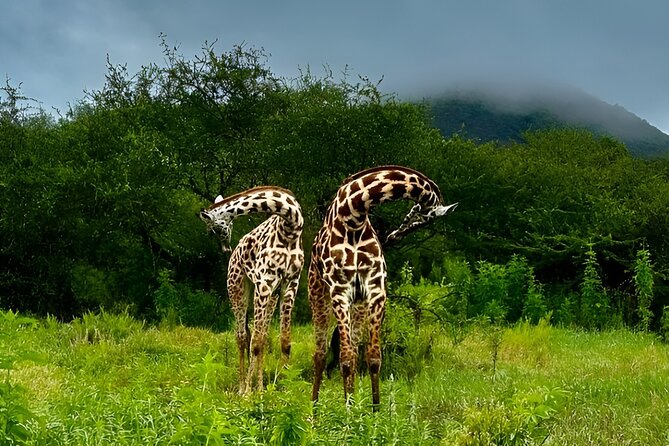
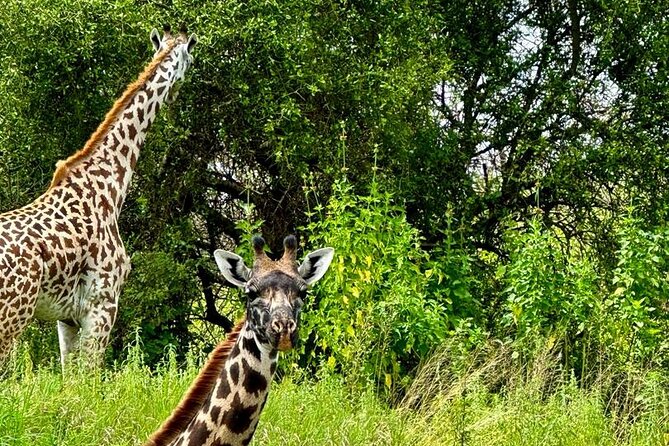
The Arusha Giraffe Centre offers a different sort of wildlife encounter. Instead of sitting in a safari vehicle and watching animals at a distance, you walk through the centre’s natural setting with a guide. The giraffes may come close enough for you to appreciate the full scale of their long legs, patterned coats, and towering necks.
The animals remain the focus, but this is not simply a photo stop. The centre presents its work through three connected ideas: wildlife, the environment, and the local community. That matters because giraffe protection cannot be separated from the condition of the land or the way people use it.
The advertised visit lasts about one hour and 20 minutes, with roughly one hour and 15 minutes allocated to the centre itself. That is enough time for a useful introduction and a meaningful walk, but not so long that the outing takes over your day in Arusha.
I would treat this as a focused add-on to a larger Tanzania itinerary. It can work before or after other local activities, and the morning or afternoon choice gives you some flexibility. The centre is outside Arusha at 21 Giraffe Centre Road in Moita, and the tour begins and ends at that meeting point.
More Private Tours in Arusha
- 5 Days Budget Private Safari, Tanzania
★ 5.0 · 191 reviews - 5-Day Private Northern Tanzania Safari from Arusha
★ 5.0 · 182 reviews - 6 Days Private Budget Safari
★ 5.0 · 163 reviews
The education centre explains the bigger picture
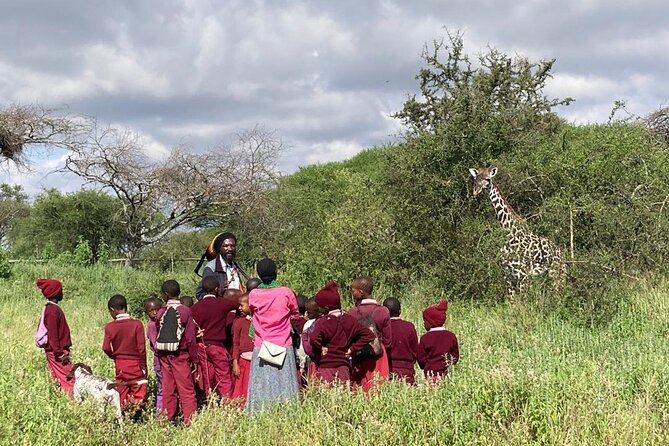
Your visit starts with a guided session at the education centre. Here, the team explains how wildlife, the environment, and the community affect one another. You also learn about Eco-Ag, the centre’s approach to combining ecological restoration with agriculture.
This introduction gives the giraffe encounter more meaning. You are not only seeing an appealing animal. You are also learning about the pressures on its habitat and the need to involve local people in conservation work.
Several guides bring different experience to the presentation. Jerome has been praised for his understanding of the land, giraffes, and other animals. Nic has led enthusiastic visits for families, while Nick has explained the centre’s work in agriculture and land regeneration. The team also includes Natalie and Nat, who are closely involved in running the project.
The exact guide may depend on the day, but the practical advantage is the same: this is a private activity, so you can ask questions as the visit unfolds. If you want to know how giraffes behave, why their population is under pressure, or how farming affects habitat, you have time to ask rather than simply follow a fixed script.
I especially value the agriculture connection. Many wildlife experiences talk about protecting animals as if conservation happens separately from daily life. Here, the centre makes the case that healthier farming methods can help protect the land that giraffes need.
The walking safari brings you close to the giraffes
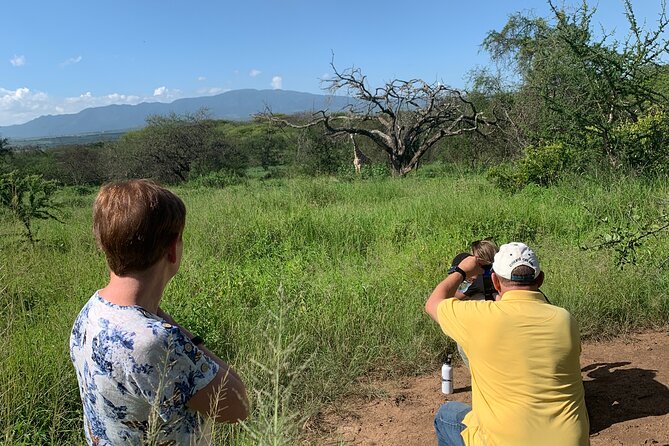
After the education portion, you walk through the centre to see the giraffes. The setting is described as a bush area and sanctuary, rather than a formal zoo display. The aim is to see the animals in a more natural setting and to understand how they are being cared for.
You may be able to walk within about five feet of the giraffes. That distance is close enough to make the encounter memorable, but you still need to follow the guide’s instructions and give the animals room. Giraffes may look calm and gentle, yet they are large wild animals. A respectful approach is essential.
The walk also gives you a chance to notice more than a giraffe’s head above the trees. You can watch how the animals move, how they respond to people, and how they fit into the surrounding habitat. Your guide can explain what you are seeing in real time.
Families can take part, and the experience has worked well for children. Still, keep in mind that the activity involves walking outdoors on uneven ground. A moderate level of fitness is requested, and the route may feel less comfortable during wet weather.
The centre can look especially green during the rainy season. That may make the surroundings attractive, but rain can also affect the walk and the road in. Since the experience requires good weather, the operator may offer another date or a full refund if conditions force a cancellation.
Conservation here includes community and farming
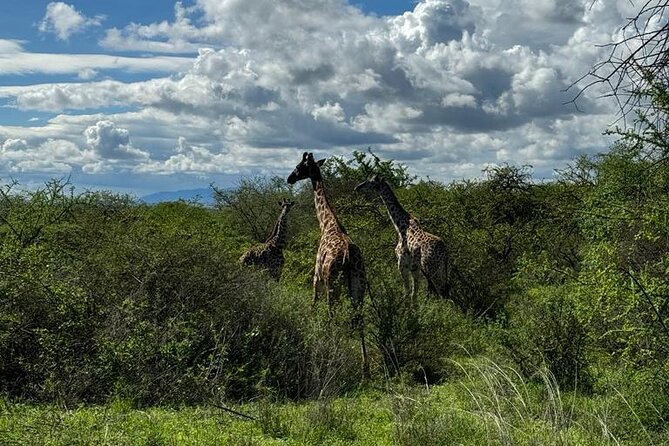
The most useful lesson from this outing is that giraffe conservation is not just about breeding or protecting individual animals. The centre also focuses on land regeneration and on teaching methods that can help local communities use land in a more sustainable way.
The Eco-Ag idea is presented as part of the solution. You learn why farming practices can contribute to habitat loss and why changes in agriculture may help restore land. The education work also places importance on local children, who are described as future participants in conservation.
That community focus gives the visit a practical edge. You are shown a working project rather than a simple animal attraction. The centre’s goal includes preparing giraffes for life beyond the farm or sanctuary, with care and patience as part of that process.
I would not book this expecting a full safari. You are not spending hours searching for lions, elephants, or a large range of species. The visit is centered on giraffes and the centre’s conservation and agriculture work. For many people, that narrower focus is a strength. It lets the guide explain one animal and one project properly.
The experience also offers a chance to support a local initiative directly. At $55 per person, the price is more than a quick look at animals, but it includes a private guide, the educational program, admission, and the walking encounter. For anyone interested in conservation, that makes the cost easier to justify than a brief photo opportunity with little context.
More Walking Tours in Arusha
- Arusha Guided Walking City Tour, Culture, Lifestyle & History
★ 5.0 · 150 reviews - Arusha; Walking City Tour History, Culture & Lifestyle
★ 4.9 · 63 reviews - 7-Day Private Tanzania Safari with Sunset Walking on the Crater Rim and Maasai
★ 5.0 · 40 reviews - Tanzania – Arusha NP – Private Guided 4×4 Safari – Game Drive & Walking
★ 5.0 · 30 reviews
Why the private format matters
A private tour changes the feel of a short activity. Your group is the only group taking part, so you do not have to compete with a large crowd for the guide’s attention or for a clear view of the giraffes.
You can ask questions at your own pace. If your children want a simple explanation, the guide can keep things accessible. If you want more detail about wildlife studies, land regeneration, or agriculture, you can continue the conversation.
The private format is also helpful for photography, though no special photography arrangements are stated. You have more control over your position and pace than you would in a large group. Still, the animals’ welfare comes first, so the guide’s directions should shape how close you get and how long you remain near them.
The short duration makes this format especially useful. An 80-minute visit can feel personal without requiring a full day. It also means you should arrive ready to begin at the meeting point. The tour does not include a separate transfer from Arusha in the information provided, so you need to arrange your own way to the Arusha Giraffe Centre.
Morning or afternoon: choosing the better time
The tour offers morning and afternoon departures. The best choice depends on how you are arranging the rest of your day rather than on a guaranteed animal schedule, since no specific seasonal behavior timetable is provided.
A morning visit may suit you if you want to begin with the giraffes and leave the rest of the day open. An afternoon visit can work well after another Arusha activity, provided you leave enough time to reach Moita and locate the meeting point.
The centre’s setting may change with the season. During the rainy period, the area can be especially green, which adds to the appeal of the walk. At the same time, wet conditions may make the approach and walking route less easy. The operator can cancel for poor weather, offering a new date or a full refund.
Because the visit is short, I would avoid planning it too tightly against another booking. The stated duration is approximate, and the drive to the centre may take longer than expected if the road is rough.
What the road and walking conditions mean for you
The meeting point is the Arusha Giraffe Centre on Giraffe Centre Road in Moita. The road in may surprise you. It has been described as rough and all-terrain, so this is not the sort of outing where you should assume a smooth city transfer all the way to the entrance.
That does not make the visit unsuitable, but it is worth planning for. Give yourself time to reach the centre, especially if you are coming from another activity. If you are arranging transport independently, confirm that your vehicle can handle the approach.
Once there, expect an outdoor walk rather than a paved attraction with easy access throughout. The activity is open to anyone, but a moderate physical fitness level is recommended. Comfortable walking shoes and protection from sun or rain are sensible choices, although the supplied details do not specify a required dress list.
The route may be more demanding for very young children, older adults, or anyone who has trouble walking on uneven ground. Since this is a private tour, you can ask about the pace, but you should not assume that the entire experience is seated or flat.
Is $55 a fair price?
At $55 per person, this is a reasonable price if you want a private, guide-led wildlife encounter with an educational purpose. You are paying for more than entrance access. The package combines the centre’s presentation, a guided walk, and the chance to approach giraffes in a small setting.
The value depends on what you want from Tanzania. If your main goal is a full safari with many species, this will not replace time in a national park. If you want a memorable local activity near Arusha, the cost compares well with the personal attention and focused conservation content.
I also think the private format improves the value. With a group tour, a short visit can feel rushed or generic. Here, you have the chance to shape the discussion around your own interests, from giraffe behavior to farming and community work.
The centre’s conservation focus may also matter in your buying decision. The project has been developed over many years, and the people running it present the work with clear personal commitment. You should still book because the activity suits your interests, not simply because a conservation label sounds appealing.
Who will enjoy this experience most?
This outing suits you if you want close animal contact without committing to a full safari day. It is particularly good for families, wildlife enthusiasts, and visitors who want to understand the conservation work behind an animal encounter.
It also fits travelers with a free morning or afternoon in Arusha. The private format works well for couples, families, and small groups who prefer to ask questions freely rather than follow a large party.
You may want to choose another activity if you dislike outdoor walking, rough roads, or weather-dependent plans. It is also not the best choice if you expect a broad wildlife count. The focus is firmly on giraffes, the centre, Eco-Ag, and the links between animals, land, and communities.
Confirmation is provided when you book. Free cancellation is available if you cancel at least 24 hours before the start time. Cancellations or changes made inside that window are not refunded or accepted, and the cut-off uses local time.
Should you book the Arusha Giraffe Centre walk?
Book it if you want to stand close to giraffes, learn from a private guide, and support a project that connects wildlife care with land restoration and community education. The chance to walk within a few feet of these animals is the clear highlight.
I would make room for it in an Arusha itinerary, especially if your group values meaningful local projects over a quick animal photo. Just allow extra time for the rough approach, expect an outdoor walk, and keep your plans flexible in case of rain.
The experience is short, focused, and not a substitute for a national-park safari. But at $55, it offers a personal encounter and a useful lesson in conservation without taking a full day.
FAQ
Where does the private giraffe tour begin?
It begins at the Arusha Giraffe Centre, 21 Giraffe Centre Road, Moita, Tanzania.
Where does the tour end?
The activity ends back at the same meeting point at the Arusha Giraffe Centre.
How long does the experience last?
The experience lasts approximately one hour and 20 minutes. The guided visit at the centre is listed as about one hour and 15 minutes.
Is the tour private?
Yes. Only your group participates in this activity.
Can I choose a morning or afternoon visit?
Yes. The experience offers both morning and afternoon tour options.
What does the visit include?
It includes admission to the Arusha Giraffe Centre, a guided education session, and a walking safari around the sanctuary to see giraffes.
Is the tour suitable for everyone?
Anyone can join, but a moderate level of physical fitness is recommended because the experience includes outdoor walking.
What happens if bad weather cancels the tour?
If poor weather causes a cancellation, you will be offered a different date or a full refund. You can also cancel for a full refund if you cancel at least 24 hours before the start time.
Just added around Arusha
- From Arusha: 11 days The Classics Northern Tanzania safari★ 5.0 · 11 reviews
- 6-Day Mount Meru Climb through Momella Route Guided Tour★ 5.0 · 5 reviews
- Private Day Trip to Arusha National Park with a Walking Safari★ 5.0 · 4 reviews
- From Arusha : 11-day Amazing North Tanzania safari tour★ 5.0 · 4 reviews
- Walking Day Tour to Safari in Arusha National Park★ 5.0 · 5 reviews
- 2 Days Tanzania Midrange Group Join Safari★ 5.0 · 7 reviews
- Best 5 Days Tanzania Private Luxury Safari with luxury Lodges★ 5.0 · 12 reviews
- Waterfall & Coffee Walking Tour★ 5.0 · 6 reviews
Walking Tours, compared.

Stonetown: Food Markets and Street Food Walking Tour
Read our review →
Arusha Guided Walking City Tour, Culture, Lifestyle & History
Read our review →

Underwater Walking Experience in Zanzibar,No Swimming Needed
Read our review →

7-Day Private Tanzania Safari with Sunset Walking on the Crater Rim and Maasai
Read our review →Browse the lists this tour appears in