
Reviewed · CITY TOURS
Private Insightful City Tour of Dar es Salaam
Dar es Salaam reveals itself best in its working places, not just its postcard sights. This private tour takes you into Kariakoo Market and Kivukoni Fish Market, where trade, transport, food, and daily life give you a sharper sense of the city. I like the close look at the fish trade and the chance to ask questions as you go. I also like that the guide can adjust the walk to your interests rather than rushing a large group from stop to stop.
The main drawback is time. One to two hours is short for five stops, especially if market activity slows you down with questions or photographs. Pickup is not included in the base price, either, and costs an additional $10.
Key points at a glance
- Kariakoo Market takes you into Dar es Salaam’s commercial heart, with 45 minutes set aside for shopping, movement, and local context.
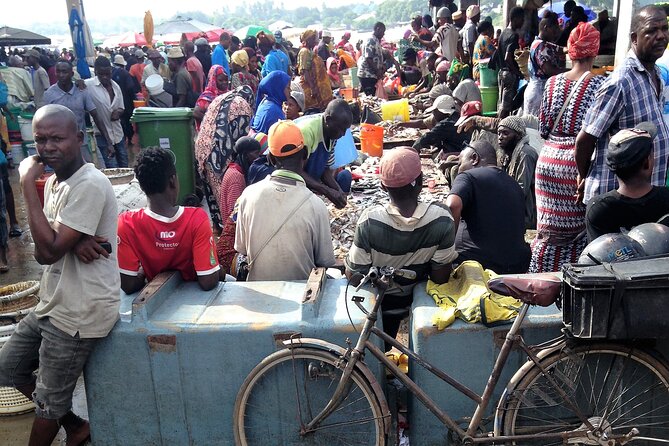
- Kivukoni Fish Market shows the working side of the city, including fishermen, boats, transport, and the fish trade.
- St. Joseph’s Cathedral links Dar es Salaam to its German colonial period, with striking architecture beside the port.
- The Askari Monument offers a short but useful history lesson about African troops and carriers who served the British Army in the First World War.
- A private format keeps the visit flexible, with only your group taking part and a guide available for questions.
- Water and soda are included, while pickup can be arranged for an extra $10.
Start at Bustani ya Posta in central Dar es Salaam
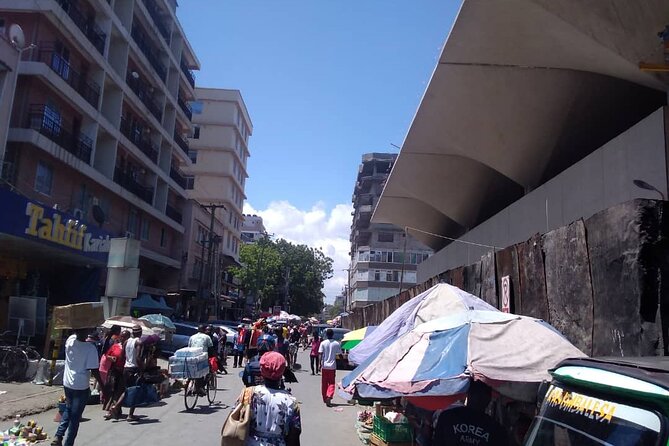
The tour begins at Bustani ya Posta, a practical central meeting point in Dar es Salaam. The activity runs daily from 9:00 in the morning to 6:00 in the evening, so you have some choice about fitting it around a hotel checkout, a port visit, or another city plan.
You meet your guide at the starting point and then move through the city on foot, with travel time between stops included in the total duration. Since this is a private activity, your group does not have to match the pace or interests of strangers. That matters in a market, where you may want to pause for a question, watch a transaction, or take in the sights before moving on.
Pickup is offered, but it is not part of the advertised price. It costs an extra $10. If you prefer to meet at Bustani ya Posta, the lower price keeps the arrangement simple. The meeting point is also near public transport, which may help if you are already in central Dar es Salaam.
The tour costs $55.26 per person. I see the value mainly in the private guide and the access to everyday city life rather than in the number of formal attractions. It is a reasonable price for a short, personal introduction, especially if you have limited time. It becomes less attractive if you want a long city walk, extensive museum time, or a full-day sightseeing program.
More City Tours in Dar es Salaam
- Dar es Salaam: City Tour
★ 4.7 · 159 reviews - Dar es Salaam City Tour – Everyday
★ 5.0 · 64 reviews - The Best/Top Rated Cultural City Tour in Dar es Salaam
★ 5.0 · 57 reviews
Kariakoo Market: Dar es Salaam’s commercial pulse
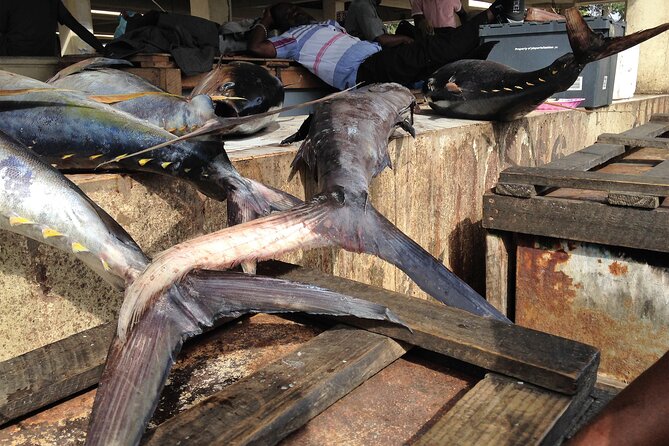
The first major stop is Kariakoo Market, one of East Africa’s biggest markets. You have about 45 minutes here, enough to get a clear sense of its scale and purpose without trying to cover every corner.
This is not a polished shopping hall built for sightseeing. It is a place of business. You can expect movement, color, smells, voices, goods, and people handling the practical work of buying and selling. That makes it a useful first stop because the market shows how the city functions rather than simply how it looks.
Your guide adds value by explaining the background of the market and the area around it. You can ask about what you are seeing instead of guessing at the purpose of a stall or the meaning of a local exchange. The guide’s fluency in the communication language also gives you more room for conversation, which is especially helpful in a place where the action can move quickly.
I would treat Kariakoo as a place to observe respectfully, not as a stage set for photographs. Keep your belongings secure, stay aware of foot traffic, and follow the guide’s advice about when and where to take pictures. The experience is strongest when you pay attention to the ordinary details: how goods move, how people shop, and how the market fits into city life.
The 45-minute stop may feel brief if you enjoy markets. It is long enough for an introduction, but not for a slow shopping session. If you have a particular interest in food, clothing, trade, or local commerce, mention it early so the guide can shape the conversation around it.
Kivukoni Fish Market and the work behind the catch
Kivukoni Fish Market gives the tour a different focus. After the broad commercial energy of Kariakoo, you turn toward the coast and the daily work of fishermen. The visit lasts about 45 minutes, and travel time between stops is already included in the overall tour length.
Here, the guide explains the fishermen’s working methods, the forms of transport they use, and how fish moves through the trade. This is valuable because you are not simply looking at a market display. You are seeing part of the chain that connects the water, the boats, the sellers, and the people who buy the catch.
The market may be especially rewarding if you like seeing how a city earns its living. It also gives you a more grounded view of Dar es Salaam than a quick drive past the waterfront. You can ask how the market operates and pay attention to the practical rhythm of unloading, selling, and moving goods.
There is a sensory side to this stop. Fish markets can be wet, crowded, and strongly scented, and conditions may change with the day’s activity. That is not a flaw, but you should know what kind of place this is. Wear comfortable shoes and avoid bringing anything you do not want exposed to a busy working environment.
One earlier visit was changed from walking to a walking and tuk-tuk format because of rain. That detail is useful: the route can adapt when weather affects the streets. It also suggests that you should not expect every tour to look exactly the same. The core stops remain the focus, but the guide may adjust how you move through the city.
St. Joseph’s Cathedral and the German chapter of the city
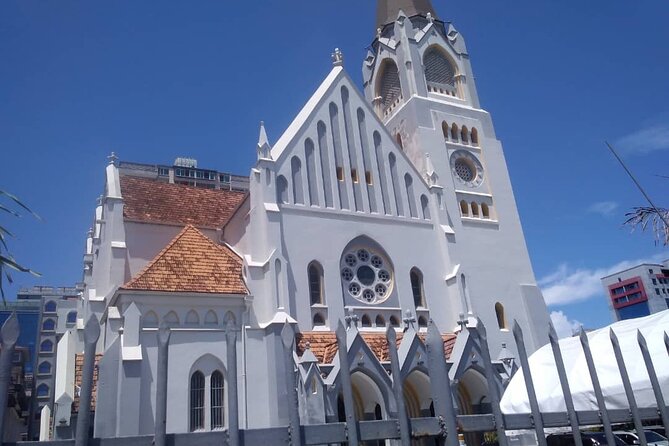
St. Joseph’s Cathedral of the Archdiocese of Dar es Salaam is scheduled for about 20 minutes. The cathedral dates from the early 1900s and was built by the Germans. Its position facing the Dar es Salaam Port of Zanzibar gives the visit a strong connection to the waterfront and the city’s colonial past.
Twenty minutes is enough for a look at the building, a short explanation, and time to appreciate the setting. It is not enough for a long architectural study or a quiet extended visit. The stop works best as part of the wider story, linking the markets and port to the people and powers that shaped the city.
The guide’s explanation is important here. A building can tell you only so much on its own. The useful part is hearing why it matters, how it fits into Dar es Salaam, and what the German presence meant for the city. The tour promises that kind of context rather than asking you to admire the facade without background.
As with any religious site, follow the guide’s instructions about respectful behavior. The supplied details do not specify a dress code or interior access, so you should not assume that a full indoor visit is guaranteed. The stop is included without a separate admission charge.
More Private Tours in Dar es Salaam
- Dar Es Salaam City Tour (Full Day With Private Guide And Car)
★ 5.0 · 39 reviews - Full-Day Private Tour of Dar es Salaam
★ 4.5 · 37 reviews - Explore Dar es Salaam: Full-Day Private City Tour
★ 5.0 · 18 reviews - Dar Es Salaam City Tour. All Must See Things (Private Guide and car) Full day
★ 5.0 · 12 reviews
The Askari Monument and a complicated wartime story
The route also includes the Askari Monument, a short but meaningful stop in the city center. The monument commemorates African troops and carriers who served the British Army during the First World War.
The story has another layer. Before the Askari Monument, a monument to a German soldier reportedly occupied the site. It was removed after the British took control. That change gives the monument symbolic weight. It is not only a statue in a traffic-filled center. It reflects a shift in political power and the role of African people in a conflict directed by European empires.
This stop is likely brief, but it adds an important question to the tour: whose service gets remembered, and how does a city change its public symbols after a change in rule? Your guide can help connect the monument to the wider city center rather than treating it as an isolated photo stop.
The supplied schedule does not give a separate duration for the Askari Monument. Because the full tour lasts only 1 to 2 hours, expect a concise explanation rather than a long historical lecture. If this subject interests you, ask about it directly while you are there.
The 1898 sanctuary beside the ocean
Another stop is a sanctuary built in 1898. It faces the ocean and is surrounded by Dar es Salaam’s judiciary buildings. The details provided do not name the sanctuary, so it is best to confirm the exact site with the operator before booking if this stop is a priority for you.
Even without a long visit, the setting makes it useful. You see how religious buildings, government institutions, and the waterfront sit close together in the central city. The combination helps you read Dar es Salaam as a layered place, where faith, law, trade, and colonial-era construction occupy the same compact area.
The tour does not list a separate admission fee for this stop. Since the time allocation is not specified, the guide may handle it as a short exterior visit or a quick explanation within the city walk. Think of it as part of the central Dar es Salaam story rather than a standalone attraction requiring a long visit.
A private walk with room for questions
The greatest strength of this activity is its private format. Only your group participates, so you can ask for more explanation at a market, move on when you have seen enough, or tell the guide what interests you most.
The guide is described as willing to accommodate particular interests and invested in the city. That is a useful distinction. A private tour is not automatically good simply because it is private. Its value comes from the conversation, and this route gives you several natural subjects to discuss: trade, fishing, German rule, British control, religious buildings, and the structure of the modern city.
The communication language is fluent, which should make it easier to ask follow-up questions and understand the answers. No guide names are provided, so you should not expect a particular named guide unless the operator confirms one after booking.
The activity requires a moderate level of physical fitness. You will be walking through markets and city streets, and the exact amount of walking can vary depending on weather and how the route is handled. Water and soda are included, which is a small but welcome touch in a warm city.
Who gets the most from this Dar es Salaam tour
I would recommend this tour to a first-time visitor who wants a quick, direct introduction to Dar es Salaam. It is also a good fit if you have a free morning or afternoon and want to see working markets rather than only formal monuments.
You are likely to get the most from it if you enjoy asking questions and watching daily activity. The tour is less suited to you if you want a slow, highly detailed historical walk, a long shopping period, or a full museum itinerary.
It can also work well for a private family or small group because the pace can be adjusted. Still, anyone with limited mobility should think carefully about the moderate fitness requirement and market conditions. The supplied information does not describe wheelchair access or other accessibility arrangements, so ask before booking if that matters for your group.
The route may be useful during a port stop, but allow enough time to reach the meeting point and return to your ship or hotel. The activity itself ends back at Bustani ya Posta. Pickup can be added for $10, but the tour does not provide a different return location.
Practical value, timing, and cancellation
At $55.26 per person, the tour offers fair value when you want a private introduction and have only a short window in the city. The price includes bottled water and soda, and there are no separate admission charges listed for the main stops.
The time estimate is the key point. The route includes two 45-minute market visits, a 20-minute cathedral stop, the Askari Monument, and the 1898 sanctuary, all within roughly 1 to 2 hours. That means the last two stops must be fairly short, or the total time may run toward the longer end of the estimate.
You receive confirmation at booking, and free cancellation is available if you cancel at least 24 hours before the start time. Changes or cancellations made less than 24 hours before the start time are not accepted for a refund. The cut-off follows local time in Dar es Salaam.
Should you book it?
Book this tour if you want a compact private introduction to Dar es Salaam built around markets, local work, and a few important city monuments. Kariakoo and Kivukoni are the strongest reasons to go, while the guide’s local explanation gives the cathedral and monuments more meaning.
Skip it if you need a long, leisurely city tour or if market conditions and moderate walking would be uncomfortable. For everyone else, the price is reasonable for a short private outing, especially when your priority is seeing how Dar es Salaam works rather than collecting a long list of formal sights.
FAQ
How long does the private Dar es Salaam city tour last?
The tour lasts approximately 1 to 2 hours, including travel time between the stops.
Where does the activity begin and end?
It begins at Bustani ya Posta in Dar es Salaam and ends back at the same meeting point.
Is hotel or port pickup included?
Pickup is offered for an additional $10. It is not included in the listed per-person price.
What places are included?
The route includes Kariakoo Market, Kivukoni Fish Market, St. Joseph’s Cathedral, the Askari Monument, and a sanctuary built in 1898 near the ocean and judiciary buildings.
Is this a private activity?
Yes. Only your group participates in the activity.
What is included in the price?
Bottled water and soda are included. The listed stops do not have separate admission charges.
Can I cancel for a full refund?
Yes, if you cancel at least 24 hours before the experience start time. Cancellations or changes made less than 24 hours before the start time are not accepted for a refund.
Just added around Dar es Salaam
- The Ultimate Guide for 2-Day Tanzania Safari from Mwanza★ 5.0 · 3 reviews
- 5 Days Tanzania Safari from Mwanza to Arusha★ 5.0 · 8 reviews
- Sunrise Beach Walk with Picnic Breakfast Activity★ 5.0 · 3 reviews
- Saadani National Park Day Tour★ 5.0 · 3 reviews
- Private Tour in Historical Dar es Salaam with Lunch★ 4.5 · 6 reviews
- Dar es salaam Private City Tour with Professional Guide★ 5.0 · 5 reviews
- Dar es salaam Airport Transfer (Private & Group)★ 3.5 · 7 reviews
- Full Day Private Tour in Dar es Salaam City★ 5.0 · 4 reviews
City Tours, compared.
A Nightlife Adventure with a Local Guide: Dar es salaam city
Read our review →Browse the lists this tour appears in