
Reviewed · ZANZIBAR TOURS
Jambiani Village Women at work and play
Jambiani’s women turn beach-collected coconut husks into rope and doormats, while others weave palm leaves, sew traditional kofia caps, and collect seaweed along the shore. This private village walk brings you close to that everyday work, with a guide who comes from Jambiani itself.
I like the small, personal format, and I like that you do more than watch: you can try weaving, learn to wear a kanga, and receive henna painting. The main caution is timing. Although the tour is advertised at two to three hours, one experience lasted about 1.5 hours, so confirm the schedule if the length matters to you.
Key points
- Meet women artisans in their homes: See rope-making, doormat work, palm-leaf weaving, and handmade kofia sewing.
- Walk to the beach: Learn how local women collect and cultivate seaweed.
- Try the crafts yourself: You may handle coconut fiber and palm leaves rather than simply watch.
- Learn the kanga: A demonstration explains how this traditional garment is worn.
- Keep lunch local: A meal in one of the women’s homes can be arranged for an extra fee with 48 hours’ notice.
- Expect a private outing: Only your group takes part, with pickup from Stone Town available for an additional charge.
A closer look at daily life in Jambiani
This is not a sightseeing loop built around grand monuments. Its subject is work: the practical, skilled work that supports households in Jambiani and gives the village much of its character.
You walk between several women’s homes with a local guide. At each stop, you see a different craft or activity. That changing rhythm keeps the visit from feeling like one long demonstration. One house may focus on coconut fiber, another on sewing, and another on weaving.
I find this kind of tour useful because it gives you something that a beach afternoon cannot. You see how materials from the shore and surrounding area become useful household objects. You also meet the people who make them, rather than seeing finished handicrafts only in a shop.
The tone is likely to be informal and direct. The guide comes from Jambiani, and that local connection matters. You can ask about village life as you walk, and the guide can explain what you are seeing in its local setting.
If your guide is Ameir, you can expect a young local guide who has been praised for explaining the women’s work and helping the community. The experience is private, so the conversation can follow your interests instead of staying locked to a fixed group script.
A few more Zanzibar trips worth comparing
- Zanzibar: Quad Bike Adventure departing from Kendwa or Nungwi
★ 4.9 · 1,233 reviews - Zanzibar: Stone Town, Spice Tour, Prison Island with Lunch
★ 4.4 · 1,219 reviews - From Kendwa: Mnemba Boat Trip and Dolphin Snorkel Adventure
★ 4.8 · 1,043 reviews
Coconut husks become rope and doormats
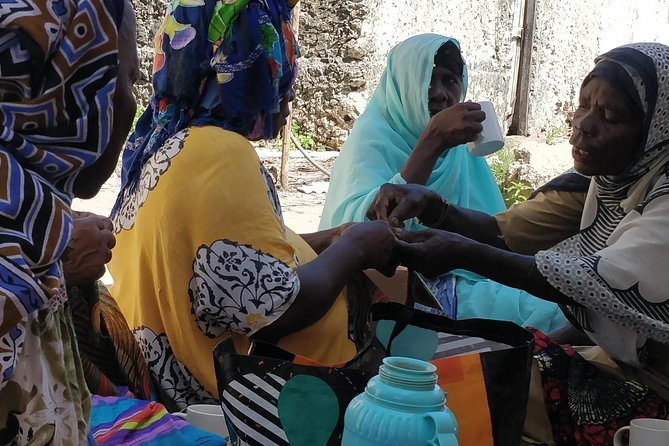
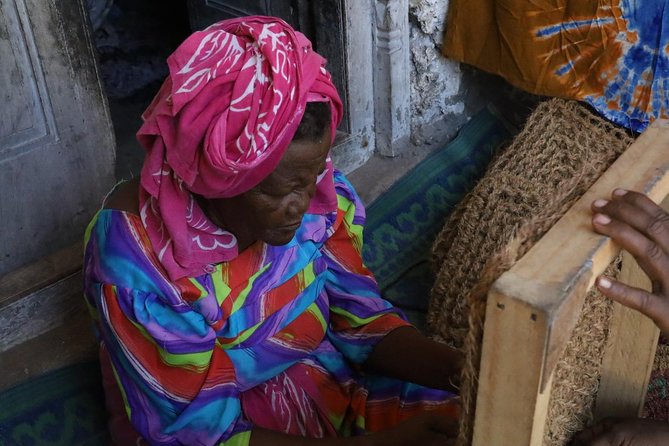
One of the most memorable parts is the coconut-fiber work. The women use coconut husks collected on the beach to make rope and doormats. It is a simple process to describe, but seeing the raw material change into something useful gives the stop its point.
You may get the chance to try weaving or handling the fiber yourself. That makes the visit more engaging than standing back for a quick photo. Do not expect a formal craft class with a long set of instructions. Think of it as a short, hands-on introduction guided by the women who do the work.
The doormats are especially easy to understand because you can see the finished purpose right away. Coconut husks, beach collection, preparation, and manual weaving all connect in one small object.
This is also where I would set your expectations. The tour gives you access to local artisans and their work, but it is not presented as a shopping tour or a guaranteed market visit. If you hope to buy a particular item, ask your guide what is available on the day.
Palm leaves, makuti, and handmade kofia sewing
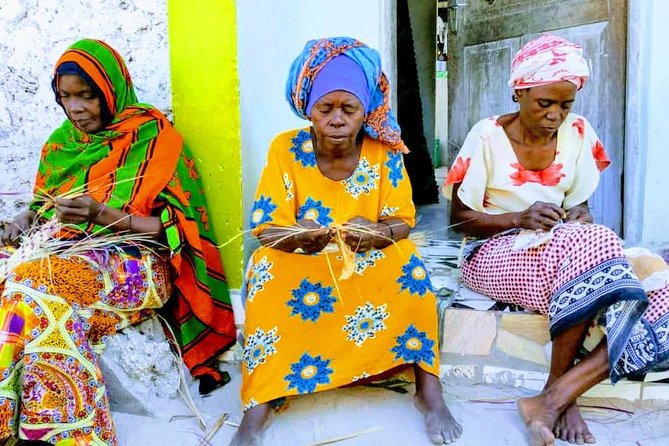
The craft stops continue with palm-leaf and makuti weaving. These techniques use plant material to create practical items, and the work gives you a better sense of the time and hand skill behind objects that might otherwise look ordinary.
The women also demonstrate traditional handmade kofia sewing. A kofia is a distinctive cap, and watching it being made adds a clothing tradition to the tour’s household crafts.
You may notice that the tour is strongest when you slow down. The point is not to rush from one photo stop to the next. Look at the materials, watch the hands, and ask the guide how the objects are used.
I would also be respectful about photography. The description allows you to visit homes and watch women work, but it does not say that every person or activity should be photographed. Ask before taking pictures, especially inside someone’s home.
Walking to the beach for seaweed work
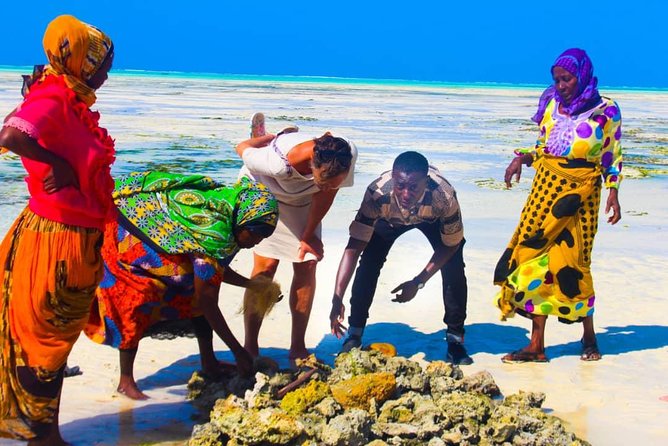
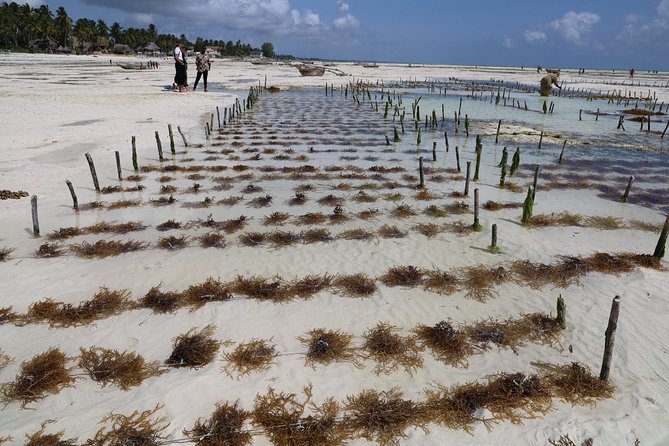
The walk includes a visit to the beach, where you learn about women collecting and cultivating seaweed. This adds an important coastal element to the tour. Jambiani is not presented only as a place of sand and water. The shore is also a workplace.
The seaweed stop helps explain why the beach matters to local families. You are not simply looking at the coast from a resort or taking a swim. You are seeing one of the activities connected with daily income and local knowledge.
The exact beach conditions and work in progress can vary. Seaweed collection is a working activity, not a stage show, so what you see may depend on the time of day and the season. Still, the guide can explain the process and place it within village life.
Wear comfortable shoes and be ready to walk. The tour is not recommended for anyone who cannot walk more than 2 kilometers. The walking distance is worth taking seriously, since the homes, craft stops, and beach visit are spread through the village.
Same corner of Zanzibar, a completely different kind of day:
- Zanzibar: Prison Island and Nakupenda Boat Trip with Lunch
★ 4.1 · 882 reviews - Skydive Zanzibar | Tandem Skydive
★ 5.0 · 877 reviews - Quad Adventures in Zanzibar: Nungwi / Kendwa
★ 4.9 · 640 reviews - Mnemba Island: Dolphin Swim & Snorkeling with Optional Lunch
★ 4.3 · 591 reviews
Learning the kanga and trying henna
The kanga demonstration offers a more personal look at clothing. You learn how this traditional garment is worn, rather than just seeing one hanging in a shop. If you are interested in dress, customs, or practical daily life, this is a useful part of the visit.
The experience also includes henna painting. This gives you another chance to take part instead of only observing. If you are a woman, one review specifically notes that you may be invited to try some of the women’s activities. The exact participation will depend on the people you meet and what is happening that day.
I like these elements because they add movement and touch to the tour. You are learning through demonstration, clothing, craft, and body art, not only through a guide’s explanation.
Keep in mind that henna is a hands-on activity. If you have a skin concern or simply do not want it, you can ask questions before agreeing. The supplied information does not give details about the type of henna or how long the design takes to dry, so ask your guide on the day.
Lunch in a woman’s home, with advance notice
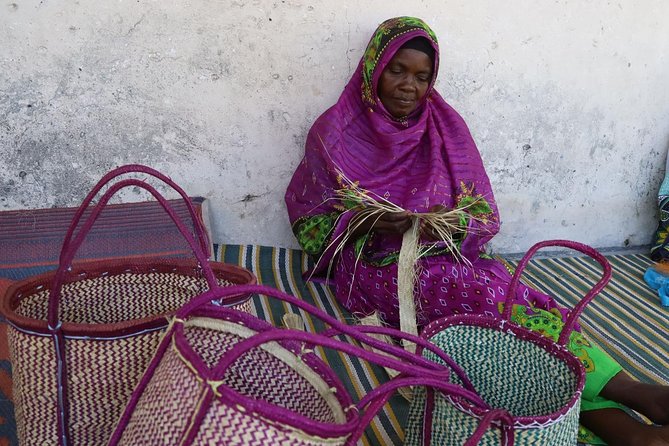
You can arrange lunch in one of the women’s houses for an additional fee. This is not included in the $32.65 tour price, and you must give at least 48 hours’ notice so the meal can be prepared.
That advance planning matters. Do not assume you can decide at the last minute after arriving in Jambiani. Tell the operator about dietary requirements when you arrange the meal. Special diets can be accommodated if the information is provided ahead of time.
A home meal can add a useful social layer to the outing. You are not only watching food preparation from the outside. You are setting aside time to eat in a local home, which can make the visit feel less like a series of stops.
Still, treat lunch as an optional extra, not as part of the basic tour. Ask about the menu, price, timing, and dietary arrangements before you pay for it. The published details confirm that lunch is available, but do not specify the dishes or the exact cost.
Why the private format matters
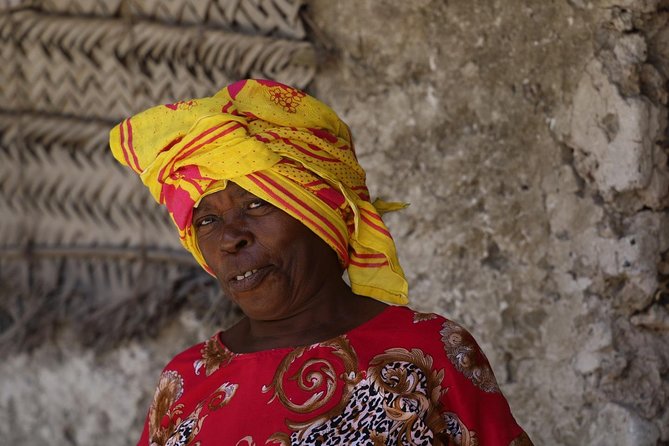
This is a private activity, so only your group participates. That is a real advantage in a village setting. You can ask the guide to slow down, spend more time at a craft stop, or explain something again without holding up a busload of people.
The private format also helps with personal attention. The guide can respond to your interests, whether you care most about sewing, seaweed, clothing, or village homes. Families and small groups may find this easier than a large scheduled walk.
There is a group discount, though the exact discount is not provided. The base price is $32.65 per person, and the private setup may offer fair value if several people share the experience. You should compare the total cost for your group, especially if you plan to add Stone Town pickup or lunch.
Mobile tickets are available. Confirmation is sent within 48 hours of booking, subject to availability. Since the tour is booked an average of 41 days ahead, I would not leave it until the final day of your Zanzibar stay if the date is important.
Transport from Stone Town and timing
Pickup from a Stone Town hotel is available for an extra charge starting at $45. That fee is separate from the tour price, so check the total before booking.
If you are staying near Jambiani, arranging your own way to the village may be more economical, but the supplied details do not give transport prices or directions. If you are based in Stone Town, paid pickup may save you the trouble of arranging a separate driver.
The activity itself is listed at about two to three hours. One account found that the actual village visit lasted only 1.5 hours, with the drive taking longer than the tour. That makes it important to ask for a realistic door-to-door schedule, especially if you have a beach booking, dinner reservation, or flight connection later.
The timing may also depend on lunch. Adding a meal will naturally make the outing longer, and the food must be prepared in advance. Confirm the expected finish time if you have plans afterward.
Who will enjoy this village walk
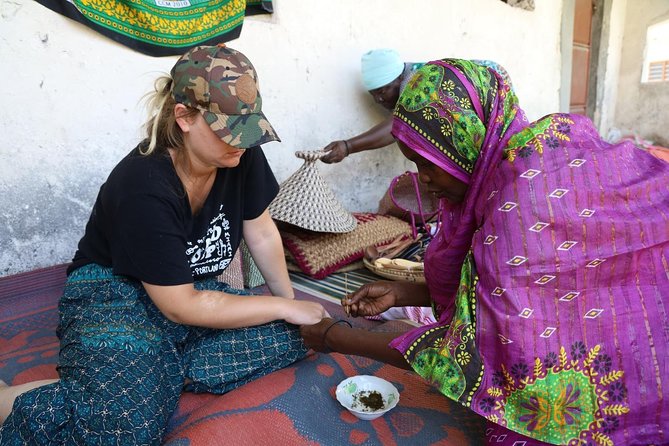
I would choose this experience if you want a human-scale look at Jambiani rather than another standard beach excursion. It suits you if you enjoy meeting local makers, asking questions, and trying small activities with your hands.
It is also a good fit for visitors who want to support local women directly through their work and, if arranged, a meal in a woman’s home. The tour gives you access to homes and workspaces that you would not normally see by simply walking along the beach.
Families may like the variety, but parents should remember the walking requirement. The tour is not recommended for people unable to walk more than 2 kilometers. Service animals are allowed, and most people can take part.
I would be less enthusiastic if you want a polished cultural performance, a tightly timed three-hour program, or a major list of historic sights. The appeal is the ordinary and practical: rope, mats, caps, seaweed, clothing, henna, and conversation.
What the $32.65 price gets you
At $32.65 per person, the price buys a private local guide and access to several village-based activities. The value comes from the personal format and the range of stops, not from expensive admissions. There is no admission ticket listed for the walking experience itself.
For one person, the price may feel higher than a basic self-guided walk. You would not, however, have the same access to women’s homes, craft demonstrations, or local explanations without a guide. For a small group, the private arrangement and group discount could make the cost easier to justify.
Budget separately for three possible extras: Stone Town pickup from $45, lunch, and any purchases you choose to make. The tour does not list shopping as an included feature, so keep your spending optional.
The high rating, 4.9 from 30 ratings, fits the experience’s strongest qualities: the local guide, the personal contact, the chance to try crafts, and the sense that you are seeing more than a staged attraction. The shorter-than-advertised duration is the main point I would clarify before paying.
Practical advice before you go
Book with enough lead time, since this experience is commonly arranged well before the travel date. Wait for confirmation within 48 hours, as availability is not automatic.
Wear clothing and footwear suited to walking through a village and visiting the beach. The information does not specify a dress code, but modest, comfortable clothing is a sensible choice when entering homes and meeting local families.
If you want lunch, provide 48 hours’ notice and list every dietary requirement. If you want pickup, ask for the full transport cost and estimated travel time from your Stone Town hotel.
Finally, keep your schedule flexible. The experience depends on local activities and good weather. If poor weather causes cancellation, you can choose another date or receive a full refund. You can also cancel for a full refund up to 24 hours before the start time, while later cancellations and changes are not accepted.
Should you book Jambiani Village Women at Work and Play?
Book it if you want a private, local view of Jambiani and prefer meeting working artisans to ticking off famous sights. The coconut-rope making, seaweed work, kanga demonstration, and henna give the visit a good mix of observation and participation.
Before booking, confirm the expected length, transport plan, lunch cost, and whether your preferred activities will be available that day. I would especially clarify the timing if you are expecting a full three hours.
For the right kind of visitor, this is a thoughtful use of a few hours in Zanzibar. It connects you with real work and real people, without asking you to pretend that a village visit is something it is not.
FAQ
How long does the Jambiani village tour last?
The experience is listed as approximately two to three hours. A shorter 1.5-hour visit has also been reported, so ask the provider to confirm the expected duration for your date.
What activities are included?
The tour includes visits to women’s homes, a beach visit to learn about seaweed collection and cultivation, coconut-rope and doormat making, palm-leaf and makuti weaving, handmade kofia sewing, a kanga-wearing demonstration, and henna painting.
Is lunch included?
No. Lunch is available at an additional cost in one of the women’s homes. You must give at least 48 hours’ notice, and you should provide dietary requirements in advance.
Is hotel pickup included?
No. Pickup from a Stone Town hotel can be arranged for an additional charge starting at $45.
Is this a private tour?
Yes. Only your group participates, and the experience includes a private local guide from Jambiani.
Can I cancel for a refund?
You can cancel at least 24 hours before the experience start time for a full refund. Cancellations or changes made less than 24 hours before the start time are not accepted. If poor weather causes the tour to be canceled, you can receive a full refund or choose another date.
Just added around Zanzibar
- Walking in Stone Town with a Expert Tourguide★ 3.7 · 3 reviews
- Stone Town Tour★ 5.0 · 16 reviews
- Jet Ski Experience from Kendwa Beach★ 5.0 · 21 reviews
- Turtle Snorkeling, Jozani Forest, Kuza Cave, Rock Restaurant★ 3.7 · 8 reviews
- Zanzibar boat rental/charters★ 5.0 · 6 reviews
- Prison island(Changuu island) & stone town walking tour★ 5.0 · 6 reviews
- Full Day Private Zanzibar Triple Delight Tour★ 4.5 · 3 reviews
- Zanzibar Tumbatu Island Cultural Experience★ 5.0 · 4 reviews
Zanzibar Tours, compared.


Stone Town, Spice Tour, Prison Island with Lunch
Read our review →
From Kendwa: Mnemba Boat Trip and Dolphin Snorkel Adventure
Read our review →
Prison Island and Nakupenda Boat Trip with Lunch
Read our review →
Mnemba Island: Dolphin Swim & Snorkeling with Optional Lunch
Read our review →
Prison Island, Nakupenda, StoneTown Tour with BBQ
Read our review →
Transparent Kayak and Drone (with Pickup Included)
Read our review →