
Reviewed · COFFEE TOURS
Arusha: Traditional Coffee Preparation(coffee tour)
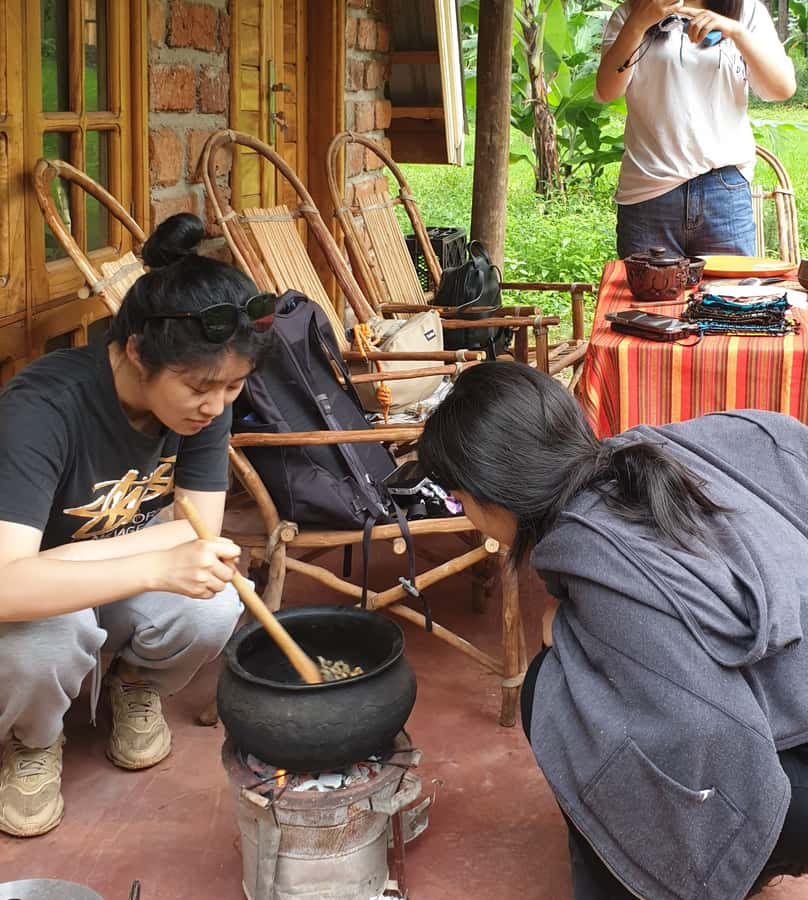
The best part of this Arusha experience is that you do not simply sip a finished cup. You make the coffee yourself, starting with dried arabica beans and ending with a drink brewed in a private garden. The work is slow and manual: pounding, roasting, grinding, and brewing over a charcoal fire.
I like the close look at a smallholder family farm, where three generations live and work together. I also like the simple setting and hands-on pace. You handle the beans instead of watching a polished demonstration from a distance. The main drawback is that three hours can feel short if you want a full lesson on Tanzanian coffee production or a long farm walk.
Key points to know before booking
- You prepare the whole cup by hand: Husk, roast, grind, and brew the beans with traditional tools.
- The coffee begins on a family-run farm: You see how arabica is cultivated before moving to the garden workshop.
- The charcoal roasting adds a rustic flavor: The beans are roasted in a clay pot rather than with modern equipment.
- The tasting is organic and single-origin: Your final cup comes from the beans used during the session.
- The setting is personal rather than theatrical: The workshop takes place in a private garden, with coconut rolls available alongside the coffee.
- The meeting point needs care: Your guide waits by the main road in a gray or chocolate company shirt.
From coffee plant to dried bean near Arusha
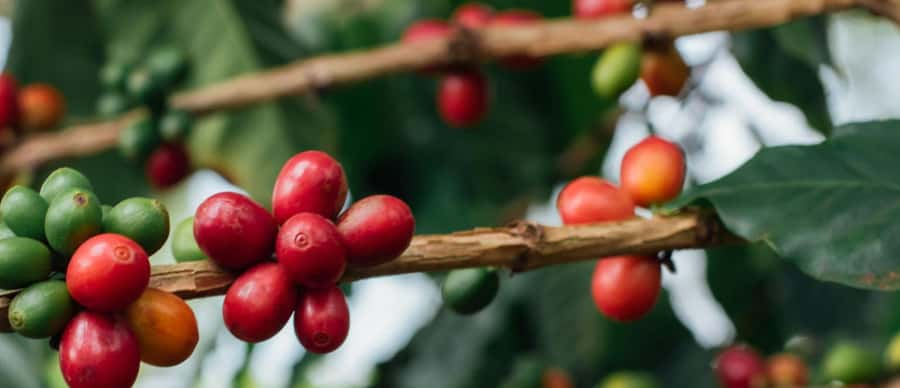
This experience begins at Naturalland Expeditions and continues with a short guided visit to a small coffee farm in the Arusha region. The purpose is not to cover every stage of commercial coffee production. Instead, you get a clear introduction to where your drink starts, with arabica cultivation as the focus.
That matters because coffee can seem abstract when you only see it in a cup. On the farm, you connect the drink with the plant, the beans, and the work required before roasting. Tanzania treats coffee as one of its major export commodities, but this visit keeps the subject at a human scale.
You see a smallholder operation, not a large plantation built for sightseeing. A family-run farm with three generations living on it gives the visit a more grounded feel. The scale also makes the lesson easier to follow. You are not trying to cover acres of crops or rush between several production buildings.
The farm visit is described as short, so set your expectations correctly. This is an introduction, not a long agricultural tour. If your main interest is coffee cultivation, ask your guide questions while you walk. The information provided confirms a guided farm visit, but not a detailed schedule for each crop area or a full explanation of harvesting and processing.
More Coffee Tours in Arusha
- Arusha or Moshi : Hot Spring, Waterfall & Coffee Farm Tour
★ 4.8 · 80 reviews - Arusha: Materuni Waterfalls, Coffee, and Hotsprings Tour
★ 4.8 · 78 reviews - Coffee tour and Buffet Lunch with Kingstone Asilia (Arusha)
★ 5.0 · 74 reviews
The mortar and pestle make coffee a physical process
After the farm visit, you move to a private garden for the hands-on part of the experience. Here, your guide explains each stage and gives you the tools to take part.
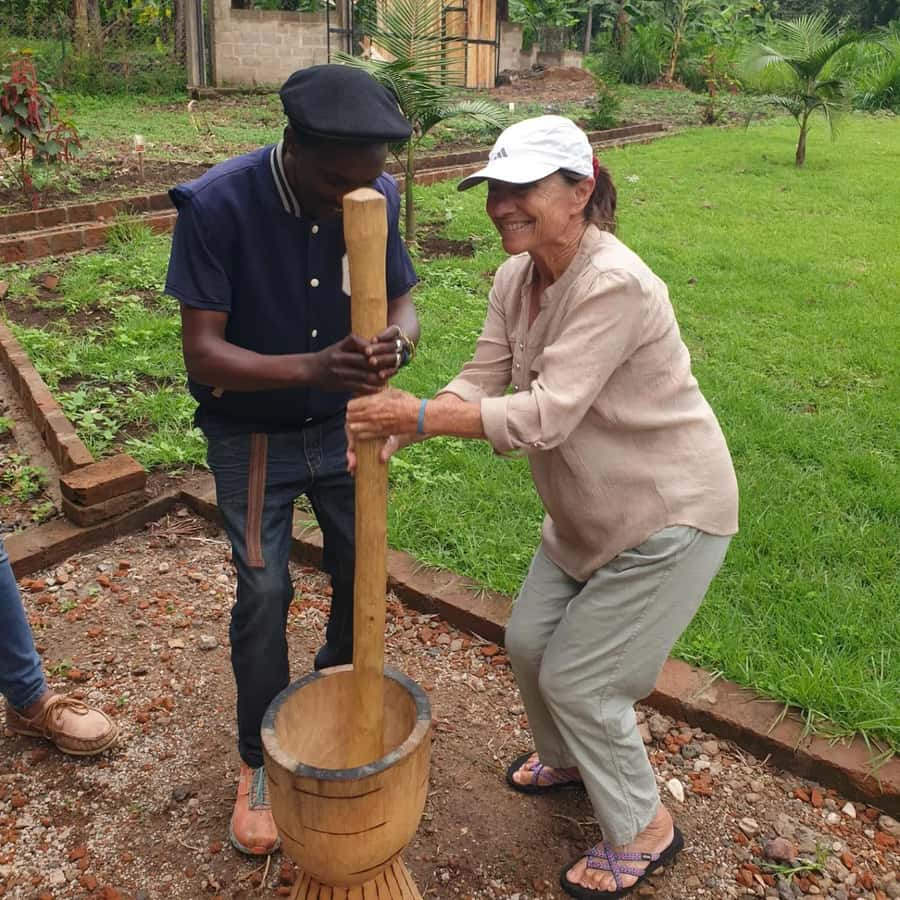
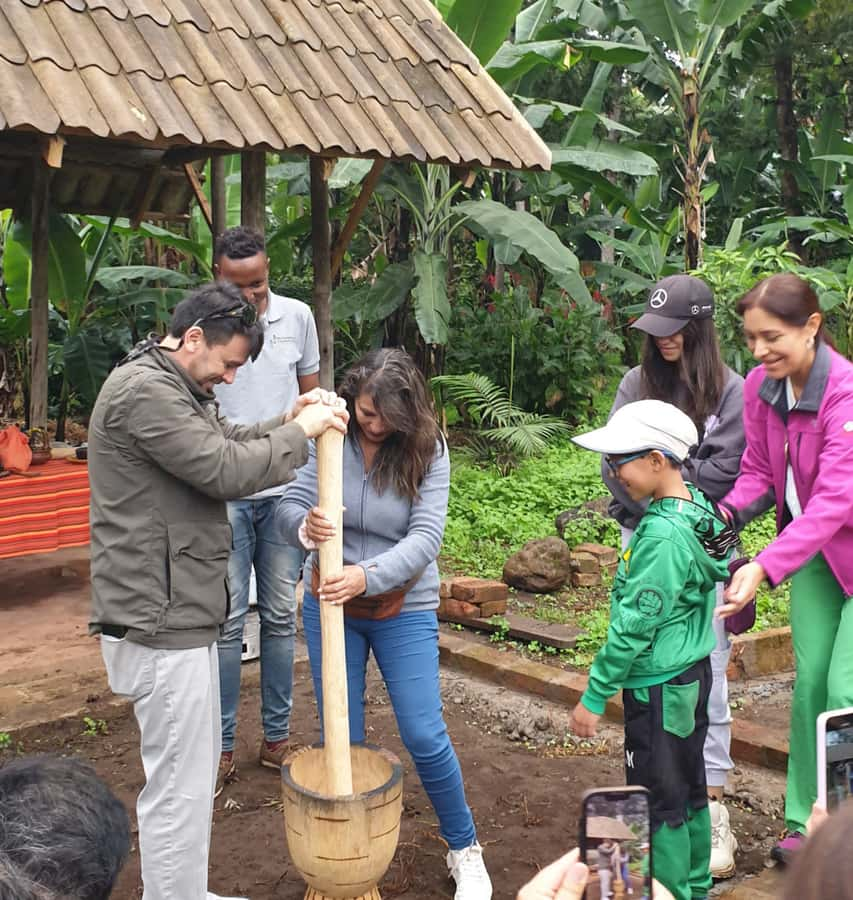
The first step is husking the dried beans. You place them in a large wooden mortar and use a pestle to pound away the outer husk. This is simple in theory, but it gives you a better sense of the labor hidden behind a morning cup of coffee.
The process is entirely manual. That is the point, and it is also what makes the activity different from a standard tasting. You are not asked to press a button or watch a machine do the work. The mortar and pestle create a direct connection between your hands and the beans.
Expect the task to be slower and less tidy than home coffee preparation. The beans need repeated pounding, and the husk must be removed before the next stage. This is a small physical activity, not a strenuous hike, but you will be doing real work. If you prefer a quick tasting with little participation, this may feel more involved than necessary.
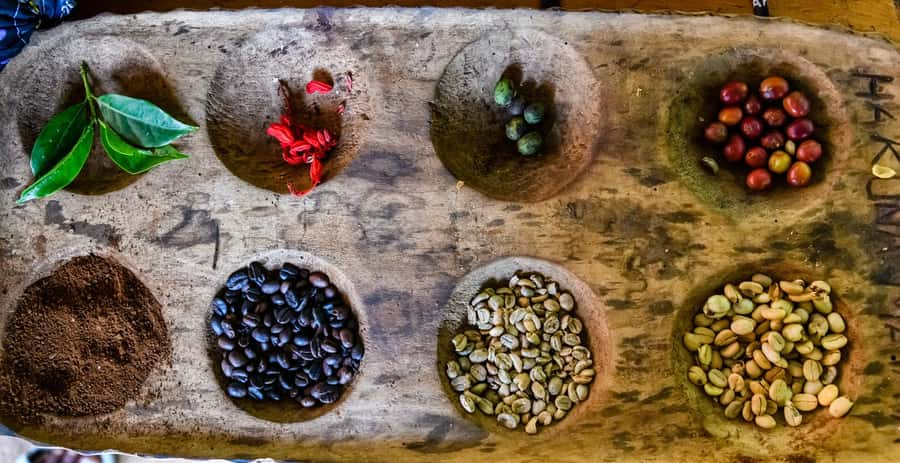
The guide then shows you how the husked beans are prepared for roasting. The sequence is easy to understand because each step follows the last one: remove the husk, roast the beans, pound them again, and brew the powder.
Clay pot roasting over charcoal
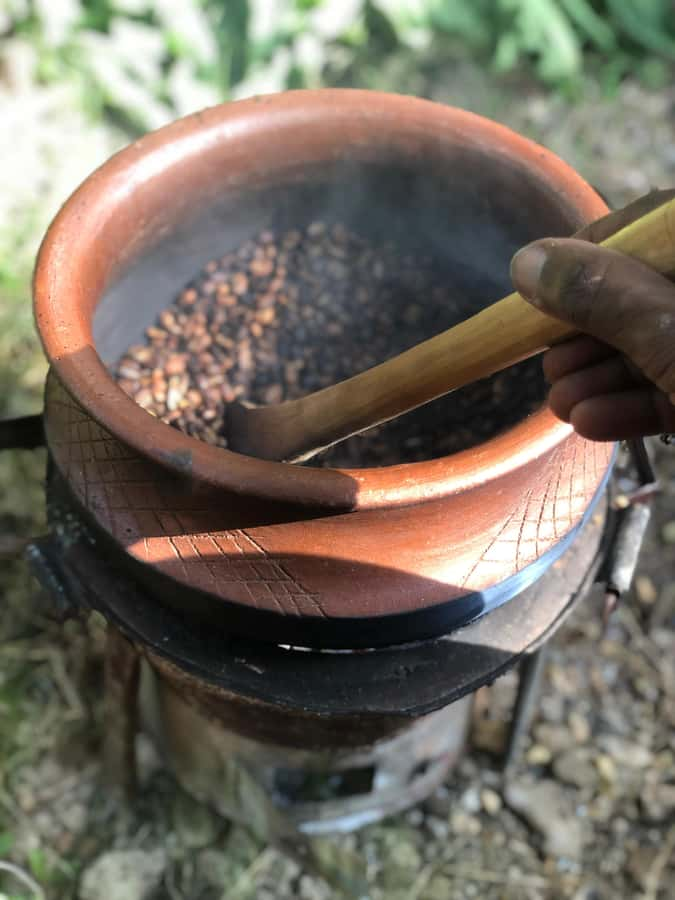
The beans are roasted in a clay pot over a charcoal fire. This is one of the most distinctive details of the session. Modern coffee equipment can produce precise and repeatable results, but the clay pot and charcoal give this workshop a more traditional character.
The heat also affects the flavor. The description of the experience points to a rustic taste, and that is a useful expectation to carry into the tasting. This is not presented as a controlled specialty-coffee lab. You are learning an old-fashioned preparation method, and the finished drink reflects that.
Roasting is the stage where you see the beans change most clearly. Their appearance, smell, and texture shift as they heat. The information provided does not specify the exact roast level or length of time, so the guide will be the best source for what to watch for during your session.
The garden setting helps keep the experience relaxed. Instead of moving through a formal processing plant, you work in an outdoor private space with handmade utensils. That setting is a major part of the appeal. The coffee preparation feels tied to daily life rather than arranged as a technical performance.
Still, charcoal roasting has limits. You should not expect the consistency of a professional roaster or a formal lesson in tasting notes. The value is in the method, the setting, and the chance to participate.
Grinding the roasted beans by hand
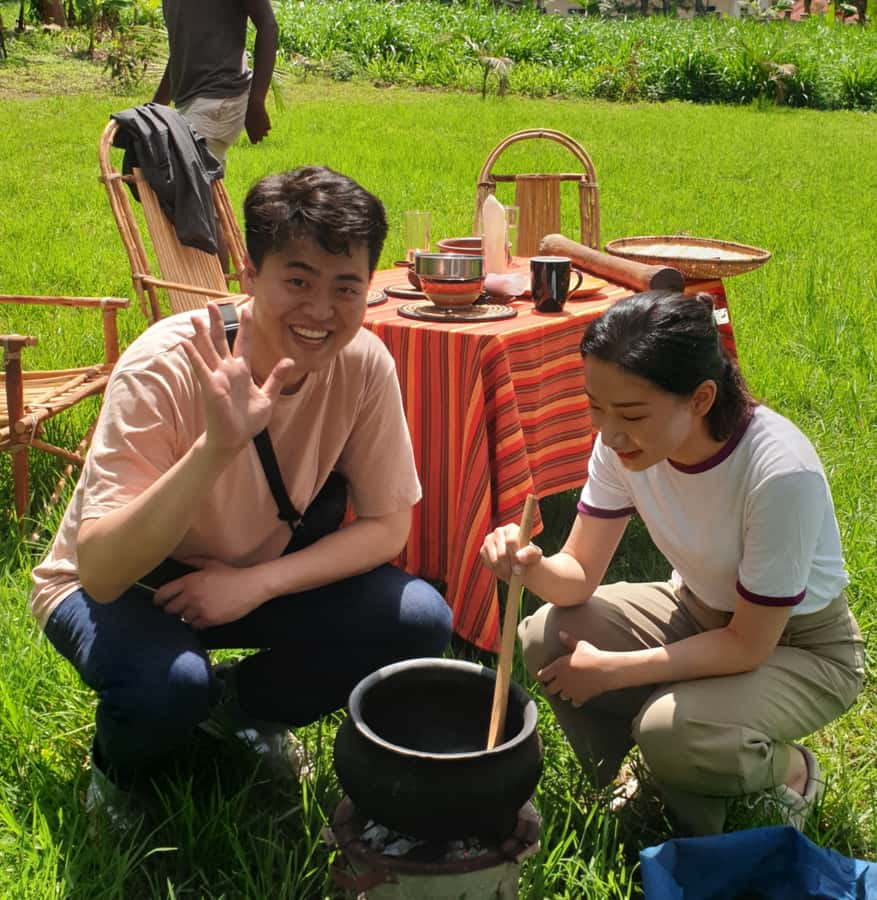
Once the beans are roasted, you pound them again until they become a fine powder. This is another stage where the mortar and pestle replace electric equipment.
The grinding takes patience. You are not just waiting for a machine to finish while someone explains the process. You help create the texture needed for brewing. That makes the final cup feel earned, especially after you have taken part in every earlier step.
This is also where the activity works well for people who enjoy food preparation. The workshop has the same appeal as making bread, cheese, or a traditional dish with local tools. The finished result matters, but the method is just as important.
The guide leads you through the sequence, so you do not need prior coffee experience. English is the tour language, and the live guide explains the stages as you work. Johnson and Derik are among the guides associated with the experience, and the available information specifically identifies them as friendly and motivated hosts.
Because no group size is given, you should not assume a private booking or a large class. The farm visit has been described as a private tour in at least one account, but the activity details do not promise that every departure is private. If that matters to you, confirm it before booking.
More coffee farm tours around Arusha:
- From Arusha: Coffee Farm and Mangalia Waterfalls Tour
★ 4.9 · 48 reviews - Hidden Arusha Waterfall, Coffee & Village Tour (All-Inclusive)
★ 5.0 · 42 reviews - Organic Coffee Tour and Local Food Experience in Arusha
★ 5.0 · 29 reviews - Private Meru Coffee Tour in Nkoaranga
★ 5.0 · 23 reviews
Brewing and tasting your single-origin coffee
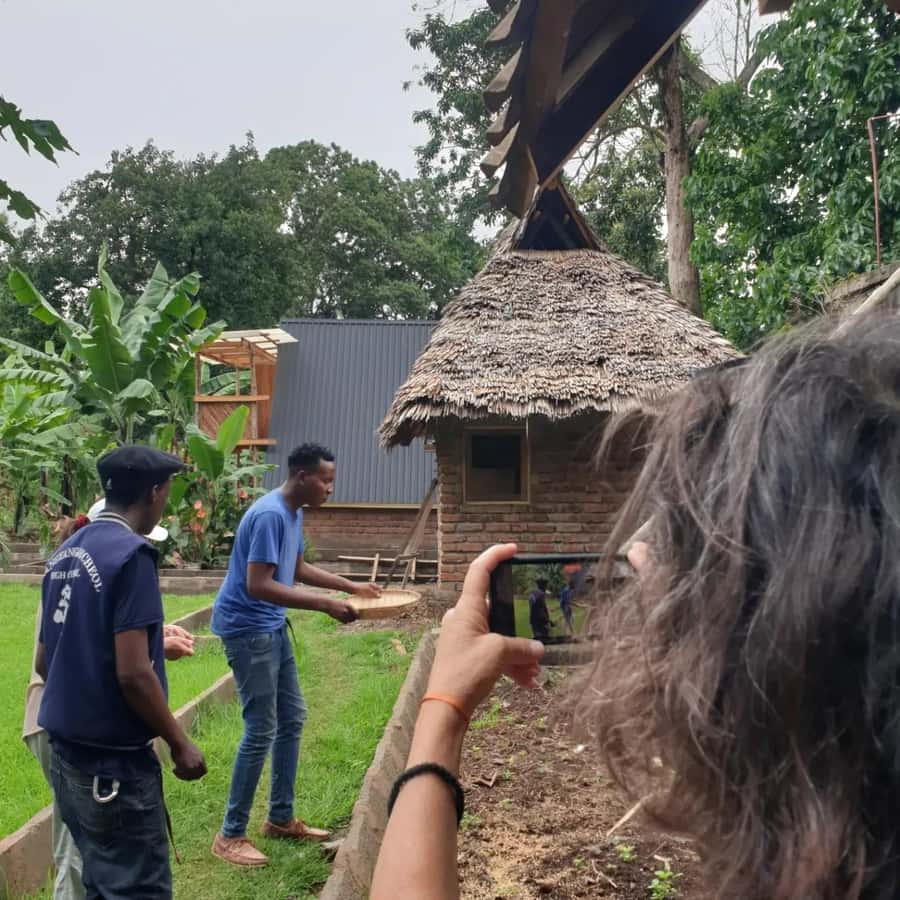
The final step is brewing the coffee you have prepared. You then sit down to enjoy an organic, single-origin cup made from the beans used in the workshop.
This is the payoff, but it is not just a tasting. You understand the drink differently after seeing the farm and handling the beans. The cup carries the flavor of the roast and the method, along with the satisfaction of having completed the process yourself.
The finished coffee has been described as excellent, though taste is personal and the traditional method does not aim for the same profile as a modern café. You might notice a stronger rustic character from the clay pot and charcoal roasting. The exact flavor will depend on the beans and preparation on the day.
Coconut rolls may also be served. They are a small detail, but they add to the sense that this is a local food experience rather than a narrow coffee lecture. The rolls give you something to eat alongside the drink and make the garden stop feel more complete.
Do not expect a large meal. Drinks are included, and coffee is the clear center of the session. The coconut rolls are an appealing extra, not a substitute for lunch.
Why the three-hour schedule works
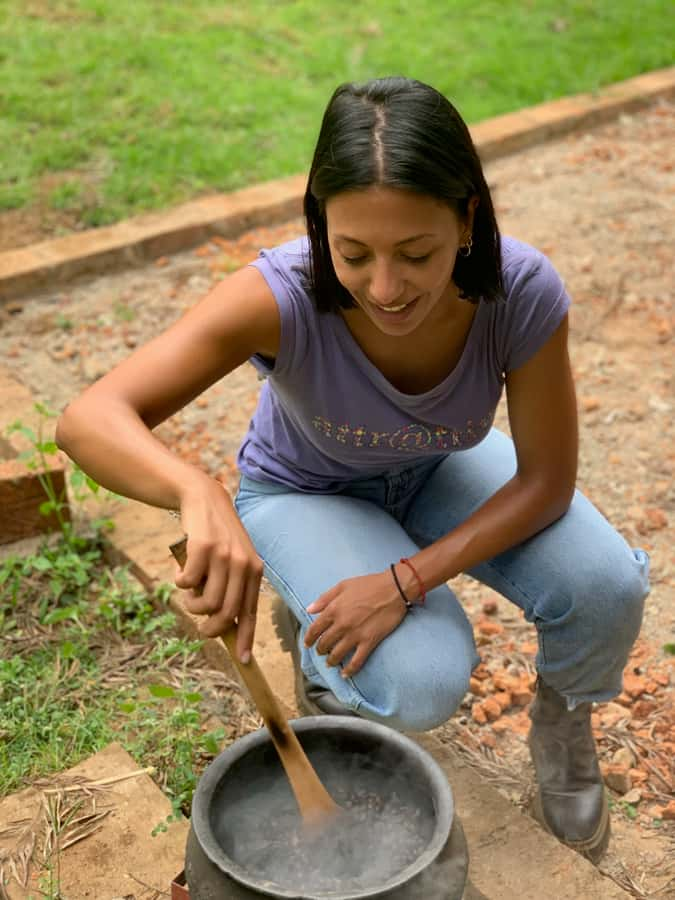
The activity lasts three hours, including the farm visit, the preparation workshop, and coffee tasting. That is a useful length for a morning or afternoon in Arusha.
You have enough time to understand the full bean-to-cup sequence without committing half a day to a single subject. The schedule also fits well before or after other plans, although the available information does not provide exact start times. Check the current departure options when you book.
The short length has a tradeoff. You will learn the basic stages, but the session is not designed as a full coffee course. There is no stated promise of a detailed lesson in harvesting, fermentation, drying, grading, export, or professional brewing. If those subjects are important to you, use the guide’s time for questions.
I see the compact schedule as a strength for most visitors. You get a focused activity with a clear beginning and end. You also leave with a better understanding of how much work sits between a coffee plant and a brewed cup.
What the $30 price covers
At $30 per person, the price includes the guide fee, the coffee farm visit, and drinks. For three hours of guided activity, the value is solid, particularly because the experience includes participation rather than only observation.
You are paying for access to a smallholder farm, instruction with traditional equipment, and the coffee you prepare. The price also supports a local activity based around family farming and practical knowledge. That makes it more worthwhile than a brief café tasting if you want context and hands-on work.
The value is less clear if you only want to drink Tanzanian coffee. You could spend less time and possibly less money at a café for a cup, though that would not include the farm visit or the preparation lesson.
I would compare this with your other Arusha plans. If you already have a long farm visit or a full food workshop scheduled, the activity may repeat some of that local focus. If your schedule is mostly wildlife viewing and city sightseeing, this gives you a quieter change of pace.
The included coffee and drinks are useful, but do not book it expecting a meal or transport package. Those inclusions are not specified. Plan your route to and from the meeting point yourself unless your booking confirmation says otherwise.
Meeting your guide on the main road
The meeting instructions are simple but important. Your guide waits at the main road wearing a company shirt in either gray or chocolate.
That is a practical detail in an area where a precise indoor reception desk may not be available. Keep an eye out for the shirt and have the activity name and provider details ready. The starting point is Naturalland Expeditions, and the session returns there after the farm visit and garden workshop.
No transportation details are provided, so do not assume pickup from your hotel. The information confirms the starting and ending point, but not transfers, taxis, or walking directions. Check the exact location before the day of the activity.
The tour is offered in English. That makes it suitable for English-speaking visitors who want explanations while working with the tools. If you need another language, this experience does not list one.
Who will enjoy this coffee workshop
I would recommend this to you if you like hands-on cultural activities and prefer a small local setting to a polished attraction. It suits coffee drinkers, food lovers, families, and anyone curious about traditional preparation.
It is also a good choice between bigger Arusha excursions. After a busy safari or long day outdoors, three hours of farm walking and garden work offers a slower rhythm. You get to meet local guides, handle ordinary tools, and focus on one everyday product.
The experience may suit families, but the supplied information does not give a minimum age or specific child arrangements. Ask before booking if you are traveling with young children.
Coffee specialists may enjoy the method but want more technical detail. The session covers the essential stages from dried bean to cup, yet it does not promise advanced tasting instruction or professional roasting theory. You can still make the most of it by asking about the farm, arabica cultivation, roasting, and brewing as you go.
It is less suitable for anyone who dislikes smoke, manual work, or outdoor preparation. The beans roast over charcoal, and the process requires repeated pounding. The activity is gentle, but it is not passive.
Booking flexibility and practical planning
You can cancel up to 24 hours before the activity for a full refund. You can also reserve now and pay later, which helps if your Arusha schedule is still changing.
Starting times depend on availability, so check before you commit to another morning or afternoon plan. The experience lasts three hours, but allow extra time for reaching the meeting point and continuing to your next stop.
Wear something comfortable for walking around the farm and working in the garden. The provided details do not specify dress requirements, weather arrangements, or equipment, so avoid assuming that protective clothing or rain cover will be supplied.
Bring curiosity rather than technical coffee knowledge. The guide handles the instruction, and the process is designed to be followed step by step. If you want the strongest experience, ask questions during the farm visit and pay attention to how the beans change through each stage.
Should you book this Arusha coffee tour?
Book it if you want to make a traditional cup from start to finish, not simply taste one. The family-run farm, charcoal roasting, handmade tools, private garden, and coconut rolls give the three-hour visit a clear local character.
Skip it if your main goal is an advanced coffee education, a large plantation tour, or a full meal. Those are not what this activity promises.
For $30, I think the experience offers good value for a relaxed, practical introduction to Tanzanian arabica. It is short, personal, and easy to fit into an Arusha itinerary. The strongest reason to go is simple: by the time you drink the coffee, you understand the work behind it.
FAQ
How long does the coffee experience last?
The activity lasts three hours, including the smallholder coffee farm visit, guided preparation, and coffee tasting.
What is included in the price?
The price includes drinks, the coffee farm visit, and the guide fee.
Which language is the tour offered in?
The live tour guide speaks English.
Where does the experience start and finish?
It starts at Naturalland Expeditions, includes a visit in the Arusha region, and returns to Naturalland Expeditions.
How can I identify the guide?
The guide waits at the main road wearing a company shirt in either gray or chocolate.
Can I cancel or pay later?
You can cancel up to 24 hours in advance for a full refund. You can also reserve the activity and pay later.
Just added around Arusha
- From Arusha: 11 days The Classics Northern Tanzania safari★ 5.0 · 11 reviews
- 6-Day Mount Meru Climb through Momella Route Guided Tour★ 5.0 · 5 reviews
- Private Day Trip to Arusha National Park with a Walking Safari★ 5.0 · 4 reviews
- From Arusha : 11-day Amazing North Tanzania safari tour★ 5.0 · 4 reviews
- Walking Day Tour to Safari in Arusha National Park★ 5.0 · 5 reviews
- 2 Days Tanzania Midrange Group Join Safari★ 5.0 · 7 reviews
- Best 5 Days Tanzania Private Luxury Safari with luxury Lodges★ 5.0 · 12 reviews
- Waterfall & Coffee Walking Tour★ 5.0 · 6 reviews
Coffee Tours, compared.
Materuni Waterfalls, coffee tour & Kikuletwa Hot Springs
Read our review →
Materuni Waterfall, Coffee Tour and Picnic Hot Lunch
Read our review →
Maasai village visit, Materuni waterfalls & coffee experience
Read our review →
Arusha or Moshi : Hot Spring, Waterfall & Coffee Farm Tour
Read our review →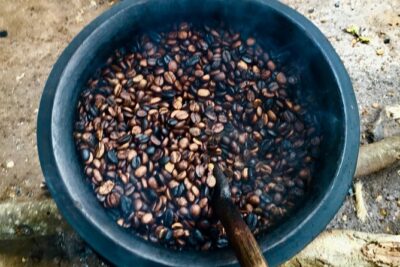
Coffee tour and Buffet Lunch with Kingstone Asilia (Arusha)
Read our review →
Materuni Waterfalls, Visiting Chagga Village, CoffeeTour Kikuletwa Hotsprings
Read our review →
6 Days Serengeti Safari(hiking waterfalls &coffee tour)
Read our review →
Hidden Arusha Waterfall, Coffee & Village Tour (All-Inclusive)
Read our review →Browse the lists this tour appears in