
Reviewed · CITY TOURS
Ancient Bagamoyo City Day Tour
Bagamoyo is where Tanzania’s coastal story comes together: Swahili settlement, Arab trade, the slave trade, German rule, Christian missions, and the journeys of David Livingstone. This private day trip gives you several clear entry points into that past, from Kaole Ruins to the old cathedral and seaside customs house.
I like the mix of serious history and hands-on stops. You get a museum and ruined mosques, then a crocodile and reptile sanctuary where you may hold one of the animals for a photograph. Lunch, snacks, bottled water, and alcoholic drinks are included, which helps justify the $200 per-person price for a private 10-hour outing.
The main consideration is the long day. You leave Dar es Salaam at 7:00 a.m., and Bagamoyo’s story includes difficult subjects such as slavery and colonial rule. If you want only beaches and easy sightseeing, this may feel heavy. If you enjoy context, old buildings, and coastal culture, it is a strong choice.
Key points to know before you book
- A full day from Dar es Salaam: Plan on roughly 10 hours, with a 7:00 a.m. start and pickup available.
- History across several eras: The route covers the older Kaole settlement, Arab influence, the slave trade, German colonial rule, Christian missions, and coastal commerce.
- A private experience: Only your group takes part, so the pace and questions can stay personal.
- Five varied stops: You visit a museum, archaeological ruins, a colonial customs building, a cathedral area, and a reptile sanctuary.
- Food and drinks are covered: Lunch, snacks, bottled water, and alcoholic beverages are included in the listed price.
- Guide quality matters: Guides named in past bookings include Erick and Emmanuel, while Jacqueline and Abby have helped arrange tours. Confirm who will lead your visit if that is important to you.
Why Bagamoyo makes a worthwhile day trip
Bagamoyo is not simply an old town with a few scattered buildings. It grew from the much older Swahili settlement of Kaole, whose roots reach back to the eighth century. The later town was founded toward the end of the eighteenth century and became one of the most important ports on the coast.
That location shaped everything. Goods, people, languages, religions, and political power moved through the area. Bagamoyo later became the capital of German East Africa, giving the town another layer of buildings and memories.
You will not see every part of that story in one day, but the tour gives you a useful sequence. First comes the broad historical setting at the museum. Then you see the older settlement at Kaole. After that, the Old Boma shows how trade and colonial administration worked, while the cathedral and Livingstone sites bring in missionary history. The reptile sanctuary provides a change of pace at the end.
That variety is one of the tour’s strengths. You are not asked to spend all day in one museum or walk from ruin to ruin. Each stop adds a different piece.
More City Tours in Dar es Salaam
- Dar es Salaam: City Tour
★ 4.7 · 159 reviews - Dar es Salaam City Tour – Everyday
★ 5.0 · 64 reviews - The Best/Top Rated Cultural City Tour in Dar es Salaam
★ 5.0 · 57 reviews
Starting at the Bagamoyo Museum
The Bagamoyo Museum is the best place to begin because it frames the rest of the day. You spend about an hour here, with admission included.
The focus is the slave trade and the development of Bagamoyo as an important coastal center. This is difficult material, but it is essential to understanding the town. Bagamoyo was tied to networks that moved enslaved people and goods through East Africa, and the museum helps connect that painful past with the town’s later political and commercial importance.
You should give your guide room to explain the setting rather than rushing through the displays. The quality of this stop will depend partly on how clearly the guide links the objects and stories to the places you will see later.
A guide who can explain both the precolonial and colonial periods adds real value here. One account specifically praised Erick for explaining life before and after colonial rule, which is the sort of broad context this museum needs.
The museum is not a lighthearted opening, so prepare for a serious first hour. That is not a flaw. It simply means this tour suits people who want to understand the forces that shaped the coast, not only photograph old walls.
Reading the Kaole Ruins
Kaole Ruins are about an hour from the schedule, with admission included. This is the oldest part of the experience and one of its most important stops.
Kaole represents the earlier Swahili settlement that existed before the later town of Bagamoyo. The ruins also reflect Arab influence along the coast and the growth of trade between East Africa and the wider Indian Ocean world.
The value here is not only the remaining stonework. The site helps explain how communities on the coast developed systems of trade, building, religion, and language. The town’s story also connects to the spread and growth of Kiswahili, a language shaped by contact among African coastal communities and outside traders.
You will want to listen closely to the explanation of how Kaole relates to Bagamoyo. Without that link, the ruins can feel like a separate archaeological stop. With it, they become the beginning of the town’s story.
Allow for uneven ground and an outdoor setting. The supplied details do not promise extensive facilities or a particular level of accessibility, though most people can take part and service animals are allowed. Wear practical shoes and expect a warm coastal day.
Seeing trade at the Old Boma
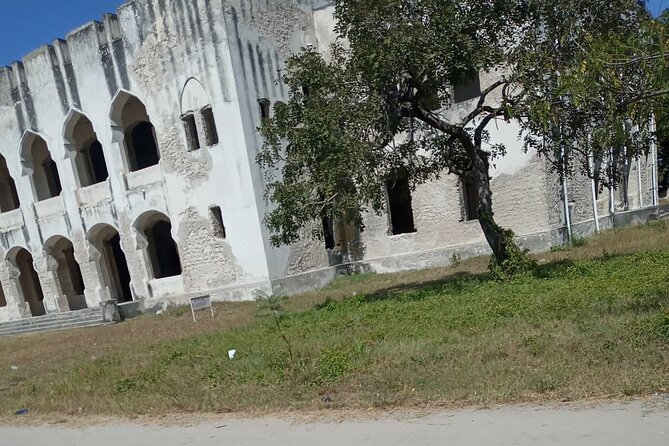
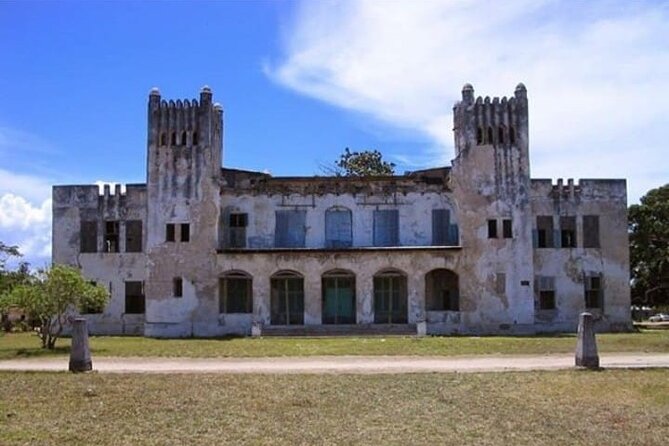
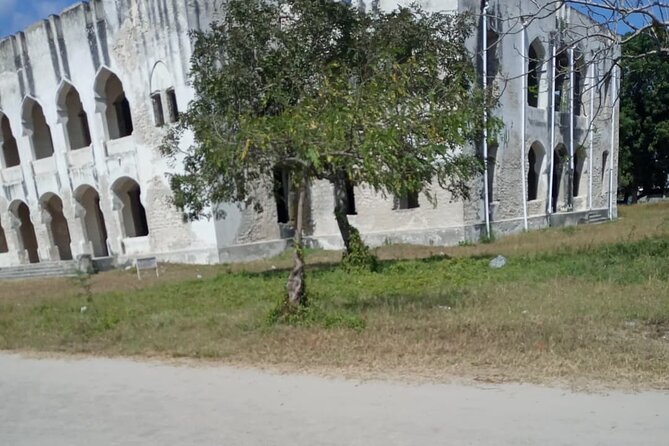
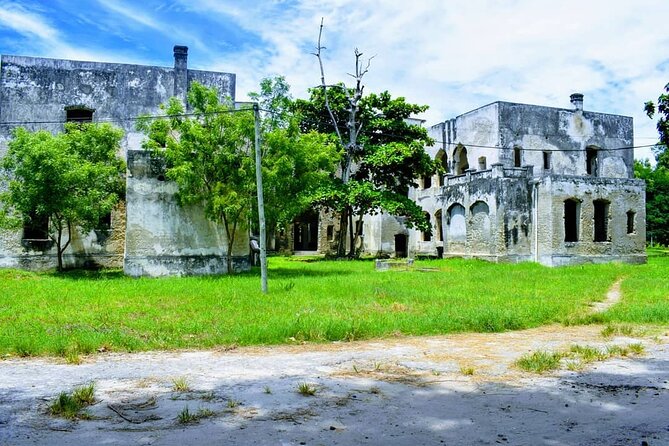
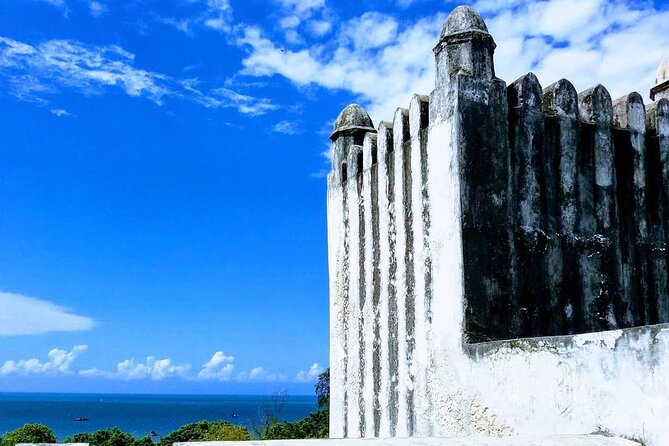
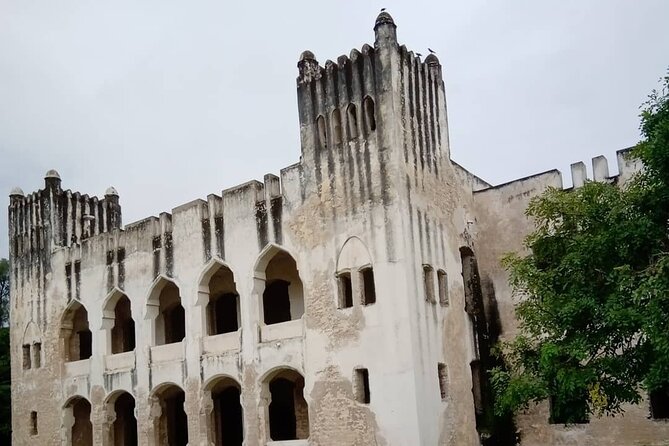
The Old Boma is a shorter stop, about 30 minutes, but its location gives it weight. It sits beside the beach, close to the center of Bagamoyo, and served as a customs building.
This is where the commercial side of the town comes into view. The building helps show how Bagamoyo handled trade and why its position mattered during the colonial period. After the museum and Kaole, you can see how a coastal settlement became part of organized systems of taxation, shipping, and administration.
Thirty minutes is enough for a focused explanation and photographs, but do not expect a long visit inside a large complex. The stop works best as a compact piece of the larger route.
I like the contrast here. Kaole points back to an older African and Swahili setting, while the Old Boma shows the formal machinery of colonial commerce. Together, they make the town feel like a place that changed over time, rather than a frozen historical display.
Same corner of Dar es Salaam, a completely different kind of day:
- Dar es Salaam City Center: Walking Tour
★ 4.8 · 102 reviews - Joining Safari from Mwanza
★ 5.0 · 54 reviews - Magical Mwanza 6 days Safari Package
★ 5.0 · 42 reviews - Dar Es Salaam City Tour (Full Day With Private Guide And Car)
★ 5.0 · 39 reviews
The cathedral and David Livingstone’s connection

The next Bagamoyo visit includes the old cathedral and places associated with explorer David Livingstone. Admission is free, and the scheduled time is about an hour.
The cathedral brings the missionary period into the story. By this point, you have already considered Arab influence, trade, slavery, and German administration. The church adds another force that shaped the coast: Christian mission activity and European religious involvement.
The Livingstone connection gives the stop a personal angle. Instead of discussing only institutions and buildings, the guide can point to places connected with a well-known explorer whose travels became part of the nineteenth-century story of East Africa.
This is a good moment to ask questions. The information provided does not specify the exact buildings or displays included, so your guide will be important in explaining what you are seeing and how the site relates to Bagamoyo’s wider past.
The visit also helps break up the day. After the museum and ruins, you are in the old town, looking at buildings and places still connected with the city’s religious and colonial history.
Ending with crocodiles and reptiles
The crocodile and reptile sanctuary is the most unusual stop. You spend about 40 minutes there, and admission is free.
Here you can see crocodiles and other reptiles at close range. If you want a memorable photograph, you may be able to hold one of the animals. That activity is optional, so you can enjoy the stop without taking part in the photograph.
This is a useful change of mood after a day focused on slavery, colonialism, and religious history. It also gives families and younger participants something direct and visual to enjoy.
Still, keep your expectations in check. The attraction is described as a sanctuary visit, not a wildlife safari. You should not book this tour expecting a large natural reserve or a long animal encounter. Its role is to provide a short, unusual final stop within a history-focused day.
What the private format changes
This is a private tour, so only your group participates. That matters more here than it would on a simple sightseeing loop.
Bagamoyo’s story has many layers, and you may want to spend more time on the slave trade, Swahili culture, German rule, or David Livingstone. A private guide can respond to those interests more easily than a fixed group tour.
The named guides associated with this experience include Erick and Emmanuel. Jacqueline and Abby have also been involved in arranging tours. If you have a particular interest in history, ask in advance whether a guide with strong historical knowledge can lead your group.
Private does not mean the day is completely flexible. The published schedule still gives you a 7:00 a.m. start and about 10 hours overall. Pickup is offered, and the activity is near public transportation, but the exact pickup arrangements are not specified in the supplied information. Confirm the meeting details before the morning of departure.
Is $200 per person fair?
At $200 per person, this is not a bargain-priced local outing. It is easier to assess as a full-day private excursion from Dar es Salaam.
The price includes pickup, lunch, snacks, bottled water, alcoholic beverages, and admission to the Bagamoyo Museum and Kaole Ruins. The cathedral area, Old Boma, and reptile sanctuary have no separate admission charge listed.
The private format is the biggest value factor. If you are traveling as a couple or a small group, the cost buys a dedicated vehicle and guide for a long day, rather than a short shared visit. It also removes the work of arranging several separate stops.
Food and drinks make the day simpler, though you should note that the minimum drinking age is 18. Tips and gratuities are not included, so set aside extra money if you feel your guide and driver provided good service.
The tour is commonly booked about 31 days ahead. That suggests you should not leave it until the last moment if Bagamoyo is a priority, especially if you need a particular date or guide.
Food, timing, and practical comfort
Lunch is included, and one account specifically praised the seafood. That fits the coastal setting, though the supplied details do not identify the restaurant or give a set menu. If you have allergies or dietary restrictions, ask when booking rather than assuming the lunch will suit you.
Snacks and bottled water are also supplied. Those details matter on a 10-hour day, particularly because the route combines driving, outdoor ruins, and several stops.
Alcoholic beverages are included for adults aged 18 and older. You do not need to drink to enjoy the tour, and it would be sensible to keep any drinking modest during a warm, active day.
The tour requires good weather. If poor weather cancels it, you are offered another date or a full refund. You can also cancel for a full refund up to 24 hours before the start time. Changes or cancellations made less than 24 hours before departure are not accepted for a refund.
Who will enjoy this Bagamoyo tour?
I would choose this experience if you want a serious introduction to coastal Tanzania and prefer a private guide over a large group. It suits history enthusiasts especially well, but you do not need specialist knowledge to follow the day.
Families may like the combination of museum, ruins, old buildings, and reptiles. The animal stop gives younger participants a break from historical sites, while the private format can make it easier to adjust the pace.
Couples also get a well-rounded day. The coastal setting, seafood lunch, and old town atmosphere add lighter moments to a route that otherwise deals with difficult subjects.
I would think twice if you have limited time in Dar es Salaam and want a short outing. Ten hours is a major commitment, and Bagamoyo is best chosen for its history rather than as a quick beach escape.
Should you book the Ancient Bagamoyo City Day Tour?
Book it if you want to understand how Swahili settlement, Indian Ocean trade, slavery, Arab influence, German colonial rule, Christian missions, and exploration meet in one coastal town. The combination of Kaole Ruins, the museum, Old Boma, the cathedral, and the reptile sanctuary gives you more range than a standard old-town walk.
The tour is worth considering at $200 per person when you value a private vehicle, a dedicated guide, included food, and a full day of organized sightseeing. Ask who will guide you, confirm pickup details, and be ready for an early start and serious historical material.
Skip it if your priority is a relaxed beach day or a low-cost half-day visit. For everyone else, this is a useful, varied way to put Bagamoyo into the larger story of Tanzania’s coast.
FAQ
How long does the Ancient Bagamoyo City Day Tour last?
The tour lasts approximately 10 hours.
What time does the tour start?
The stated start time is 7:00 a.m.
Is pickup available?
Yes. Pickup is offered, though the specific pickup location should be confirmed when booking.
Is this a private tour?
Yes. Only your group participates in the activity.
What food and drinks are included?
Lunch, snacks, bottled water, and alcoholic beverages are included.
Are entrance tickets included?
Admission to the Bagamoyo Museum and Kaole Ruins is included. The other listed stops have no admission charge stated.
What is the minimum age for drinking alcohol on the tour?
The minimum drinking age is 18 years and older.
Can I cancel for a full refund?
Yes. You can cancel at least 24 hours before the start time for a full refund. Cancellations or changes made less than 24 hours before the start time are not accepted for a refund.
Just added around Dar es Salaam
- The Ultimate Guide for 2-Day Tanzania Safari from Mwanza★ 5.0 · 3 reviews
- 5 Days Tanzania Safari from Mwanza to Arusha★ 5.0 · 8 reviews
- Sunrise Beach Walk with Picnic Breakfast Activity★ 5.0 · 3 reviews
- Saadani National Park Day Tour★ 5.0 · 3 reviews
- Private Tour in Historical Dar es Salaam with Lunch★ 4.5 · 6 reviews
- Dar es salaam Private City Tour with Professional Guide★ 5.0 · 5 reviews
- Dar es salaam Airport Transfer (Private & Group)★ 3.5 · 7 reviews
- Full Day Private Tour in Dar es Salaam City★ 5.0 · 4 reviews
City Tours, compared.
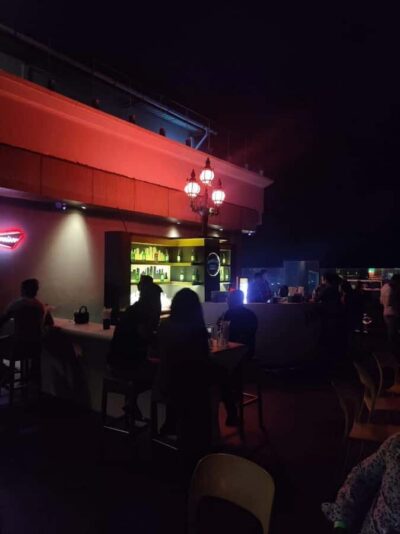
A Nightlife Adventure with a Local Guide: Dar es salaam city
Read our review →Browse the lists this tour appears in